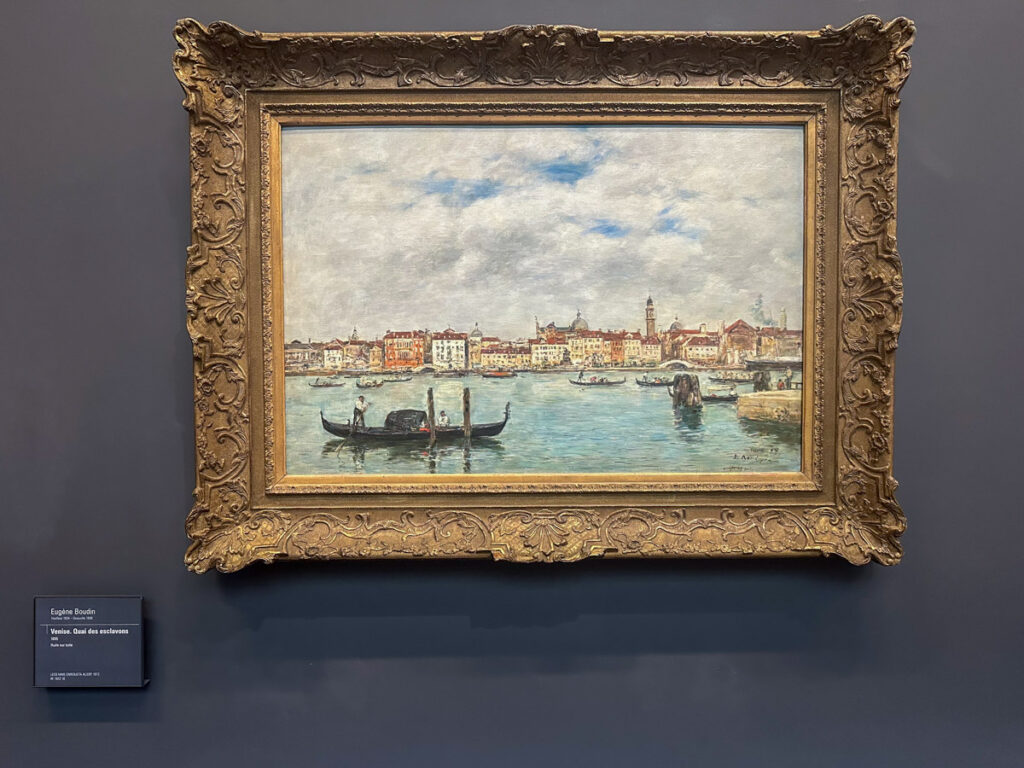
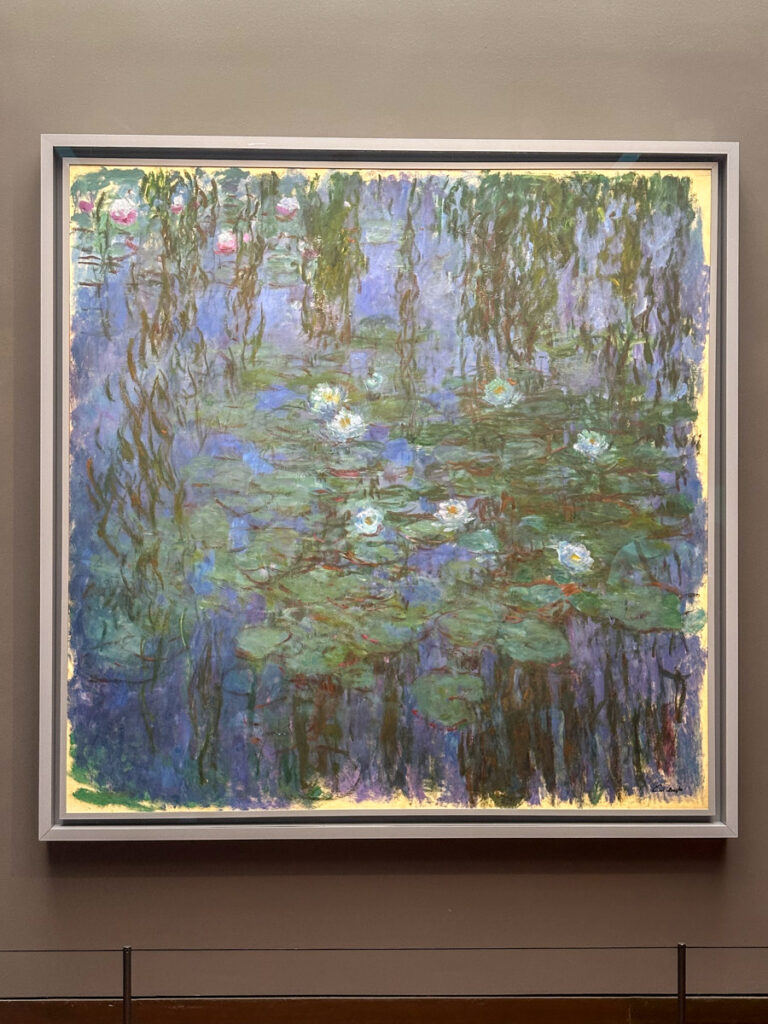
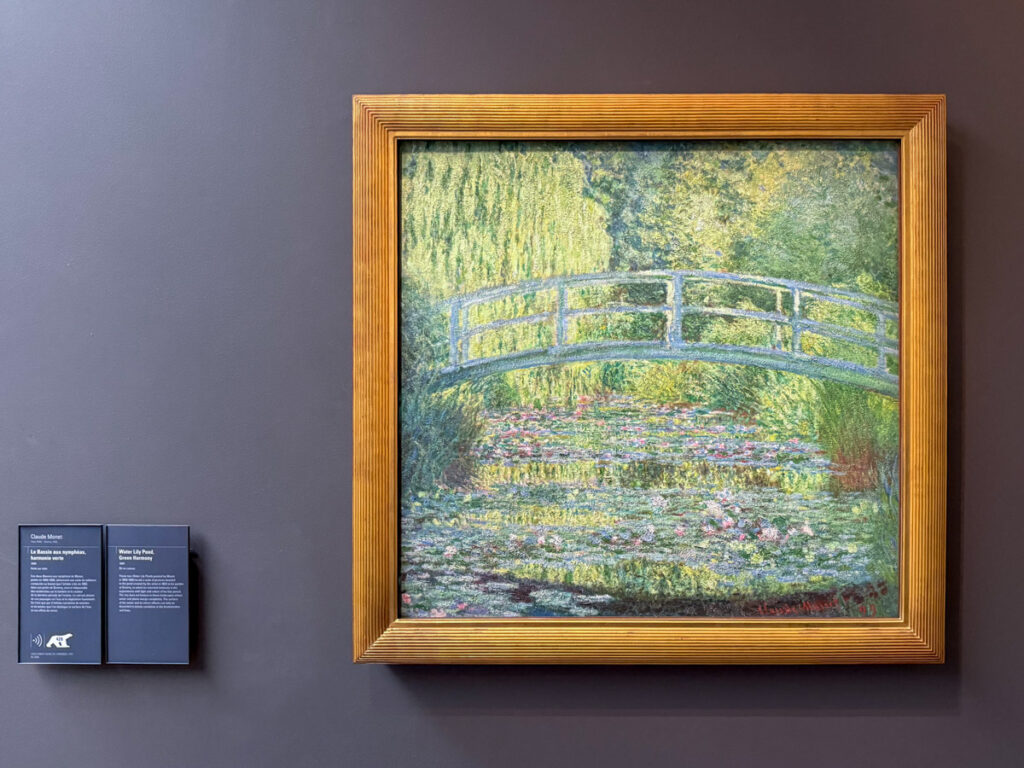
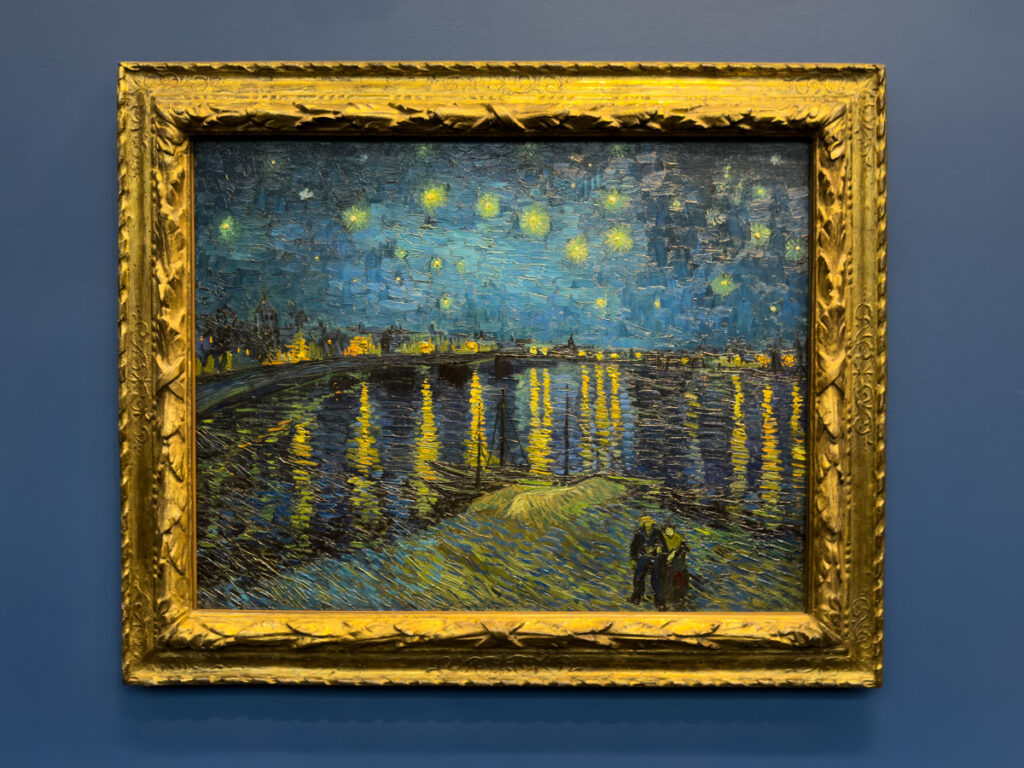
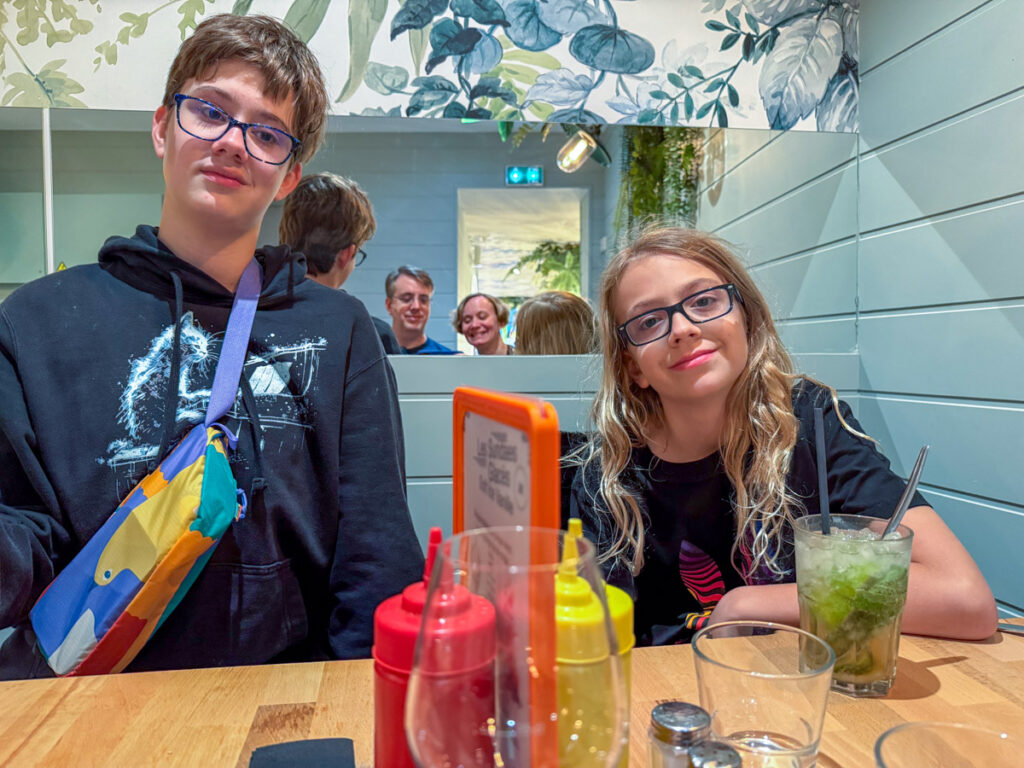
We were originally planning to visit Paris for our 20th wedding anniversary, back in 2020. At the time, we thought it would be a trip for two for maybe a week. We had halfway arranged it so the two sets of grandparents could split the week and transfer the kiddos halfway through. We had ideas. Then the pandemic happened, and we mostly just stayed home.
Now, in 2025, we decided to take the trip for our 25th wedding anniversary instead and make it a family trip. After months of on-again, off-again planning, in early June, we were finally on our way.
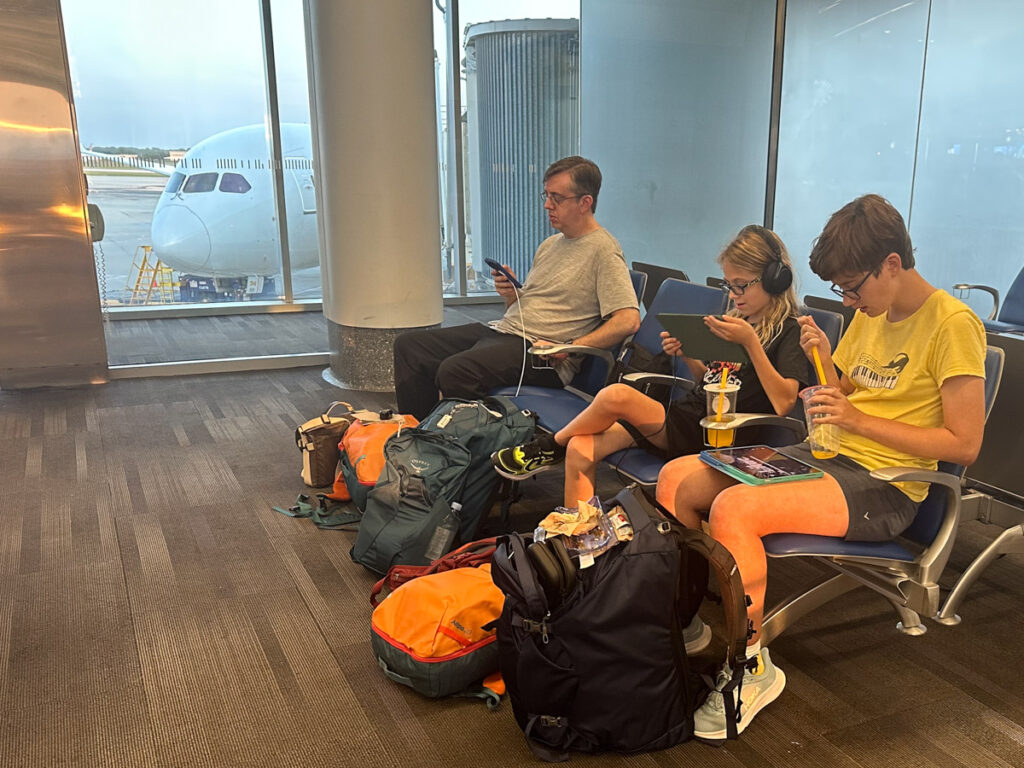
Or were we? We were set to leave on a Friday afternoon. We woke up Friday morning to find that our flight out of Austin was delayed over an hour. This would shorten our connection time in Philadelphia to less than an hour, and we weren’t feeling great about that. We looked a bit and found an earlier flight between Austin and Philly. It was pretty full, and we wouldn’t be able to sit together. And it would result in something like a four and a half hour layover in Philly, but it seemed like the safest option, so we made the change.
Unfortunately, this meant we had to kind of hustle our last minute packing. We got to the airport and found that the airport lots were all full, so we used an offsite lot. Ultimately, we made it onto our flight and all was well. I talked a nice man into swapping seats with me so that Maya wouldn’t have to sit on her own (which she was very uncomfortable with), and we made it to Philly without incident.
Our overnight flight between Philadelphia and Paris was fine. I think it was around 7 hours long and they fed us at least twice, so it was a little hard to get much sleep in, but we all tried.
Day 1 – Saturday – Arrival, Covered Passages, Richelieu Library, Petit Palais
Our flight arrived at Charles de Gaulle airport on schedule, maybe even a touch early. We had zero trouble going through passport control. Since we had an under-12-year-old in our group, we got to go through a separate line, but even if we hadn’t, the line didn’t look too bad. We had a plan to fetch the RER B train right into town and transfer to the metro to our first AirBNB.
We walked alllllll the way to the train station in the airport (they called it the aerogare – “gare” means train station). Upon arrival at the entrance to the aerogare, we saw a giant sign explaining that our train was not running – transportation strike. Some vague instructions were provided referencing a bus line to take instead. I tried to do some quick research to make sense of it, but ultimately, we decided to just take an Uber. I had read that an Uber from the airport into town can cost 60-70 euros. We got one for half of that. Now, that poor driver took I think an hour and twenty minutes to get us to our apartment; no fault of his, the traffic was awful. I suspect the rail line and metro would have cut that time in half … you know, if the train had been running.
Our AirBNB host allowed us to drop off our bags and collect our key while they finished readying the apartment. The nice woman who met us spoke mostly French. I was pretty tired by this point, and even though I knew how to ask her questions in French and respond to her French questions in French, my addled brain would produce nothing. We transacted in gestures and half-understood phrases. Either way, luggage was left and keys were acquired. This worked well for us, because our plan for coping with jet lag was to keep ourselves moving, out in the light as much as possible, at least till after dinner.
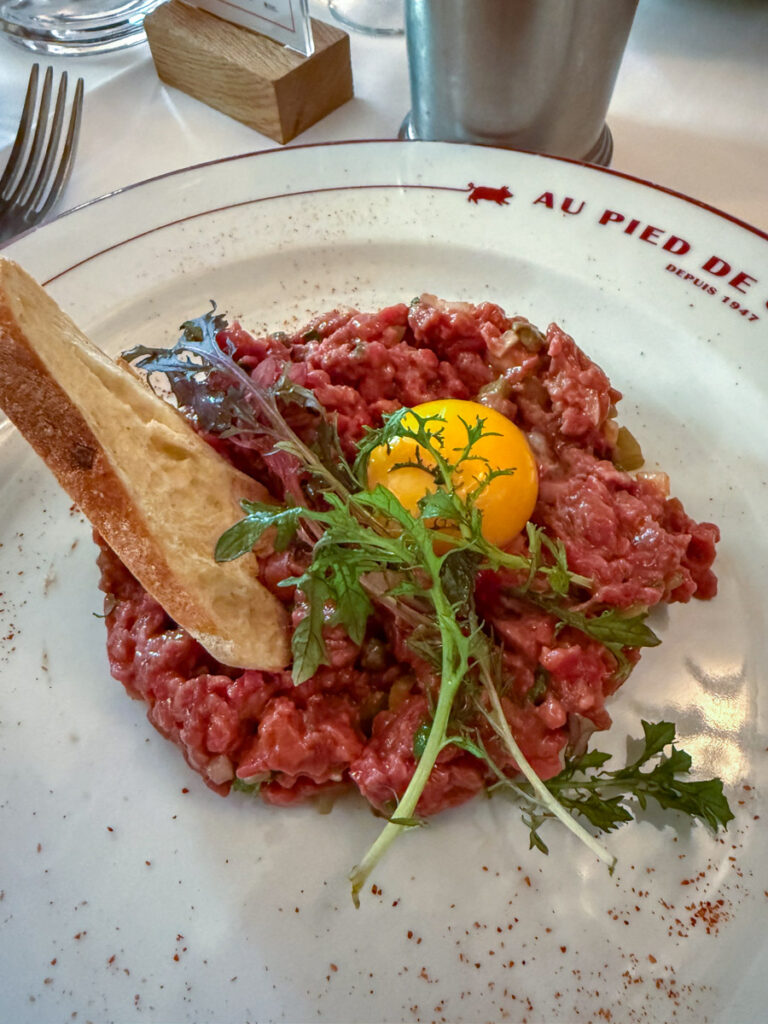
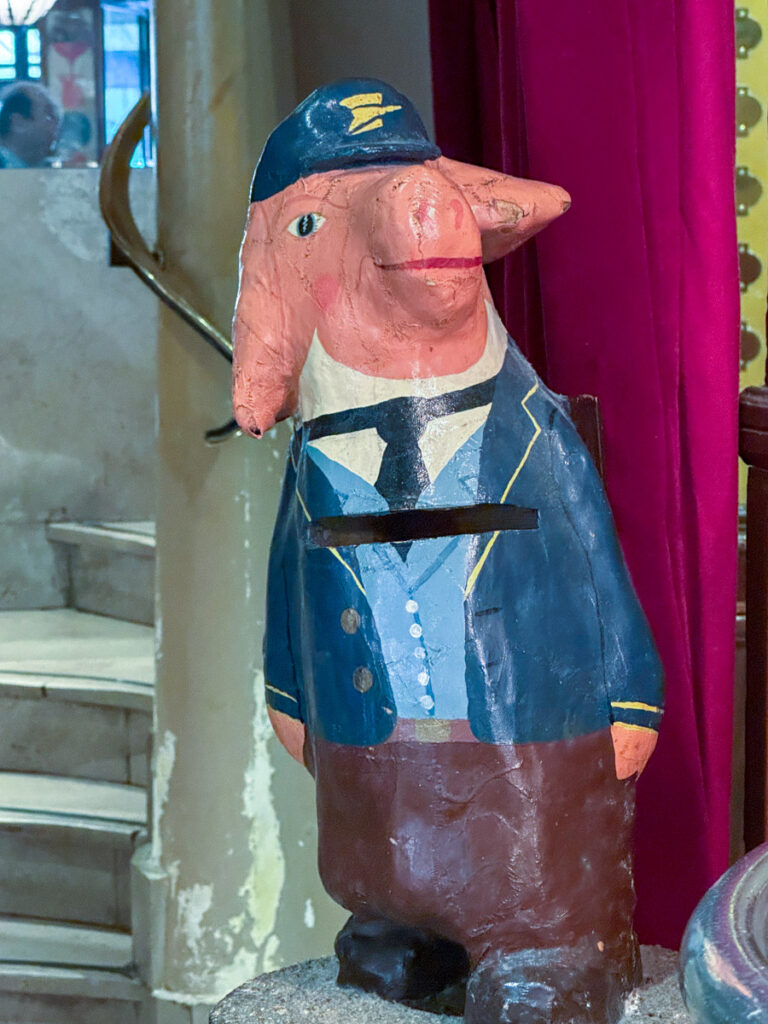
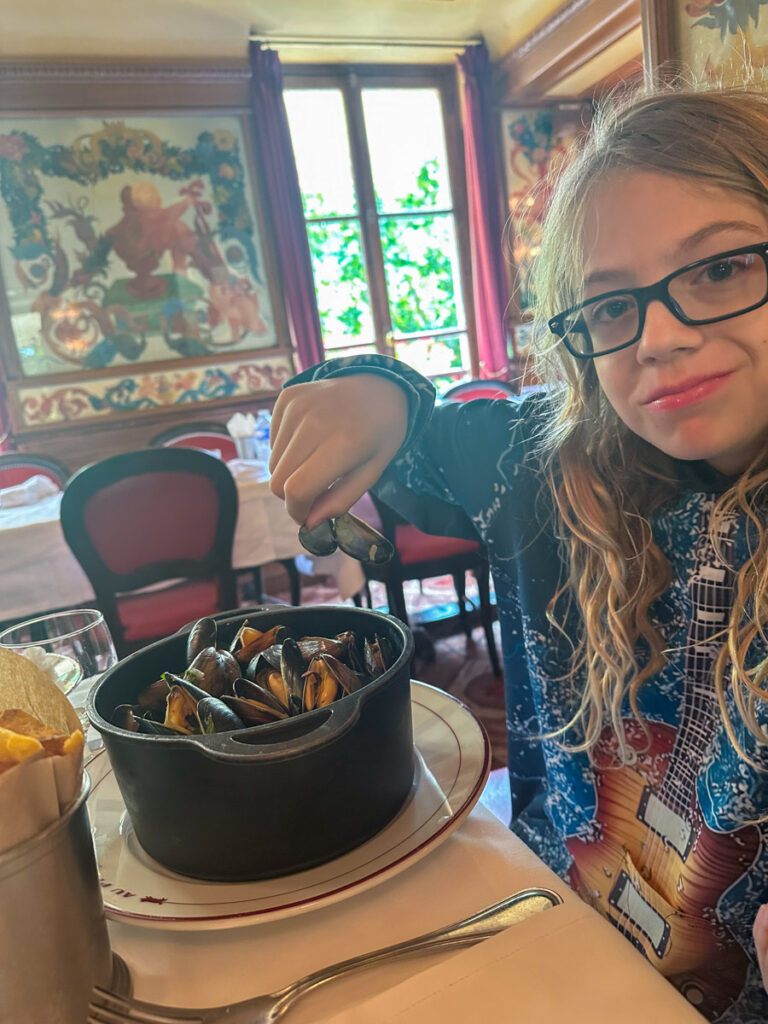
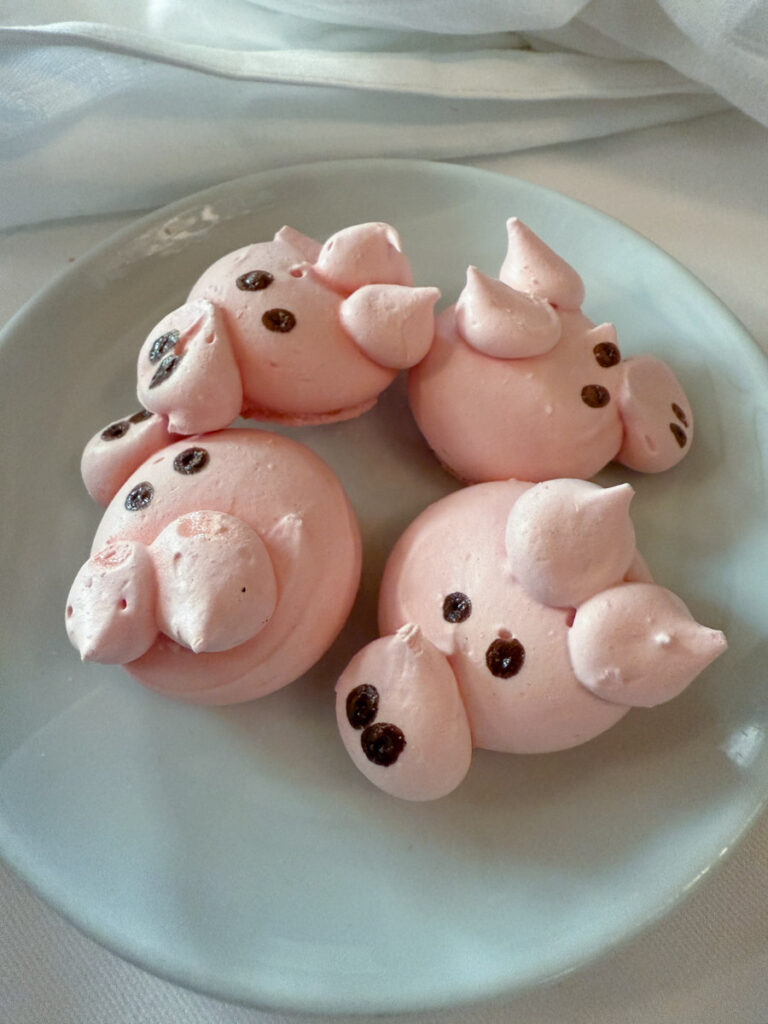
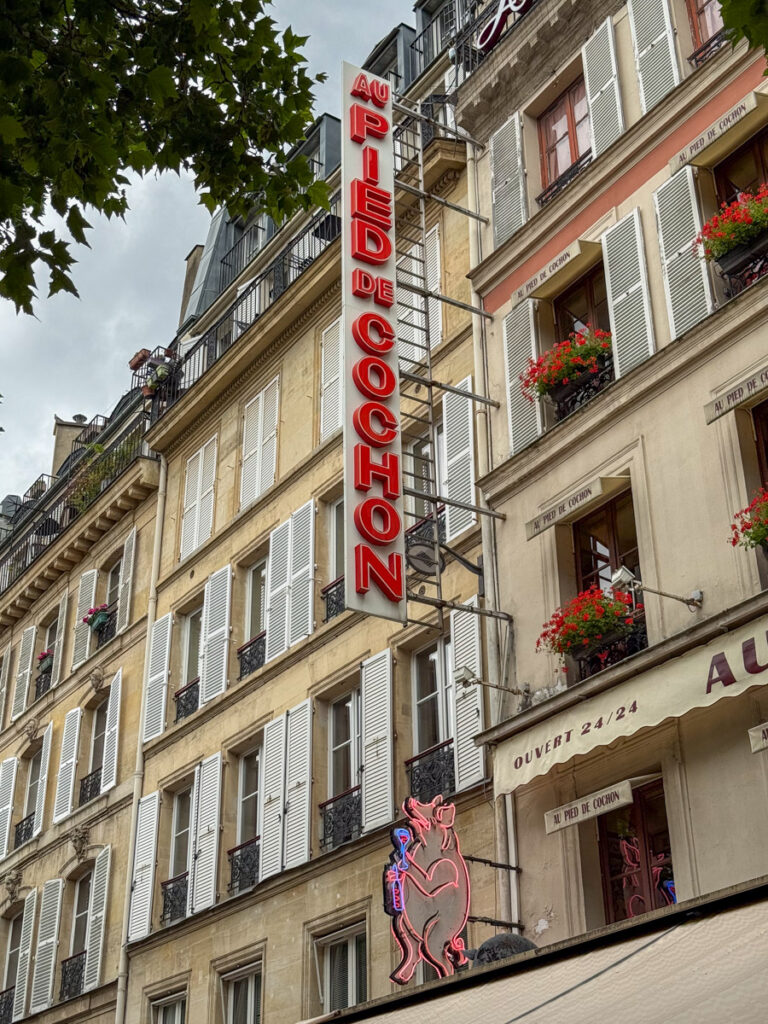
We started off by walking to Au Pied de Cochon for lunch. We all found food we wanted to eat and ordering wasn’t too complicated. We were learning already though that you had better make up your mind quickly on the food if you want to get your order in. Otherwise, you could sit quite a while before the waitstaff came by again to take your order. This would have been fine for Sean and I, but Ian and Maya took a bit longer to work out the menu and what they might like. For this first meal, I’m remembering Sean winning with a really gorgeous steak tartare. Ian had moules mariniere, Maya had some kind of fried fish (I think), and I had some sort of slow cooked meat. I don’t remember the particulars, other than that we enjoyed our meal. They did present us with cute little piggy-shaped meringues to enjoy at the end of the meal. (Ian discovered he likes meringues!)
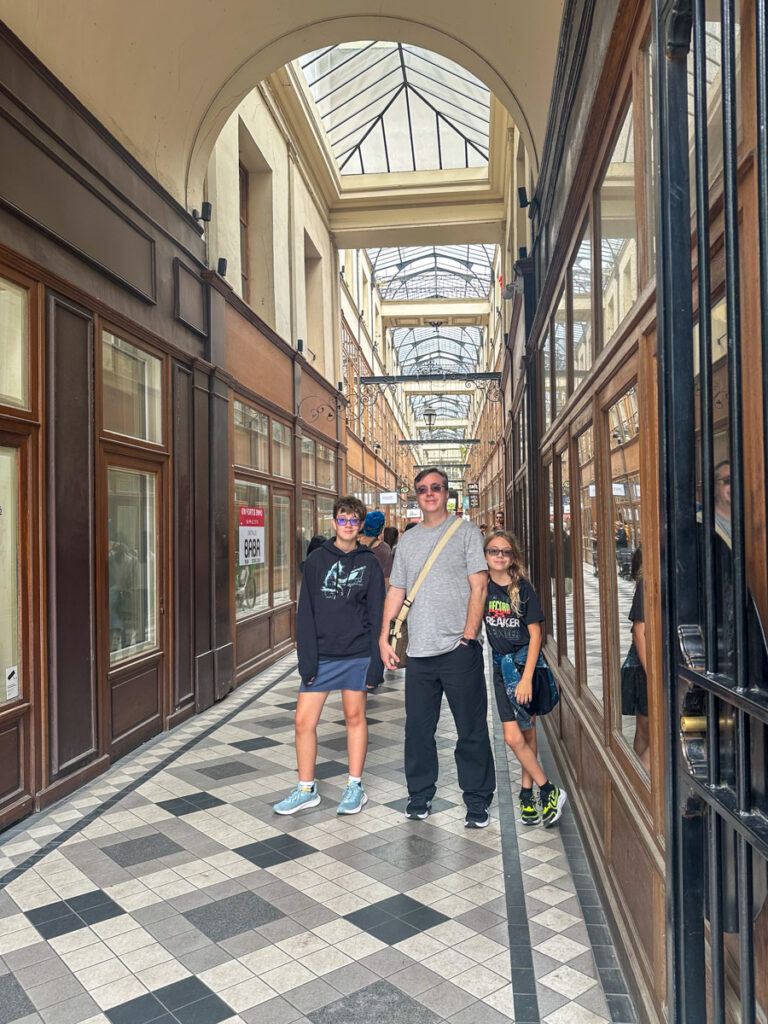
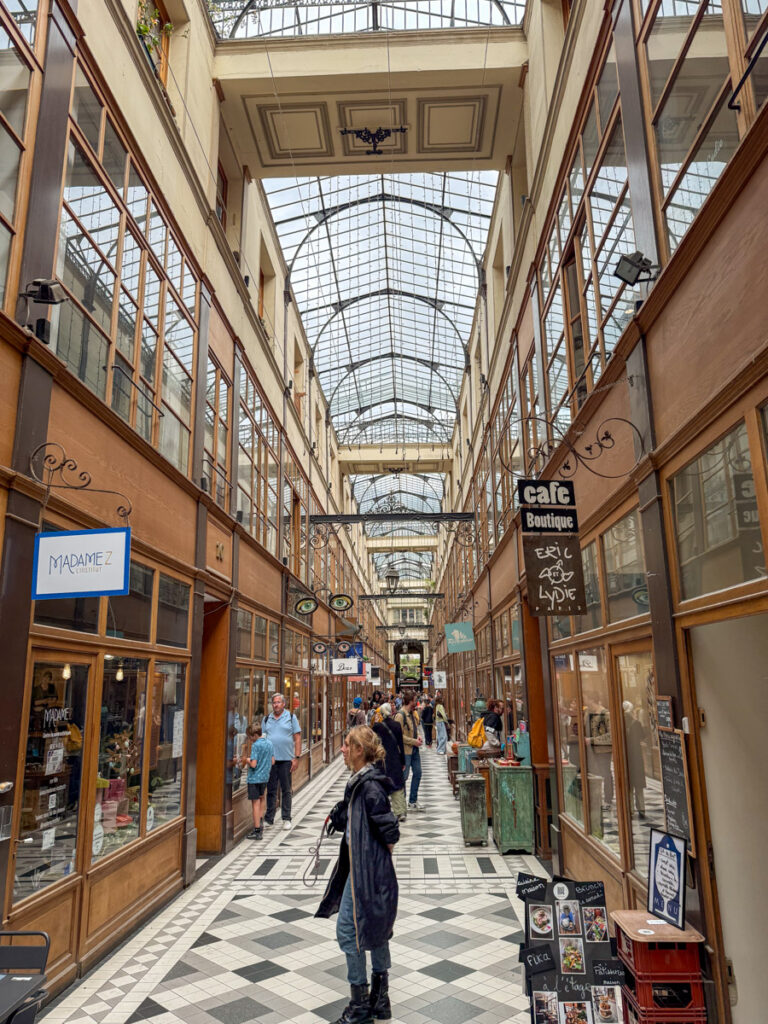
We set off next to see a couple of the famous Paris covered passages (passages couverts). In the early 19th century, these passages couverts were placed to encourage wealthy clientele to wander and shop while protected from the weather and grime of the city. As I understand it, clocks are often prominent in these passages so the patrons would know when to meet their coaches.
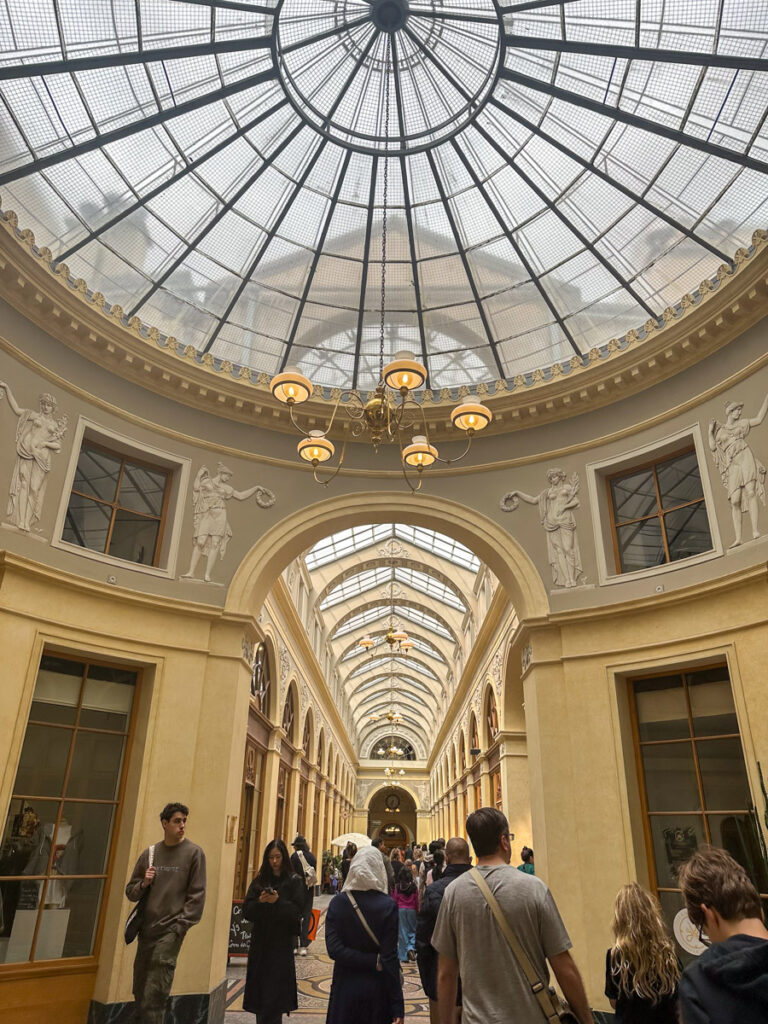
These glass-topped structures are bright and airy and house a unique assemblage of shops. I expect if we hadn’t been so tired, we’d have browsed a little more than we did. Alas, we were mostly just following the plan and trying to stay engaged. We first wandered through Passage du Grand Cerf and then we meandered over to the stunning Galerie Vivienne. I’ll be honest, just wandering through the passages felt very French to me. We definitely weren’t in central Texas anymore.
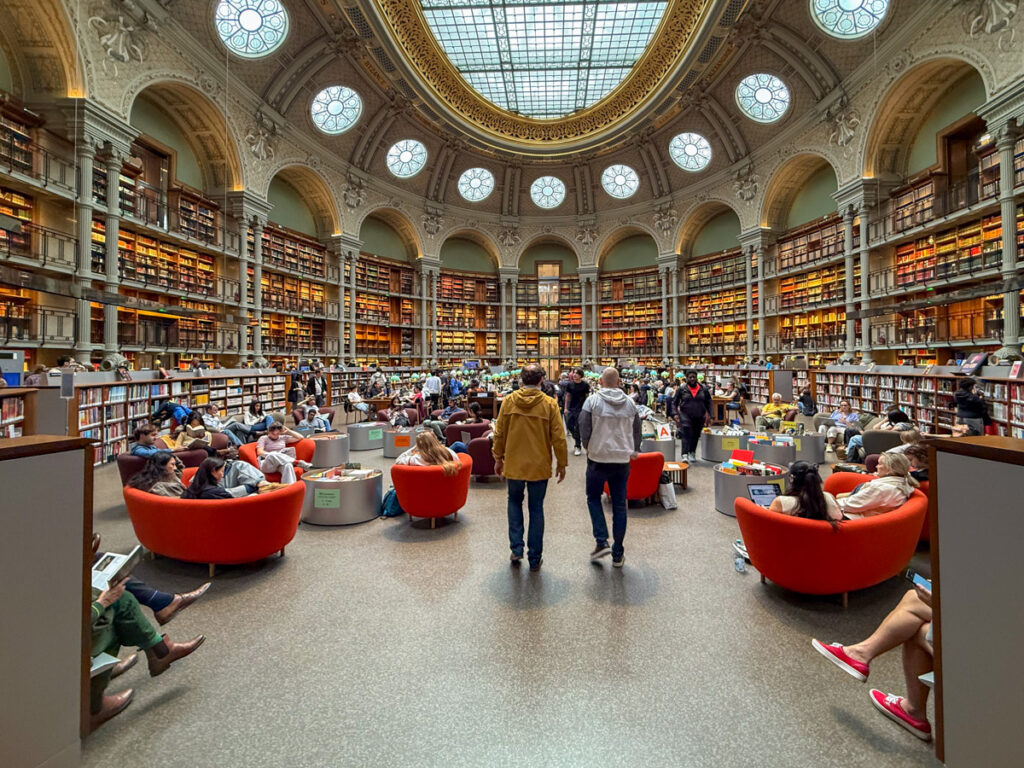
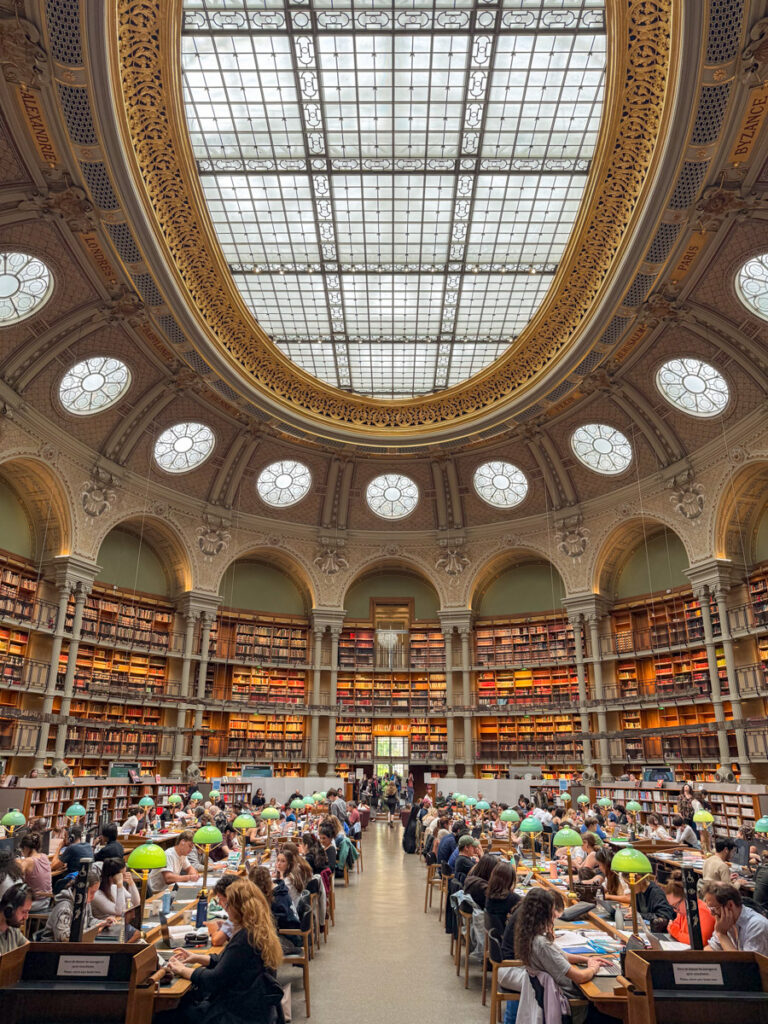
We chose to head over to the Bibliothèque Nationale de France’s Richelieu location. Built in the 17th century, originally as a palace, this is now one of the French national libraries, and it is gorgeous. Sean and I could have grabbed a couple books about French art or architecture and sat down and browsed for a while, but the kids needed movement. Instead we wandered around and gawked at the famous oval room (La Salle Ovale). The oval room was opened to readers in May of 1935. It’s huge – 43.7 meters by 32.8 meters and 18 meters high. It is free of charge for anyone to enter and sit down and read a while.
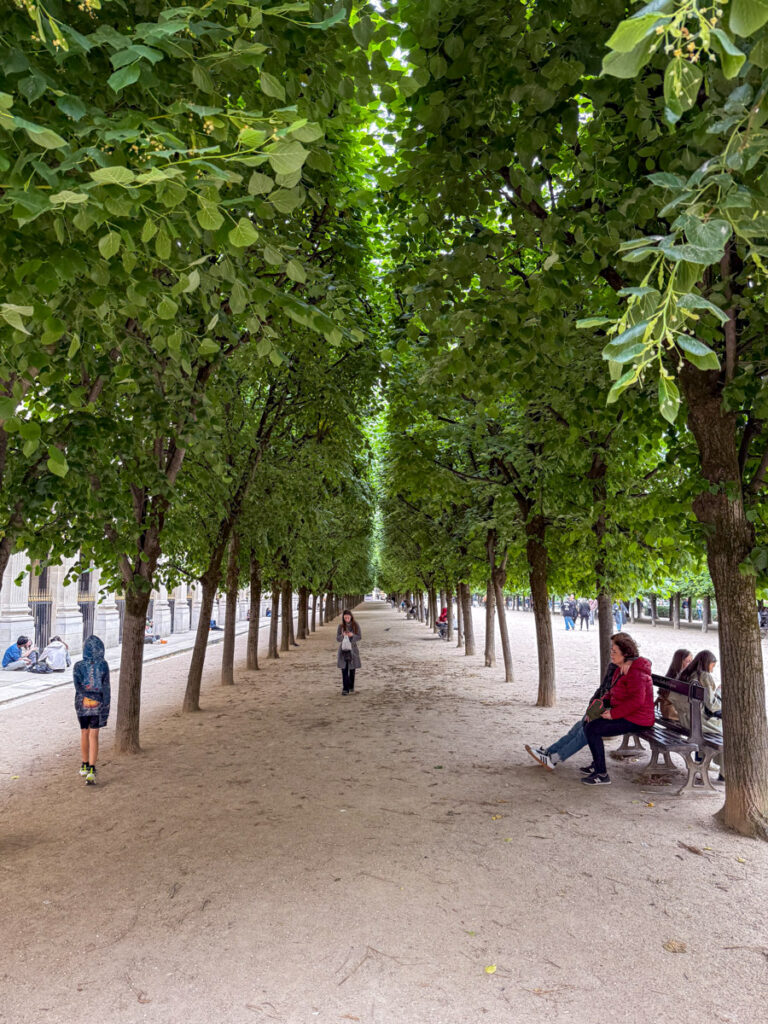
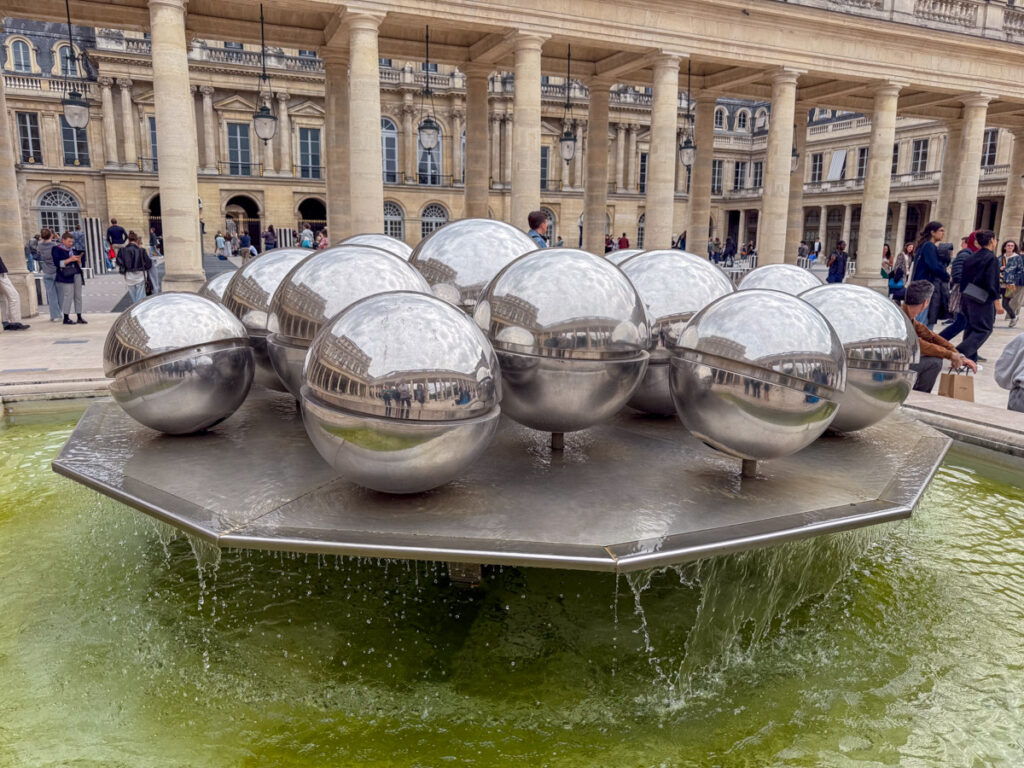
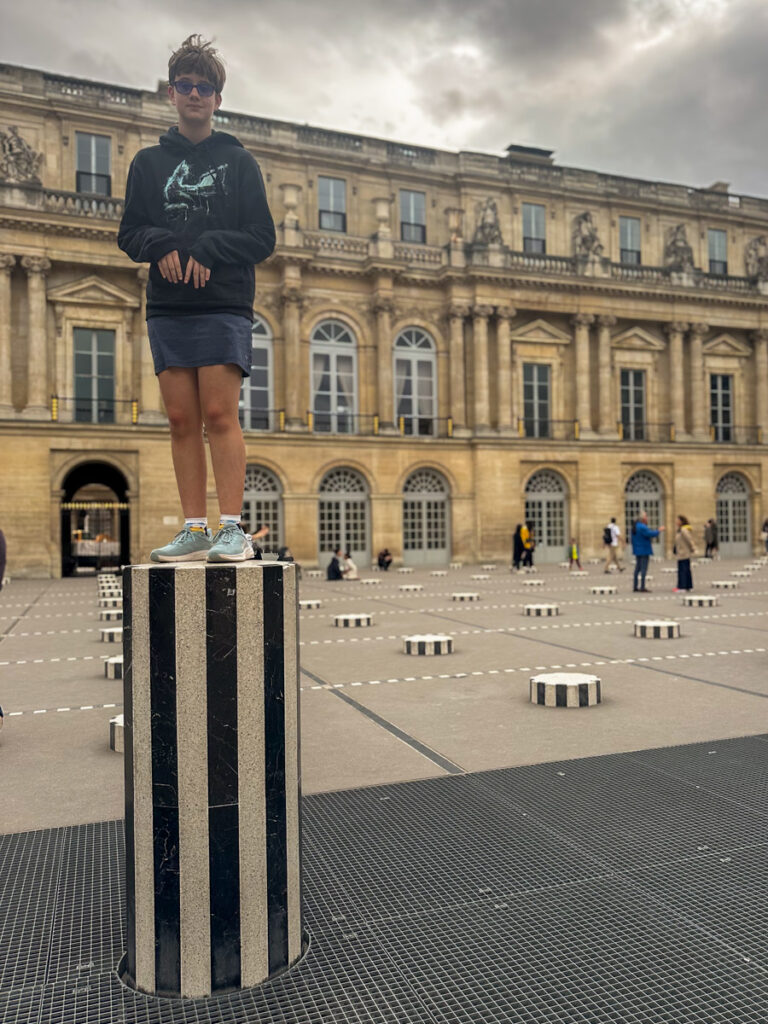
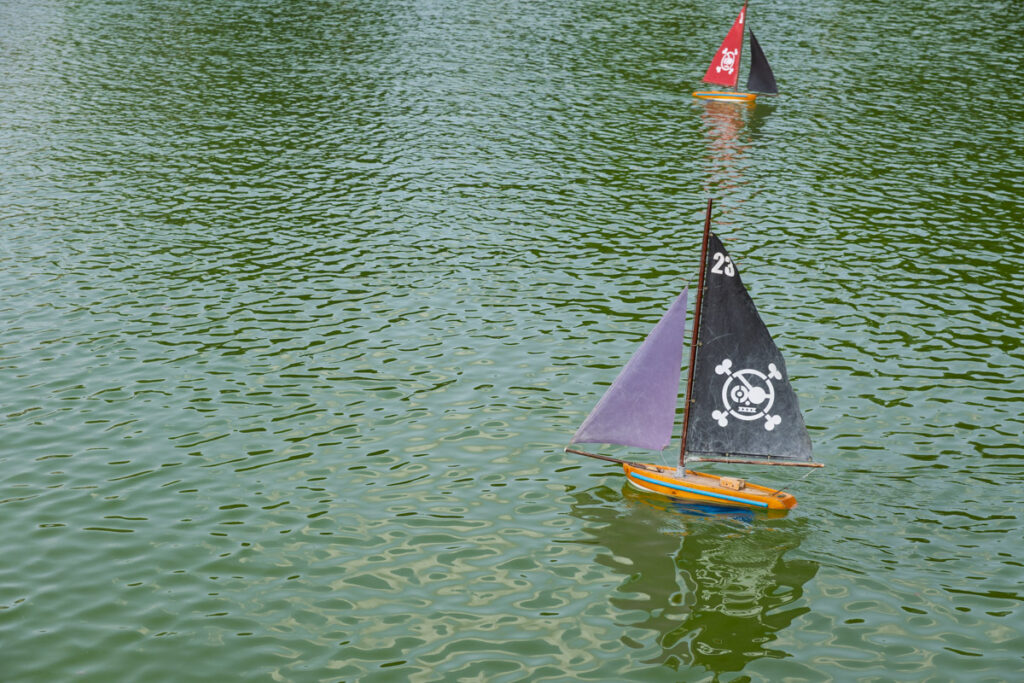
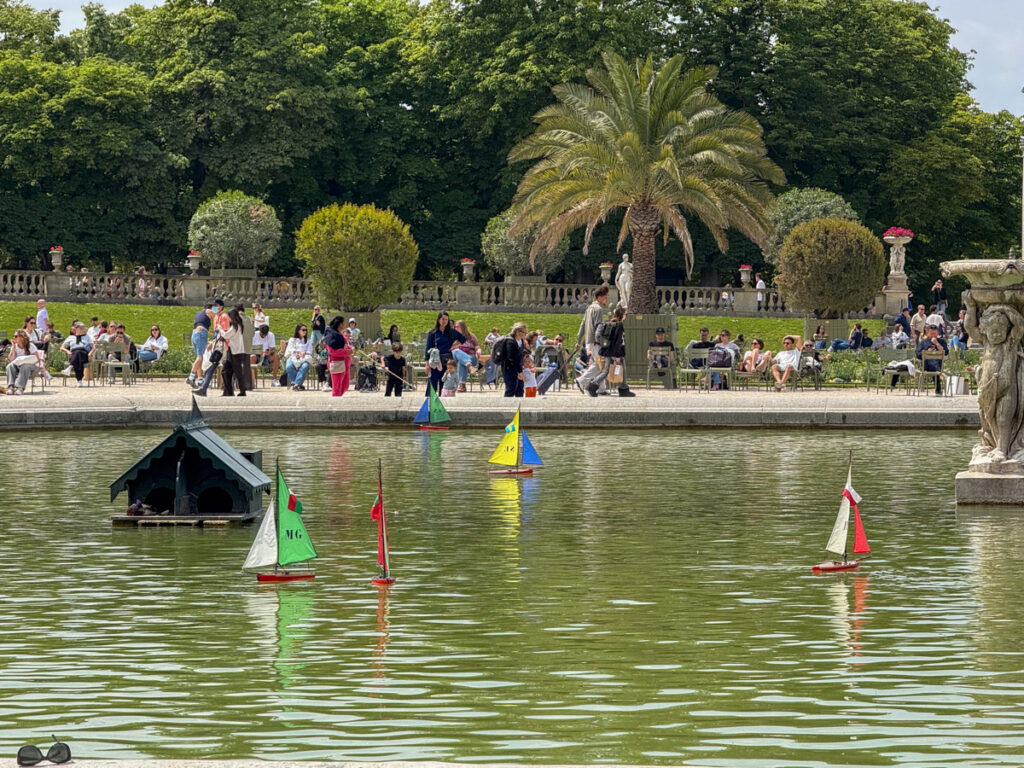
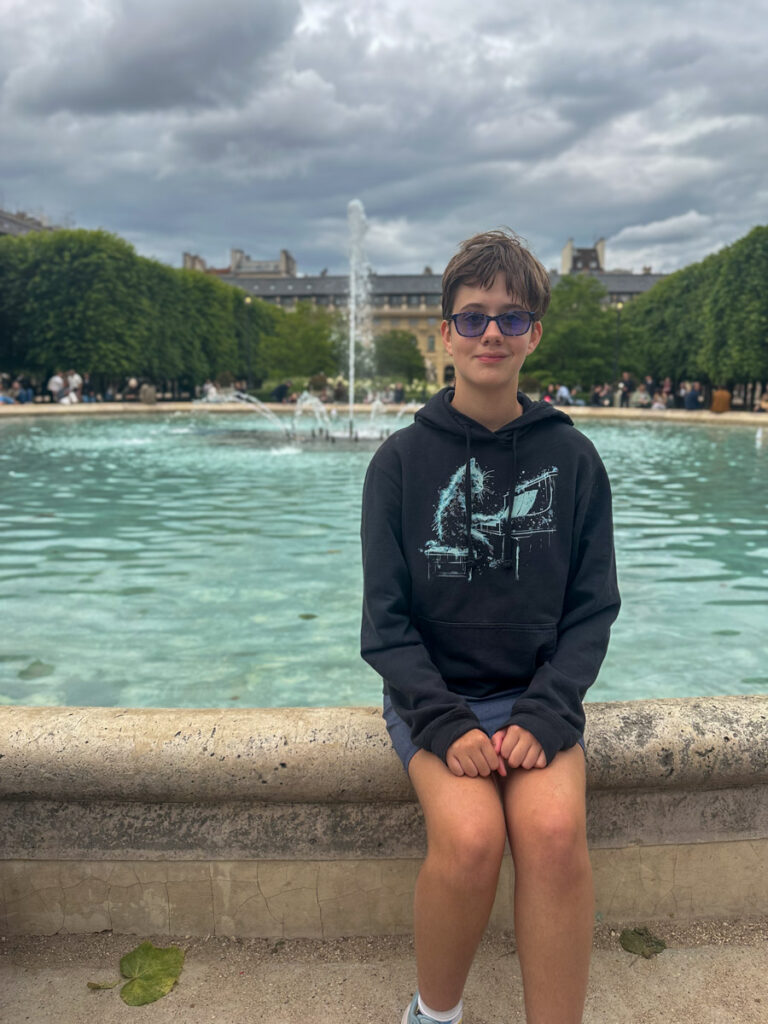
One of the things we enjoyed about the walking instructions that Apple or Google supplied us with while in Paris was that they didn’t strictly stick to the streets, often cutting through beautiful gardens and building breezeways instead. And that’s how we found ourselves accidentally wandering through the Palais Royale area, which I had half-intended to see on a different day. We were in no particular hurry and the weather was glorious, so we spent some time in the courtyard staring at little sailboats on a pond and playing on the famous striped columns.
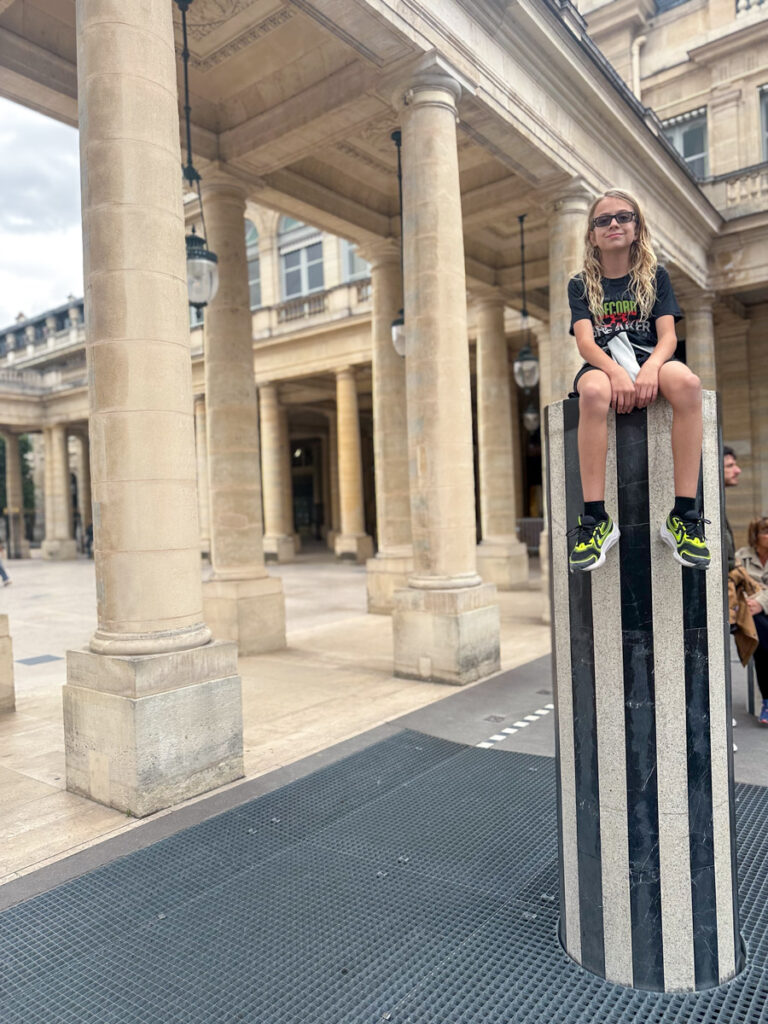
Les Colonnes de Buren were evidently installed in 1985. From what I’ve read, all the columns “take root” in the basement and extend to various heights in the courtyard. The kids, particularly Ian, had fun trying to see how tall of a column they could successfully summit. Maya did the same thing, but I don’t think it was fun for her. She simply wanted – needed – to prove that she could do it.
My memory is pretty hazy given the depth of sleep deprivation on that day, but we may have stopped in at a metro station and picked up our Navigo Easy cards at this point. It was absolutely maddening. We waited in one line to purchase our cards. This machine apparently had run out of cards to dispense, so instead it spit out a voucher that we had to take to another line to actually collect the physical cards. THEN we had to wait in the first line again to load trips onto the card. Why didn’t we just put them on our phones, you ask? Because each person needs their own “card” and the kids don’t both have phones yet. Why didn’t we pick up the weekly unlimited use card instead, you ask? Because that card specifically covers a period from Monday to Sunday. This was Saturday. We’d have had to buy a new weeklong pass on Monday. Also our Paris visit (as you will see) was broken into chunks. The Navigo Easy pass was the best choice for us.
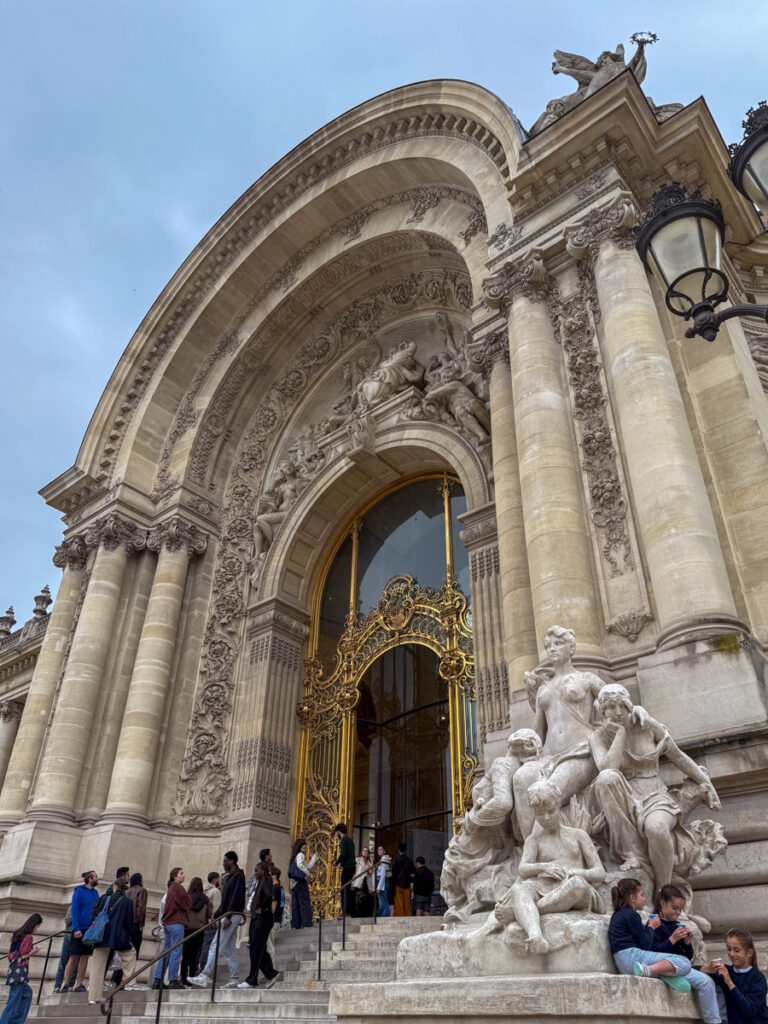
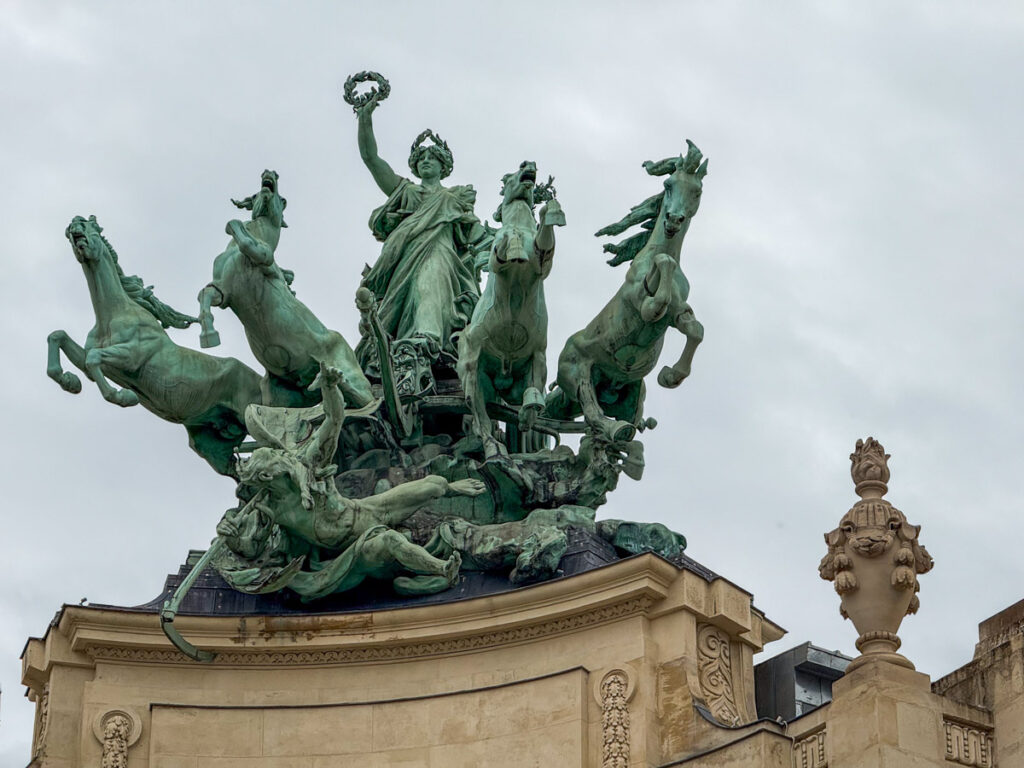
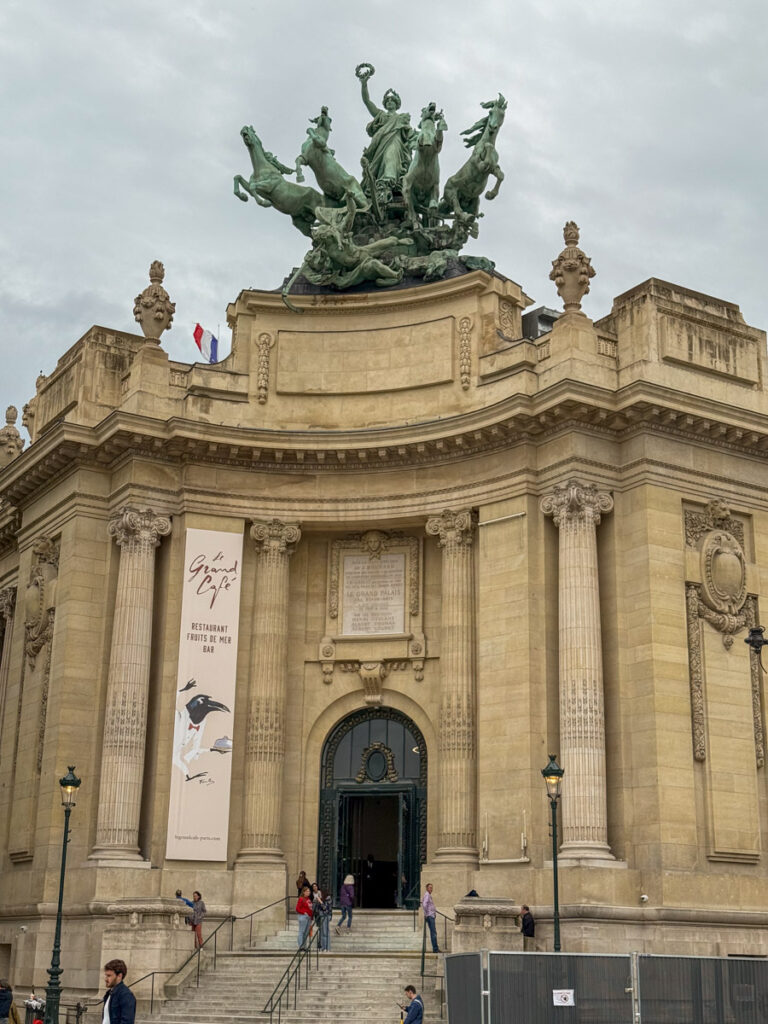
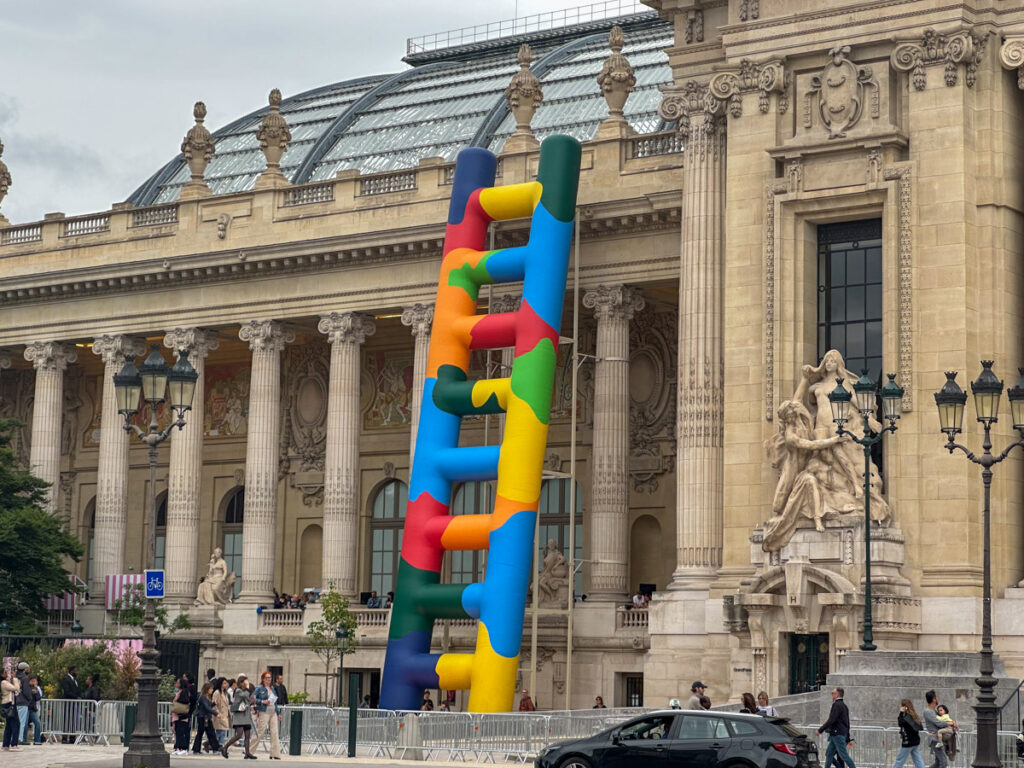
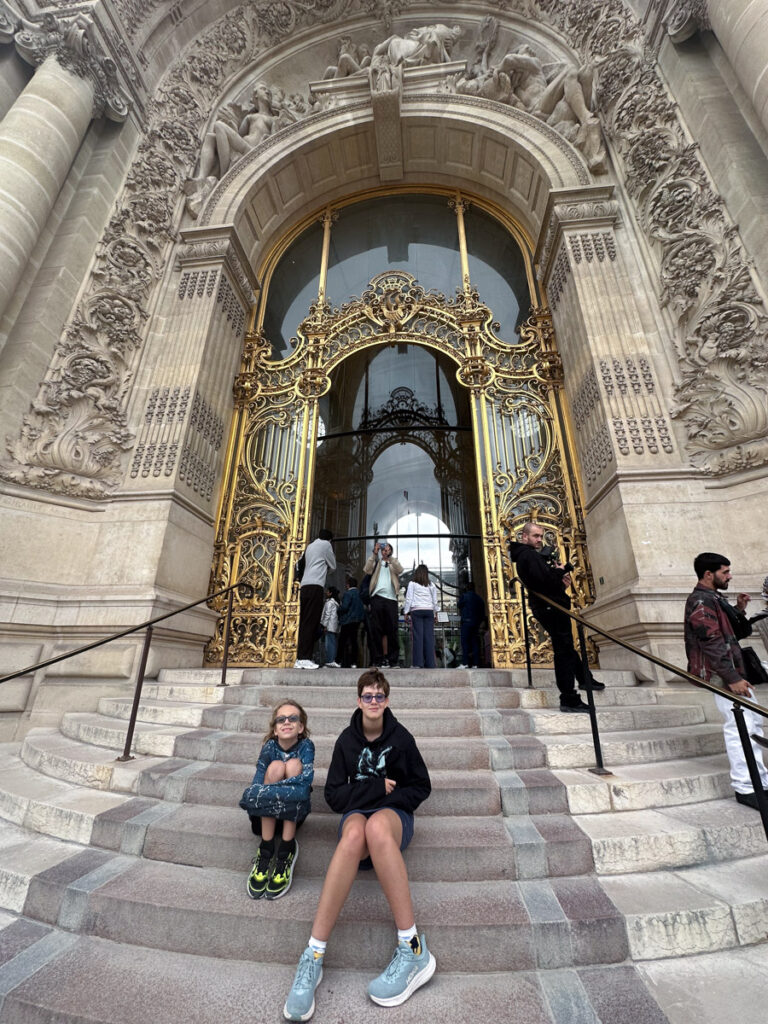
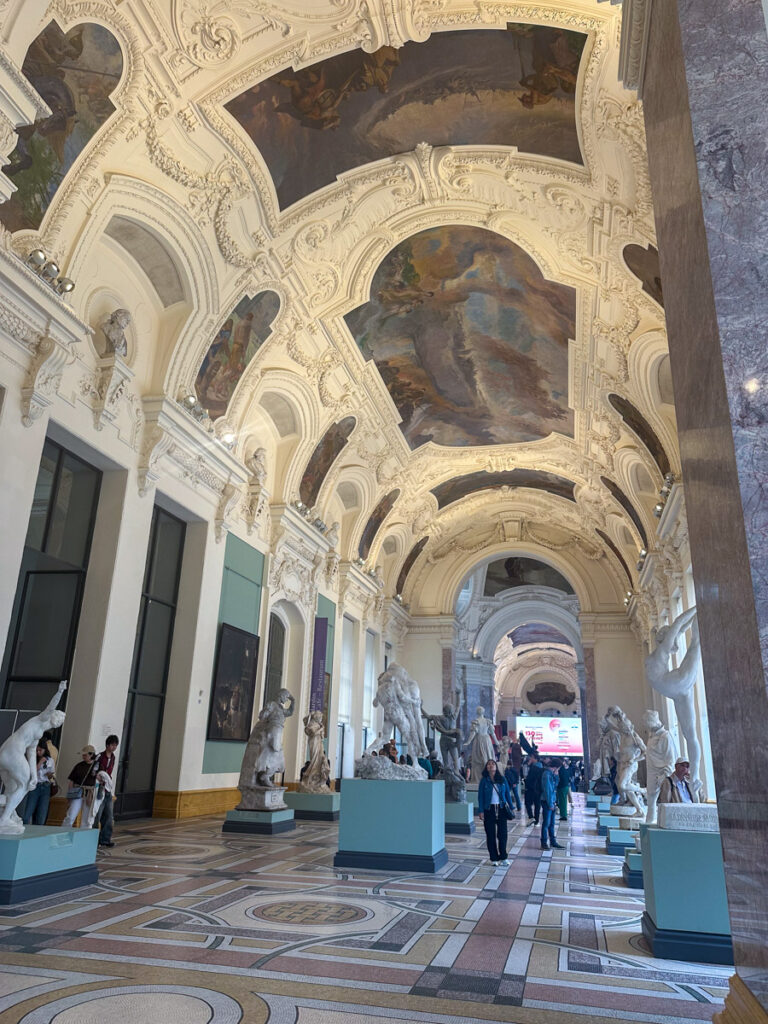
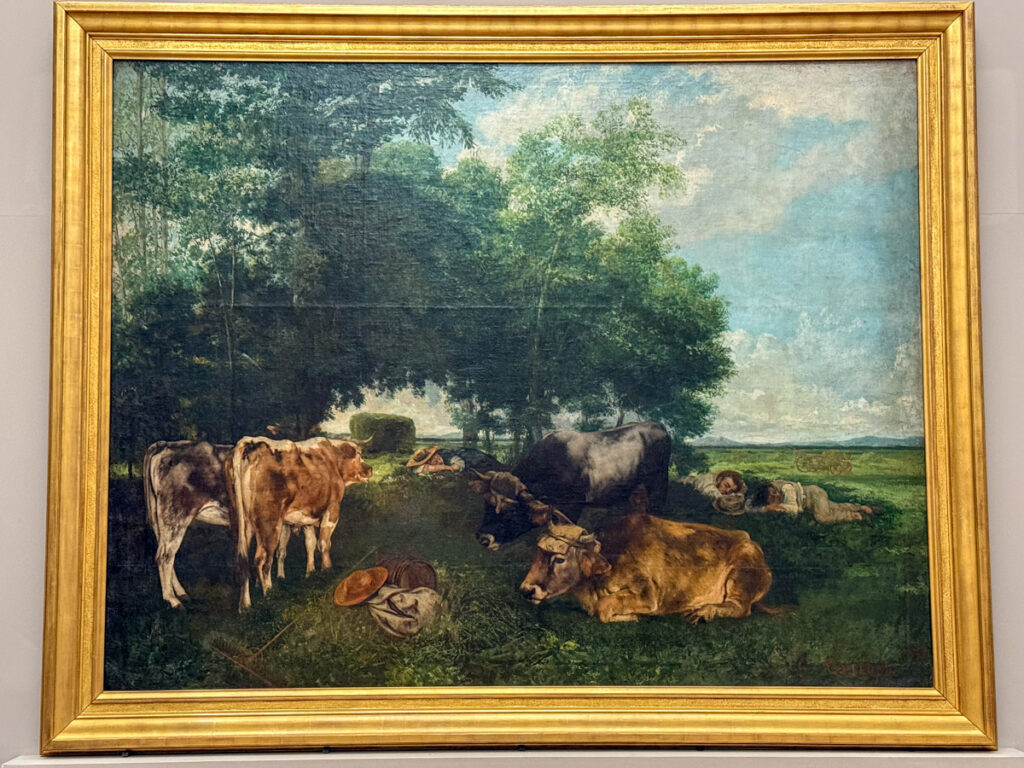
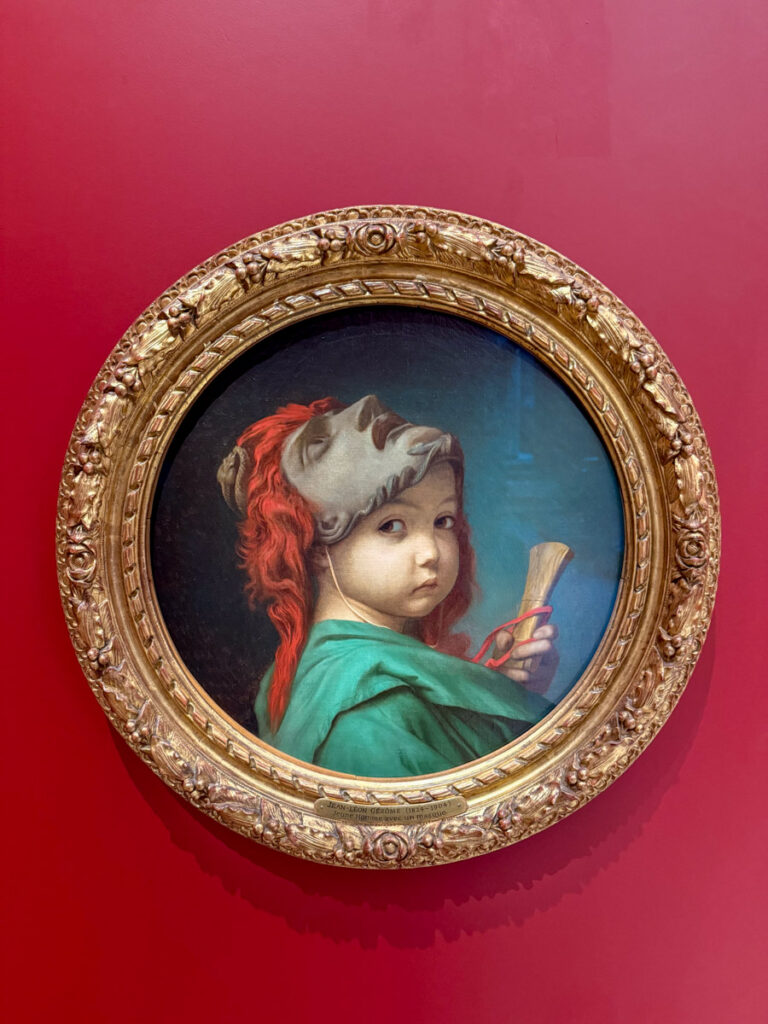
We ended our day at the Petit Palais. On Saturday, Petit Palais has late hours, staying open till 8:00 (20:00). Also, the beautiful art museum contained therein is free to visit. Sadly, the gardens were closed for restoration, but we were able to wander around inside for as long or as little as we chose. For that first day, I really didn’t want to schedule anything big. Mostly the goal was to keep us occupied so we could get a little dose of Paris and start to adapt to our new time zone.
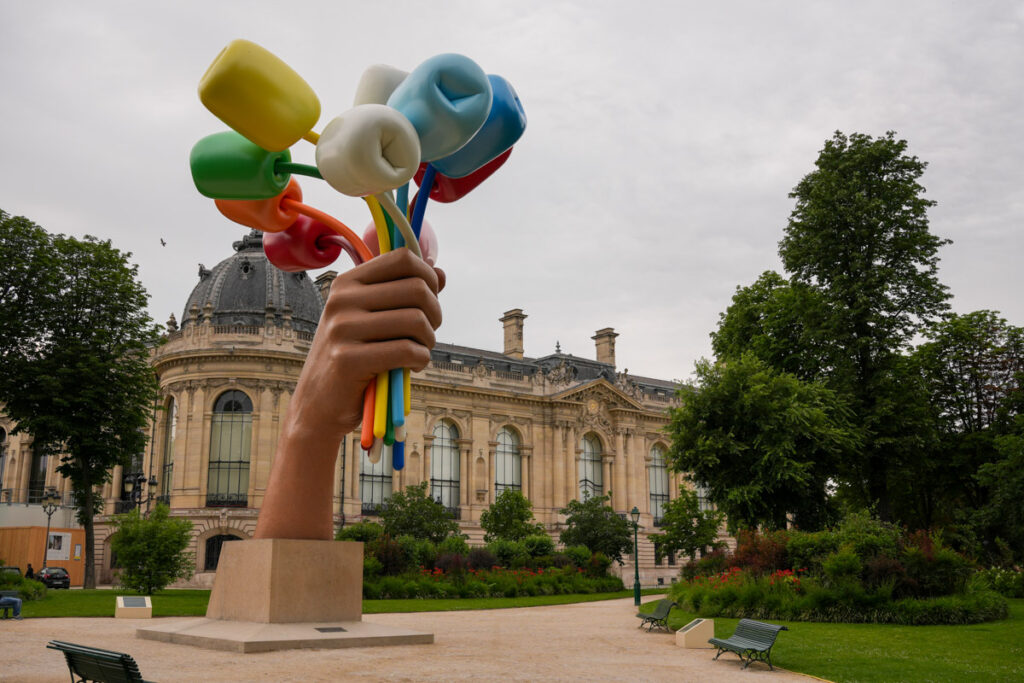
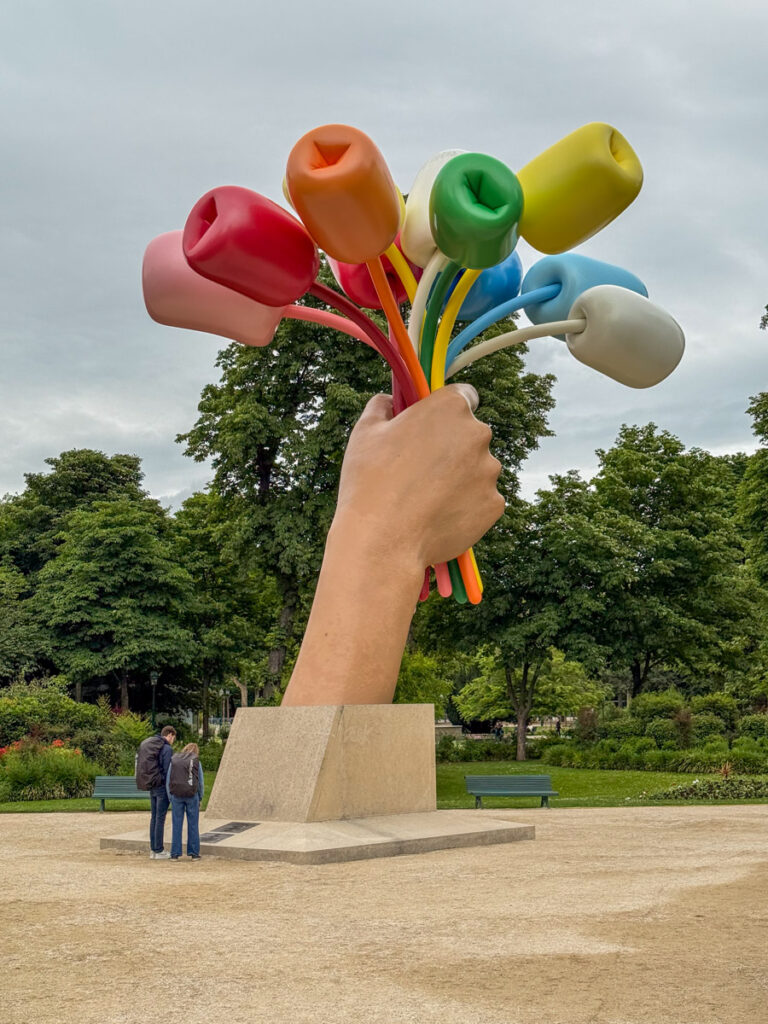
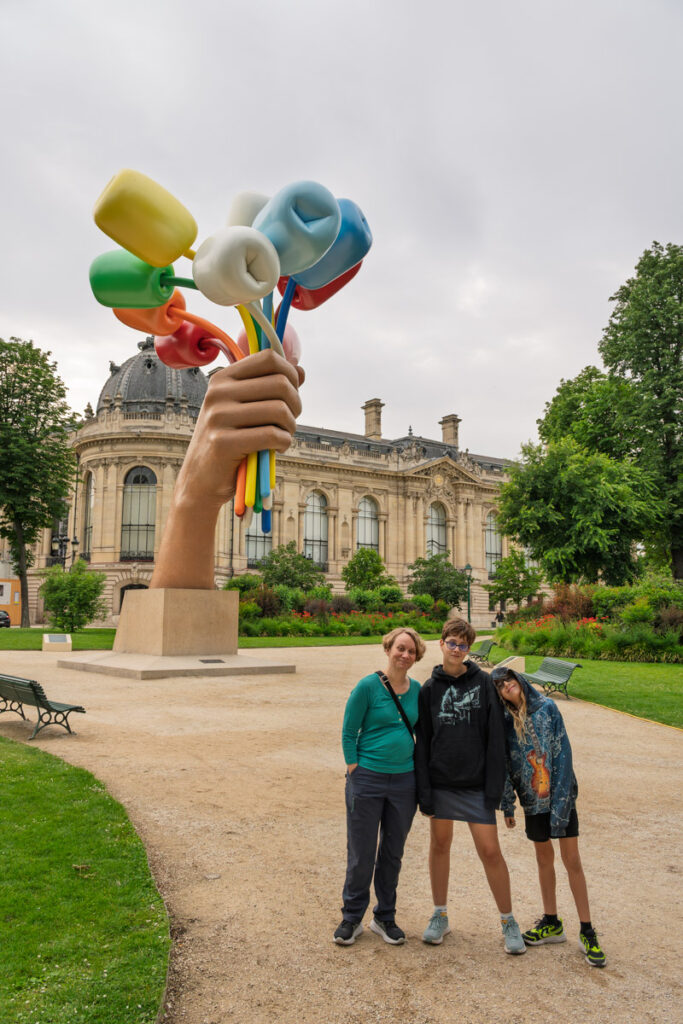
In our wandering around near Petit Palais, we happened by the Jeff Koons Bouquet of Tulips sculpture. This is not our first Koons sighting, having seen his Balloon Dog (Blue) at The Broad in Los Angeles previously. While in Paris viewing the Bouquet of Tulips, we believed it to simply be a light-hearted piece of art. However, on looking at it at post-writing time, apparently it was given to France in commemoration of the people who died in the terrorist attacks in 2015. Evidently, the bouquet of a dozen tulips only has eleven, with the missing tulip meant to represent the victims.
The four tired Woodses took the metro back to our apartment. Sean and I let the kids veg out a little bit while we walked to a nearby pizza place to fetch a couple pizzas. We learned how to ask for something to go, “a emporter?” and took our humble haul back to the apartment for a quick dinner. We quickly reset wakeup expectations for the next day (I’m an overachiever on vacation, but I’m also a realist), and were swiftly to sleep.
Day 2 – Sunday – Marche Bastille, Musee D’Orsay, Arc de Triomphe
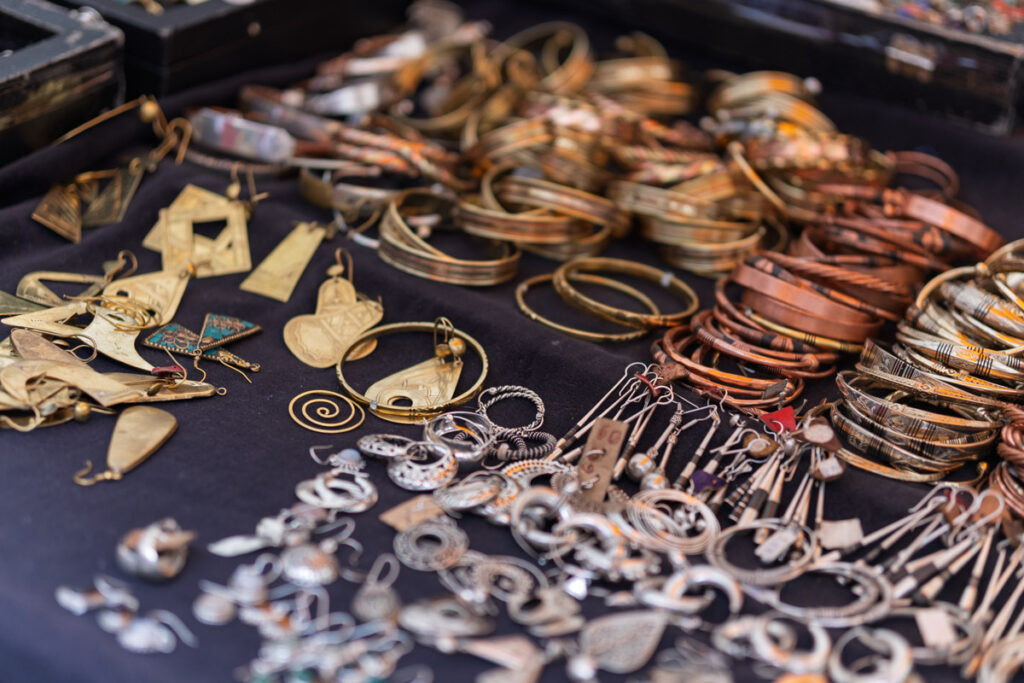
The jet lagged Woodses got a late start this morning. Luckily nothing was scheduled till the afternoon. Paris is famous for its open-air markets, so we decided to hit the Sunday market, Marche Bastille. After exiting the metro, we accidentally headed down a flea-market-like street, where Ian’s inner shopper sprung to life. Once we realized our mistake and wanted to head to the actual market, we had to drag him away from that scene so we could make it there and find ourselves a late breakfast.
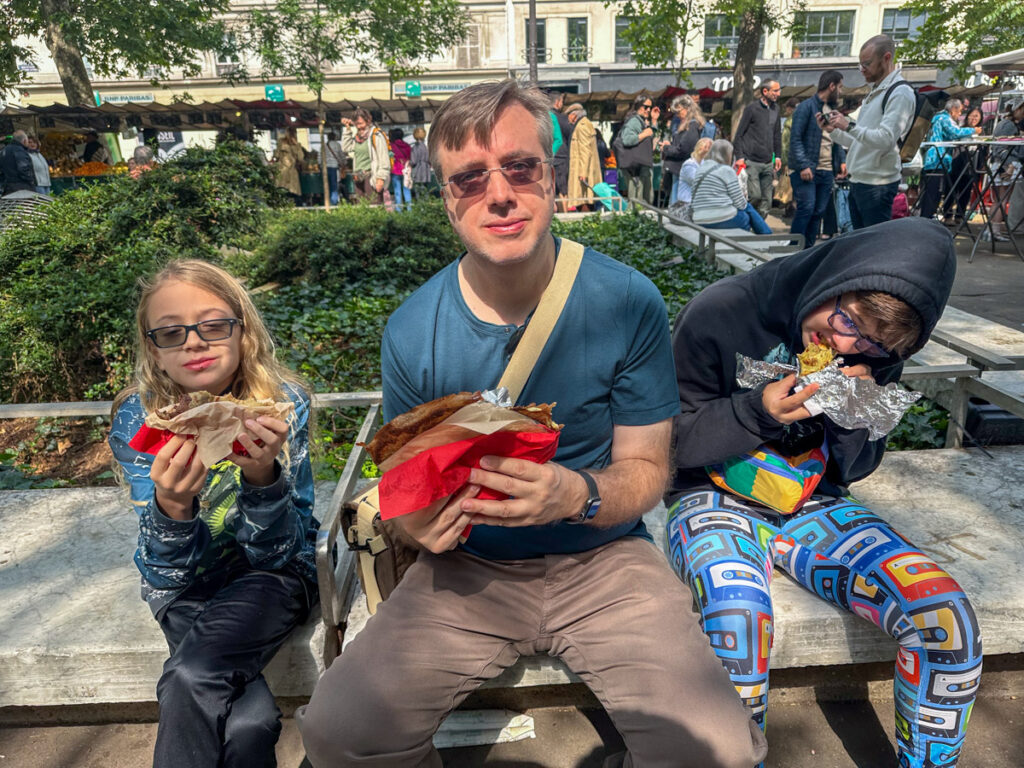
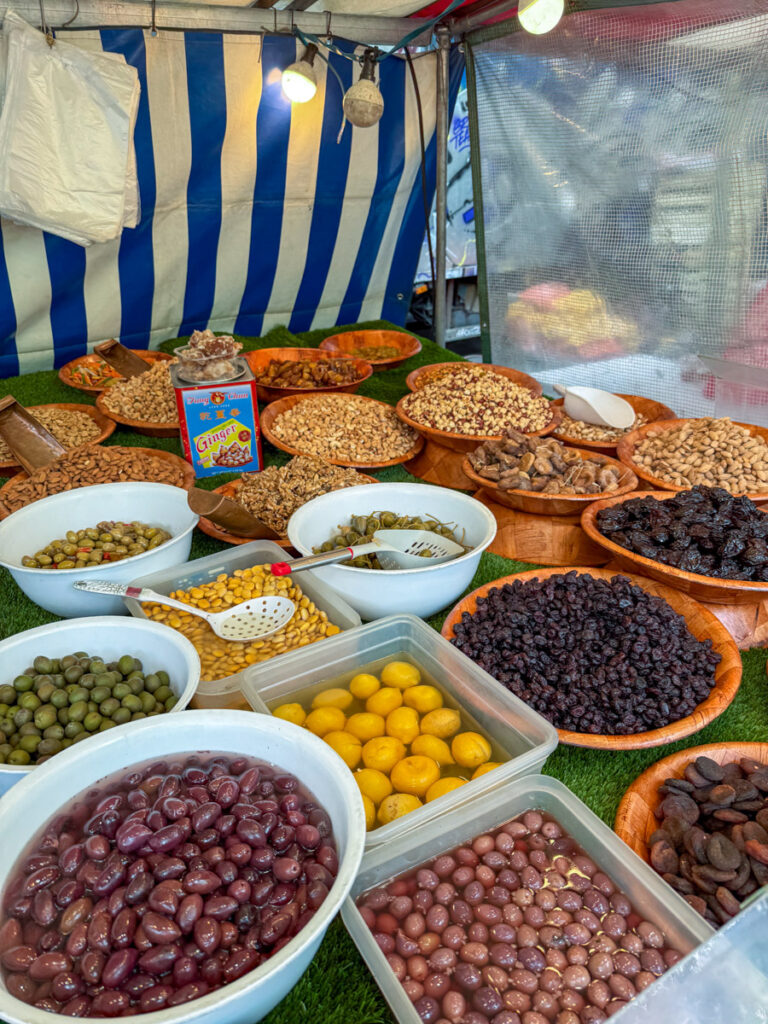
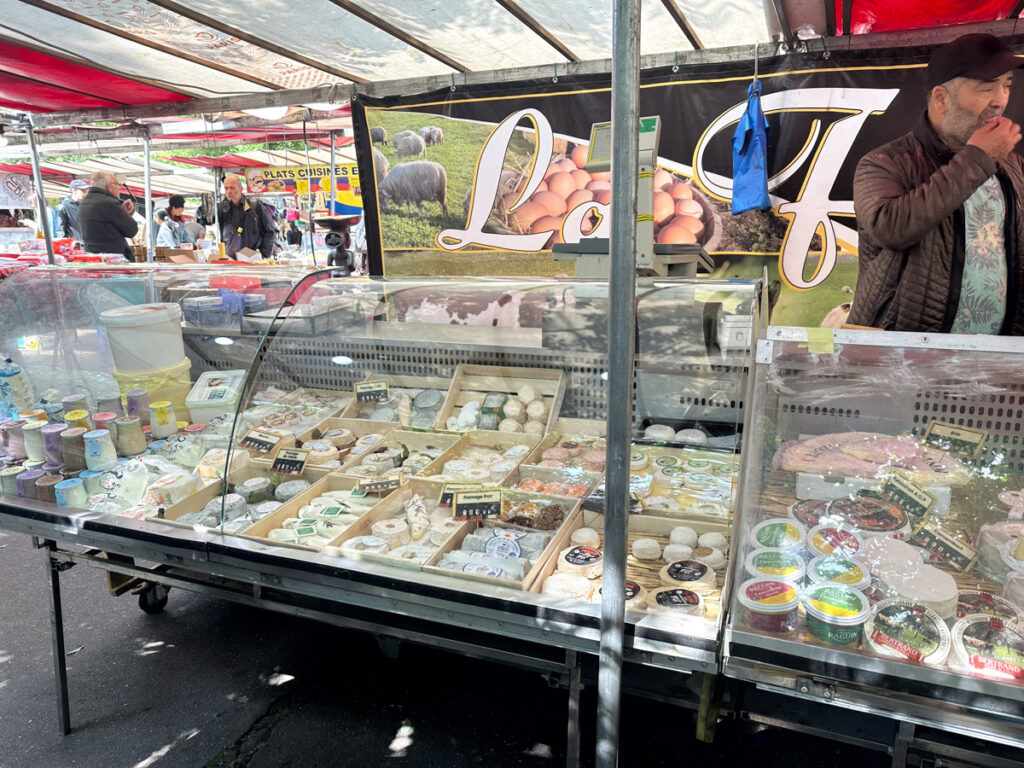
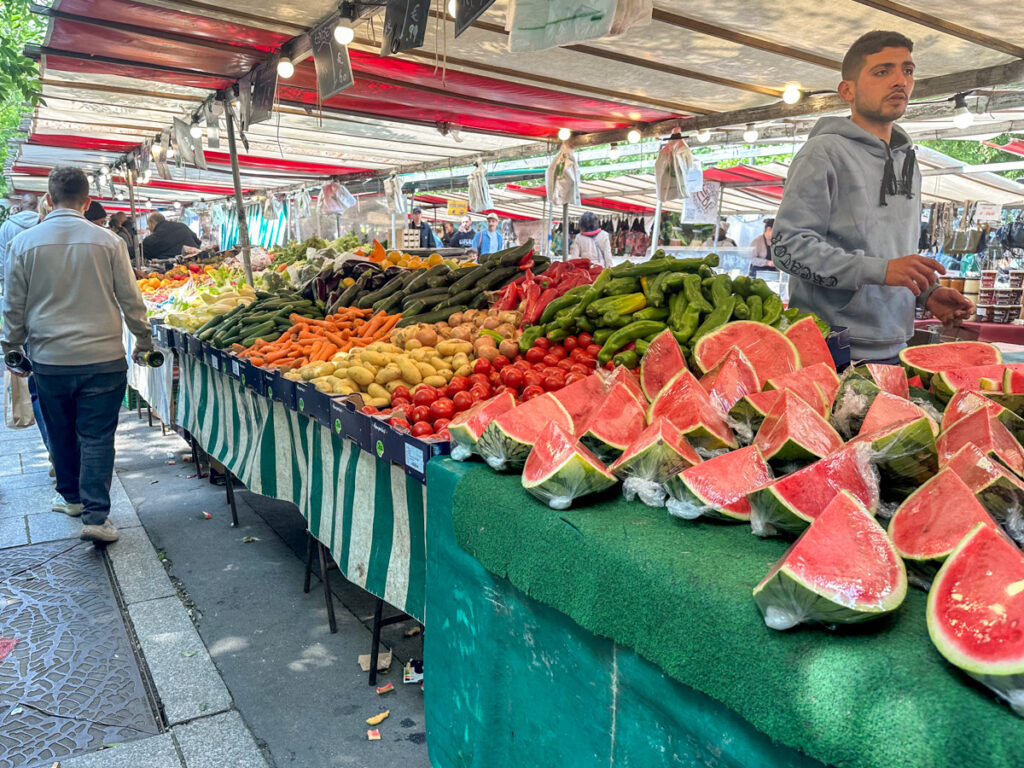
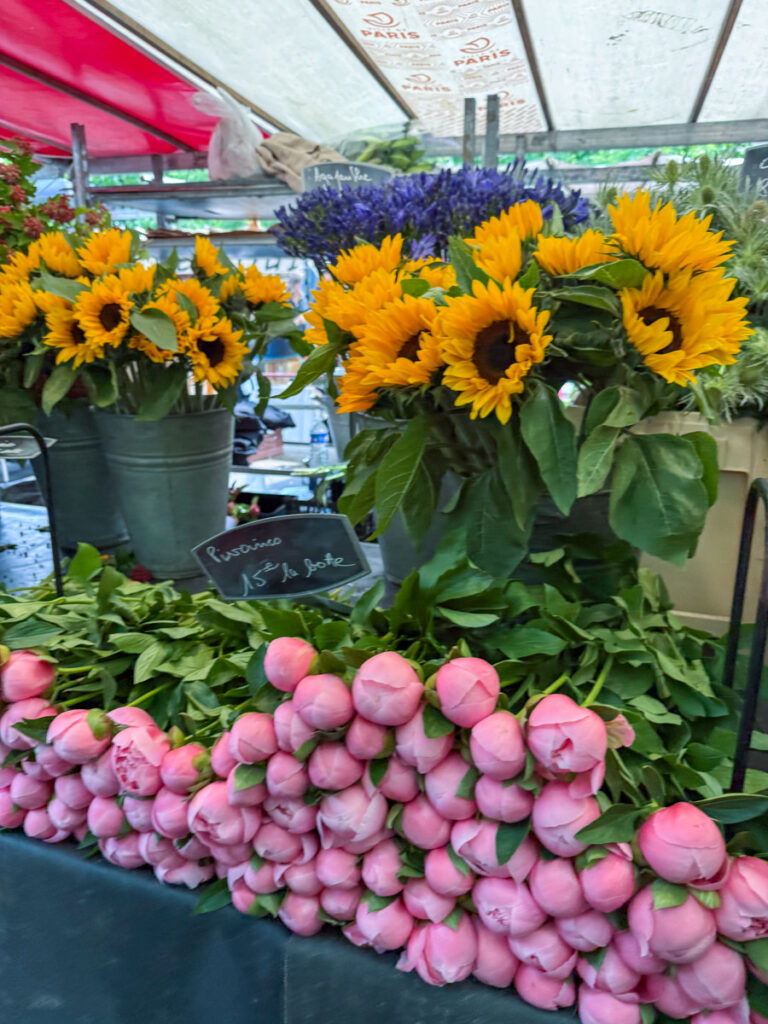
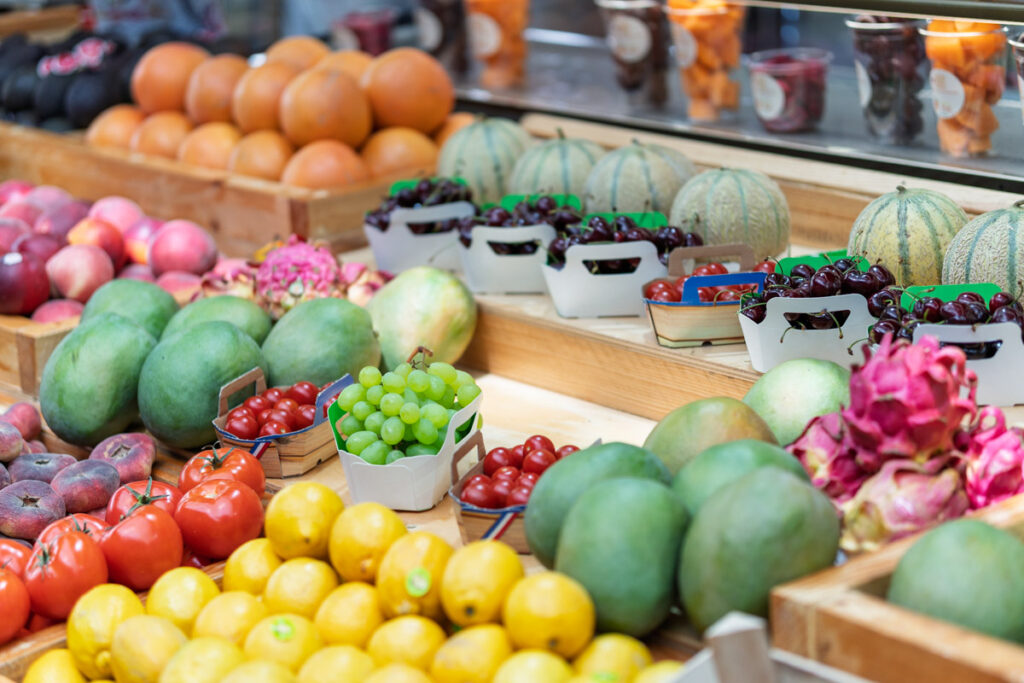
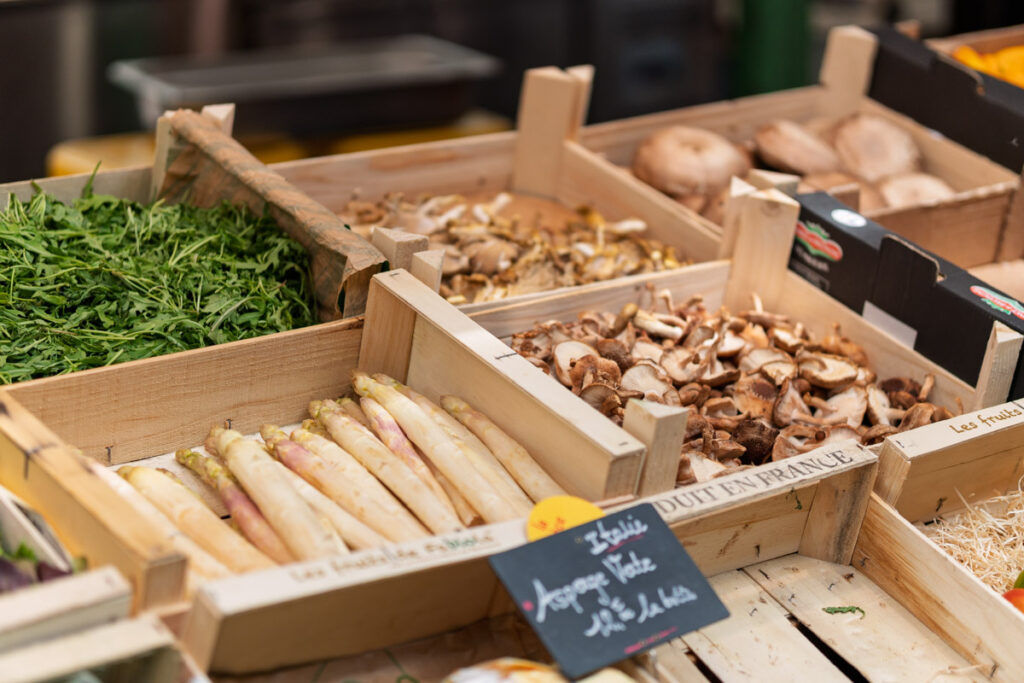
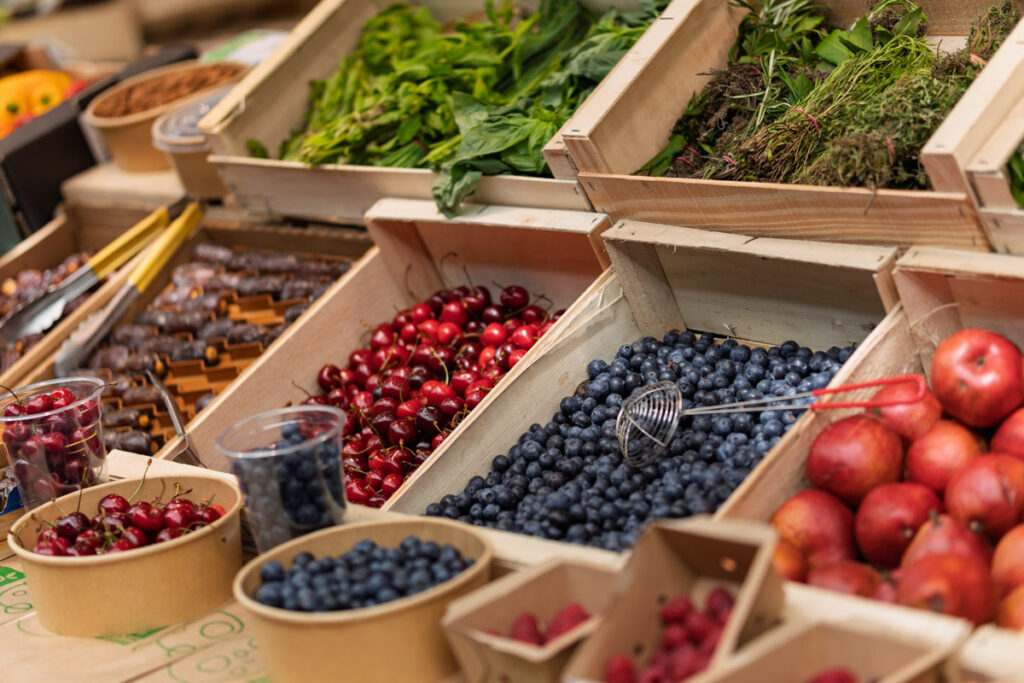
Maya and I had some galettes that featured a zaatar spice and tangy sauce and was filled with falafel. Sean and Ian went hunting for food they wanted. Sean wound up with a ham, potato, Emmental, and raclette galette, and Ian wound up with a Nutella crepe. After we ate, we took a little spin through the market. There was gorgeous fresh produce, seafood, meats, cheese and so many handmade and cooked-on-site foods. I would have liked to purchase any number of delicious food items to haul back to our apartment, but thanks to the lateness with which we started and our side quest through the flea markets, we didn’t really have a lot of time.
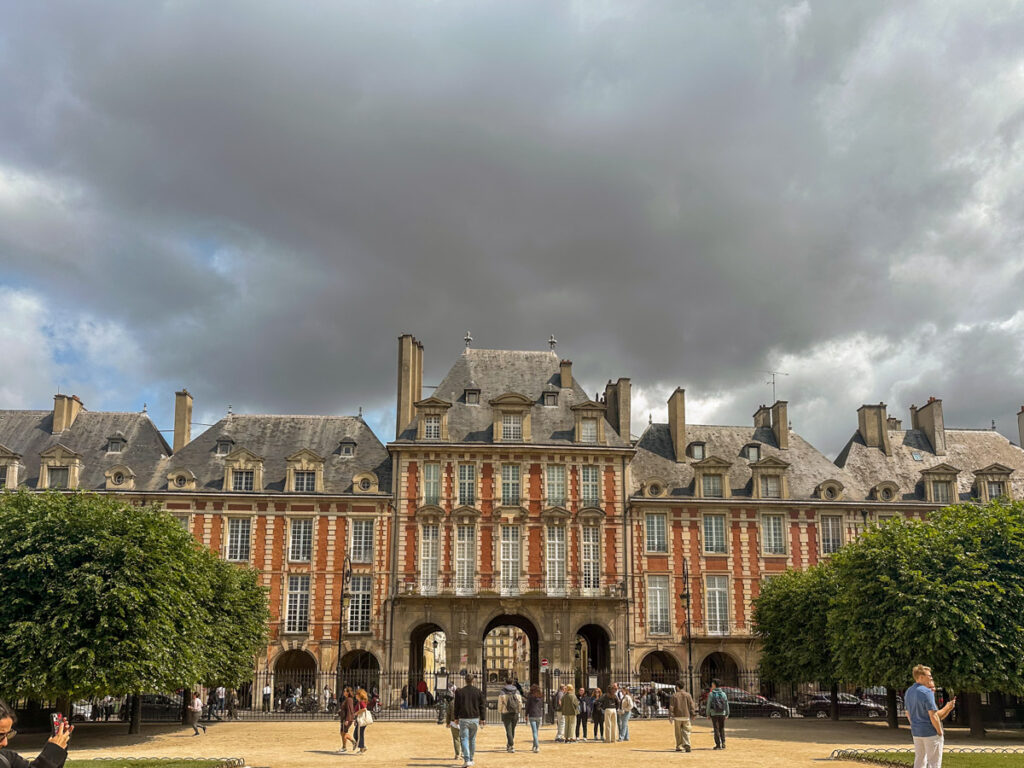
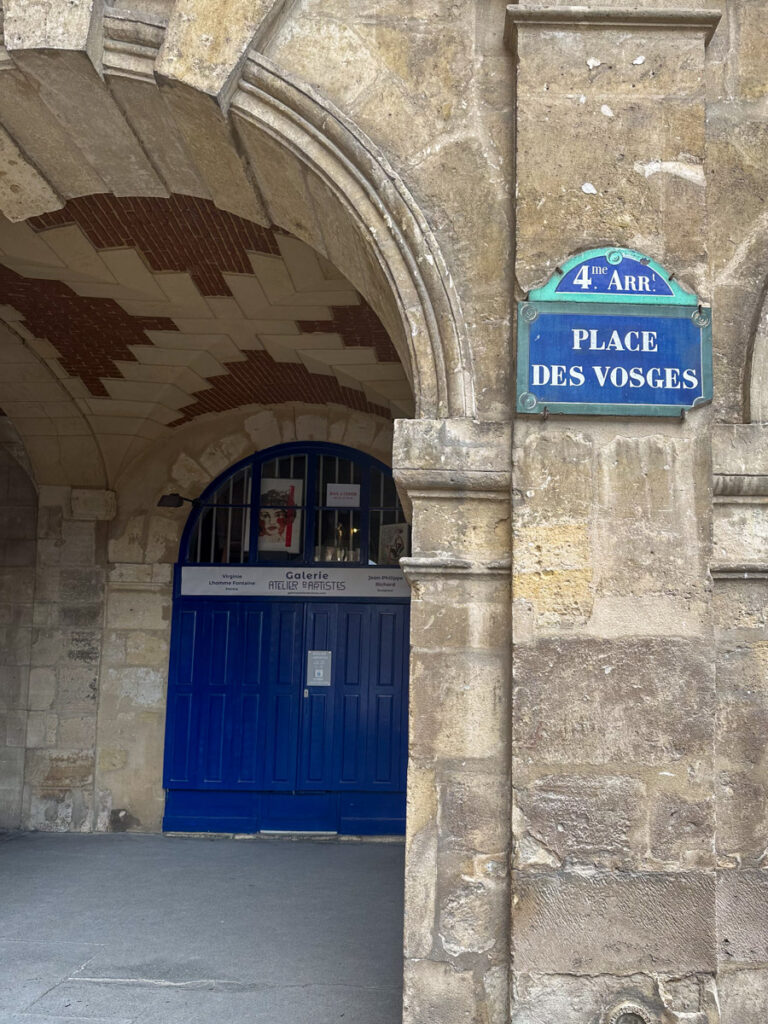
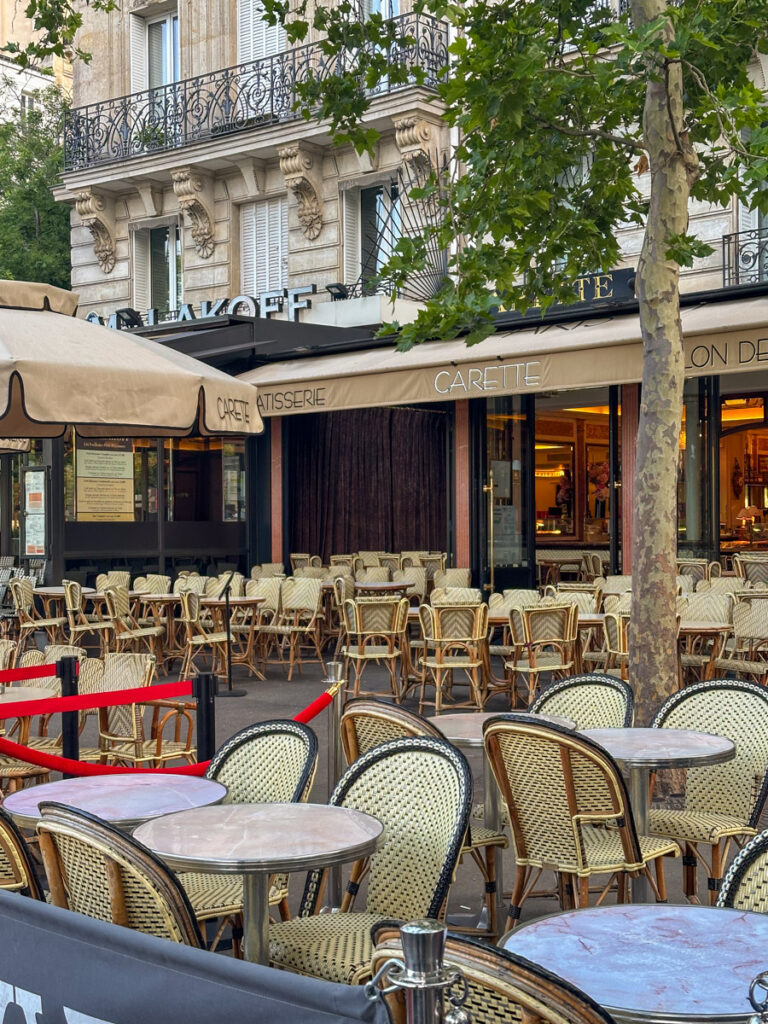
Instead we wandered up through Place des Vosges in search of some of Paris’s famous thick hot chocolate. One of Carette’s locations is in Place des Vosges, and so we thought we’d pop in for a hot chocolate. Alas, the line was so terrifically long, there was no way we would get seated and enjoy our chocolate in time to make our first timed museum of the day.
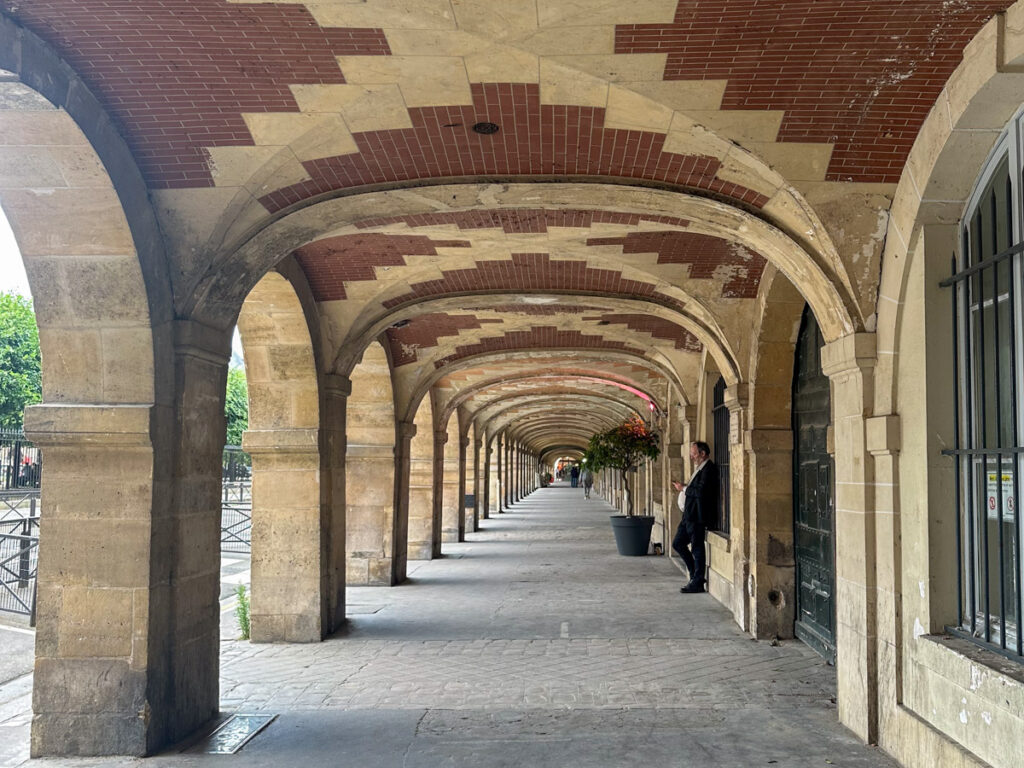
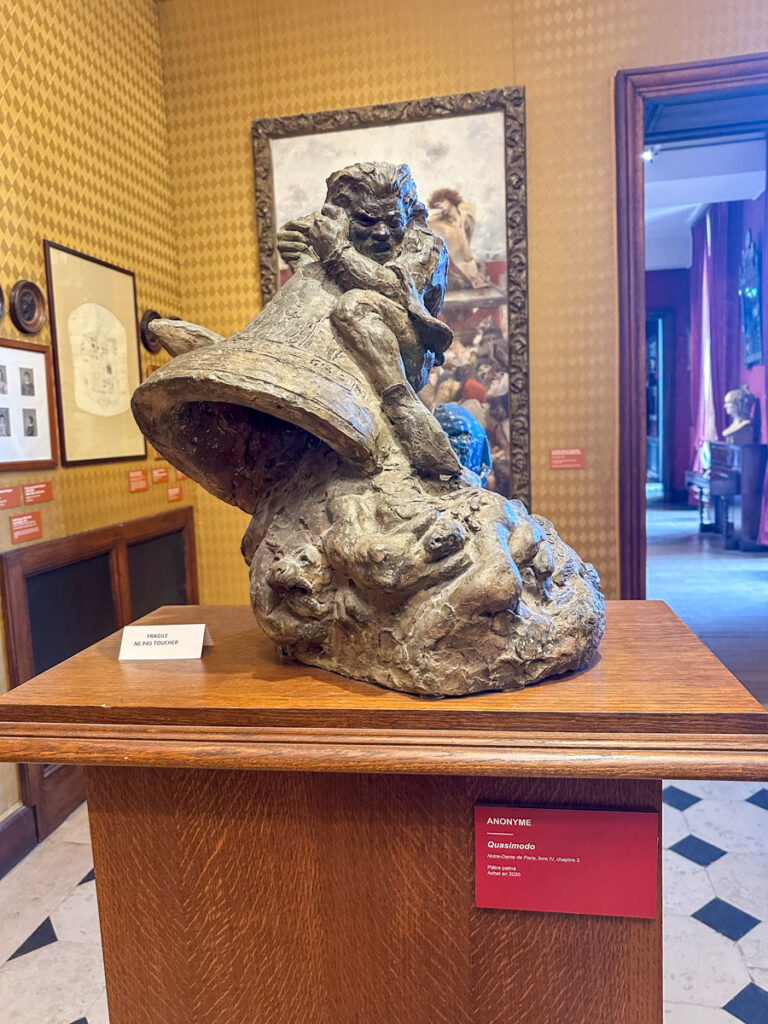
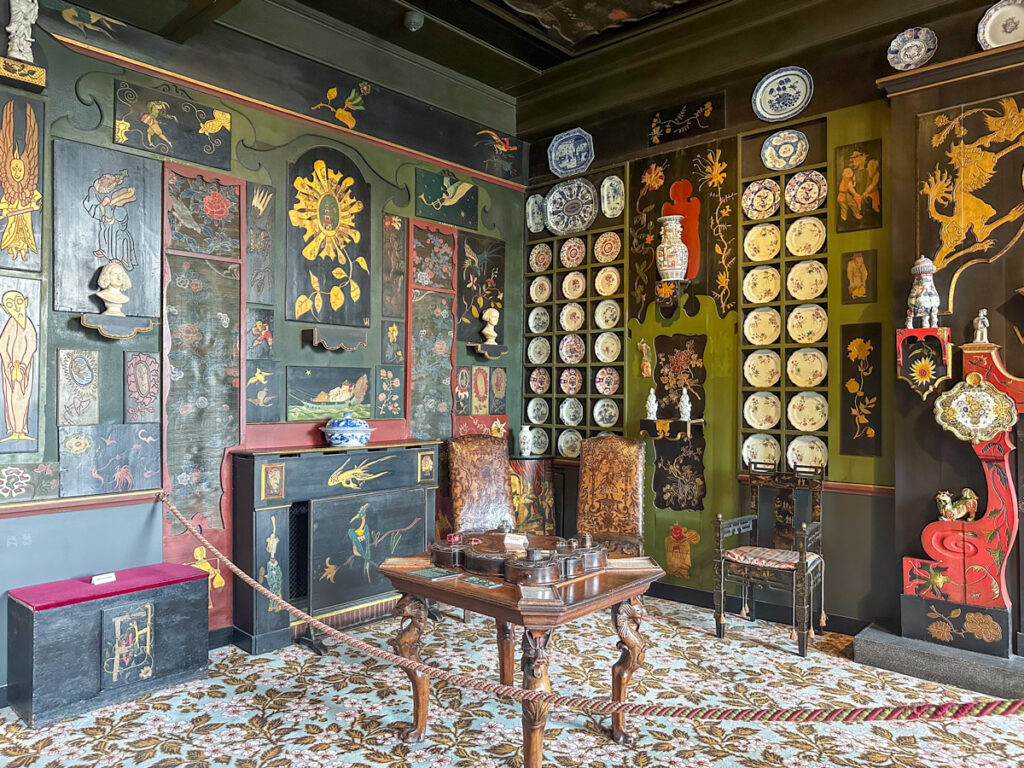
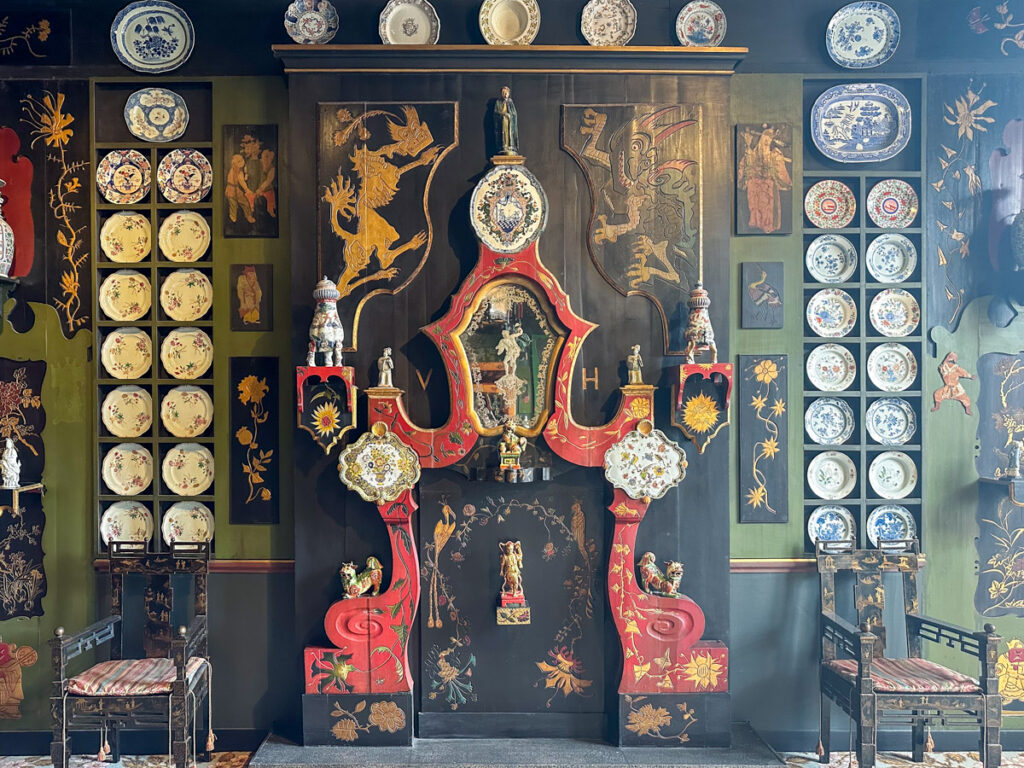
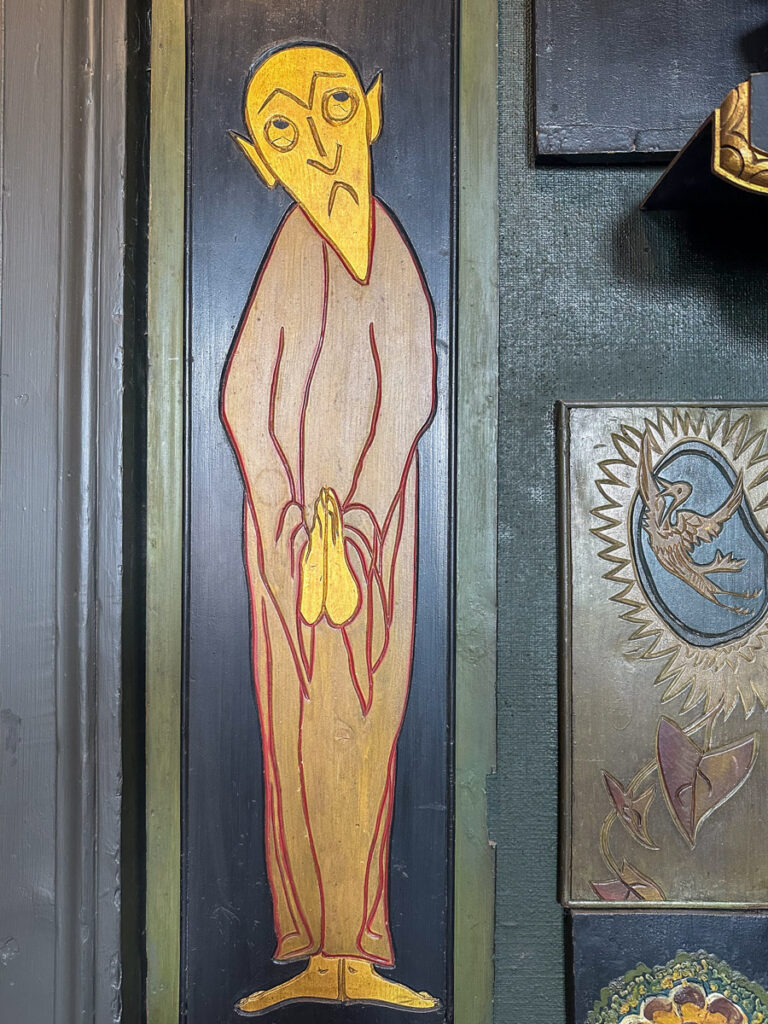
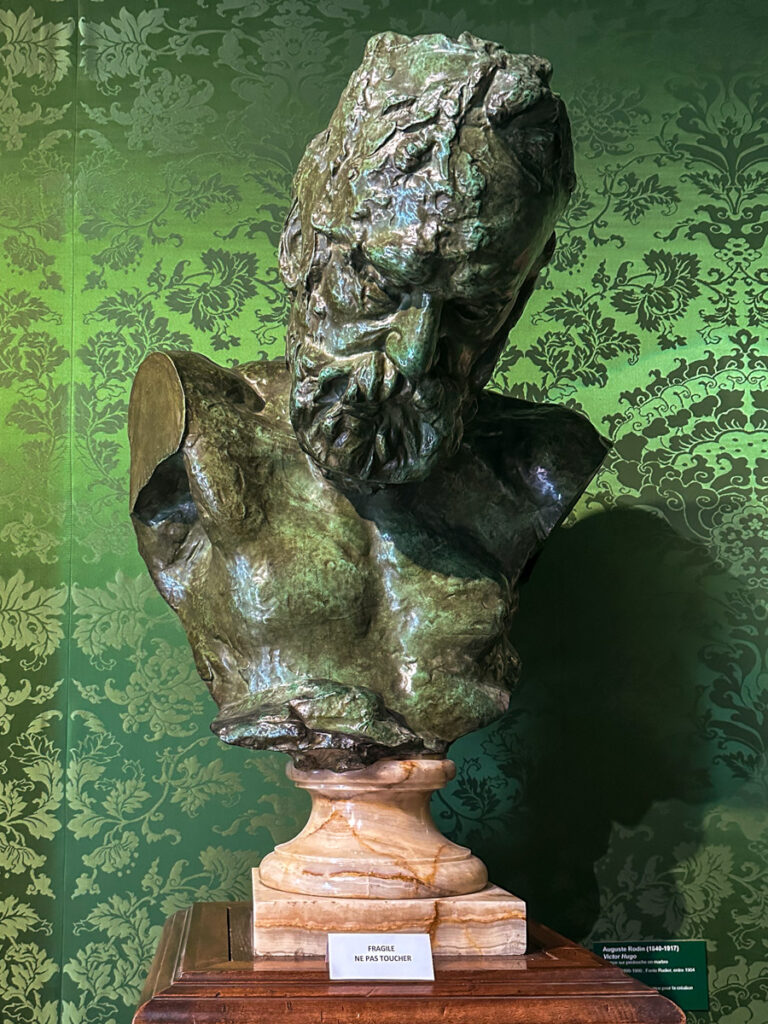
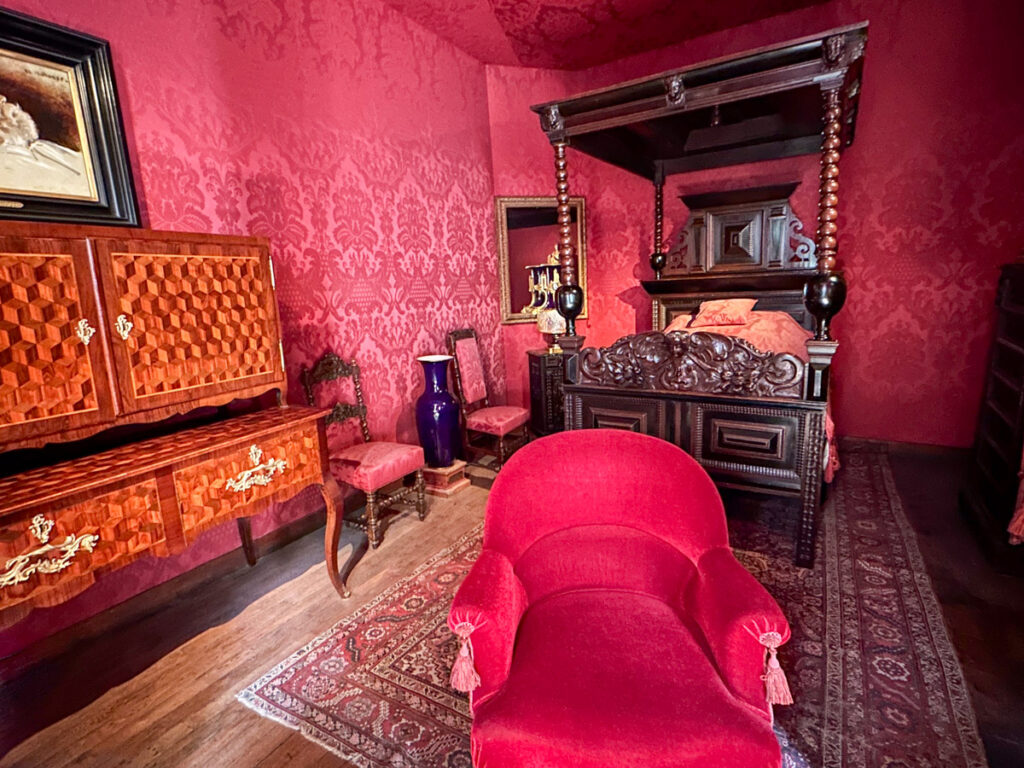
Instead, we took a little time to visit Maison Victor Hugo. This is found right in Place des Vosges and its main exhibits are free to enter. Victor Hugo, probably most famous for Les Miserables and The Hunchback of Notre Dame, lived in Paris for quite a time. The maison (house) is now a museum, showing art, decor, and furnishings.
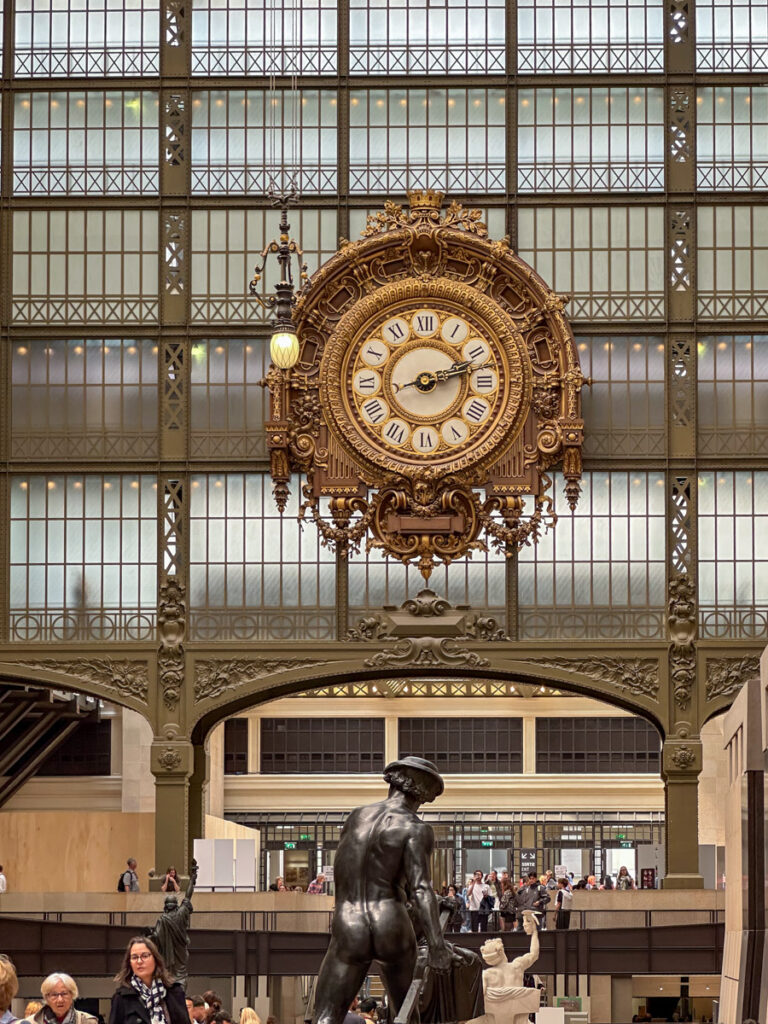
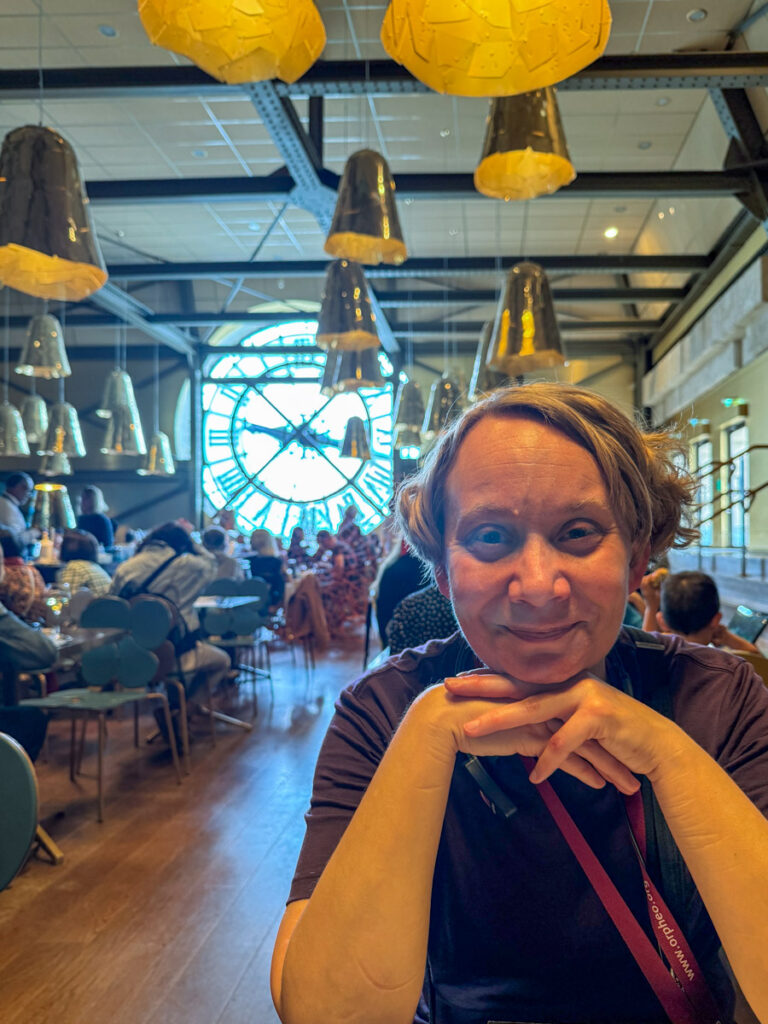
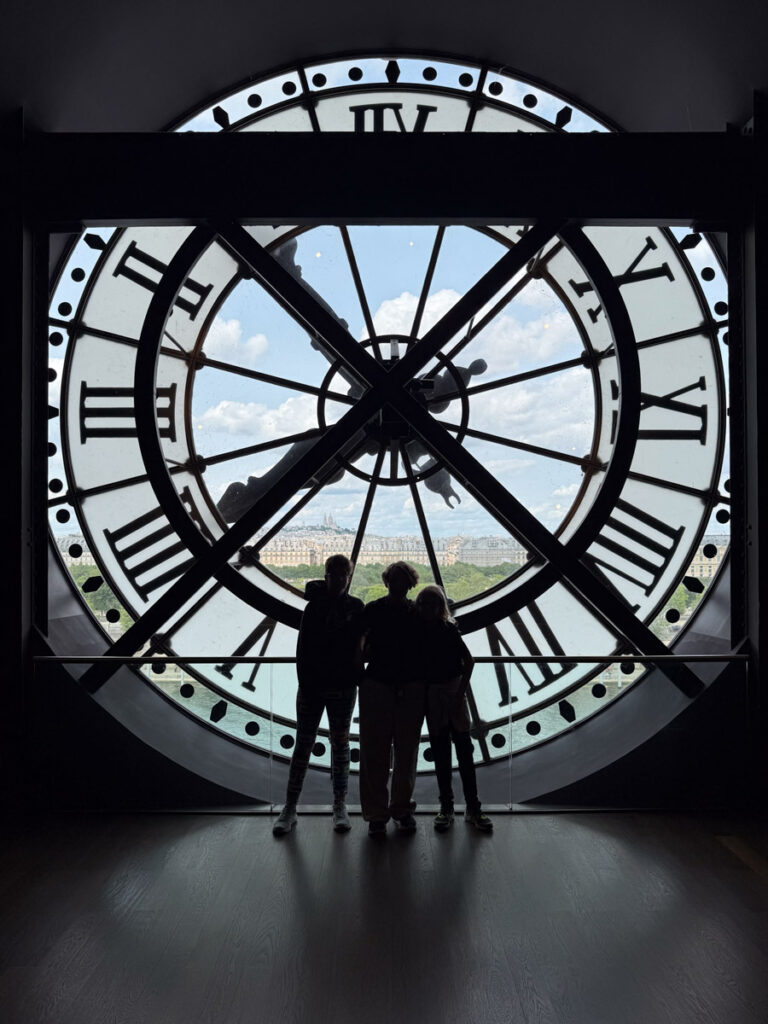
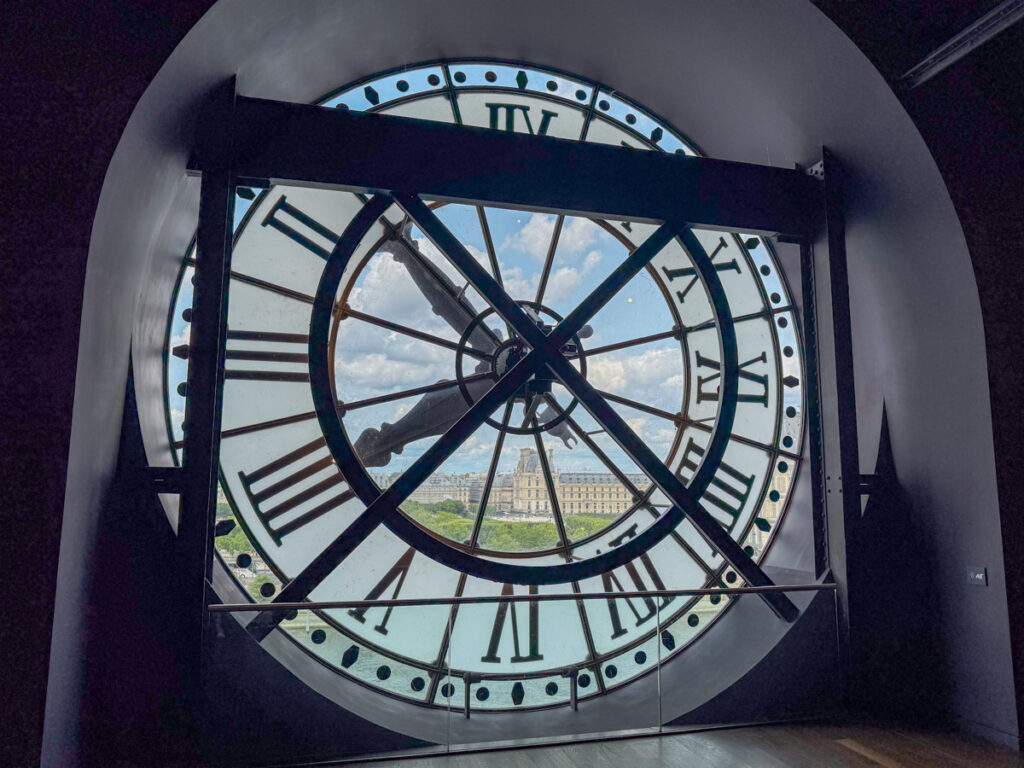
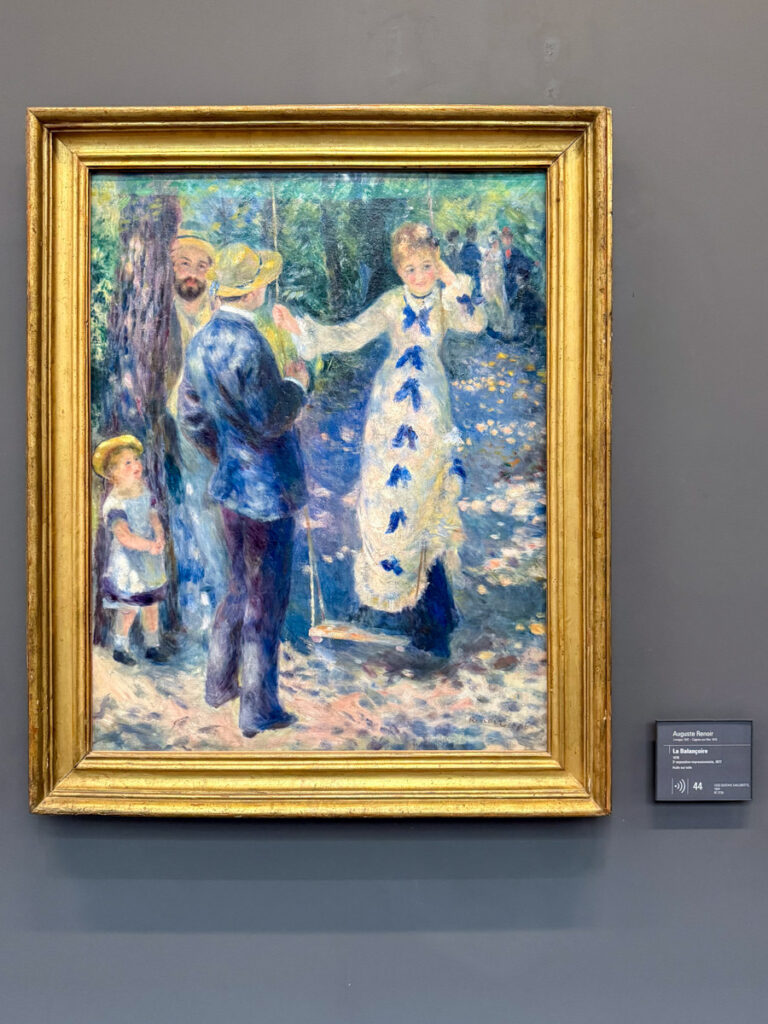
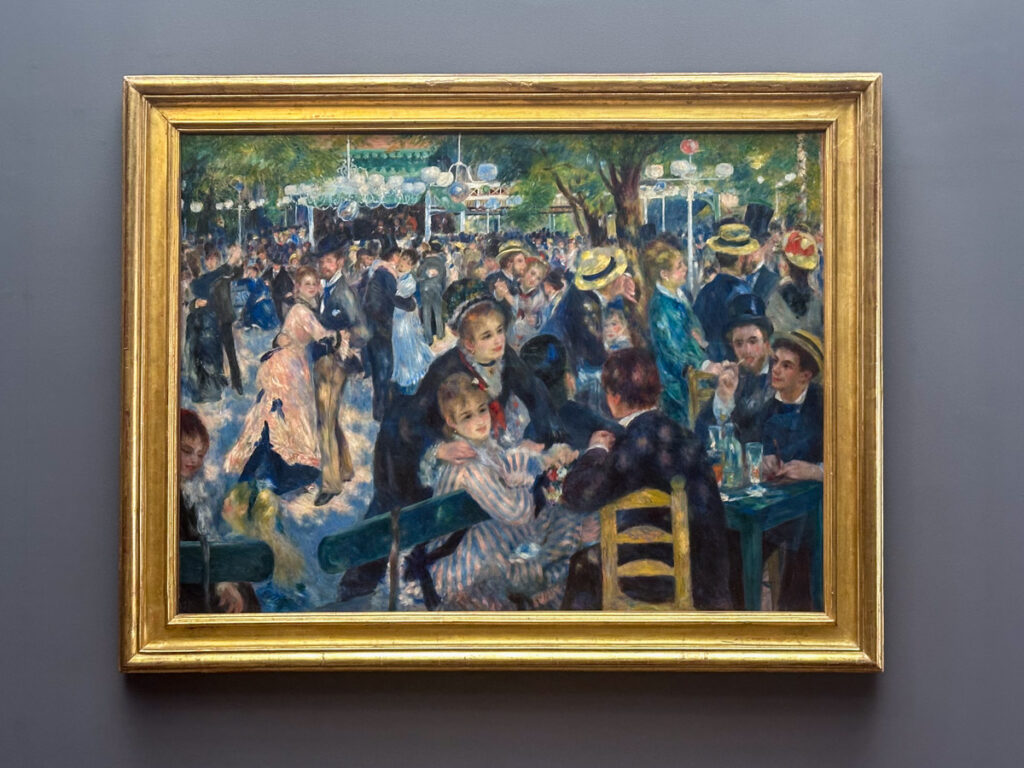
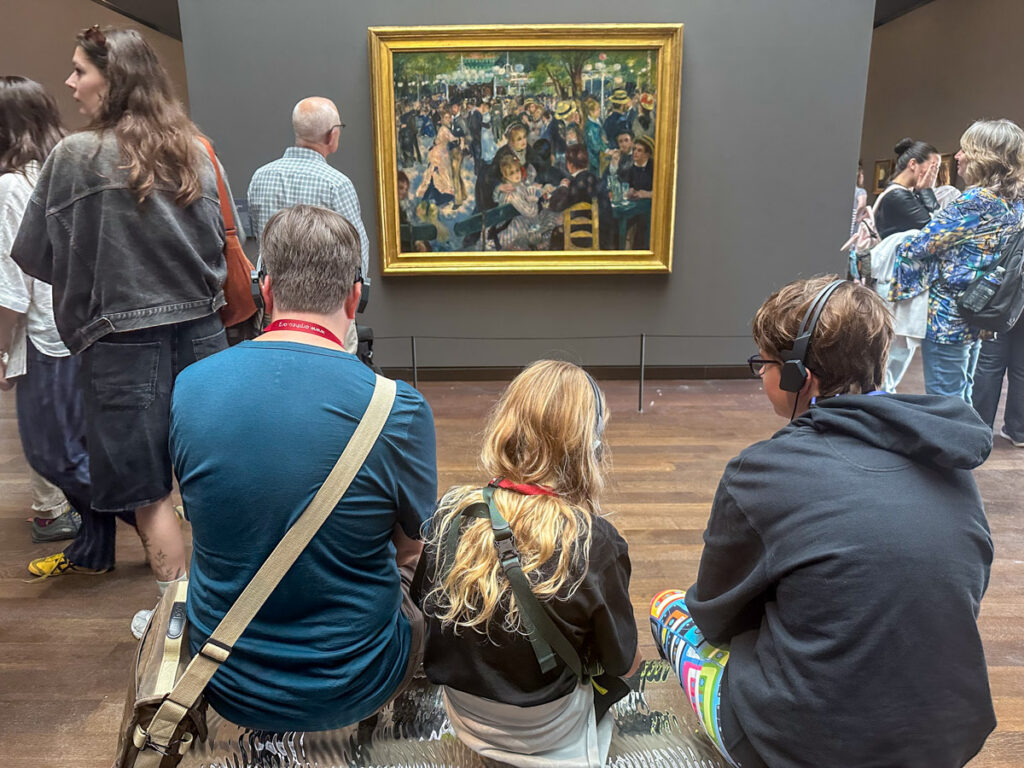
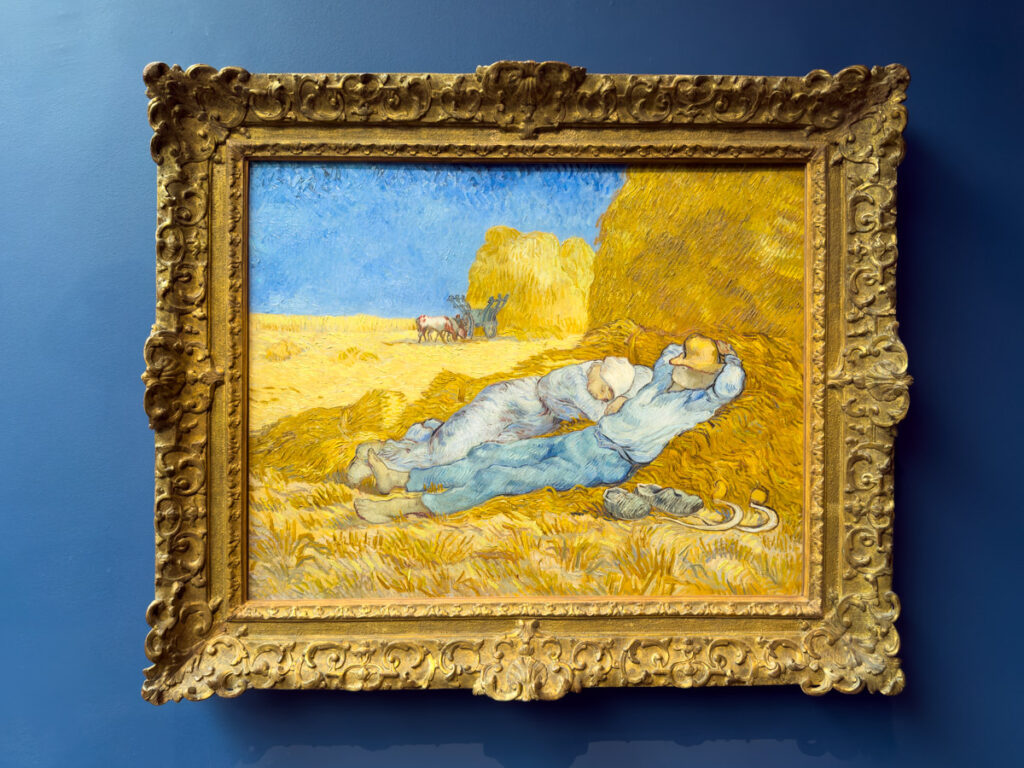
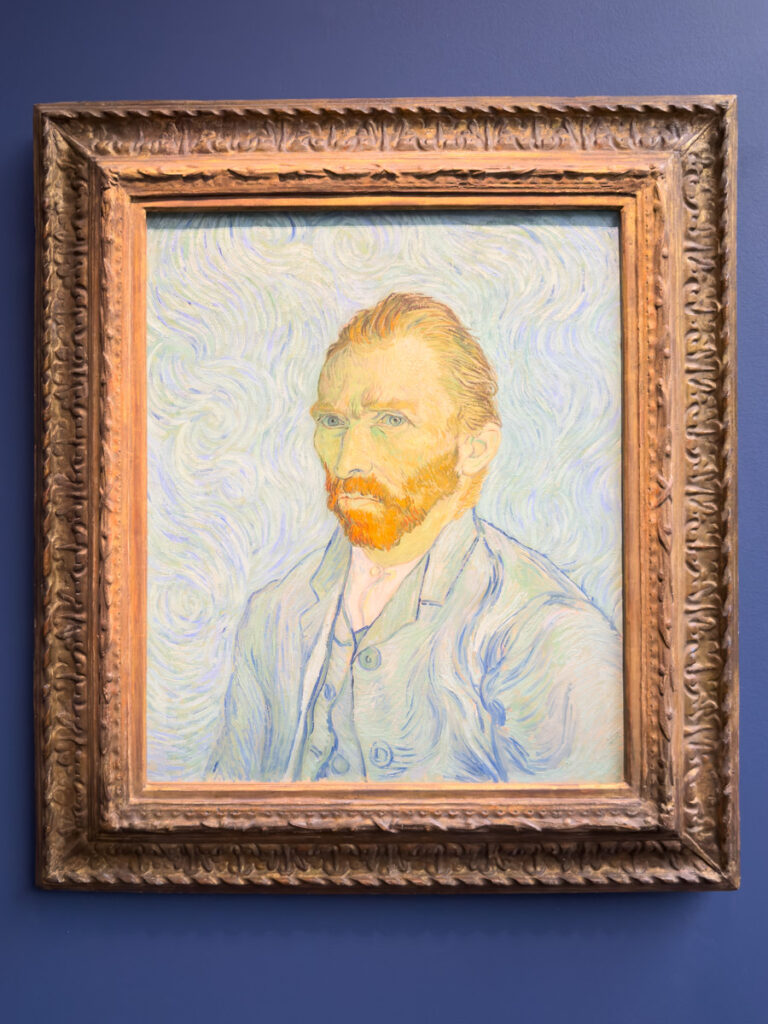
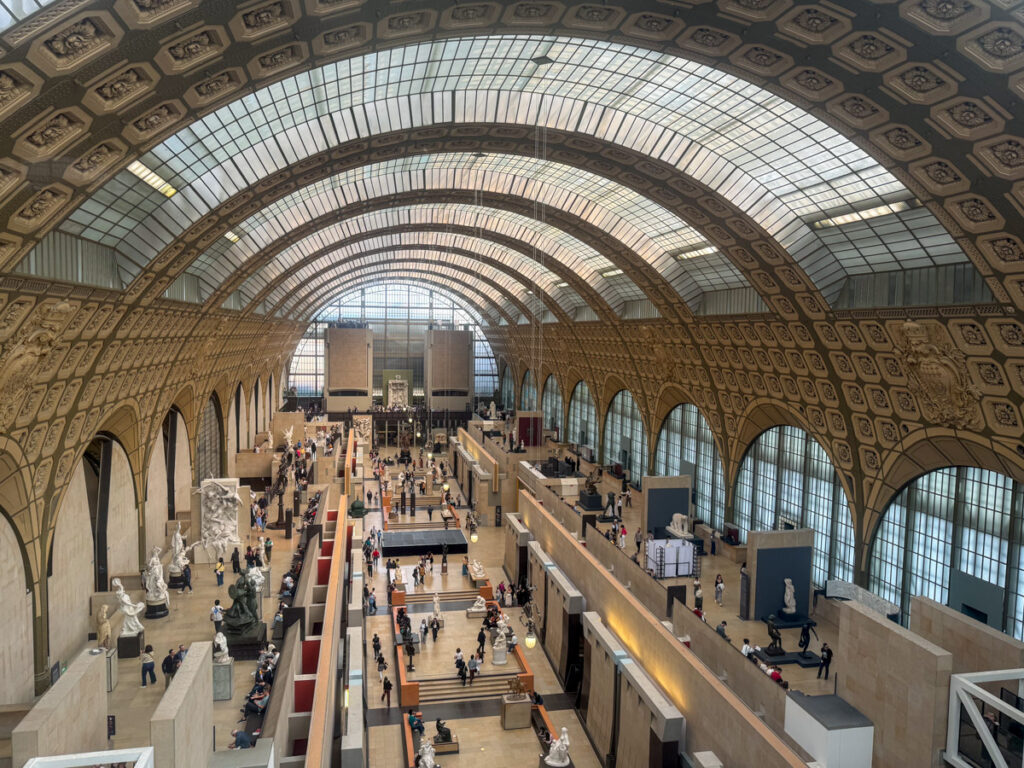
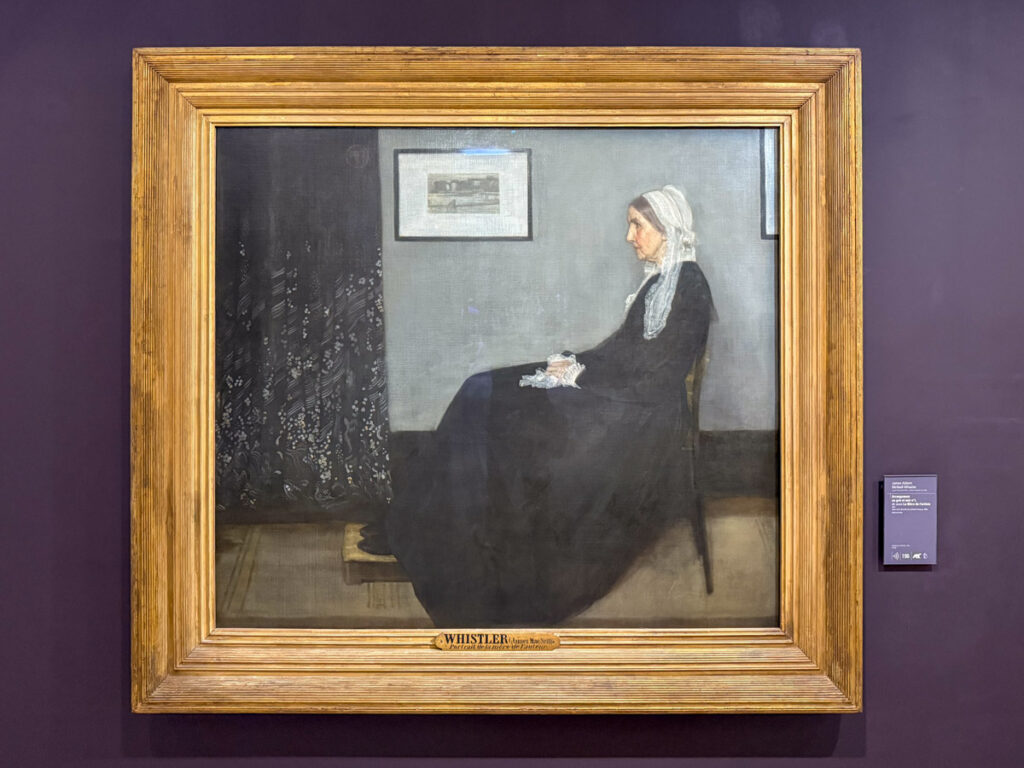
We metroed over to Musee d’Orsay for our 1:30p (13:30) timed entry. This is a more manageably sized museum than the Louvre, so just to see if we would like them, I sprung for audio guides at this location. Housed in what used to be a train station, the museum has a glass-topped central area that is huge and open. Various floors of side rooms are organized by time period. After absorbing art for an hour or so, we stopped in and had late lunch at Cafe Campana inside the museum, which I thought would be fun because the restaurant features one of the museum’s big see-through clocks. The meal was fine, and we were able to sit for a bit, which was nice given how much walking we’d done. We again had the experience that if you weren’t Johnny on the spot with your ordering, you may wait a while to see a server again.
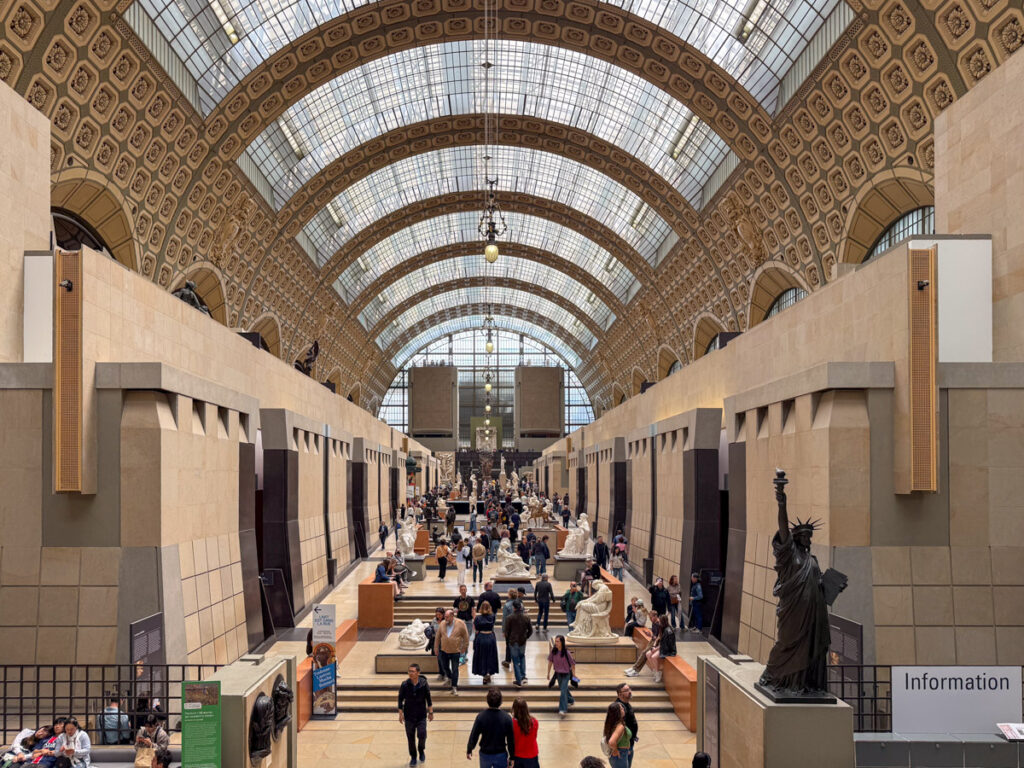
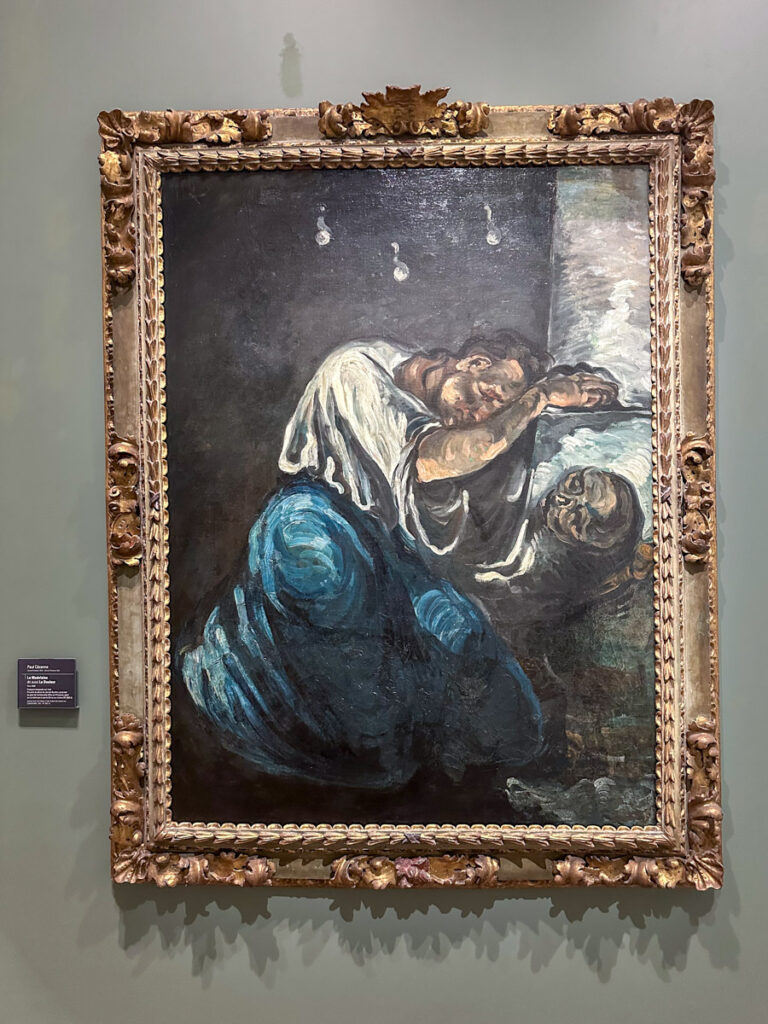
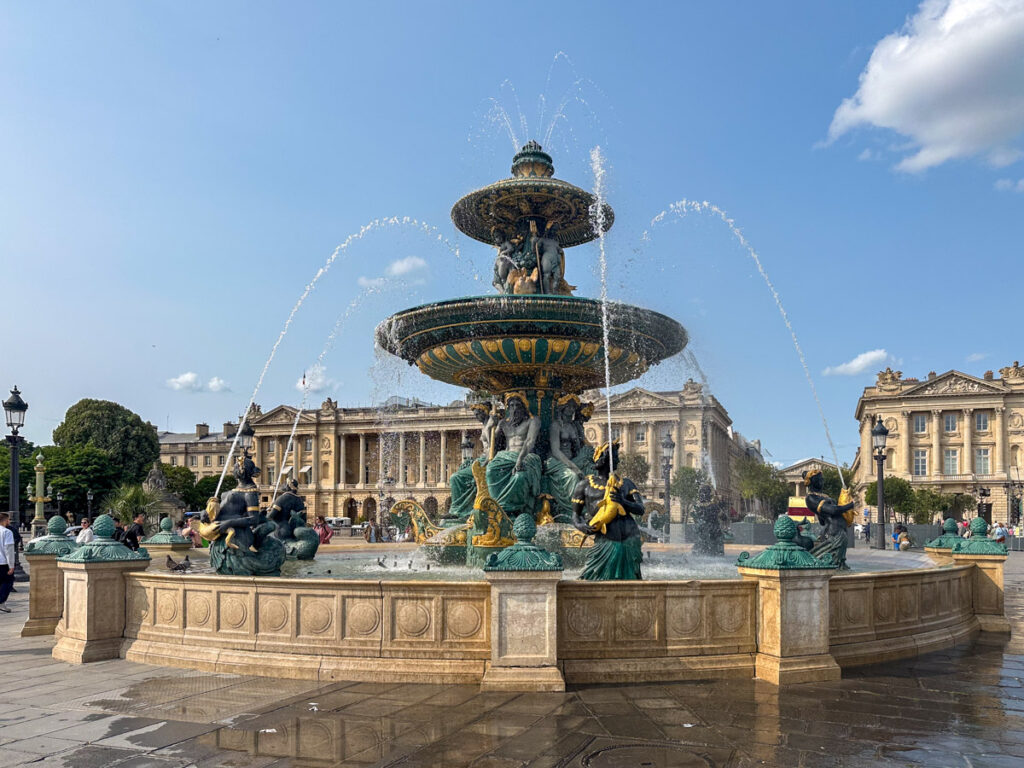
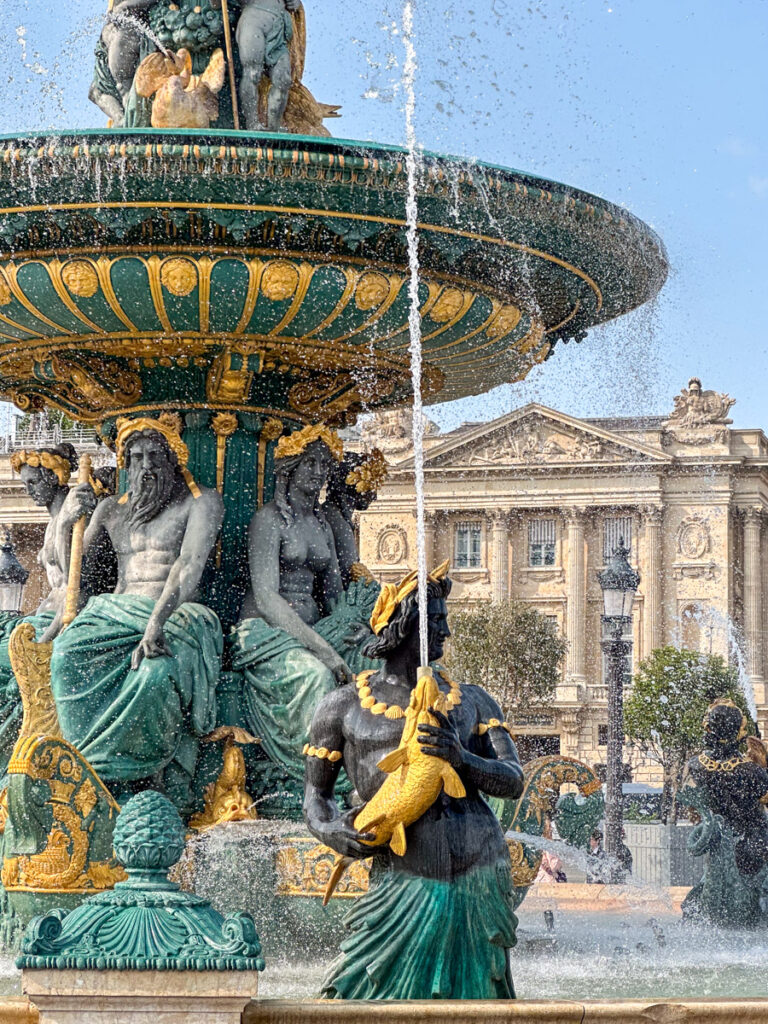
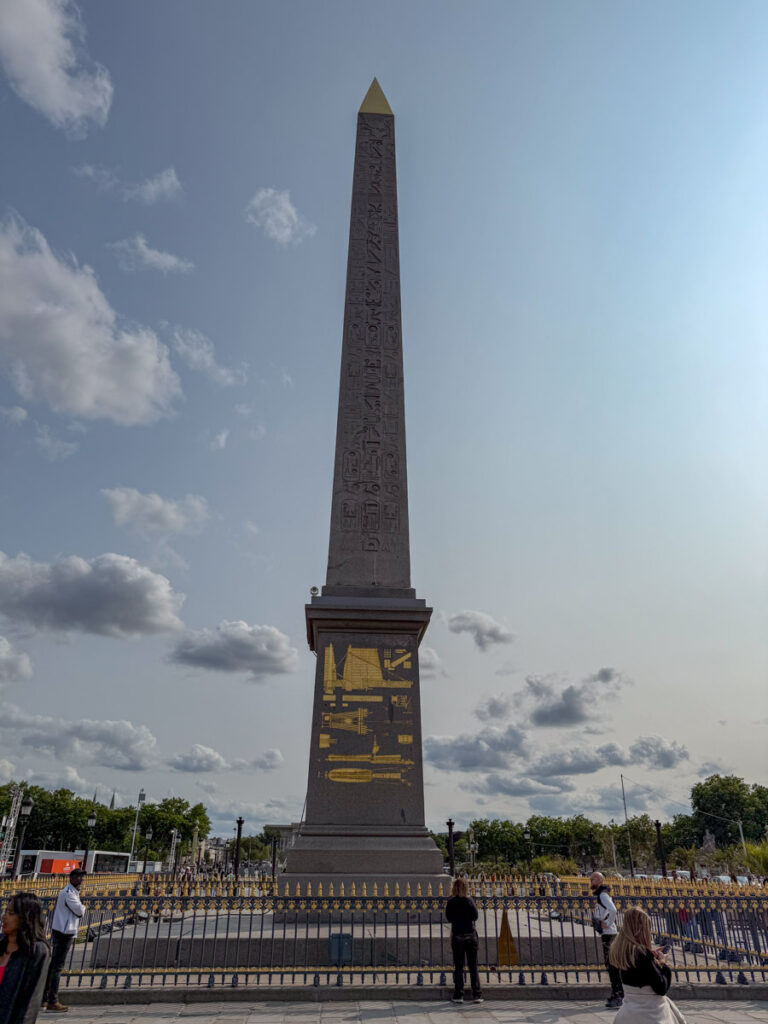
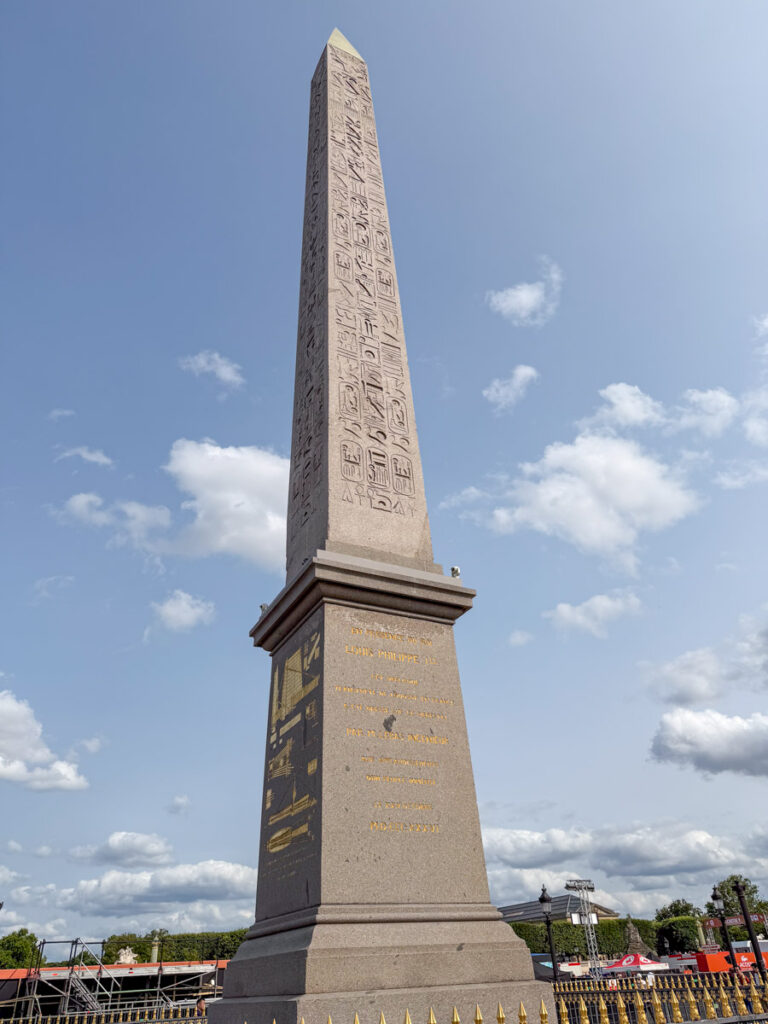
After lunch, we finished out our museum visit, filled with artists you’ve definitely heard of and paintings and sculptures you’d definitely recognize. Afterward, we headed out to Place de la Concorde, thinking we’d wander around and see the pretty scenery there and at Pont Alexander III. Alas, the area was a complete madhouse. Sections of it were blocked off to enable a televised tennis match, I think. The French folks seemed to be very happy, so their players must have been doing well.
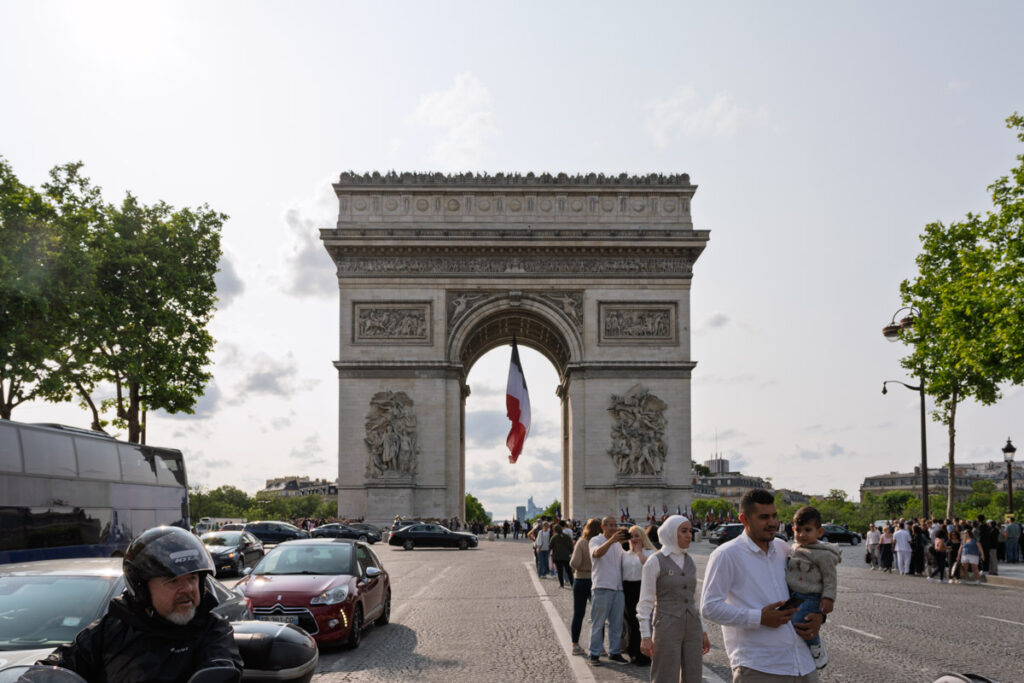
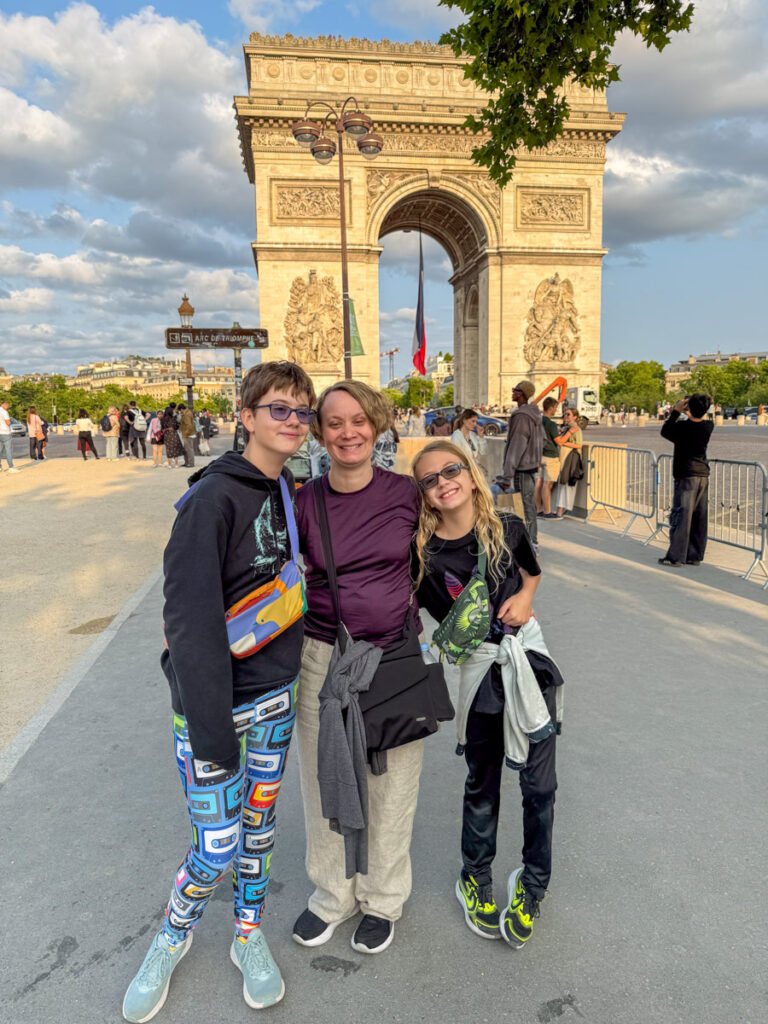
We had a long walk down iconic Champs-Elysees. A lot of people poo-poo this walk, griping that it’s a glorified shopping mall. And I suppose they aren’t wrong – I wouldn’t want to visit this street to shop for authentic French goods. But, there is something amazing about seeing that long, clear stretch to Arc de Triomphe from a distance and watching it loom larger and larger as you approach. Also many of the shops along Champs-Elysees are a little “extra,” and while I’m not a shopper, it was still fascinating.
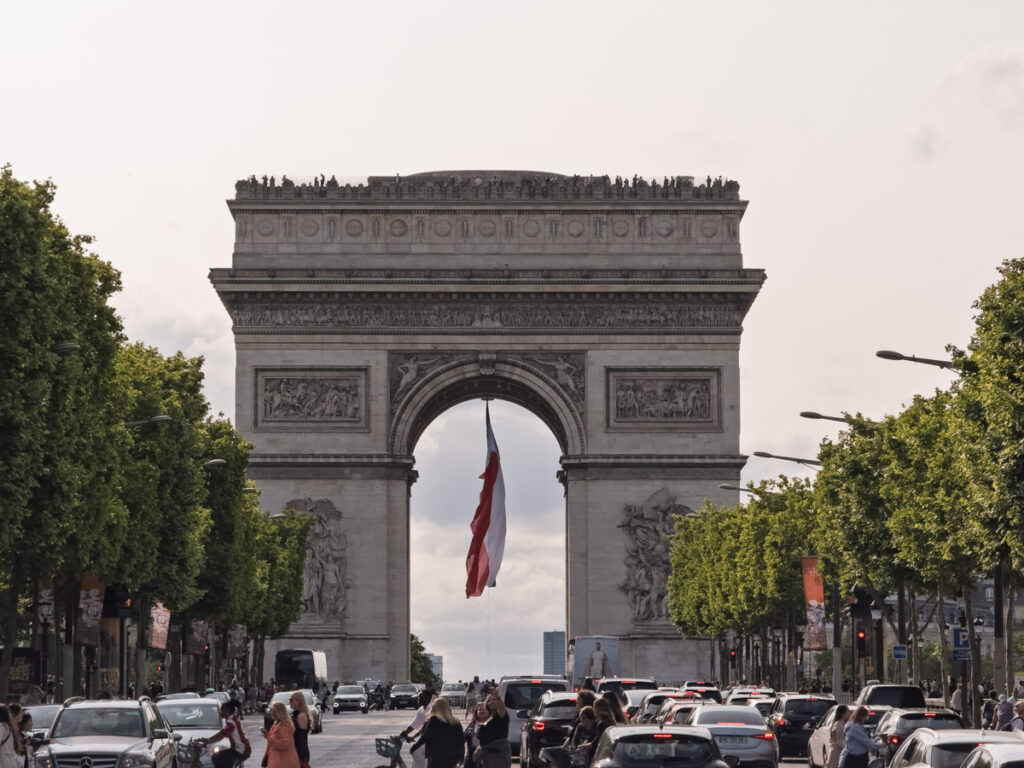
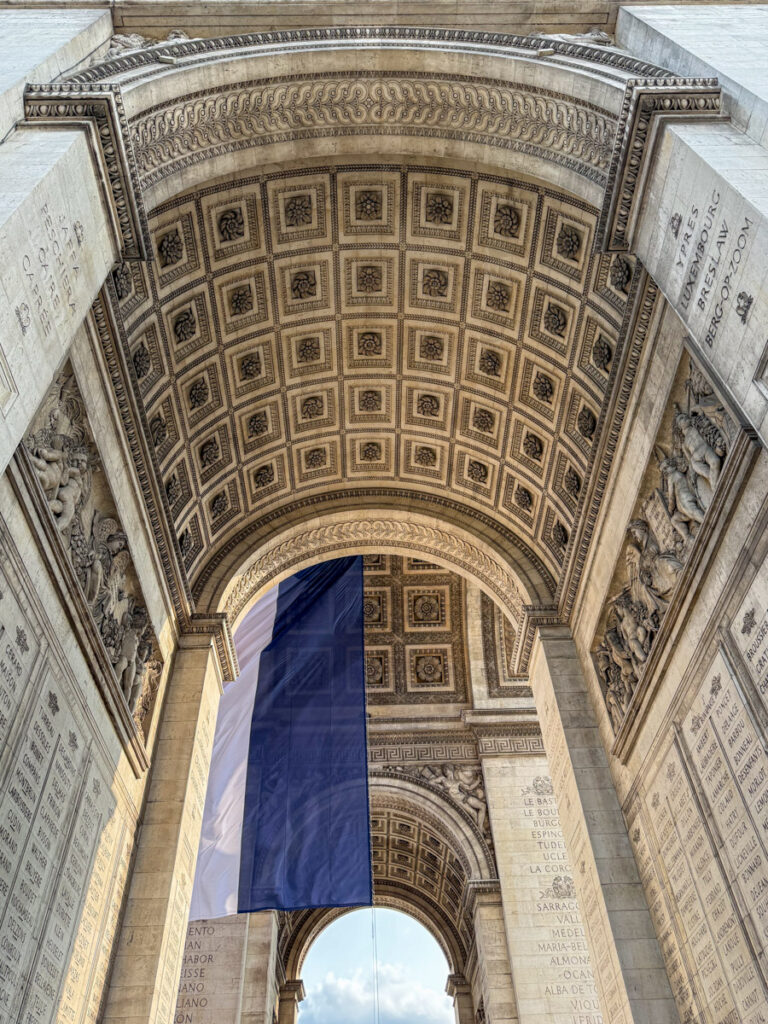
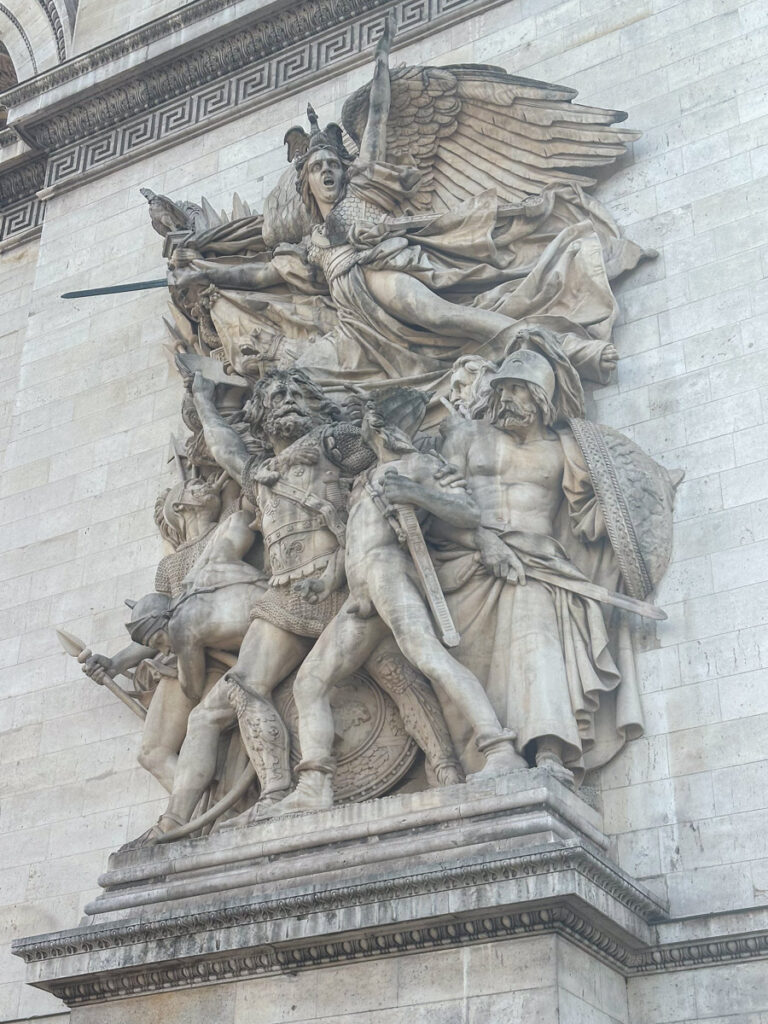
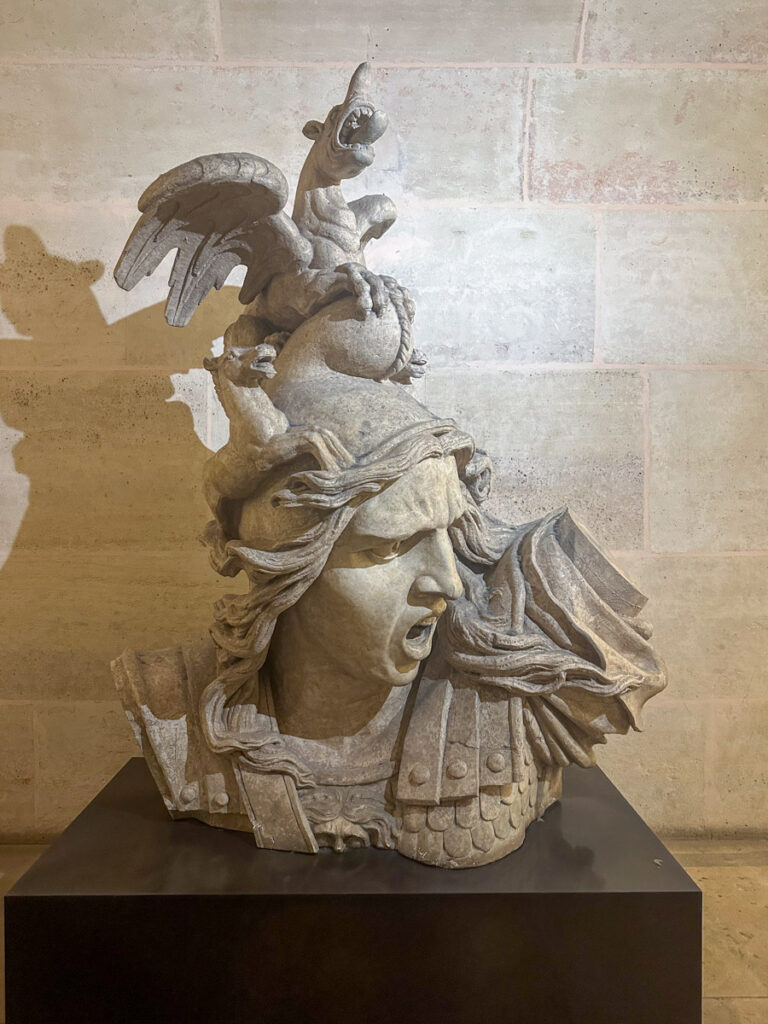
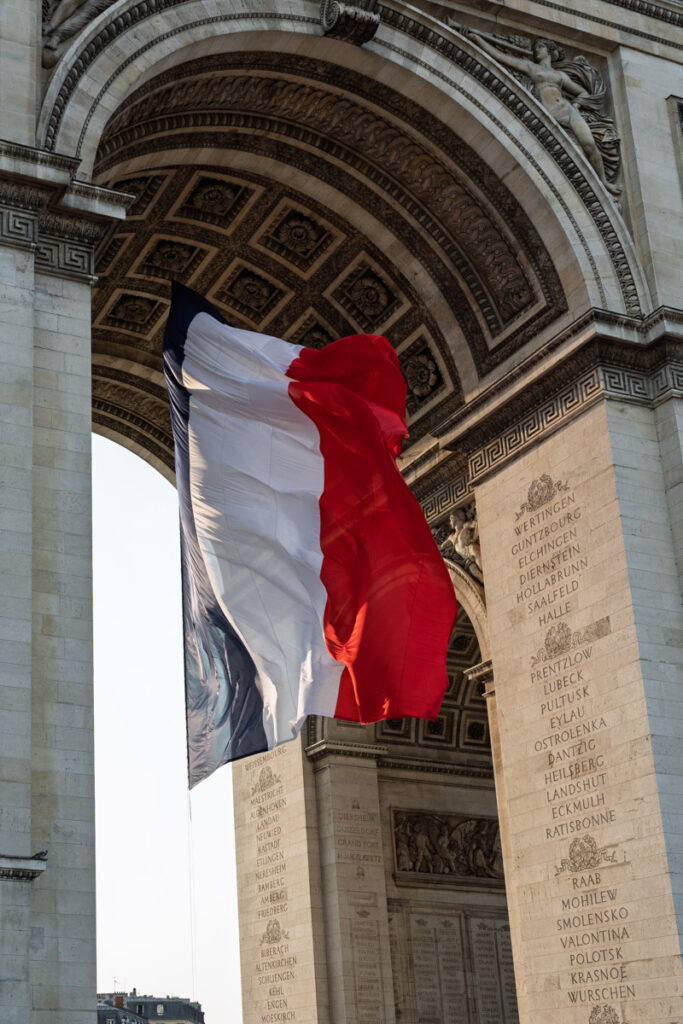
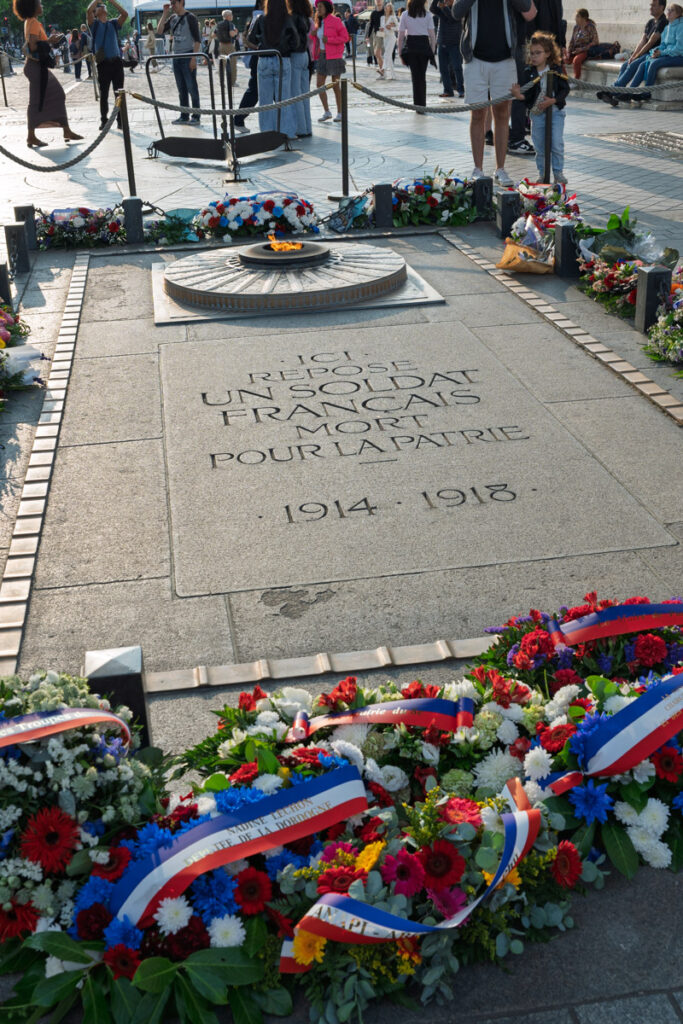
The Arc de Triomphe was commissioned by Napoleon in 1805. As it took 30 years to build and Napoleon died in 1821, he never got to see the finished product. Famously, in 1919, French pilot Charles Godefroy flew a biplane through the arc, a gesture commemorating the end of World War I. The Tomb of the Unknown Soldier, which lies beneath the arc, was inaugurated in 1920. Equipped with an eternal flame (much to Maya’s chagrin), it stands as a memorial to soldiers who lost their lives during “The Great War,” whose names remain unknown. It is said that out of respect, all military processions pass around the arc, not through it.
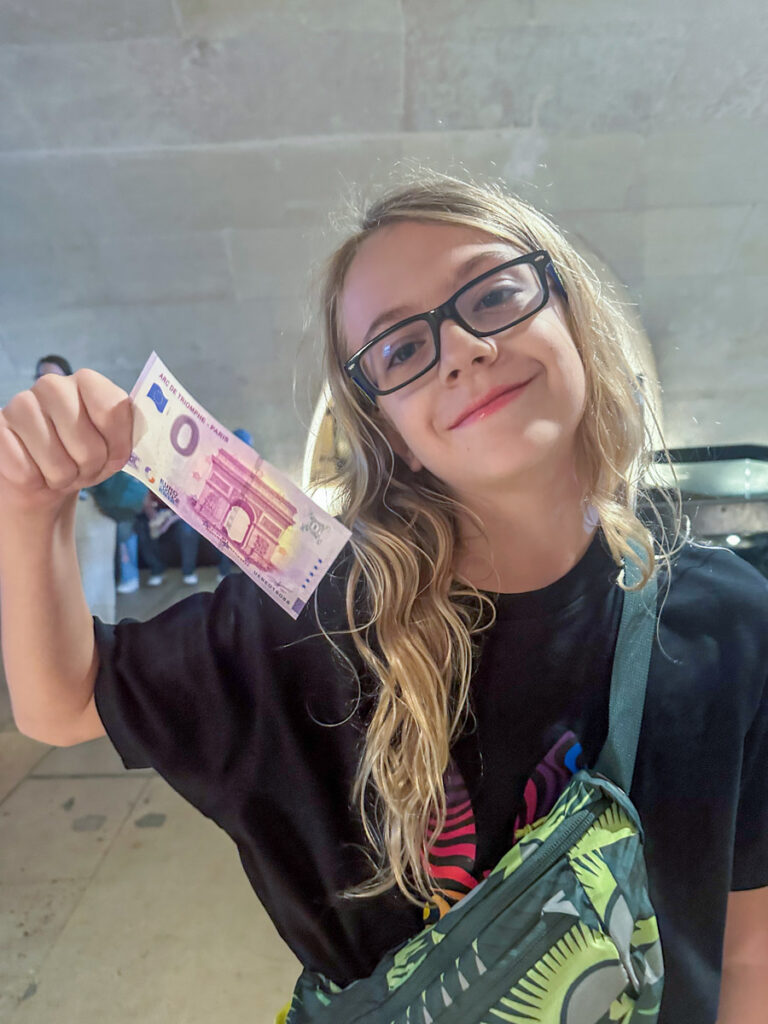
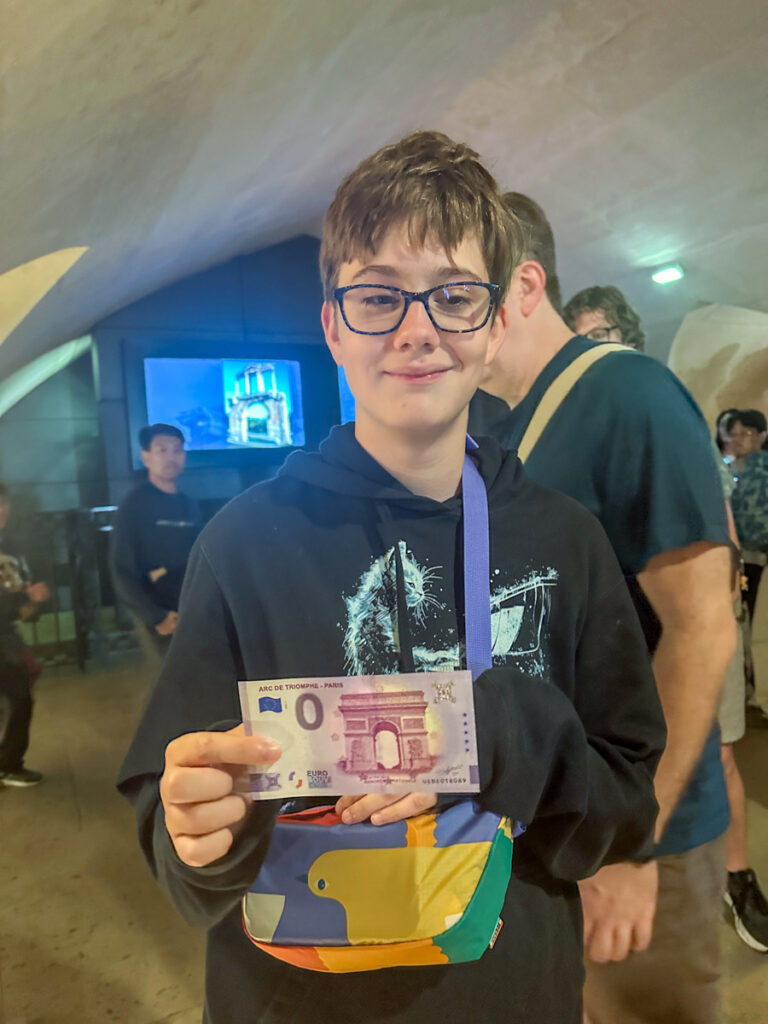
We had timed entry to Arc de Triomphe at 7:10 (19:10). As we approached, we saw a uniformed band playing. I looked it up; turns out it was for the National Day of Tribute to the Dead for France in Indochina.
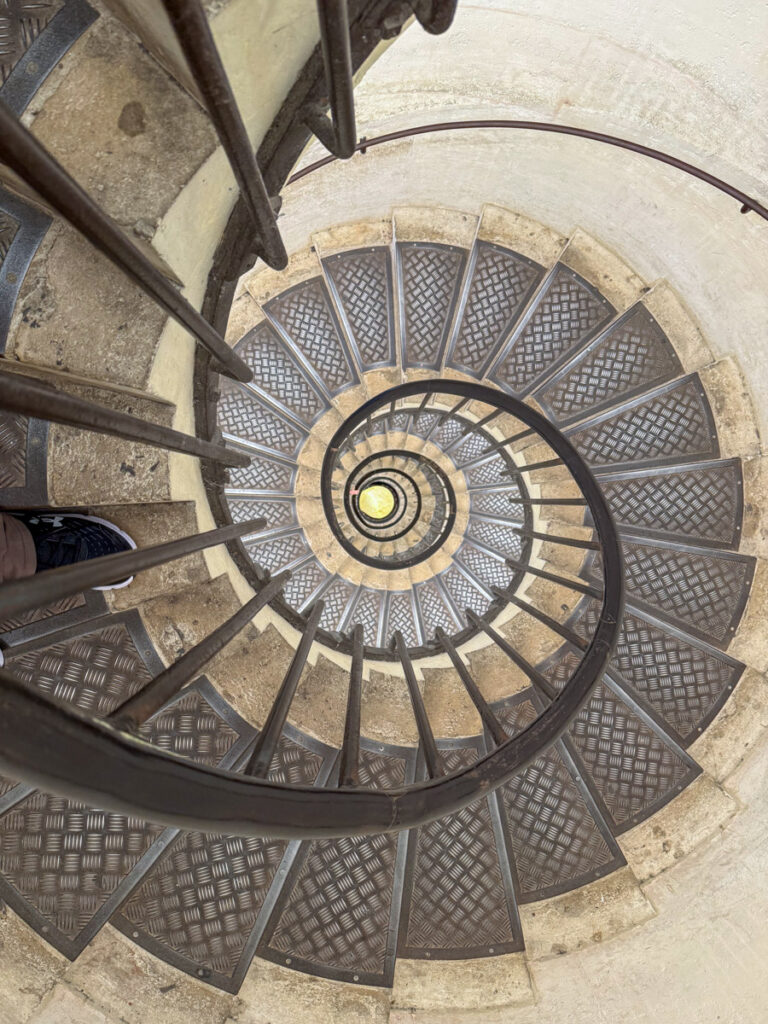
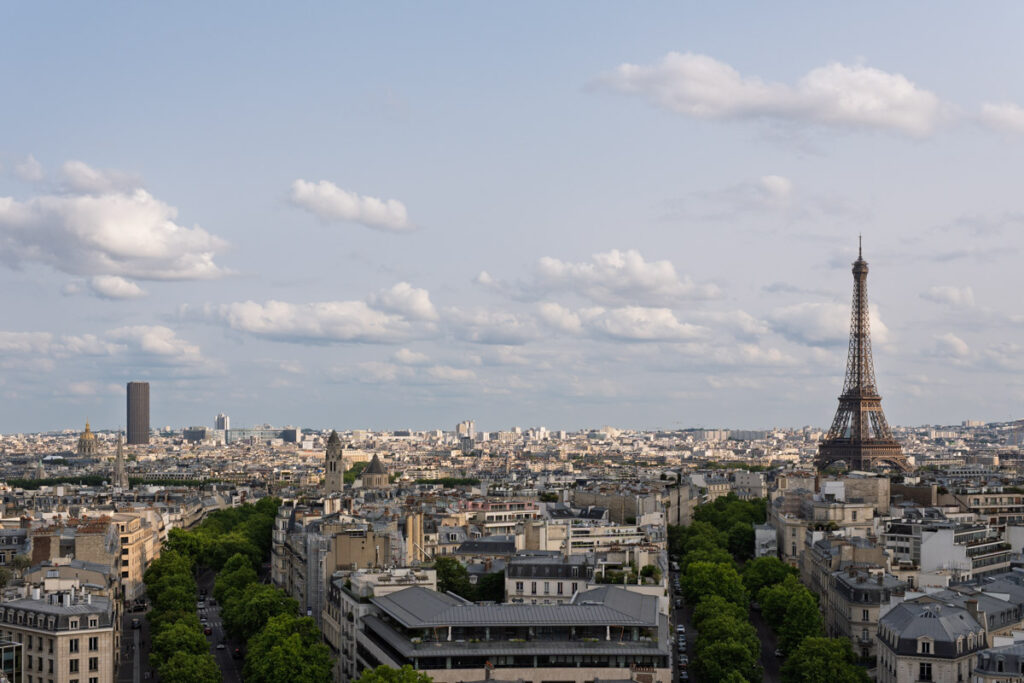
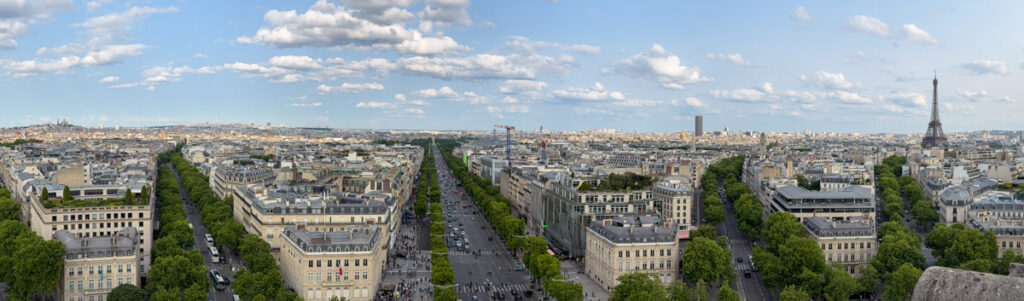
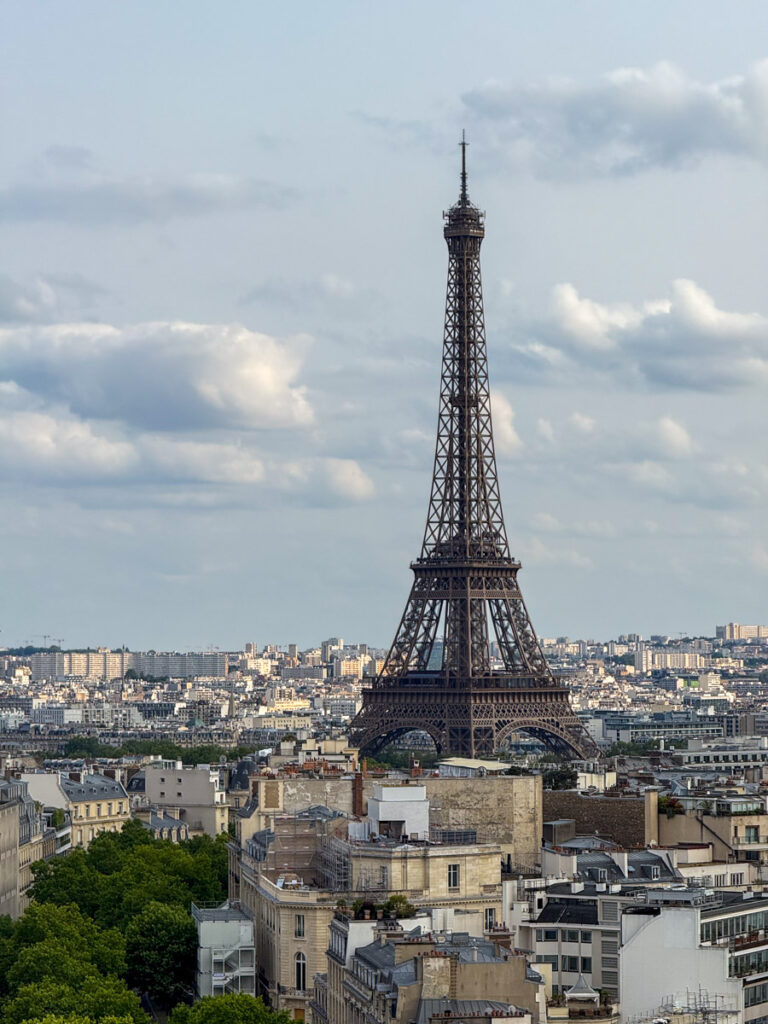
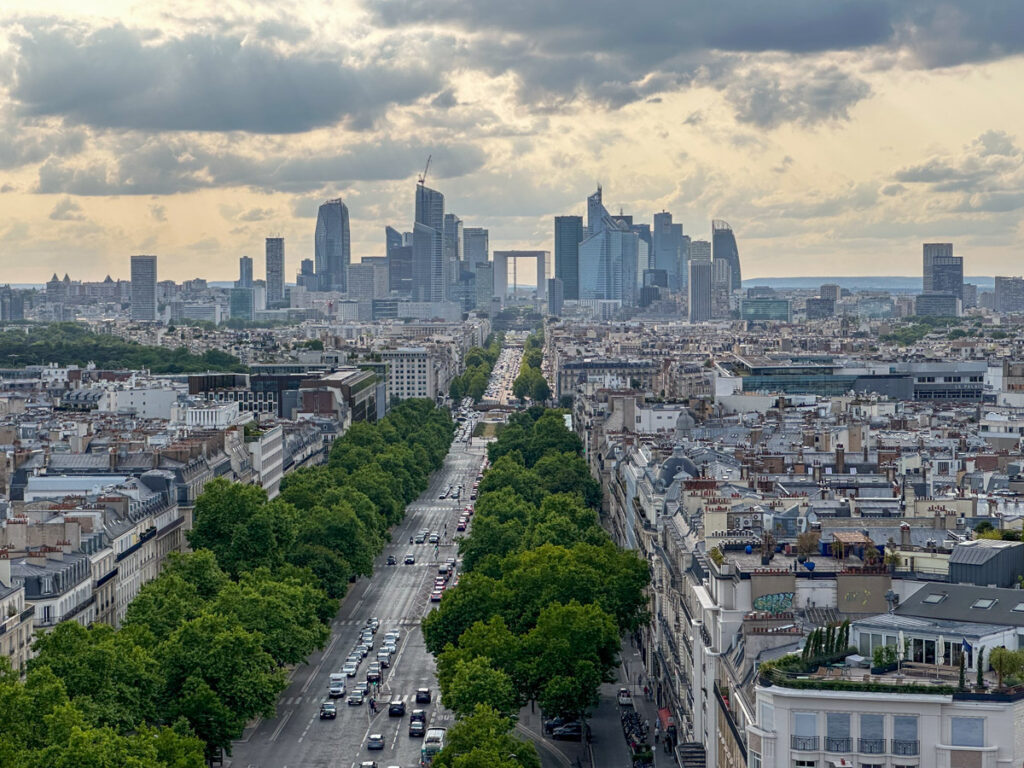
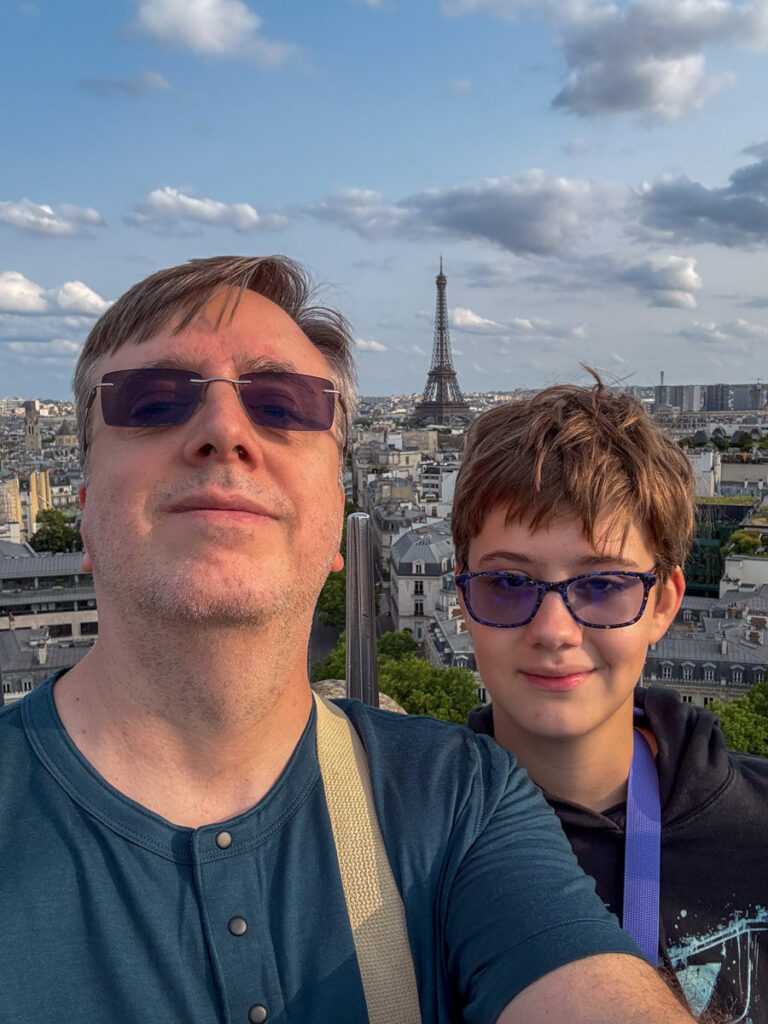
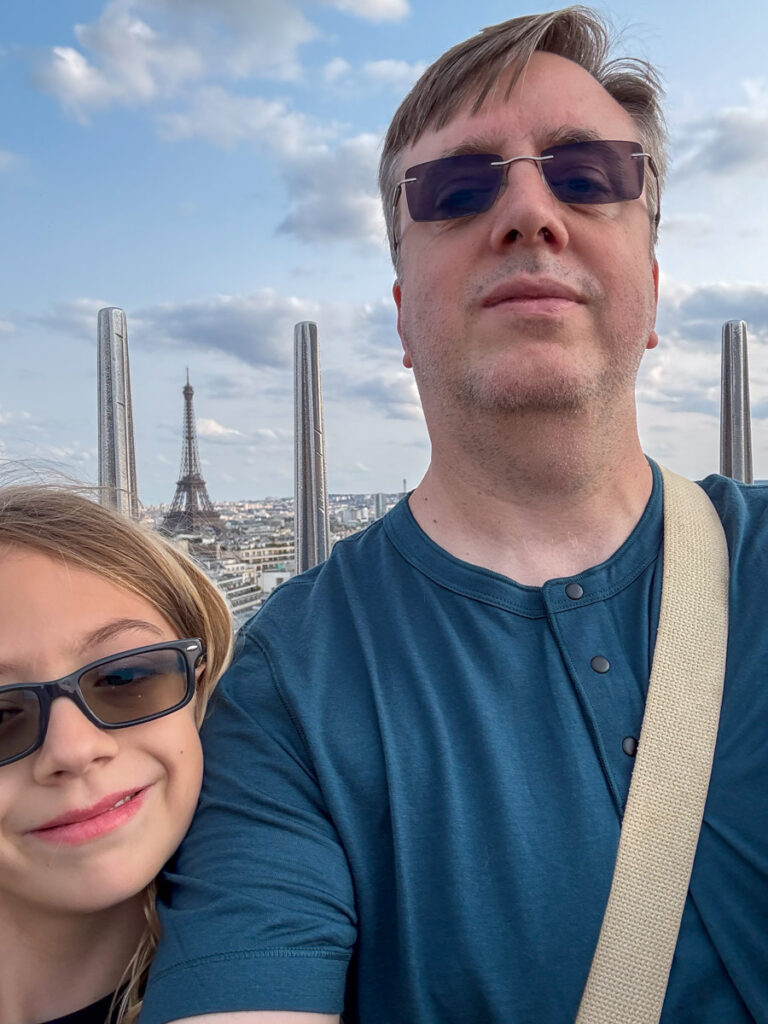
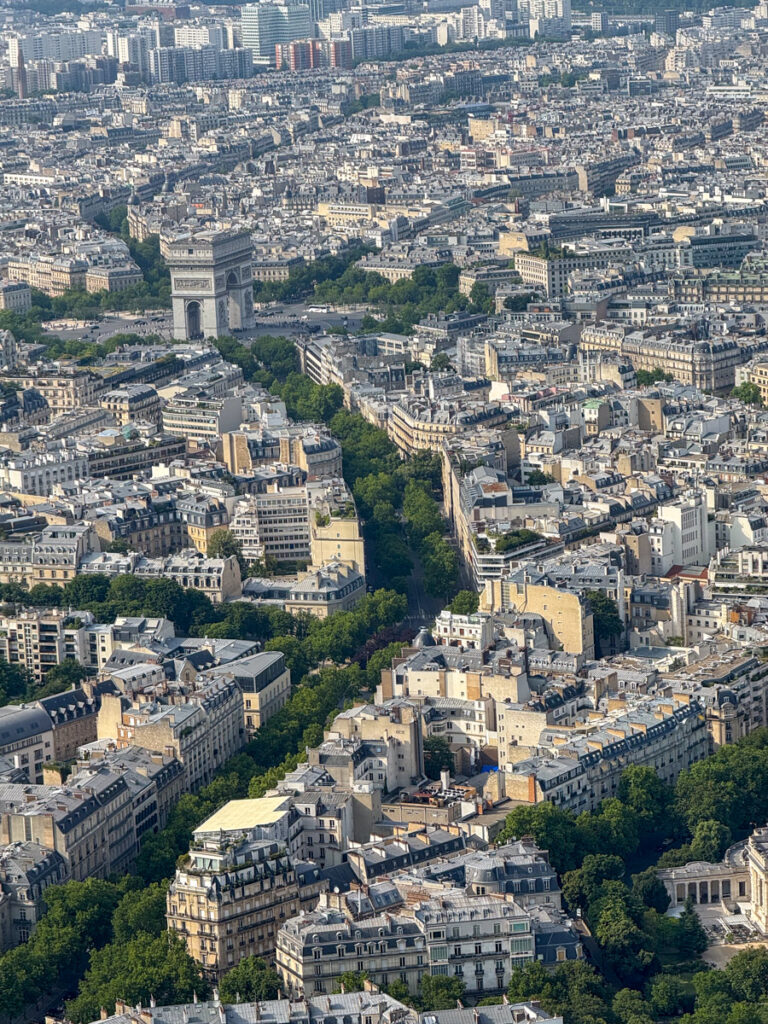
After passing through the monument’s security, we walked the 284 steps up the spiral staircase to the tippy top of the 50 meter tall monument and were treated to a very nice breeze and some stunning views of the city. We had good line of sight to the Eiffel Tower, got a nice shot of Sacre Couer, and had a gorgeous unobstructed view of the area of Paris where most of the skyscrapers are. Interestingly (to me, at least), one feature of that very modern skyline was La Grande Arche de La Defense. Built in the 80s, it’s a modern mirror of its 1800s-era counterpart.
By then, it was pretty late, so I hunted up things in our neighborhood that would be open late. We settled on a local place called Tata Burger, which the kids seemed happy with. The folks at the restaurant were extremely kind to us, and we actually had a low key relaxing dinner with no (or almost no) kid complaining. After dinner, we were back to the apartment way, WAY too late. Mom and Dad set about figuring out the European washing machine while the kids showered and got ready for bed.
Day 3 – Monday – Sainte Chapelle, Jardin du Luxembourg, Eiffel Tower
This morning, at long last, Maya got to go to a boulangerie (bakery) for breakfast. This kid can tackle a baguette like no other, pelt down pan au chocolate so fast you’d swear she didn’t even have time to taste it, and then she’d ask for tastes of whatever everyone else was eating on top of it. Maya is built for carb consumption. We were becoming accustomed to the notion that an 8:00a opening time didn’t strictly mean the place was open yet. We also learned that an open door is not necessarily an invitation – they’re just letting some air into an otherwise stifling hot building.
Then we took the beautiful walk to our 9:00a timed entry at Sainte Chapelle. We were there maybe 20 minutes early, and honestly I felt a little silly standing in line with the handful of other folks that were there. But, by the time 9:00 rolled around, the line stretched far behind us, even for a timed entry.
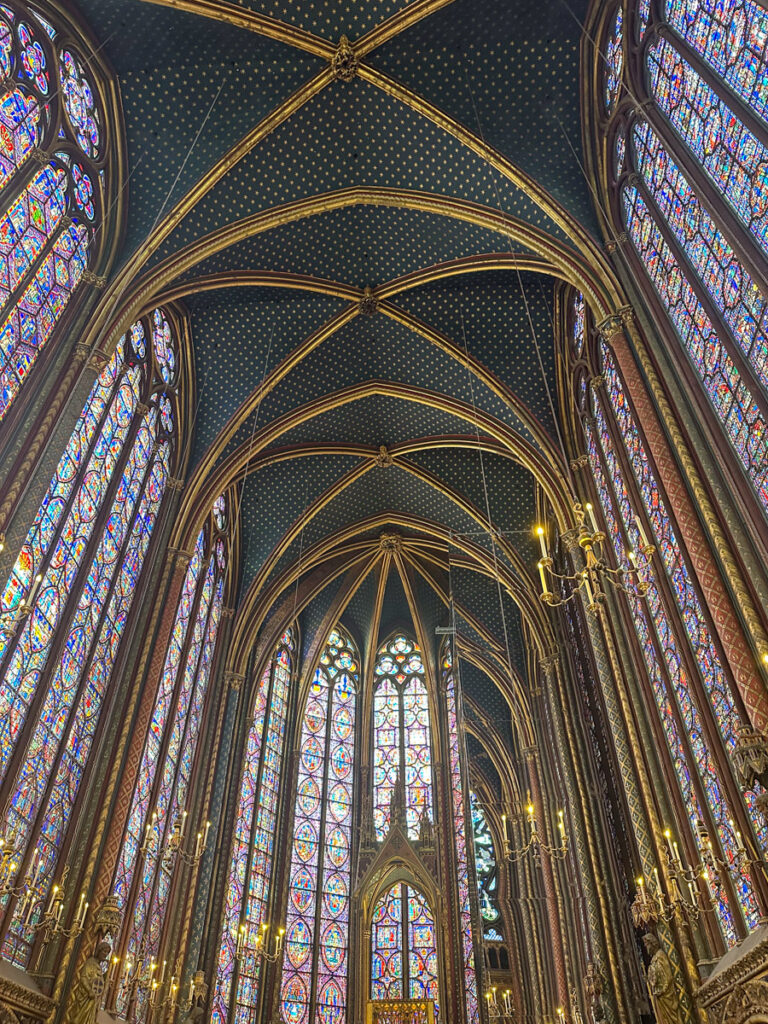
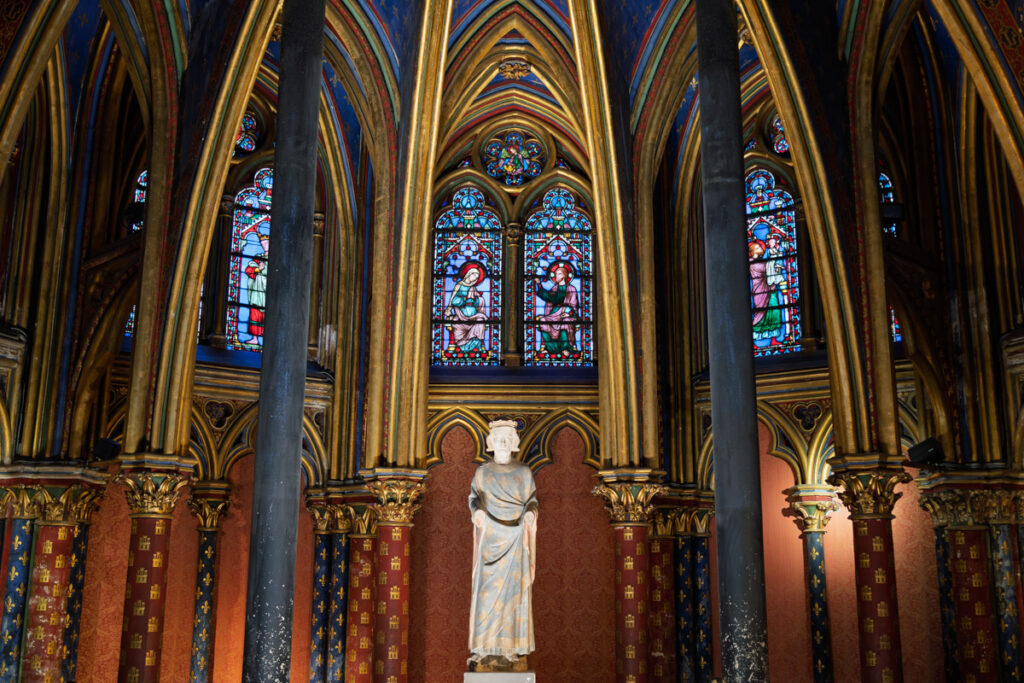
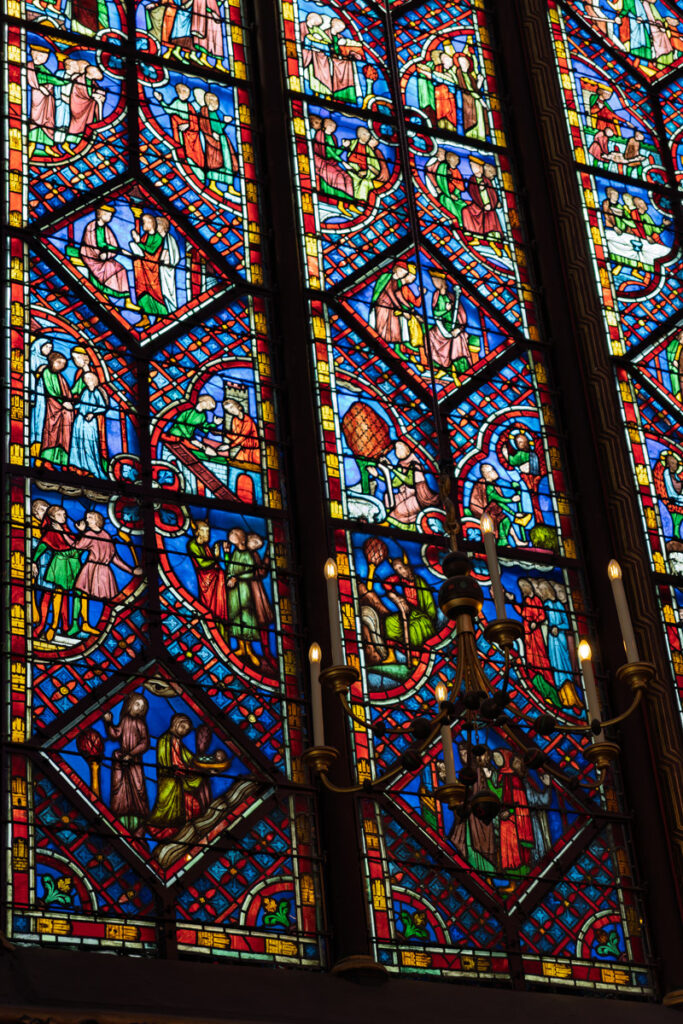
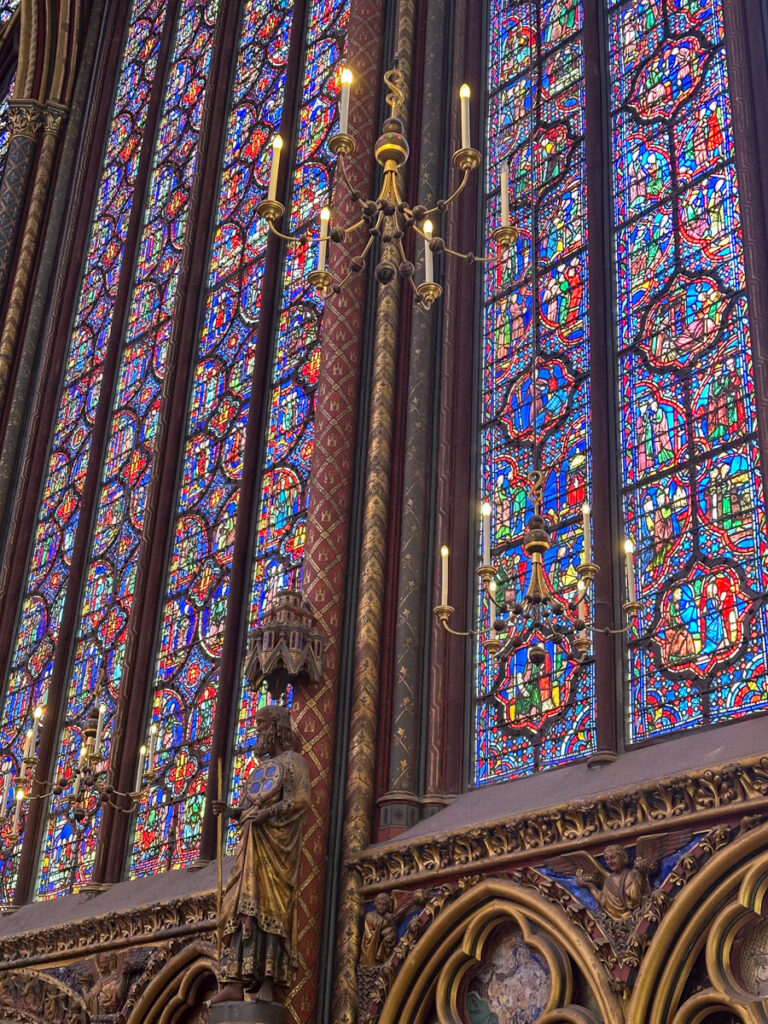
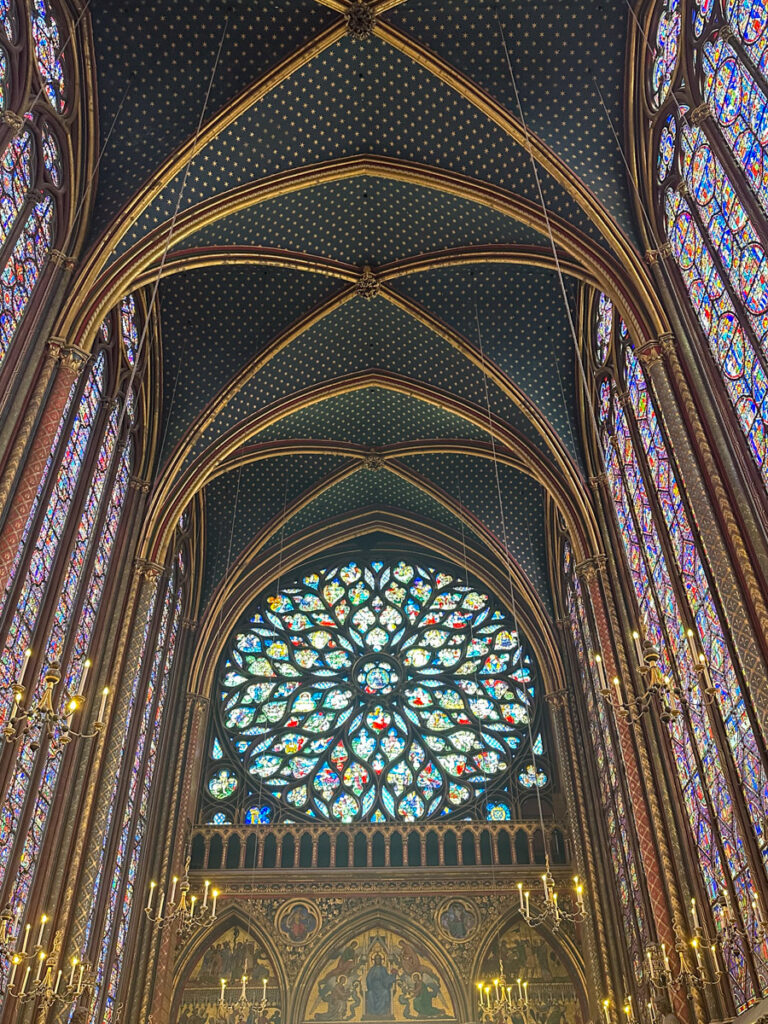
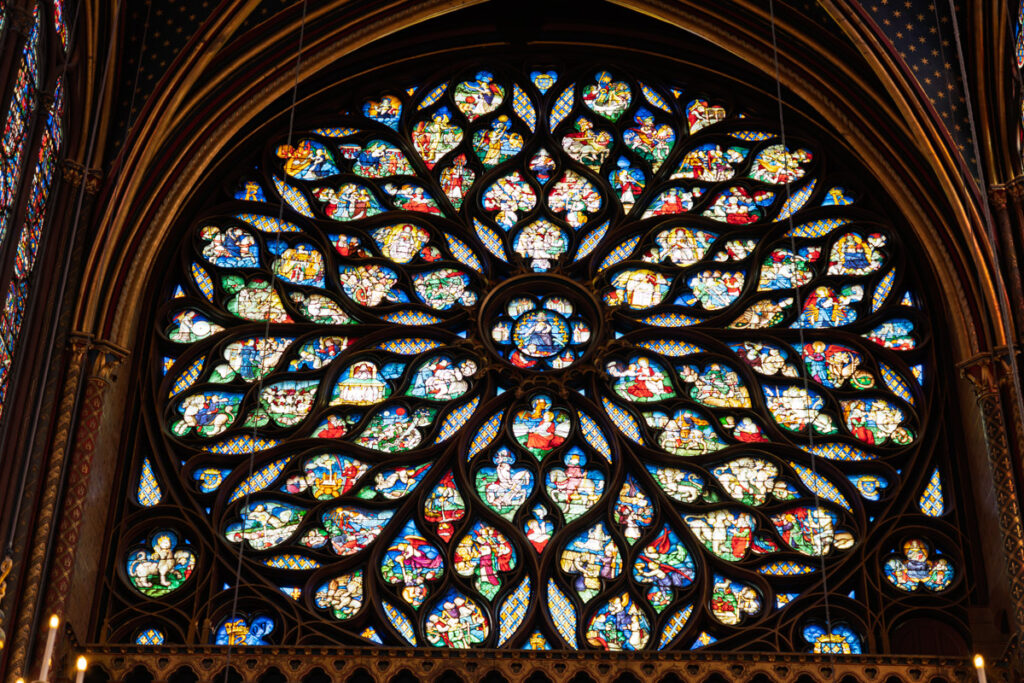
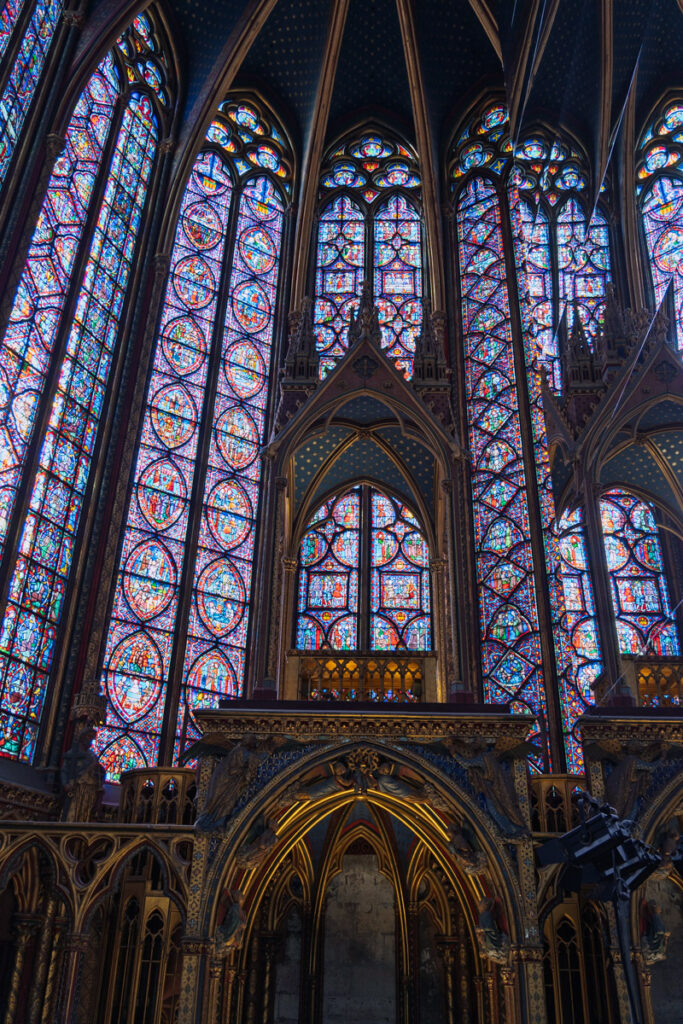
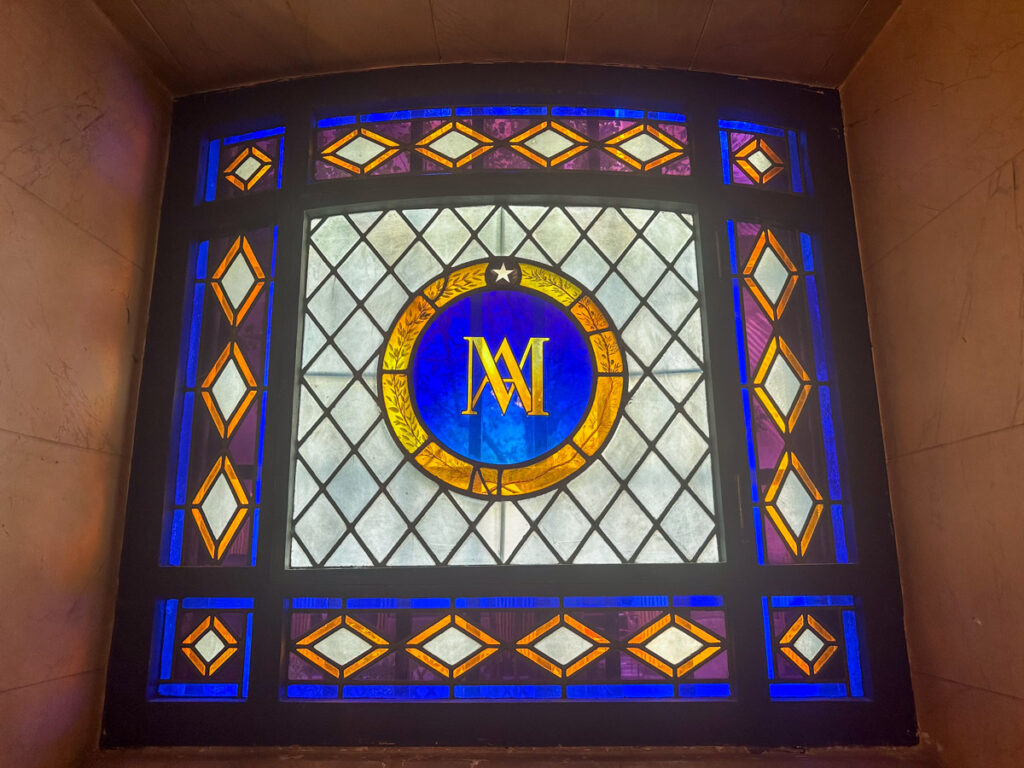
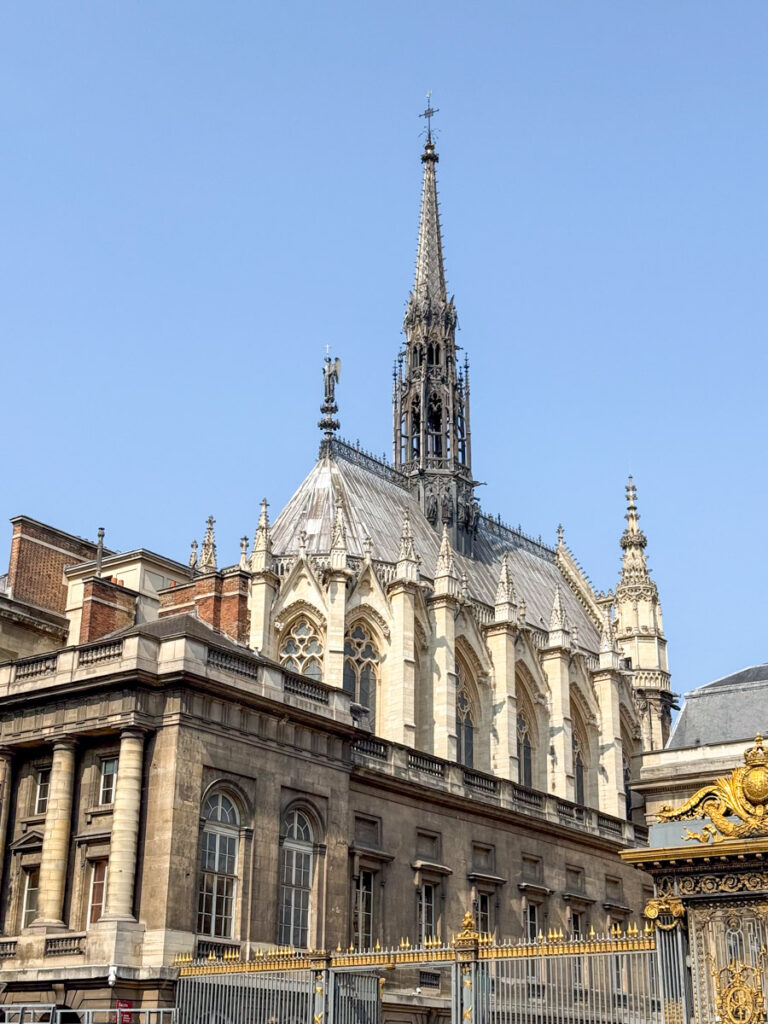
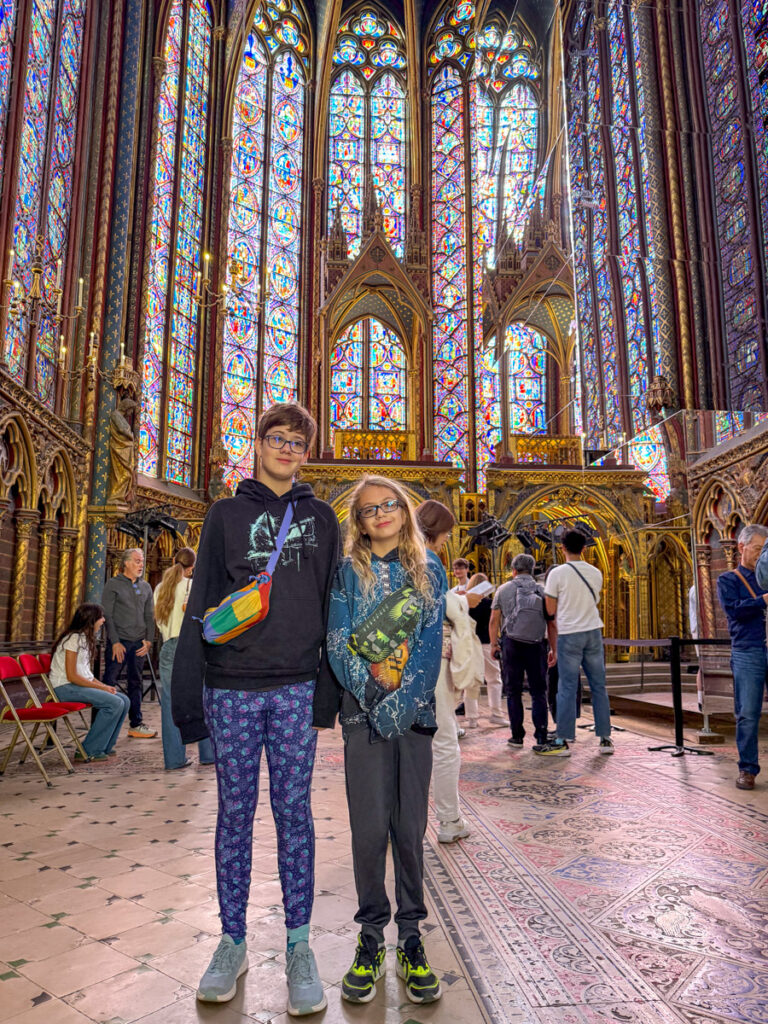
Sainte Chapelle was built in the 1200s in less than seven years, remarkably quickly for the time. The big draw here for us was the beautiful walls of stained glass prominent in this chapel. There are 15 bays of stained glass, each 15 meters high, depicting various stories from the Bible. The website tells me that 2/3 of the stained glass windows are original. Over the years, the church has been damaged by fires and then during the French Revolution, some of the windows were walled up, destroyed, or even dismantled for sale. Evidently a huge restoration project carried out between 1840 and 1863 saw it restored to its original 13th century glory.
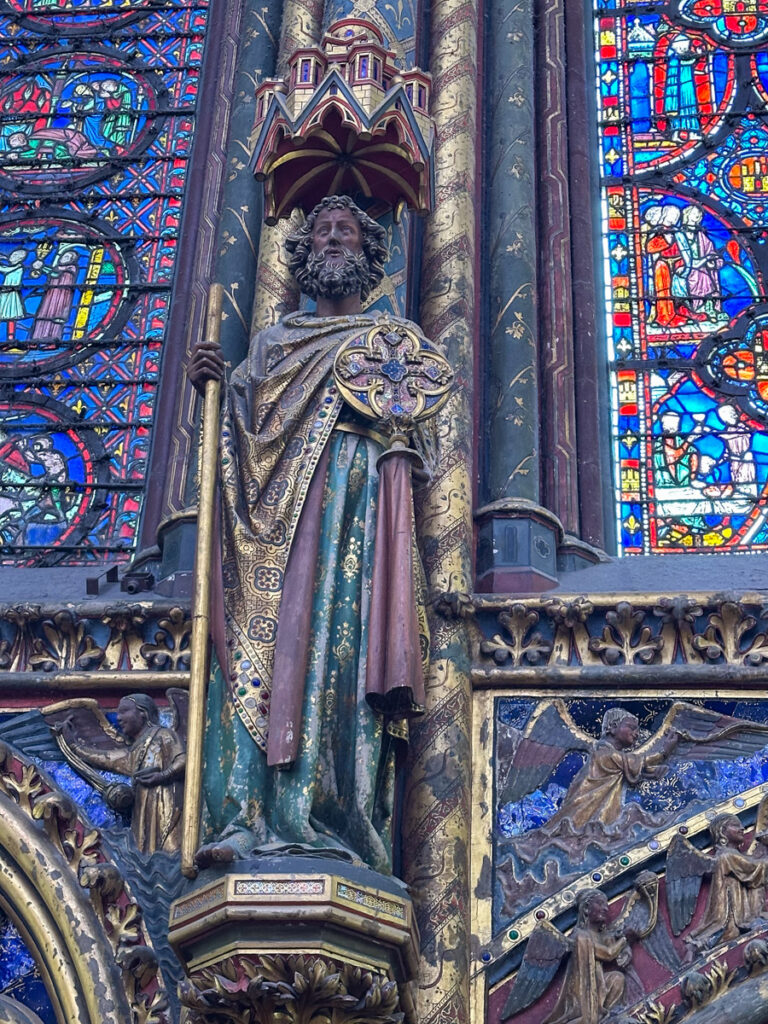
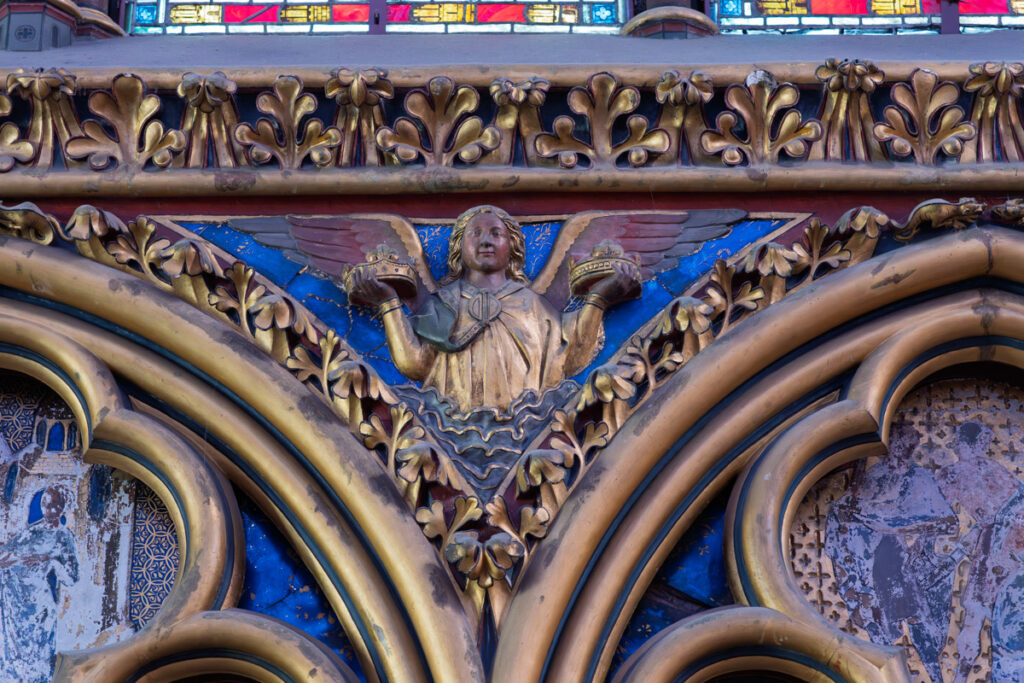
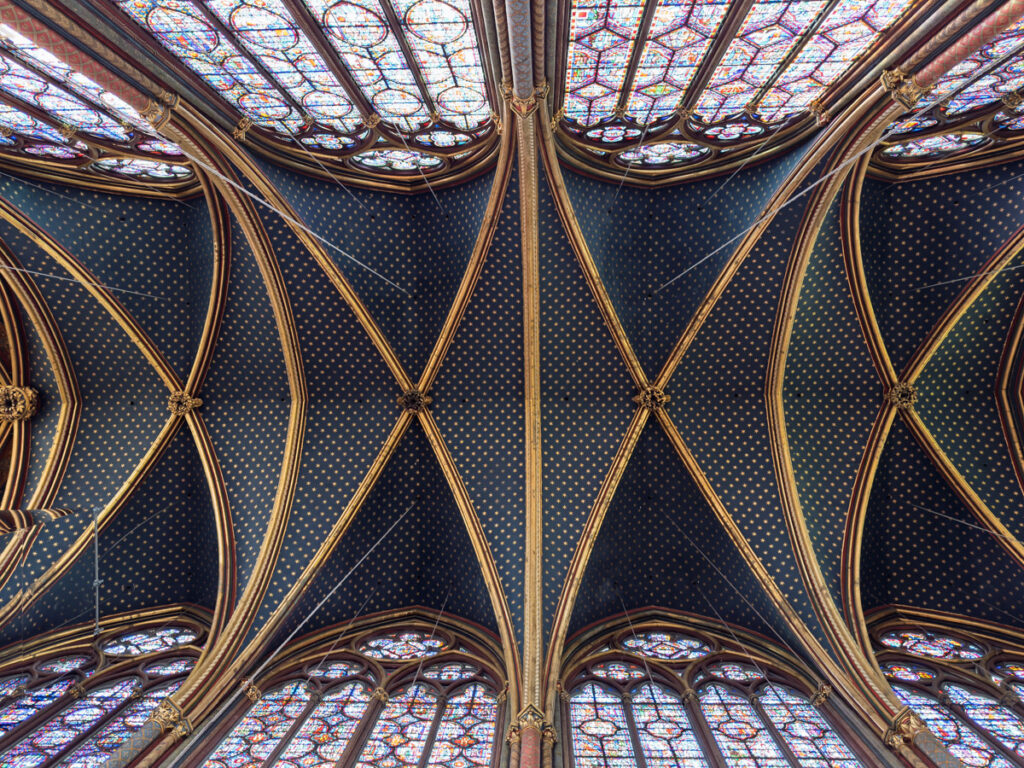
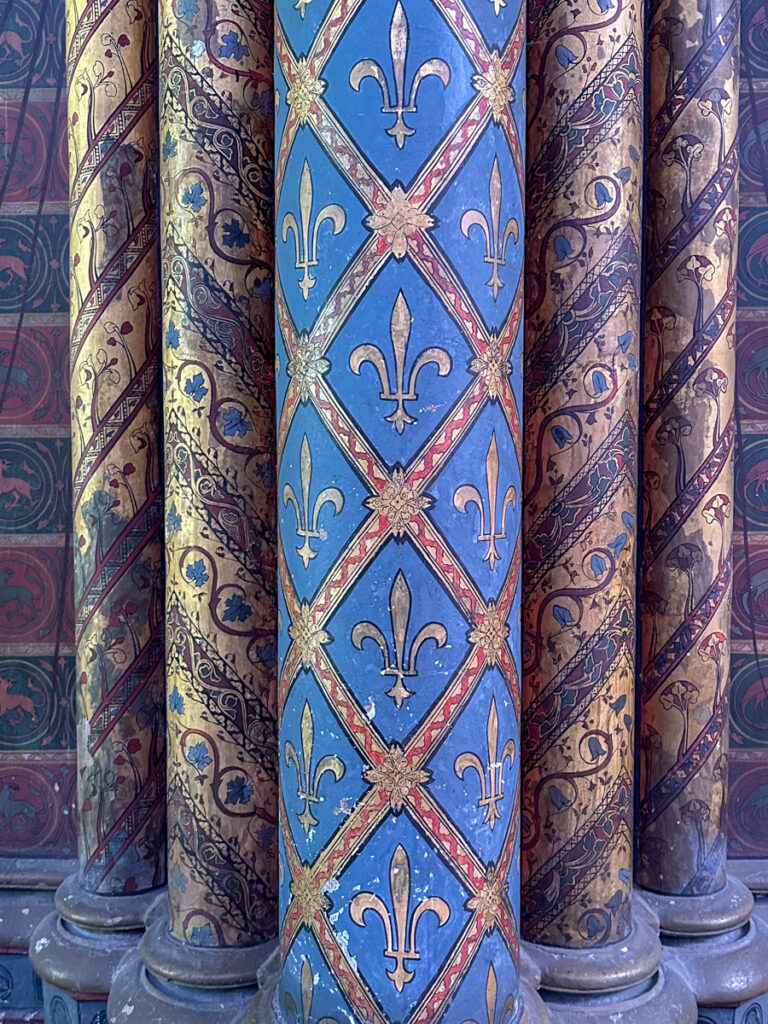
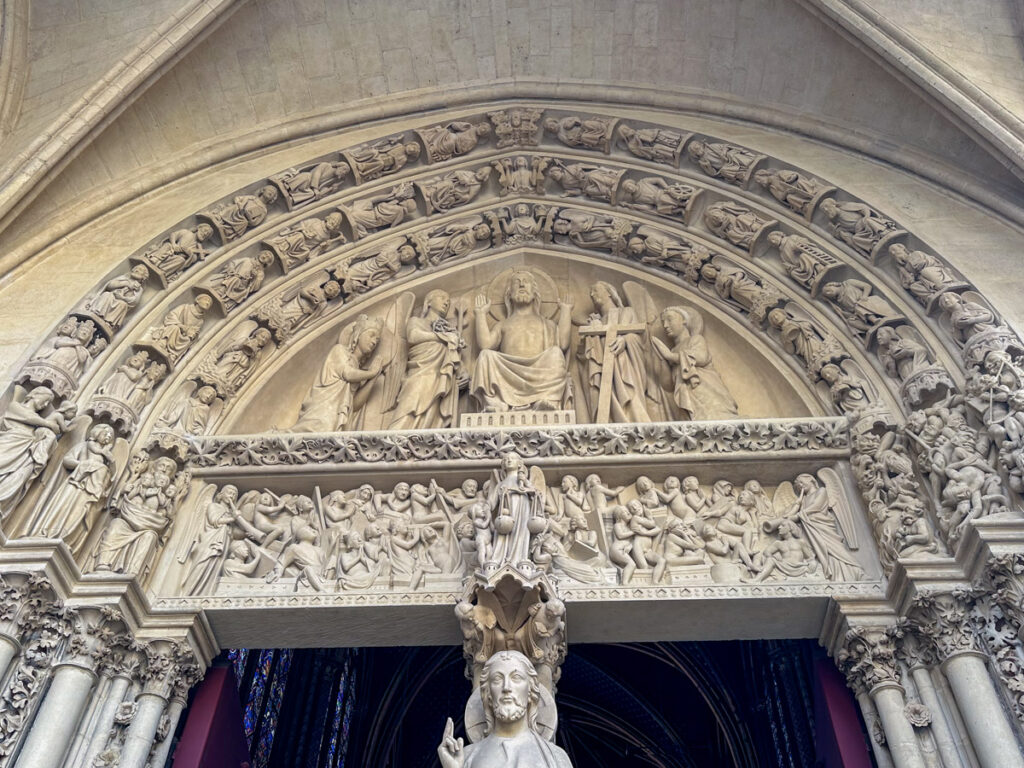
In current times, for more than 20 years, Sainte Chapelle has been undergoing a huge restoration project, presumably cleaning. While we were in the chapel, a portion of it was indeed walled over for restoration, but the novel thing they’ve done is faced that wall with mirrored surfaces, which of course reflect the beautiful stained glass light and other various artifices. It doesn’t strictly blend in, but it’s certainly less jarring than just a covered set of scaffolding would have been. And even in the jewel-box of all that stained glass, there’s more to see. The deep blue ceiling is painted with an array of golden stars, the columns are elaborately painted, and the walls adorned with sculpture. Even the floor has interesting and varied patterns.
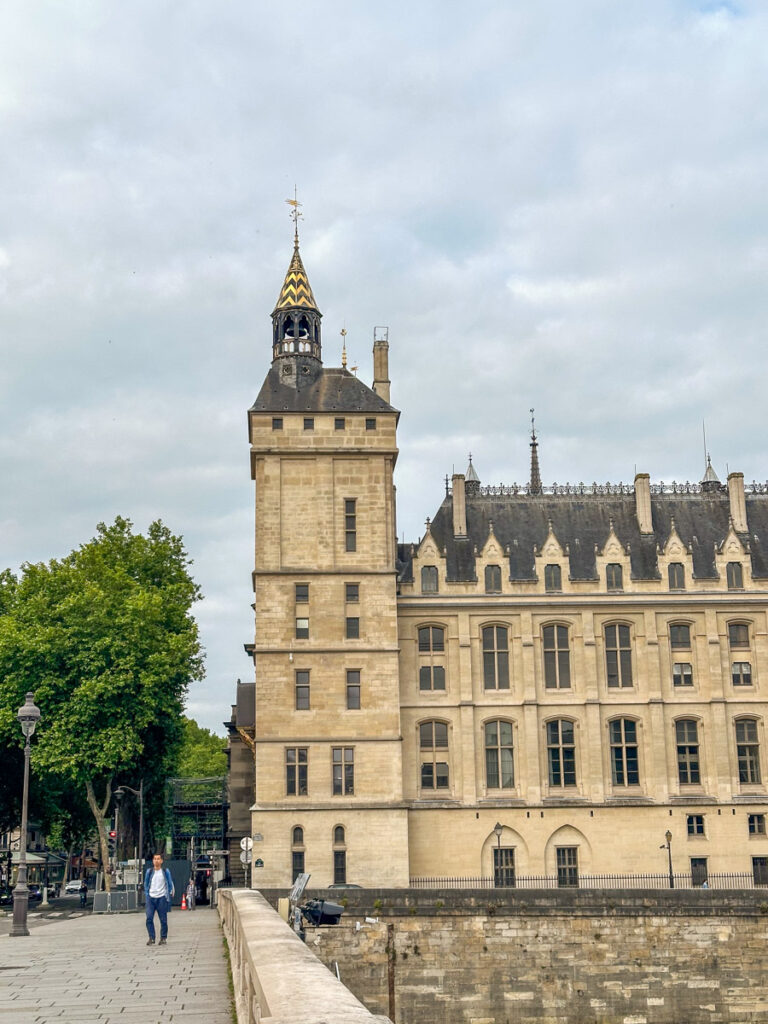
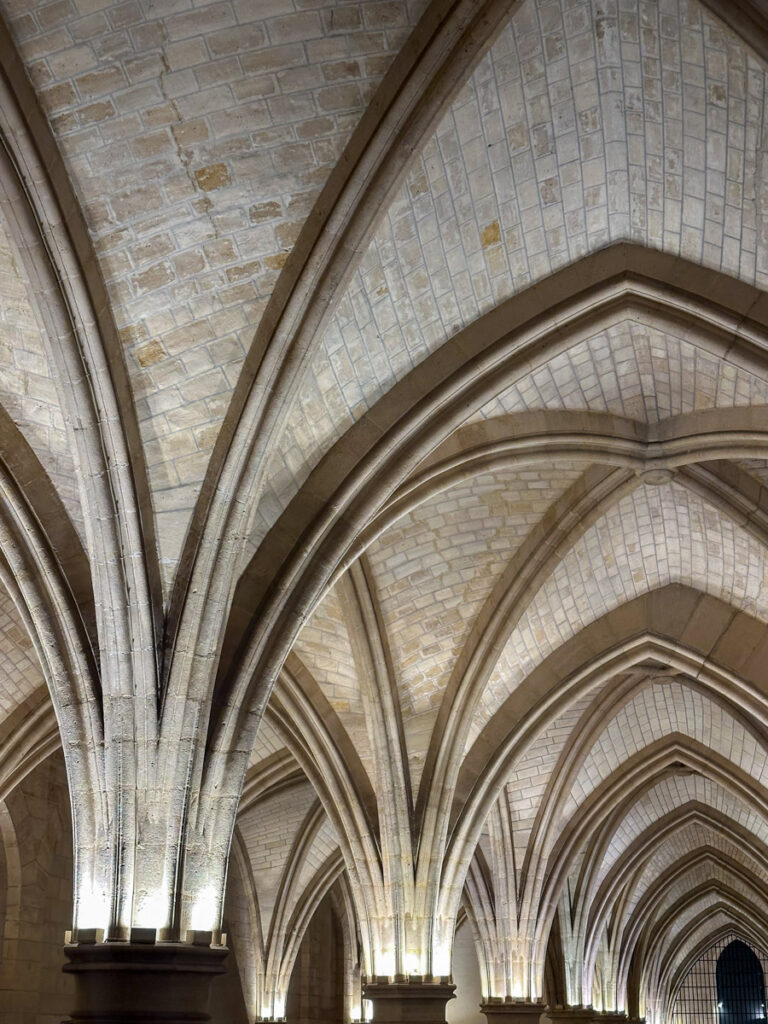
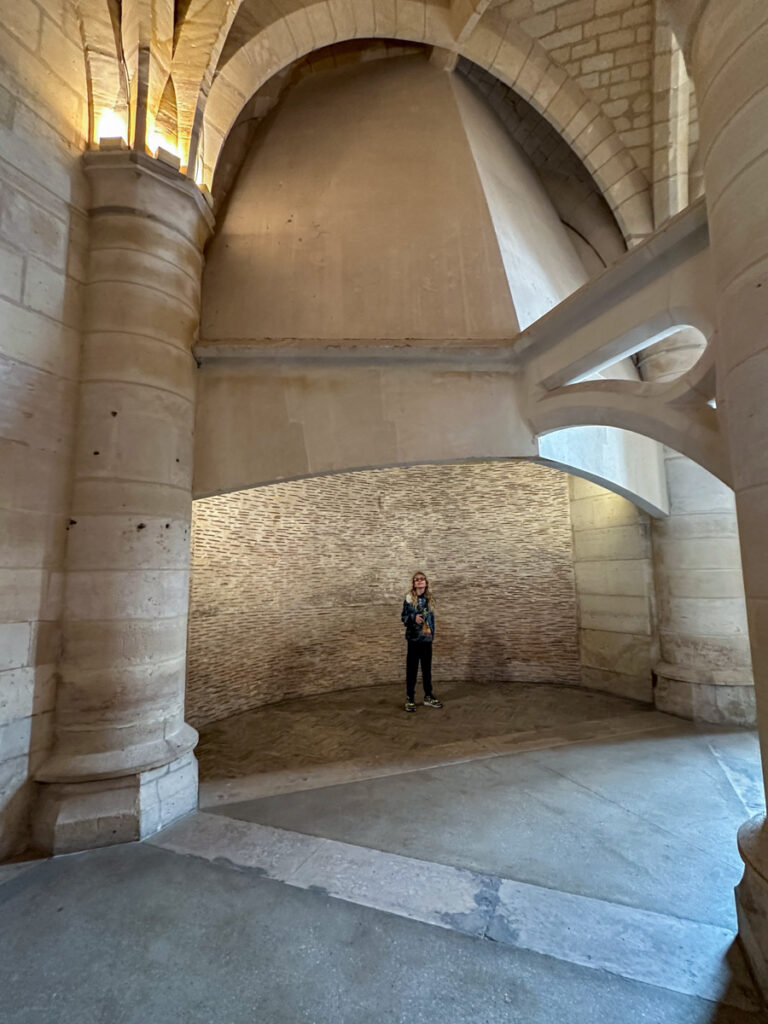
When I bought the timed tickets for Sainte Chapelle, I paid just a little extra to for a combined ticket that included La Conciergerie next door, just in case we decided we wanted to visit that too. At a minimum, I thought I could take a quick peek inside to ogle its amazing architecture. We walked in, and we were immediately given a couple of iPads which we could take to various stations and see the how the rooms we were in might have originally appeared and been used.
I’m finding it tricky to pin down when La Conciergerie was built. In the late 10th century, the Palais de la Cité was built on the site and used as a residence. It was enlarged during the 11th through 14th centuries, and more and more parliamentary proceedings occurred there. At one point, a “concierge” was named by the king, to oversee administration of the building and ensure justice in the palace, and thus its name was given.
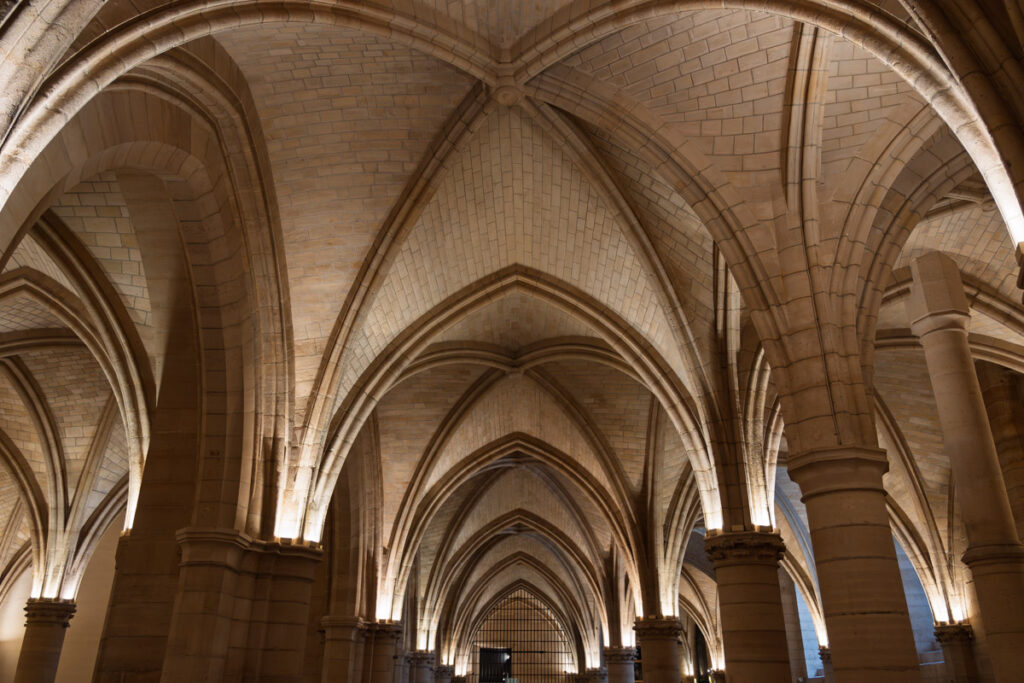
In the 1300s, the royalty all left to occupy other palaces (the Louvre, for example), and the judicial and prison functions of the building became prominent. The concierge was given greater authority over the courts. Prisoners were imprisoned in accommodations befitting their class. The wealthy would have their own furnished rooms. The poorest would be shoved into damp and often vermin infested cells referred to as oubliettes (forgotten places). Many died of the plague.
A goodly amount of the museum exhibits are given over to describing the Great Terror (or the Reign of Terror, depending on your sources). Post-revolution, France adopted a policy of rounding up anyone with anti-revolution sentiments and putting them quickly to death, with or without trial. One of its most central figures was Maximilien Robespierre. The idea that he espoused was that government had to be bad so the people wouldn’t be. Evidently the guillotine got quite a workout during this time, becoming something of a symbol of this reign of terror. One of the signs in the Conciergerie, if my notes are correct, referred to it as “the silent slash.” Robespierre himself was put to death via the guillotine in 1794, marking the end of the Reign of Terror.
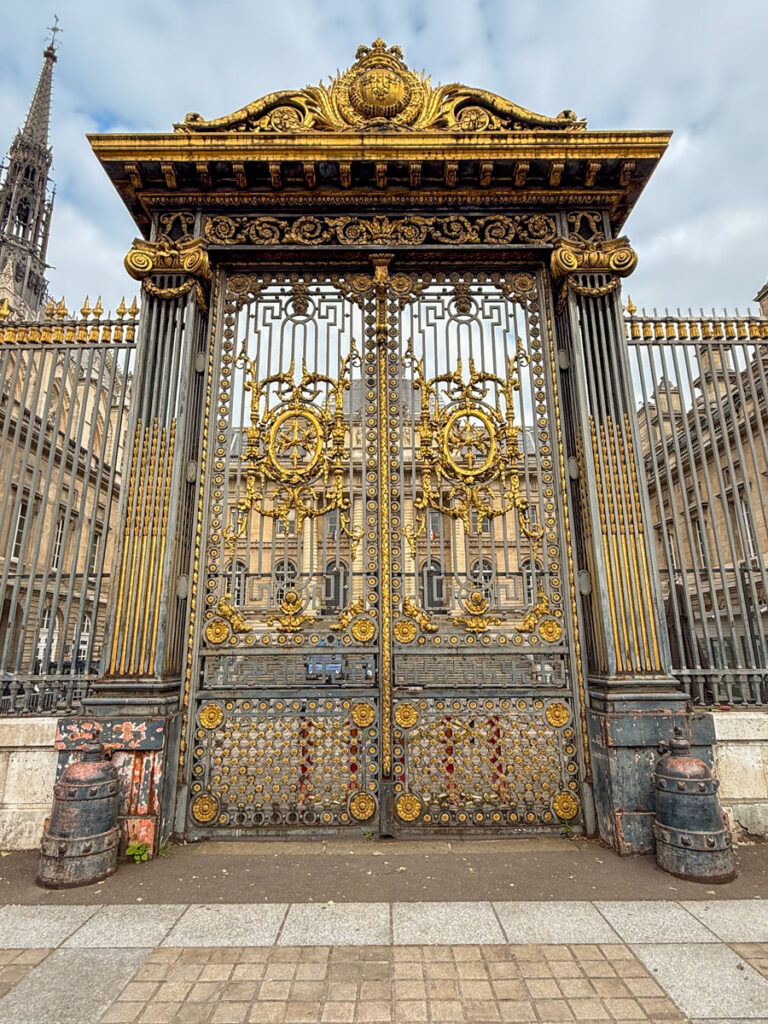
A quick aside about the guillotine: apparently, it was developed at the time as a more humane form of capital punishment. People otherwise were beheaded with swords or axes, which could be painful, especially if inexpertly administered. The poorer classes may have been stuck with basic hangings, and if I understand correctly, hanging methods that would swiftly break the accused’s neck had not yet been developed, so it was a particularly cruel form of punishment. The guillotine, by comparison, was considered “painless.” Lovely and ornate Place de la Concorde that we had wandered through several times by now, was one of the sites of many executions. I was astonished to learn that the last person to be executed by guillotine in France was killed in 1977 (in Marseilles), much more recently than I’d have anticipated.
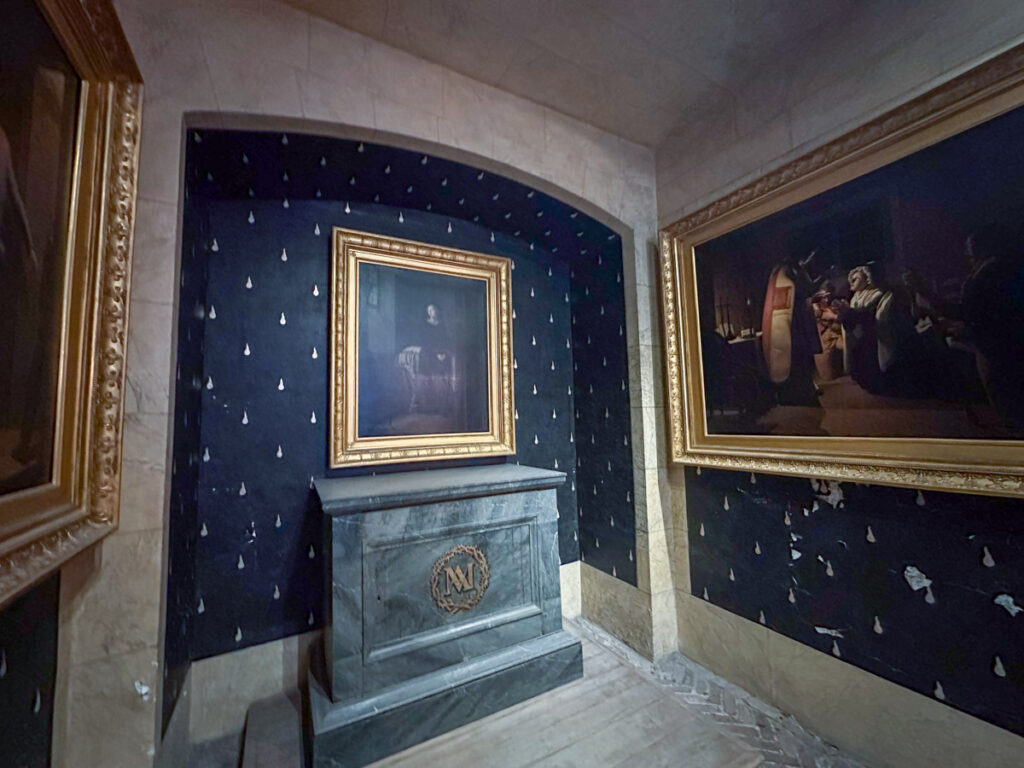
La Conciergerie’s most famous prisoner was Marie Antoinette. She was accused of treason and of “squandering national funds” and basically embodied everything the revolution hoped to correct. She was put to death in Place de la Concorde in 1793. Her cell was part of our tour.
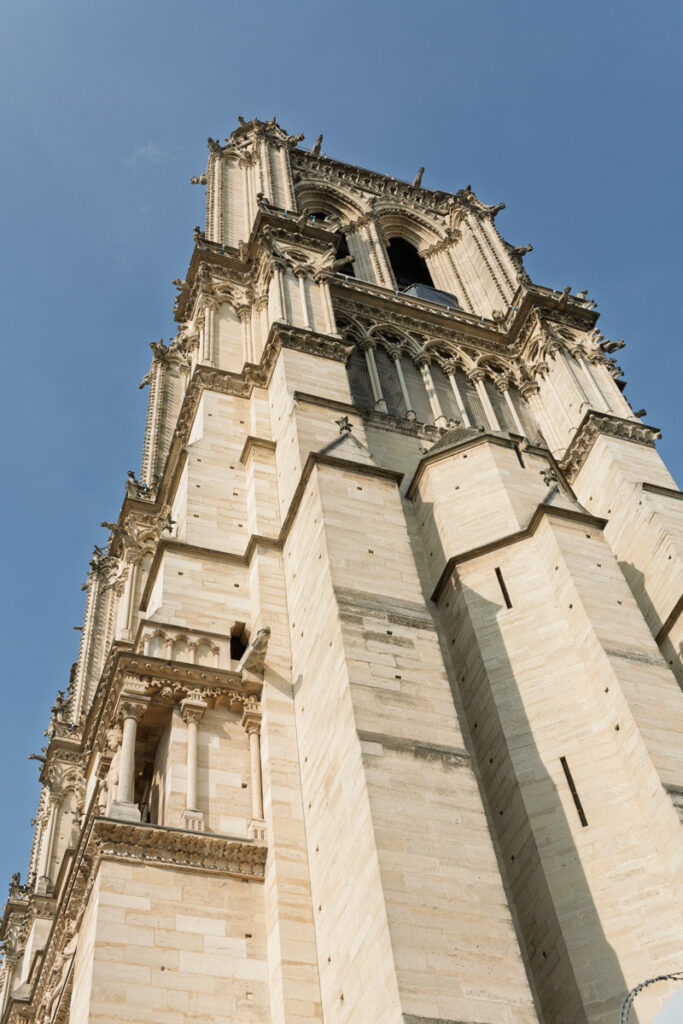
After this, we wandered by Notre Dame to see if we could go in. I had read over and over again that there were very few advance tickets available and generally speaking, any line that you found yourself in would move pretty quickly. Alas, the line was terrifically lengthy, stretching all through the huge courtyard and around the block. We decided that today was not our day.
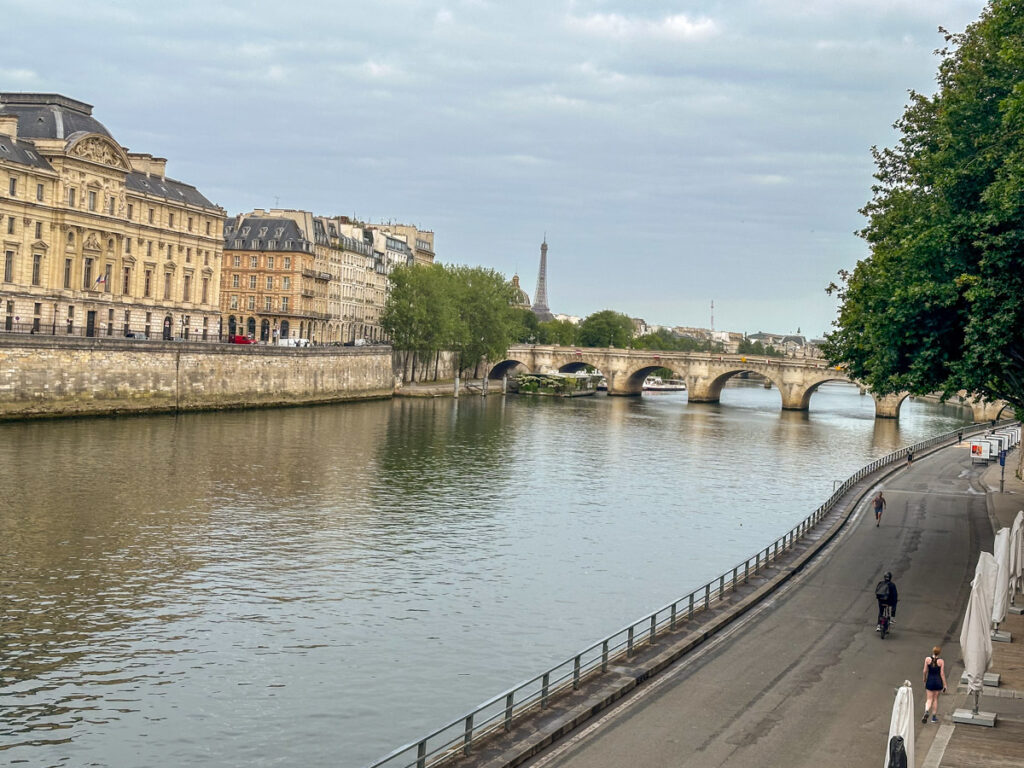
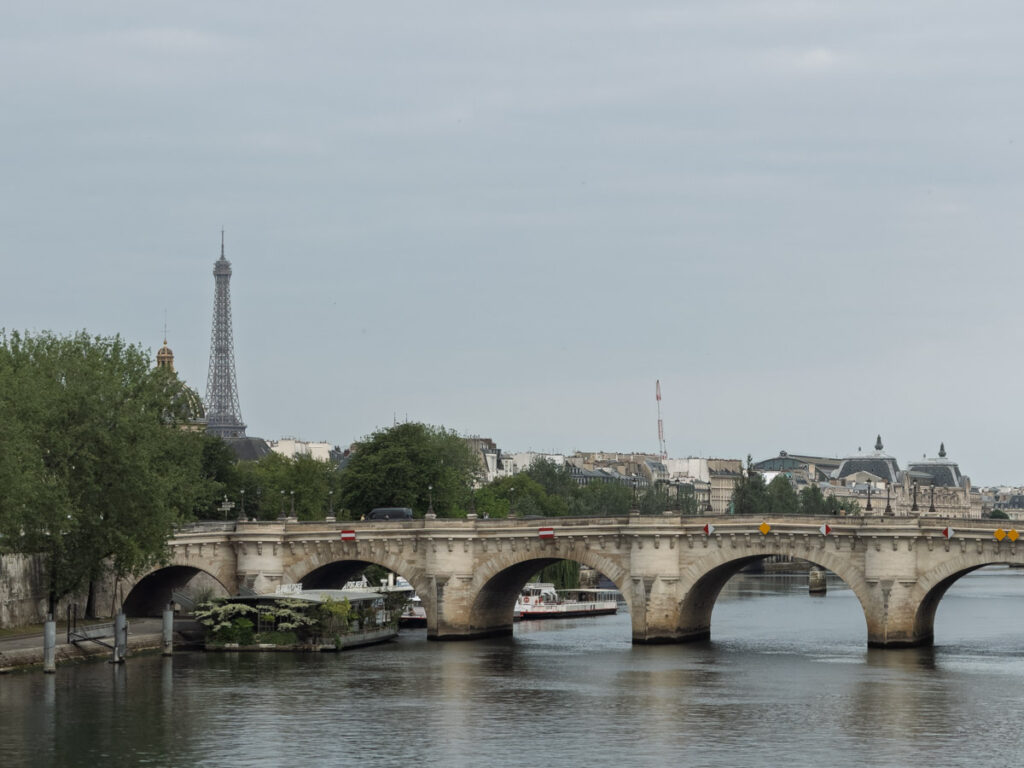
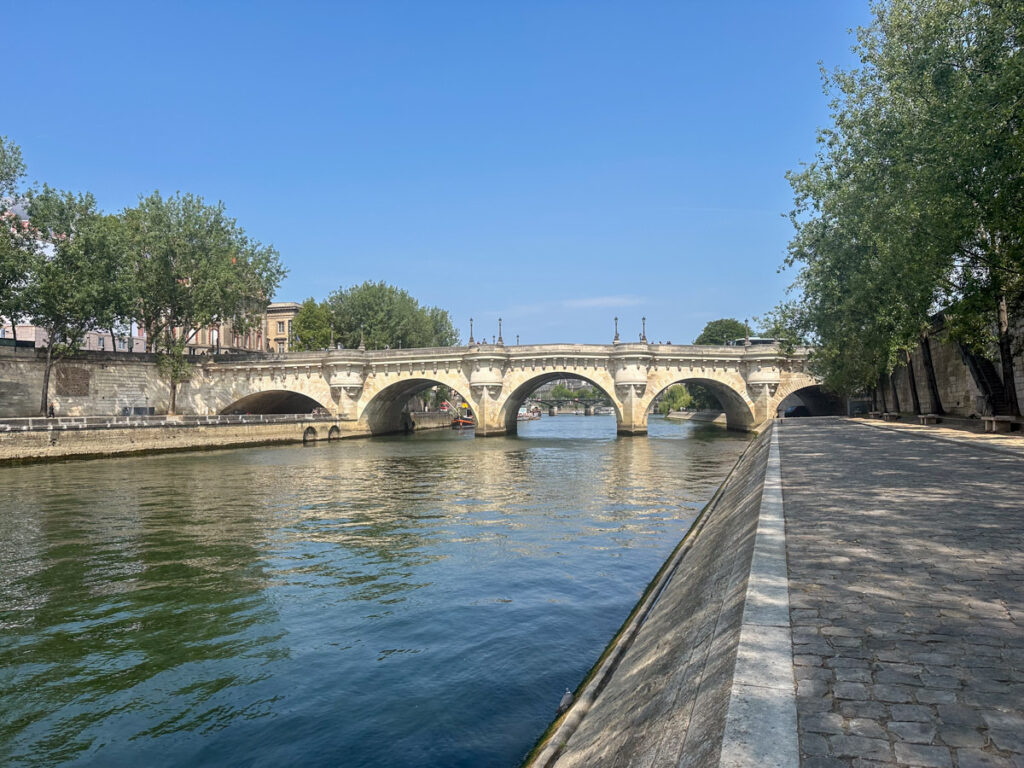
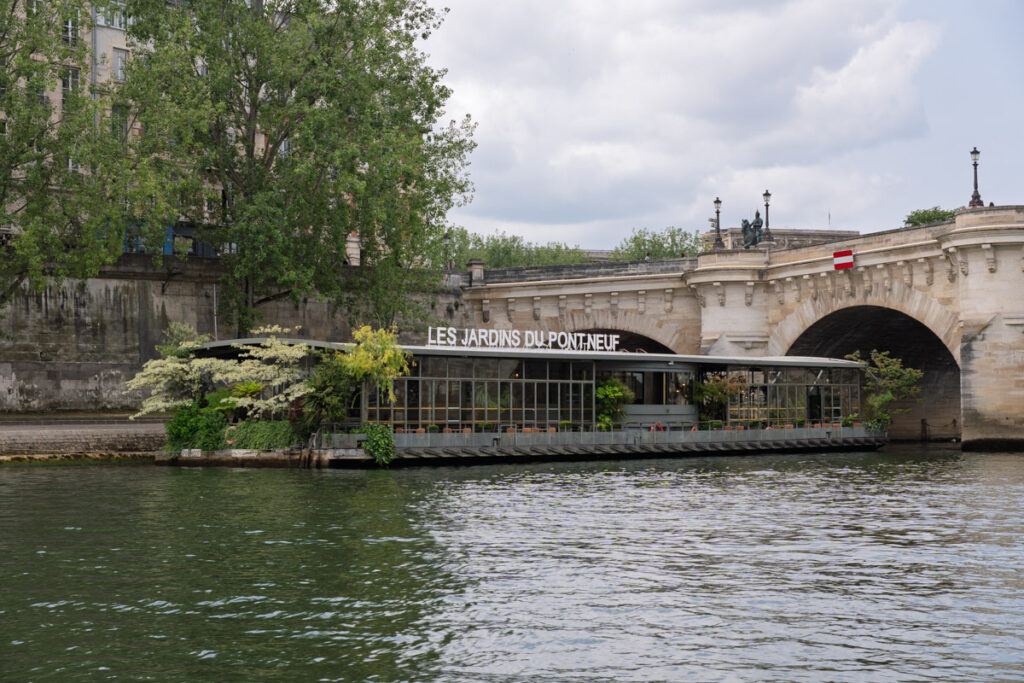
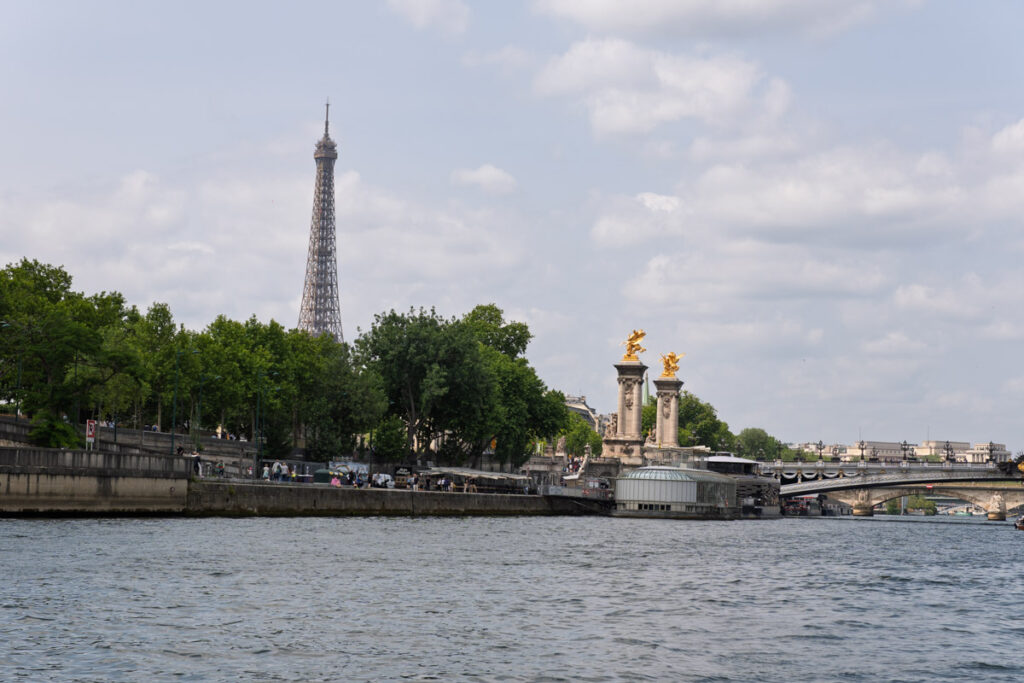
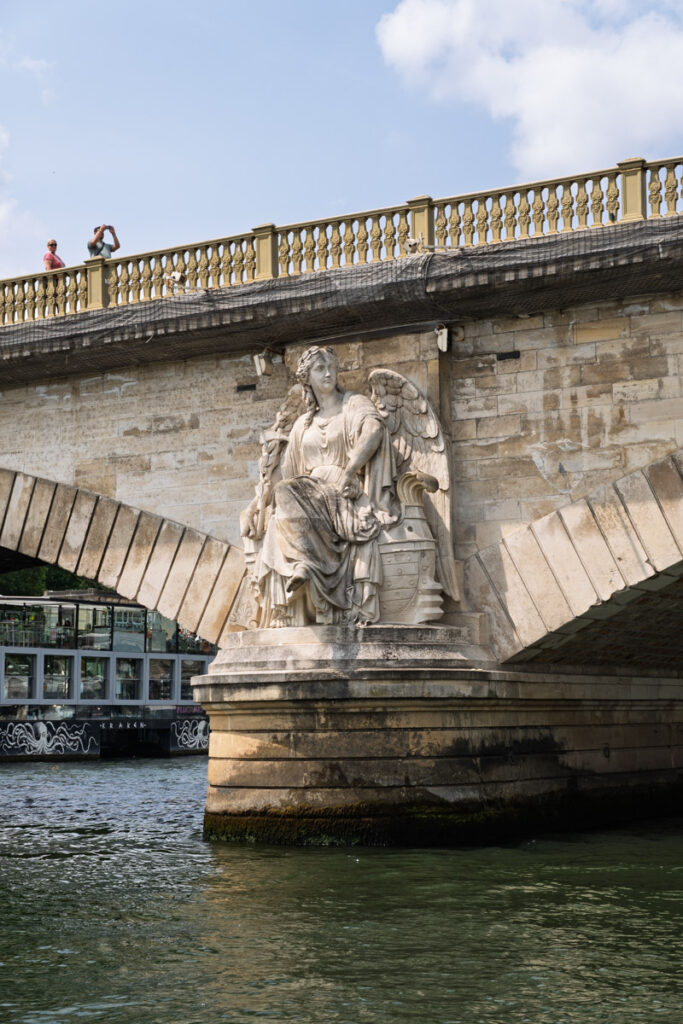
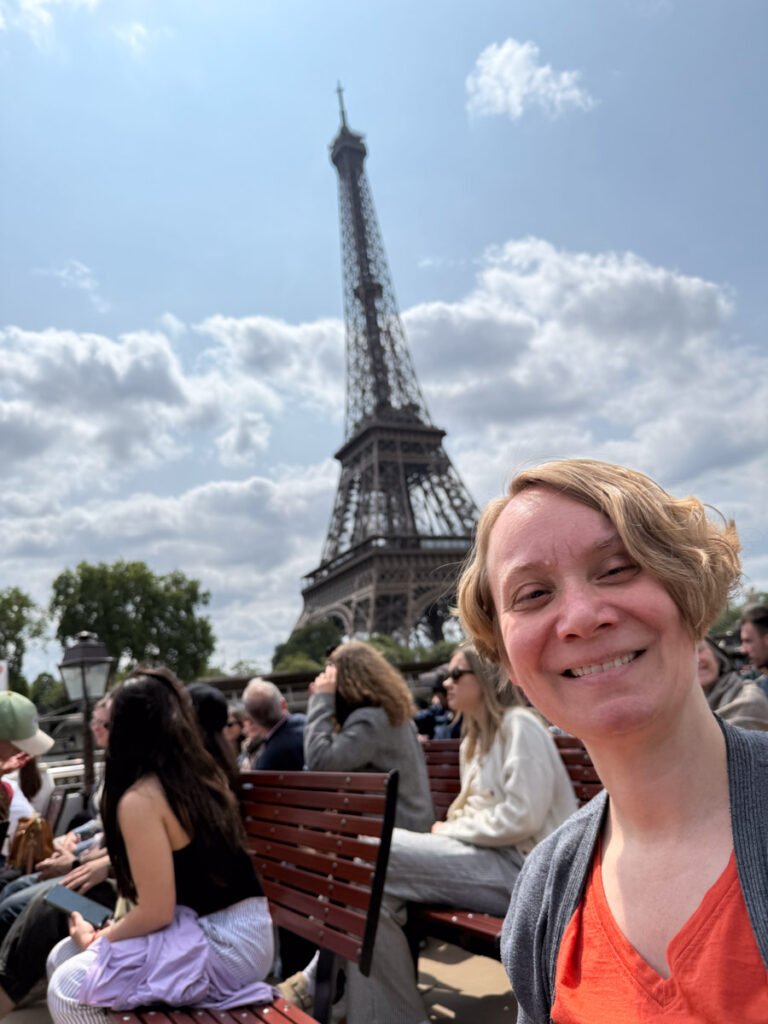
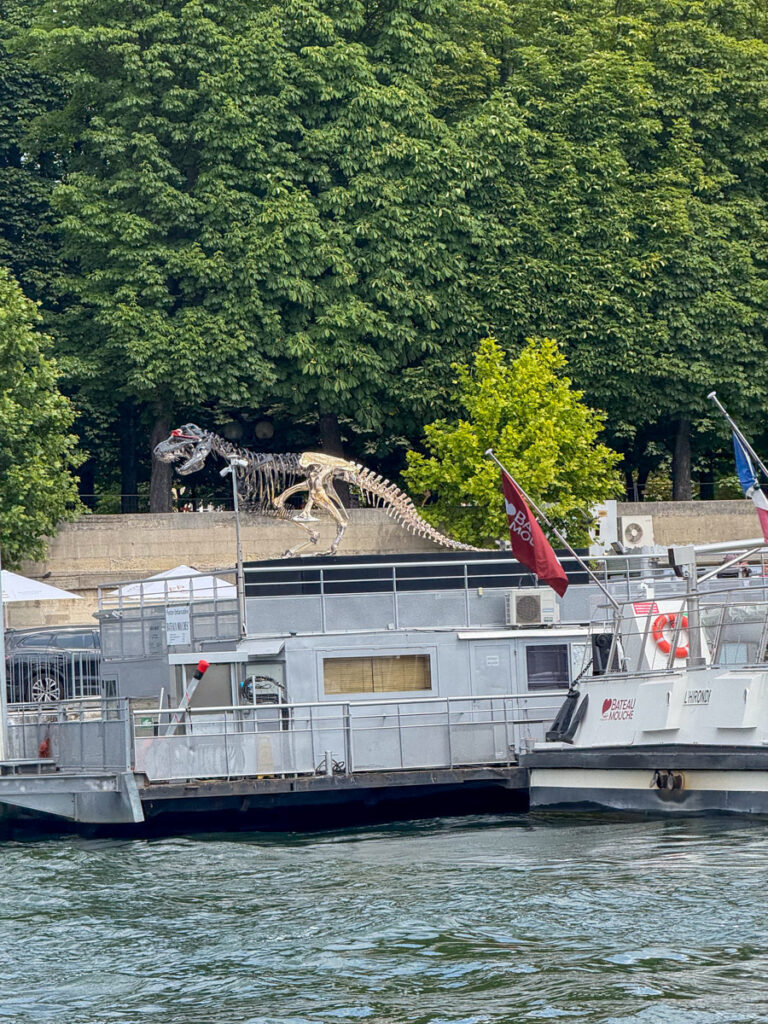
Instead we wandered along the Seine, soaking up the Parisian atmosphere. We eventually decided we might like to hop a ride on a boat, and found our way to Vedettes du Pont Neuf and bought tickets to an hour-long tourist cruise. It was really nice being out on the water, listening to our animated guide give facts first in French, which we tried gamely to understand, and then in English. The kids had had crepes while we waited for our boat’s departure time, so they were good and sugared up. Then they spent the entire boat right chattering back and forth about some game they were playing, seemingly absorbing nothing about the architectural and historical marvels they were floating past.
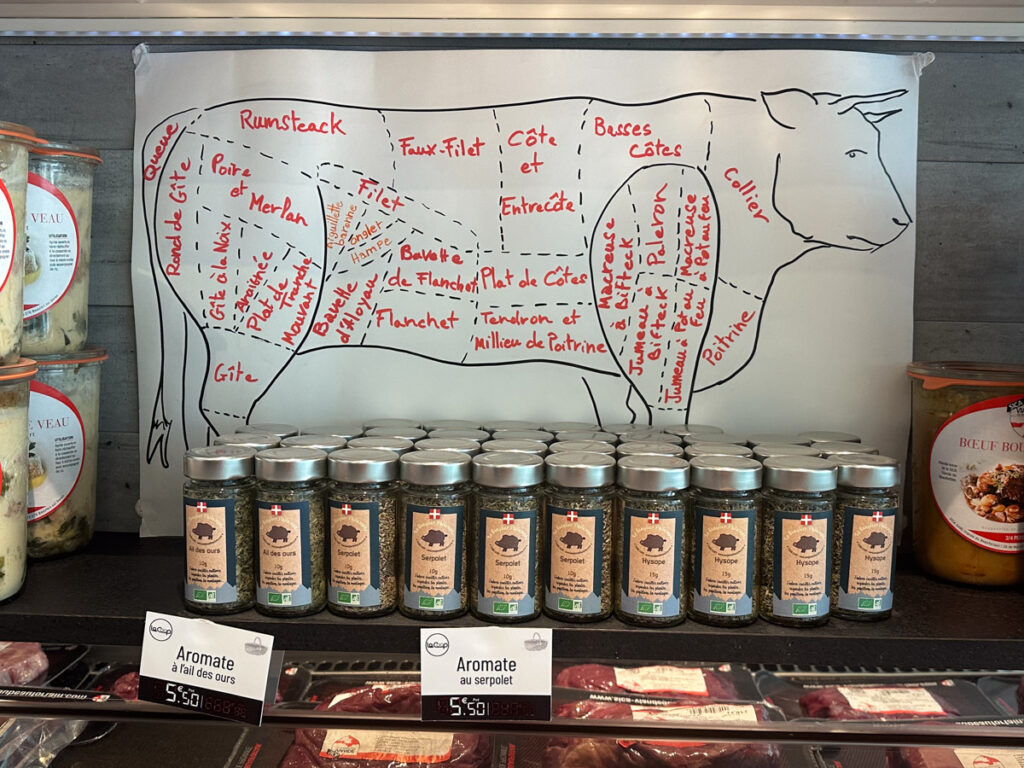
After our boat ride, we wanted to fetch a picnic lunch and go hang out in the Jardin du Luxembourg while we ate. We stopped by a fromagerie (cheese shop) called La Coop to pick up cheeses and cured meats. The store was stocked with Alsatian cheeses, none of which we were familiar with. We spoke with the shopkeeper, describing what we liked and he helped us make our selections and then he cut suitably sized chunks for us. Afterward, we stopped by a boulangerie for sandwiches, bread, drinks, and treats and made our way to the gardens.
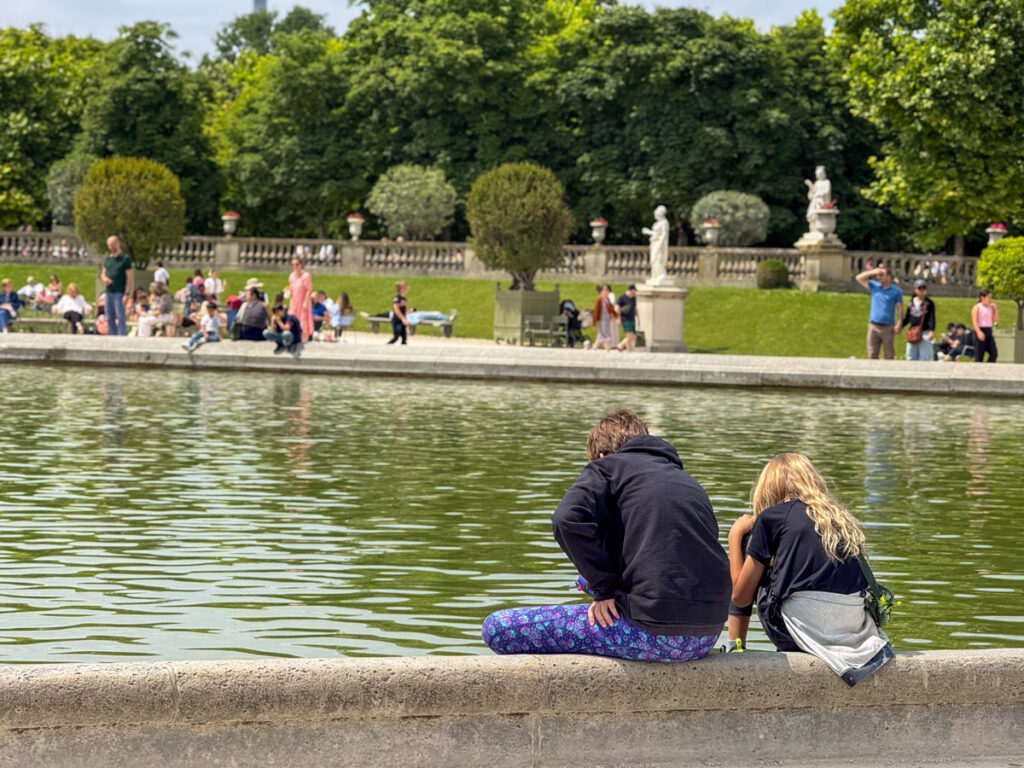
After a fair amount of searching, we found ourselves a set of four chairs in the full sun near the boat pond, and proceeded to have an absolute feast. Our cheese selections were so delicious. The meats were a nice compliment. The Orangina was an excellent palate cleanser. (We did consider picking up a bottle of wine, which would have been no problem at all, we just chose not to.)
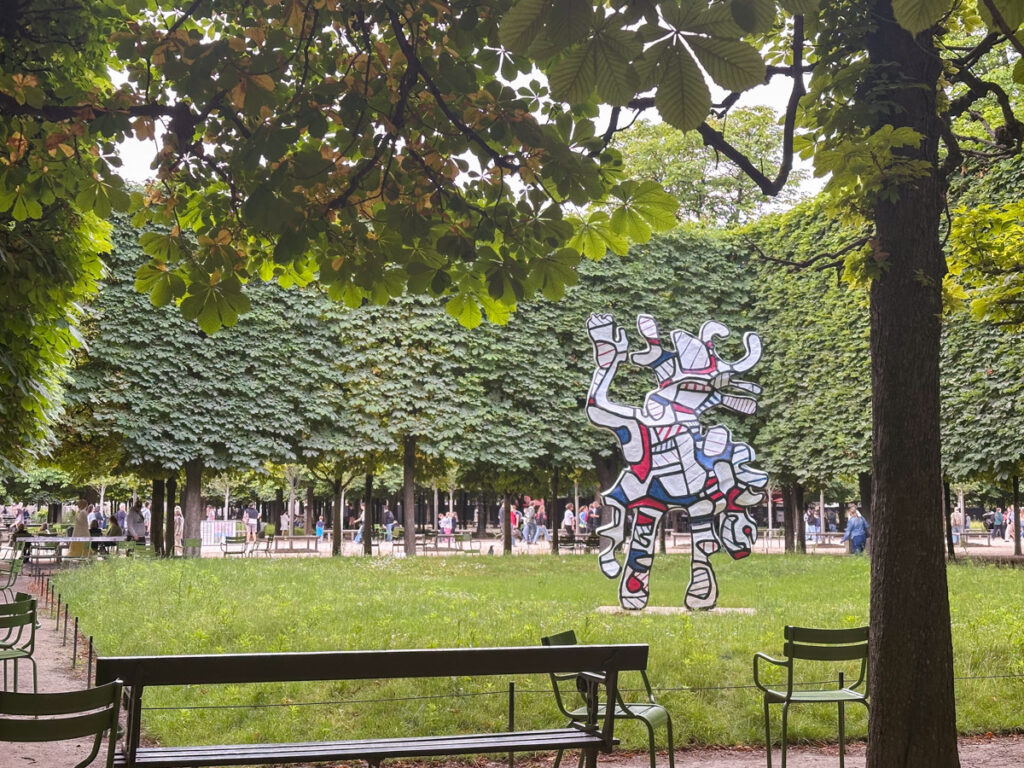
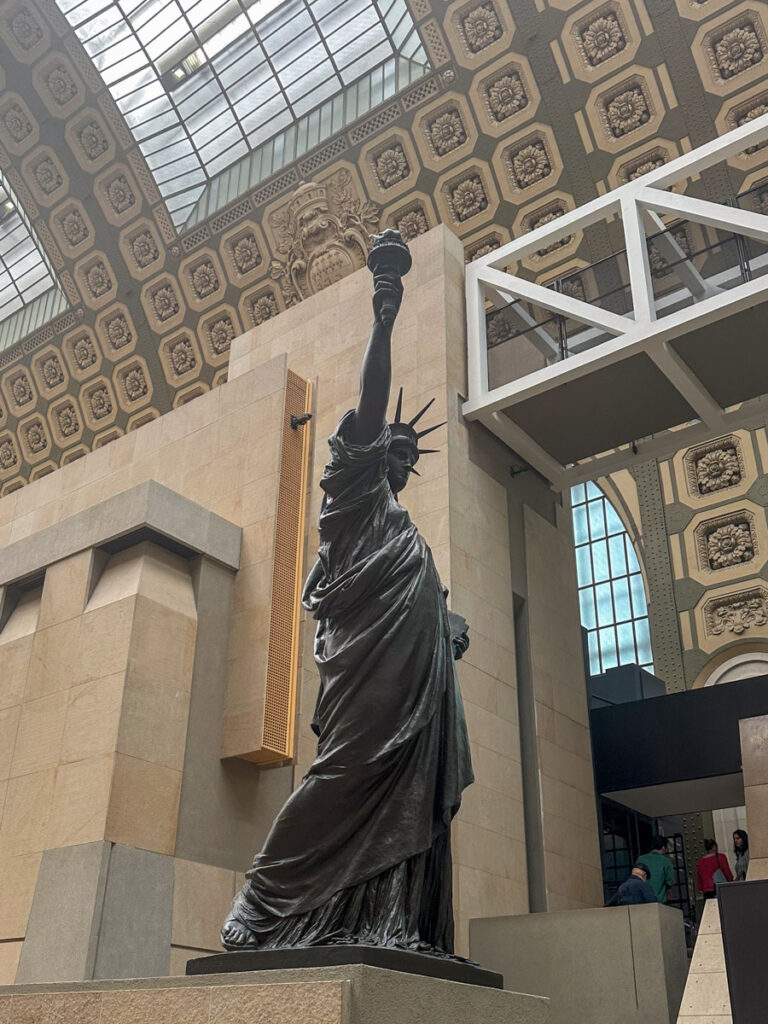
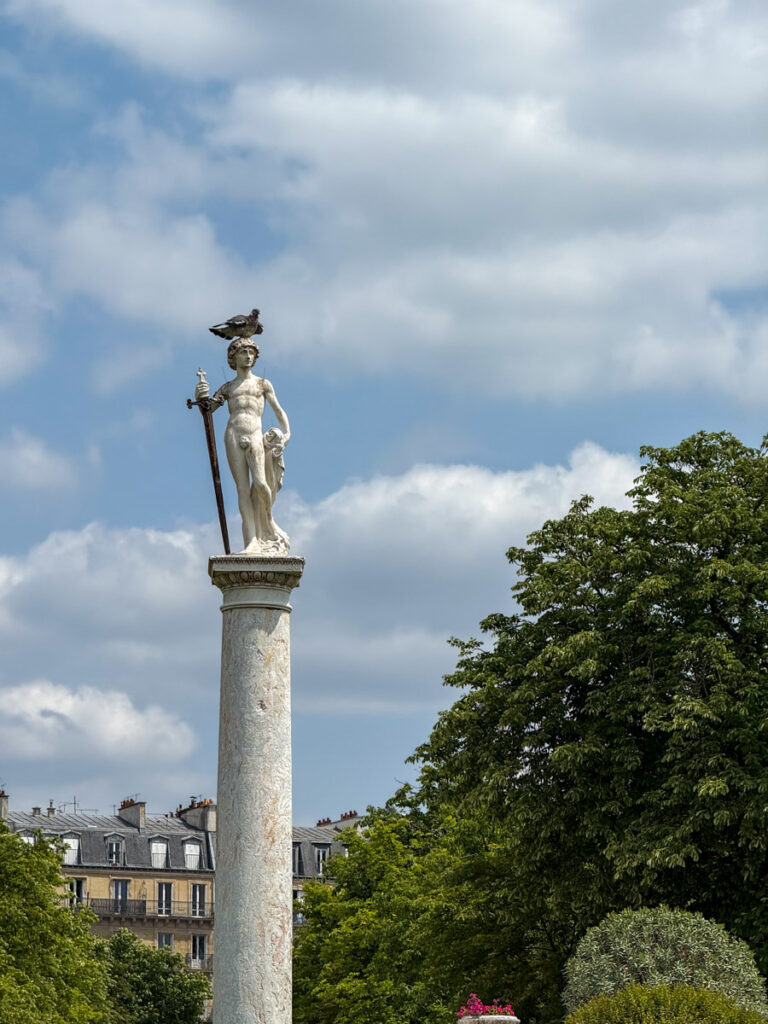
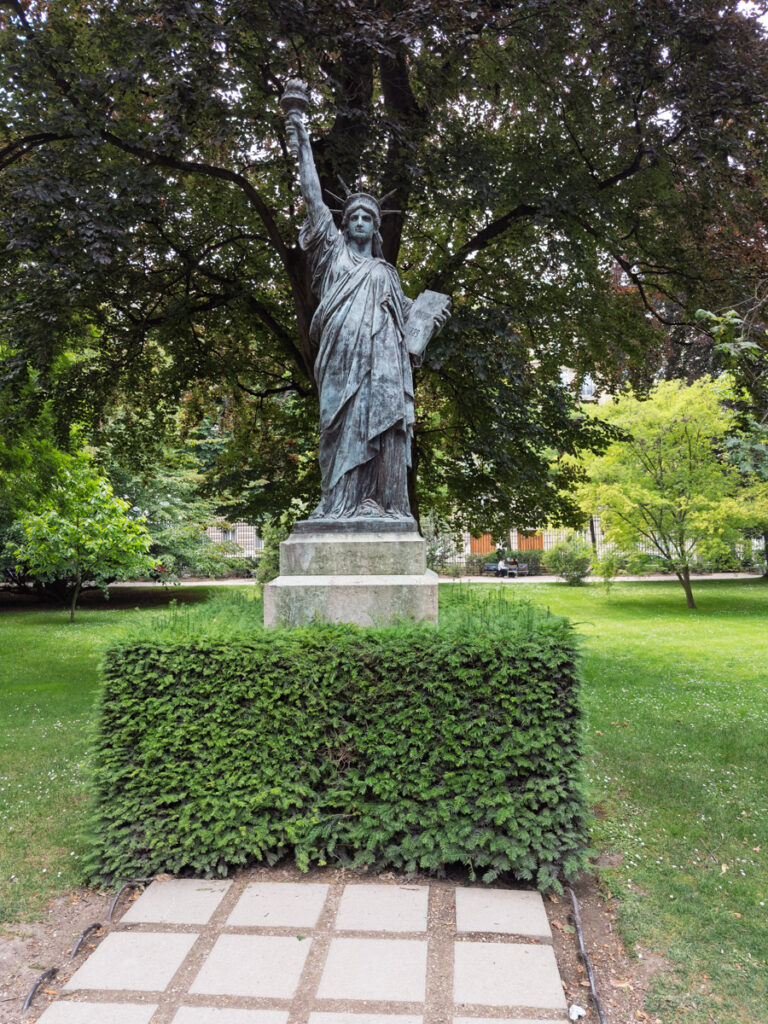
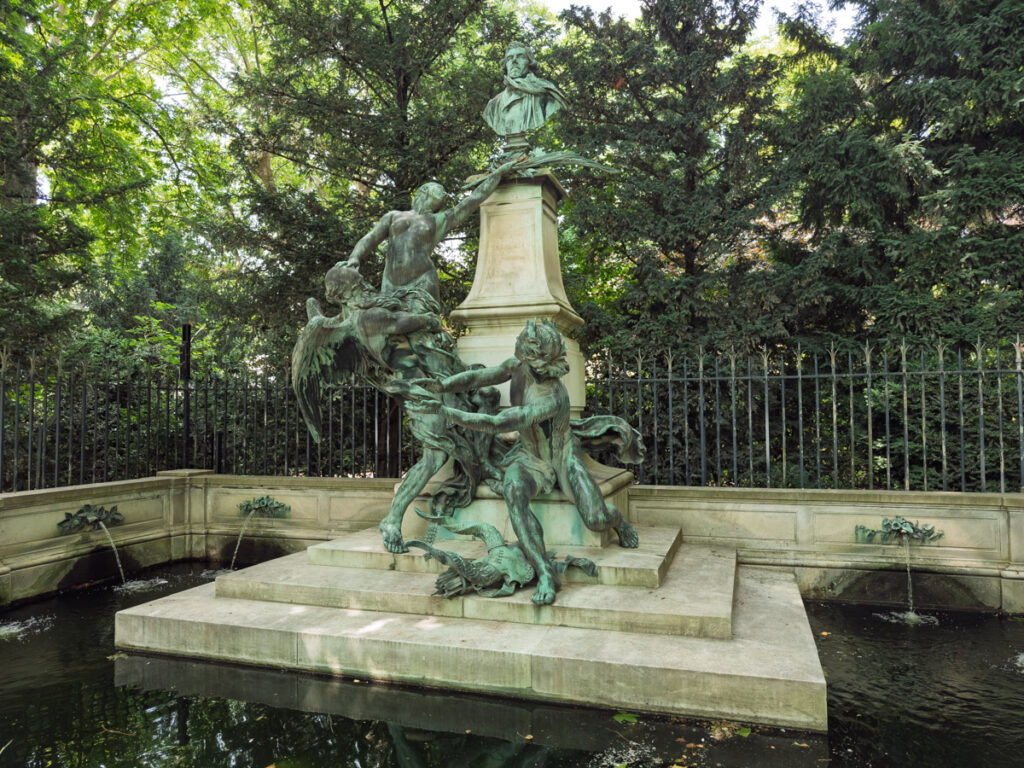
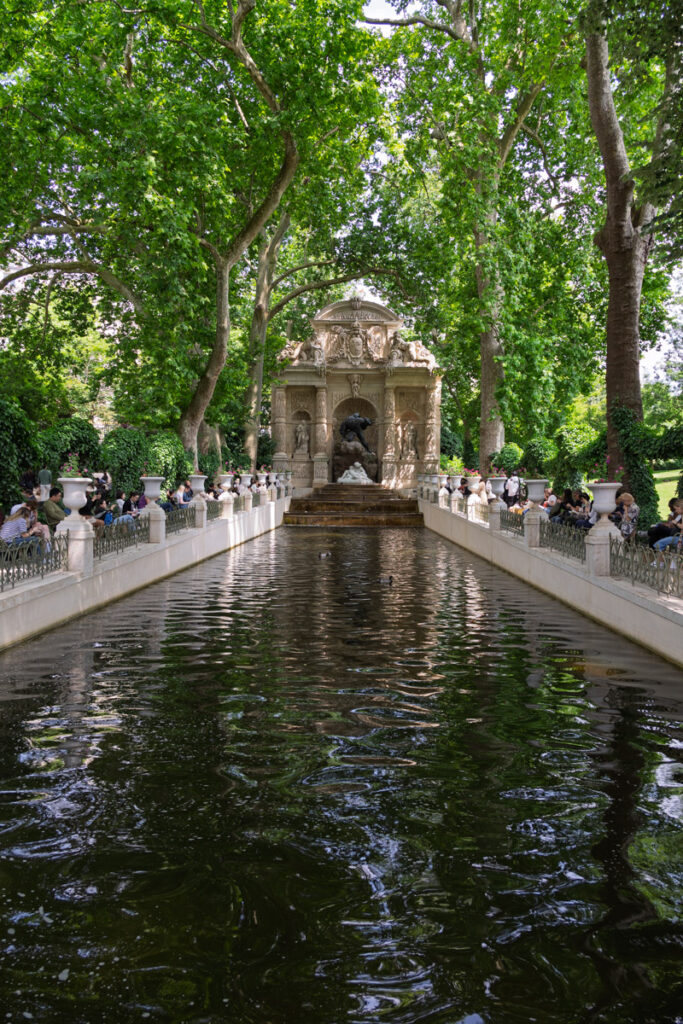
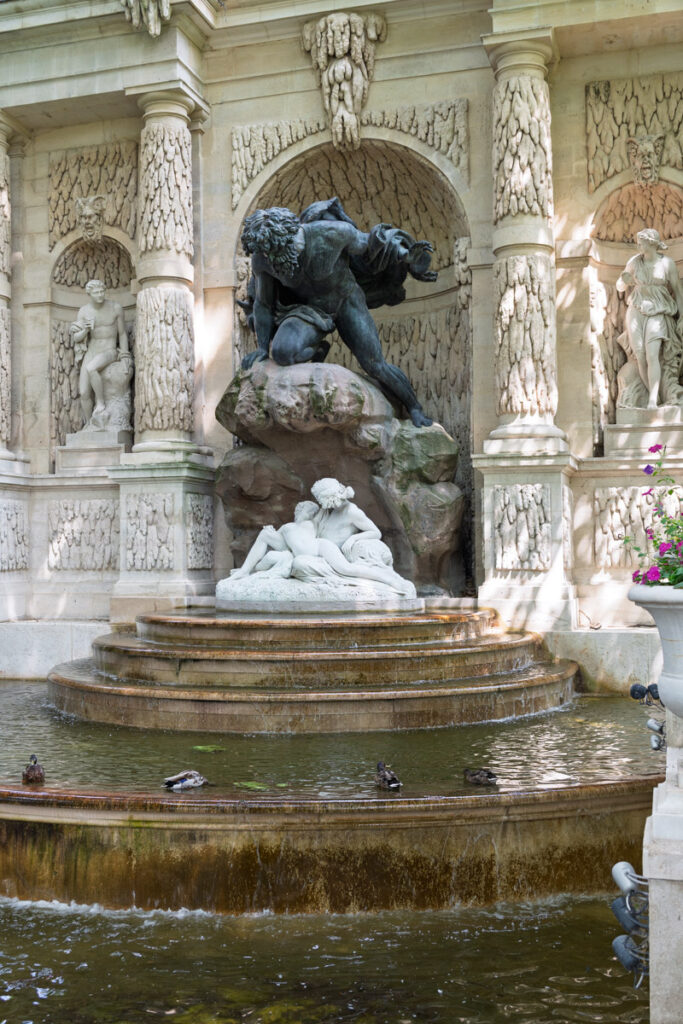
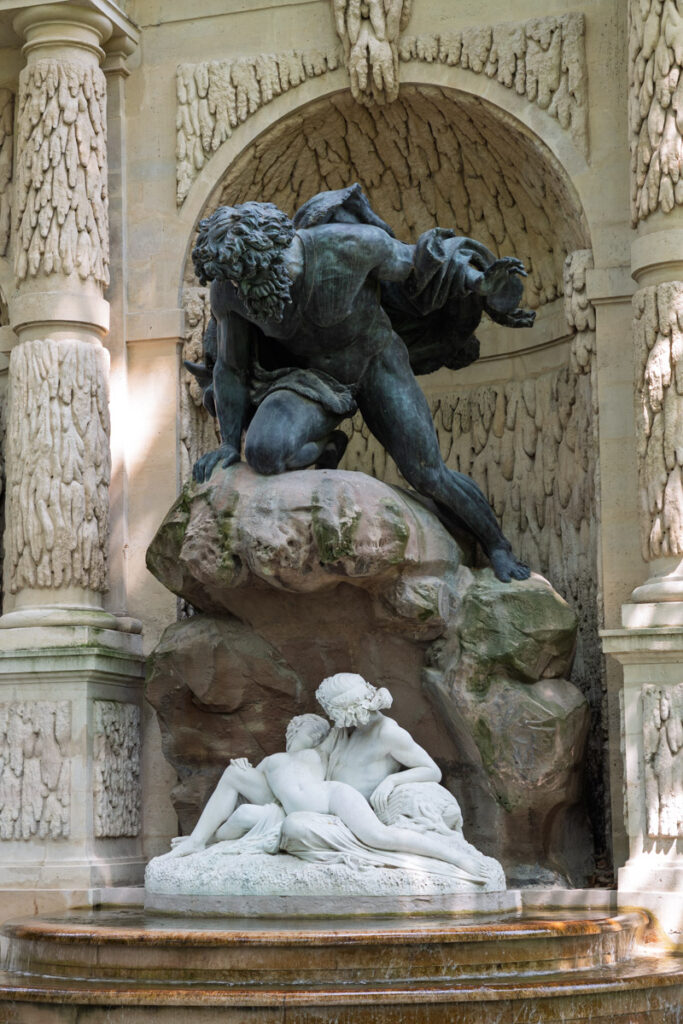
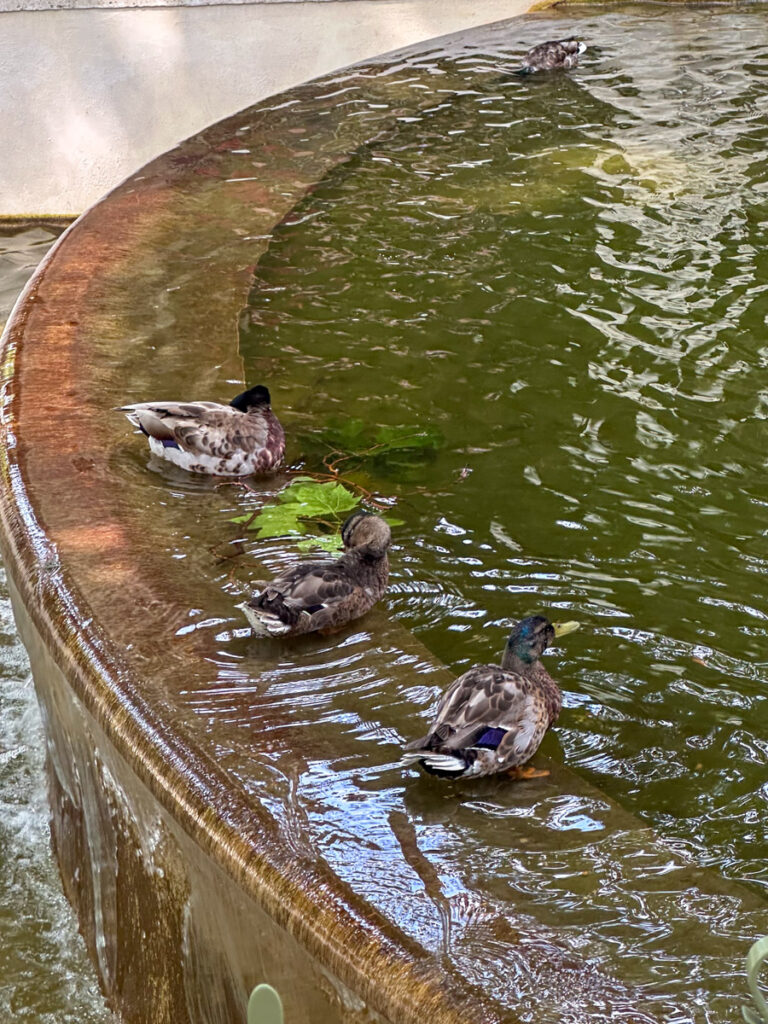
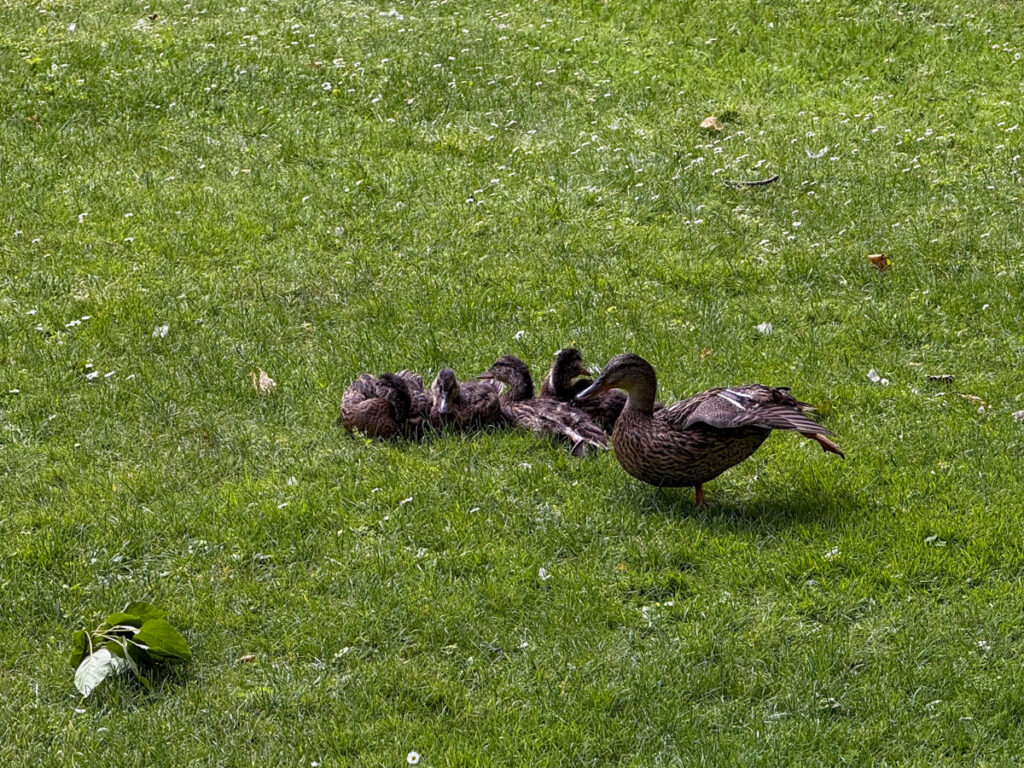
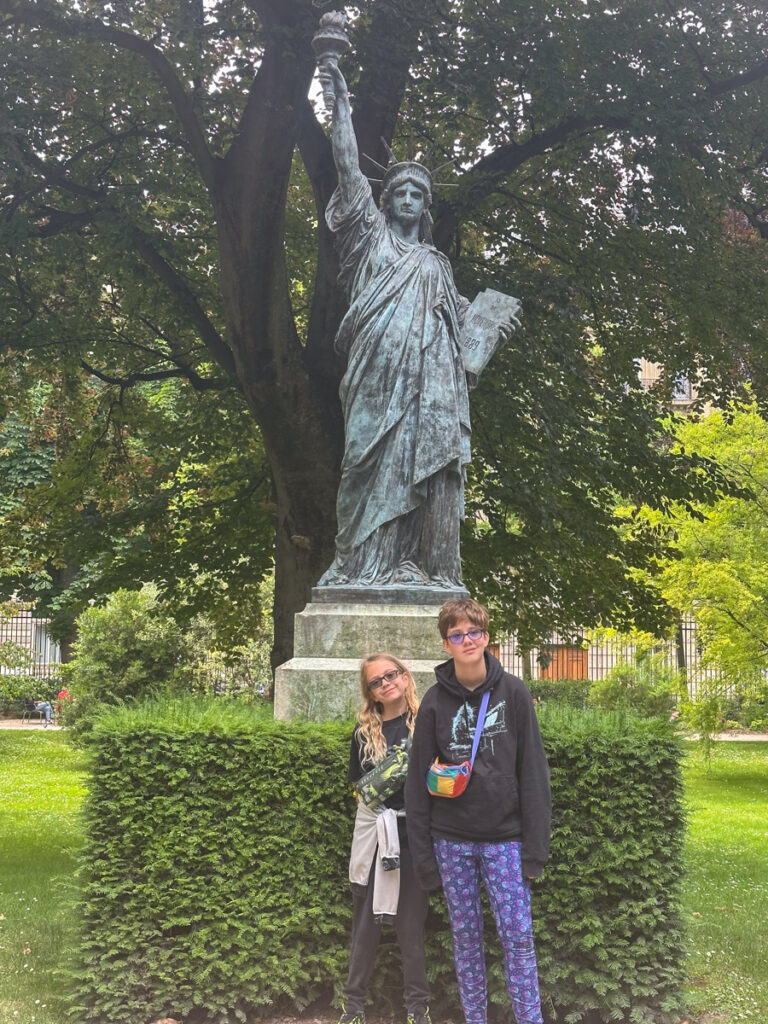
After lunch, we wandered around the Jardin, seeing our second Statue of Liberty (the first was at Orsay). Apparently, there are many statues of liberty scattered around Paris. Here’s an article, if anyone’s curious. We also made our way over to the famous Medicis fountain, built in 1630. Even with the crowd surrounding it, the fountain maintains its air of tranquility. We enjoyed watching the ducks and occasional pigeons and starlings enjoying the water. There were whole families of ducks wandering around the grounds, much to the kids’ delight.
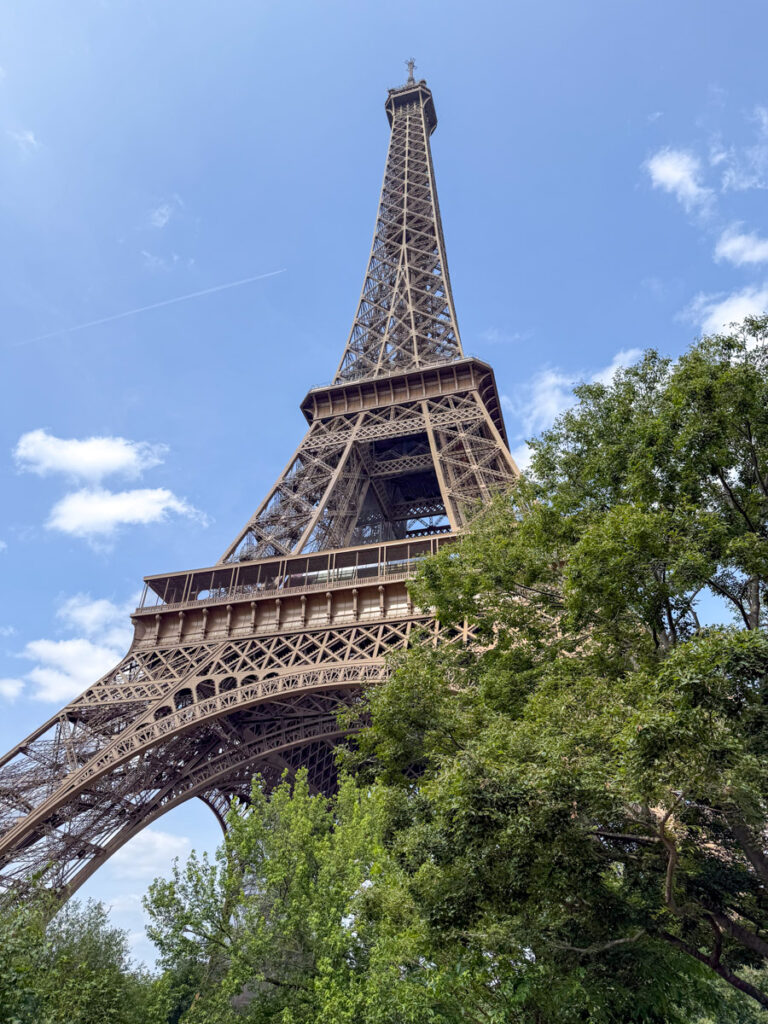
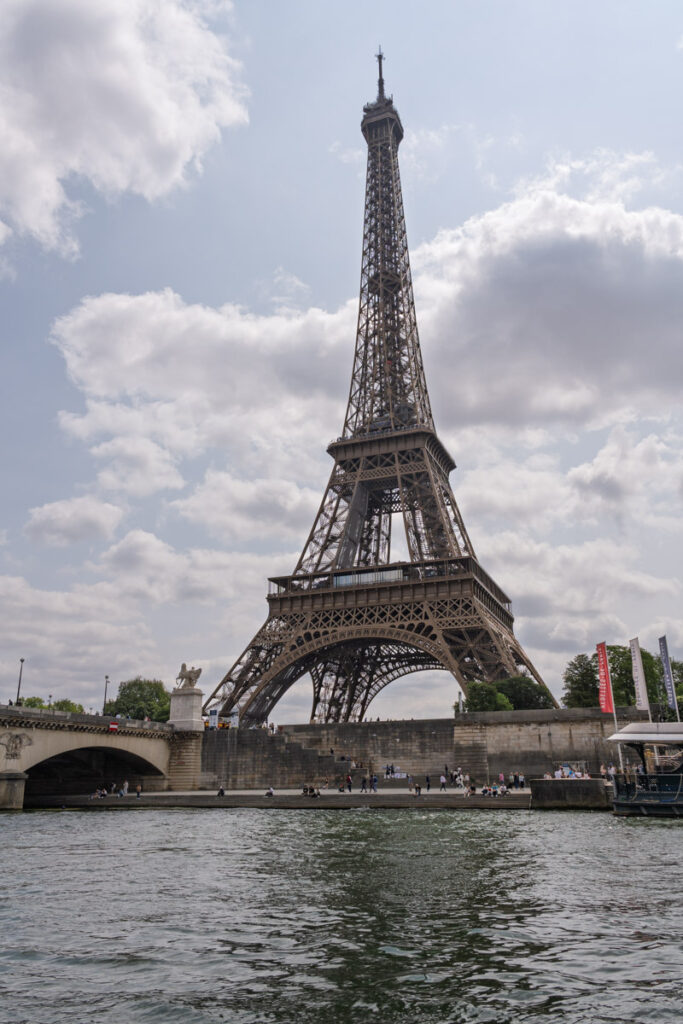
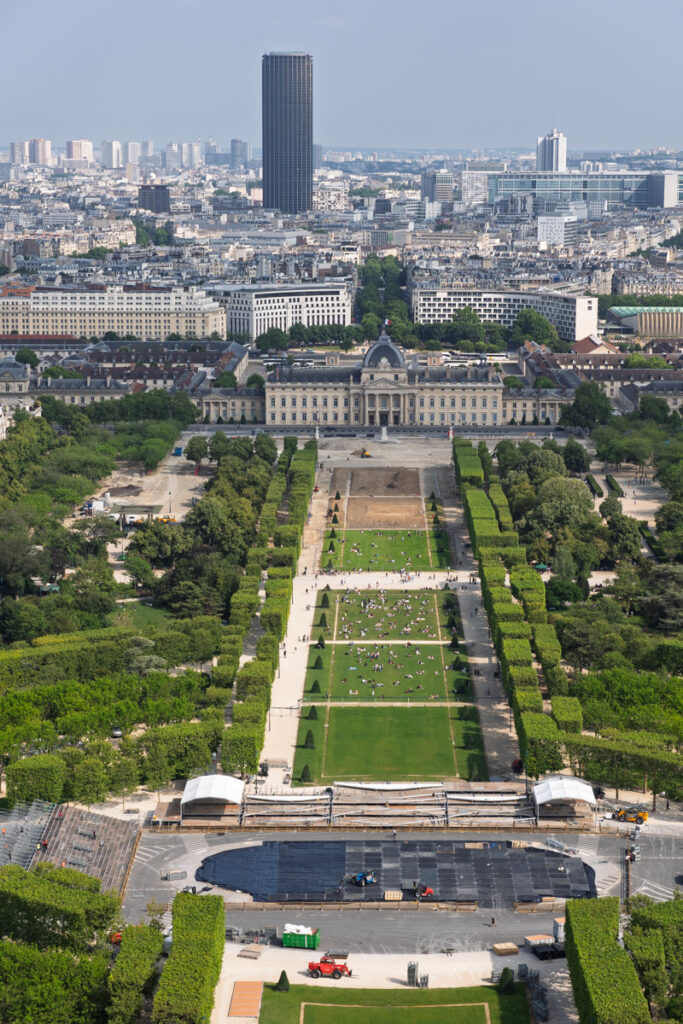
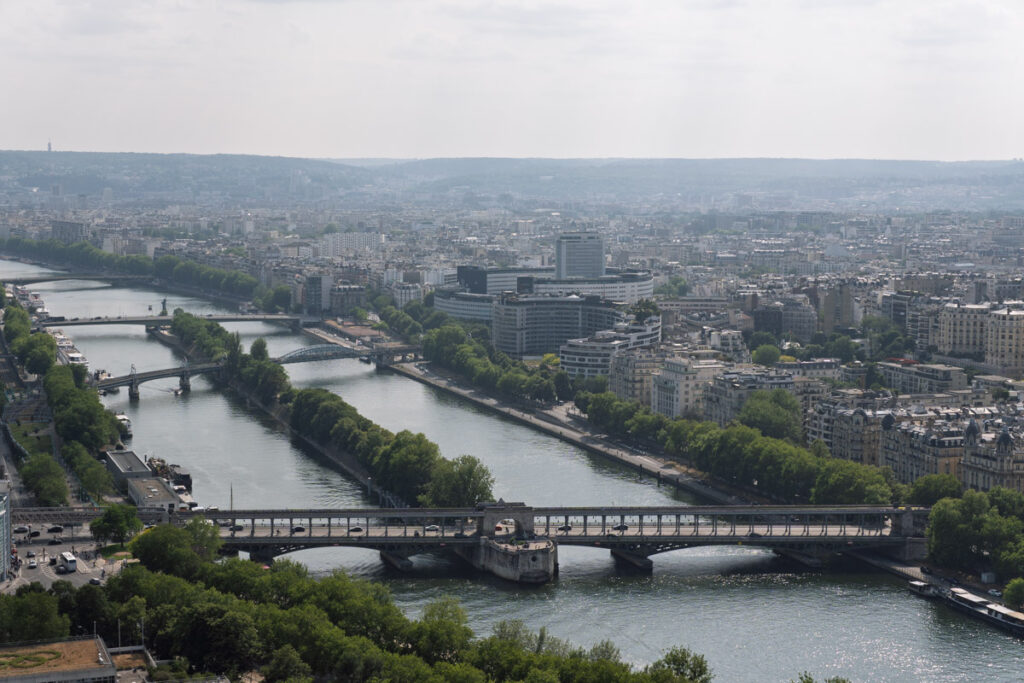
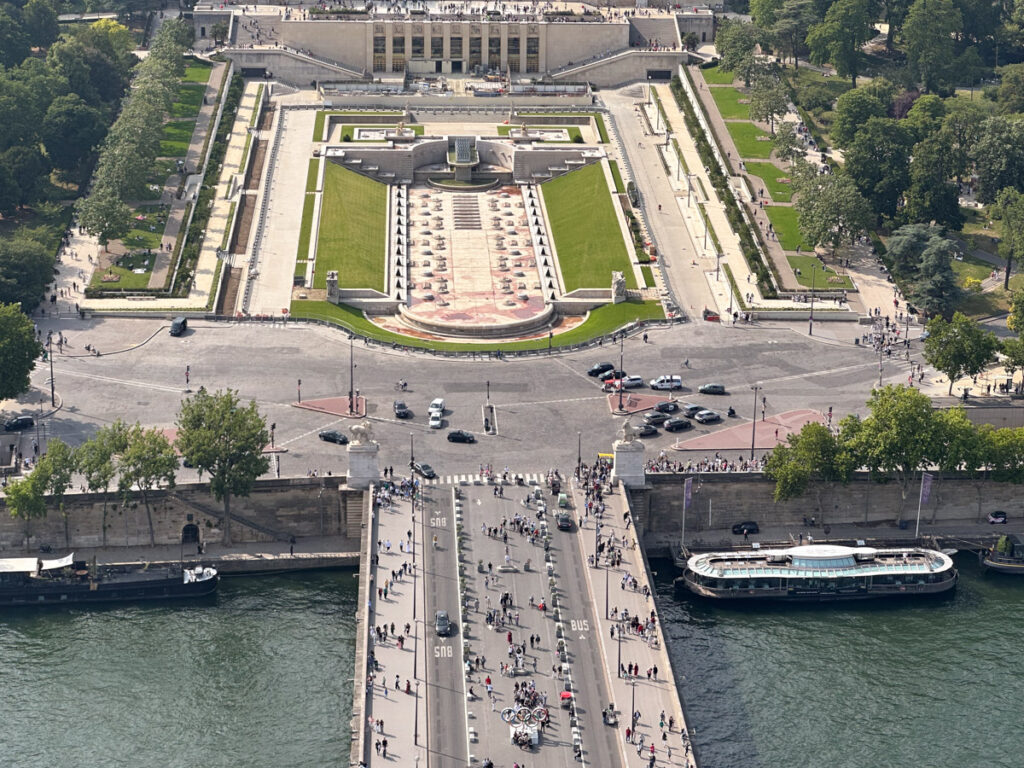
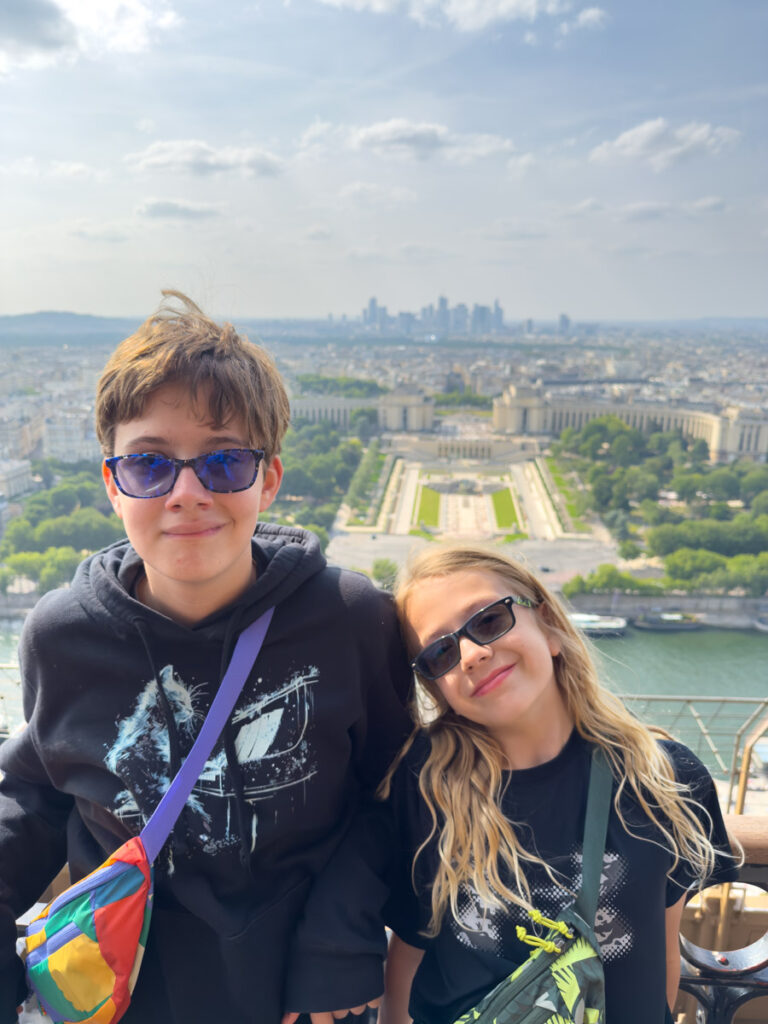
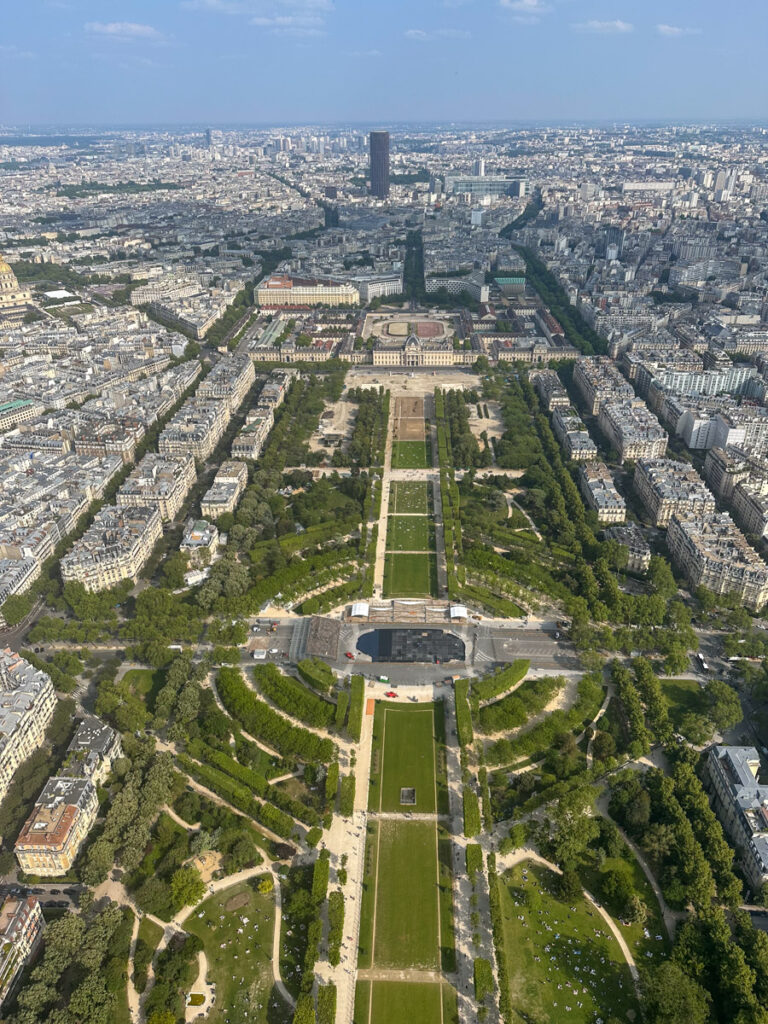
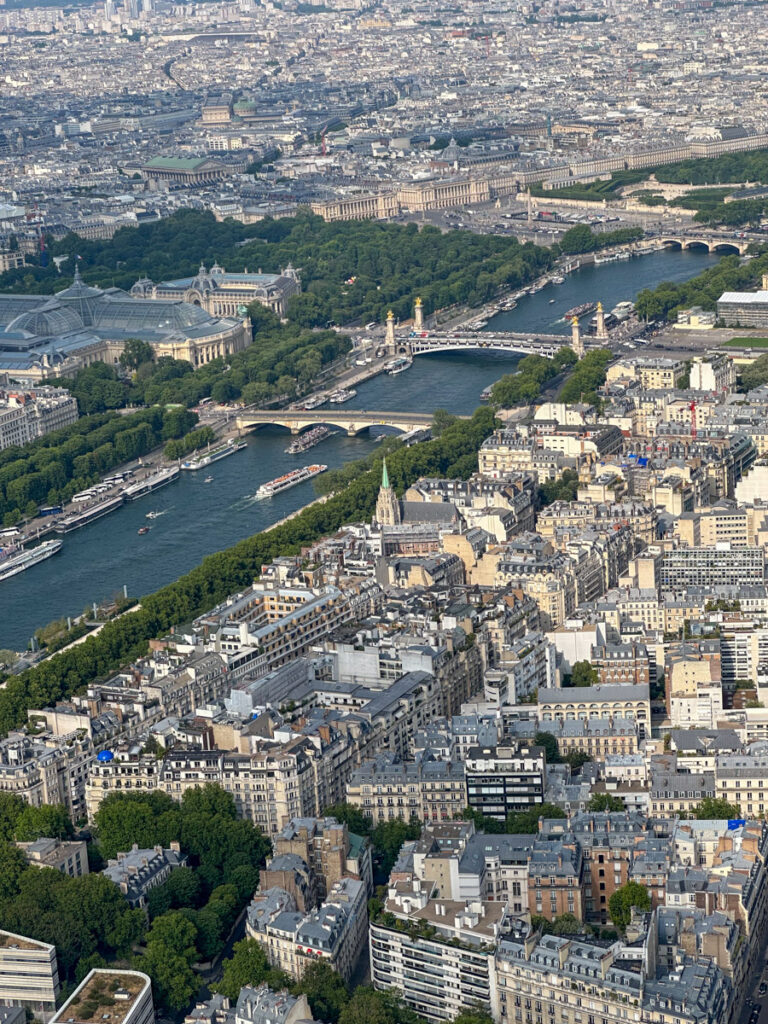
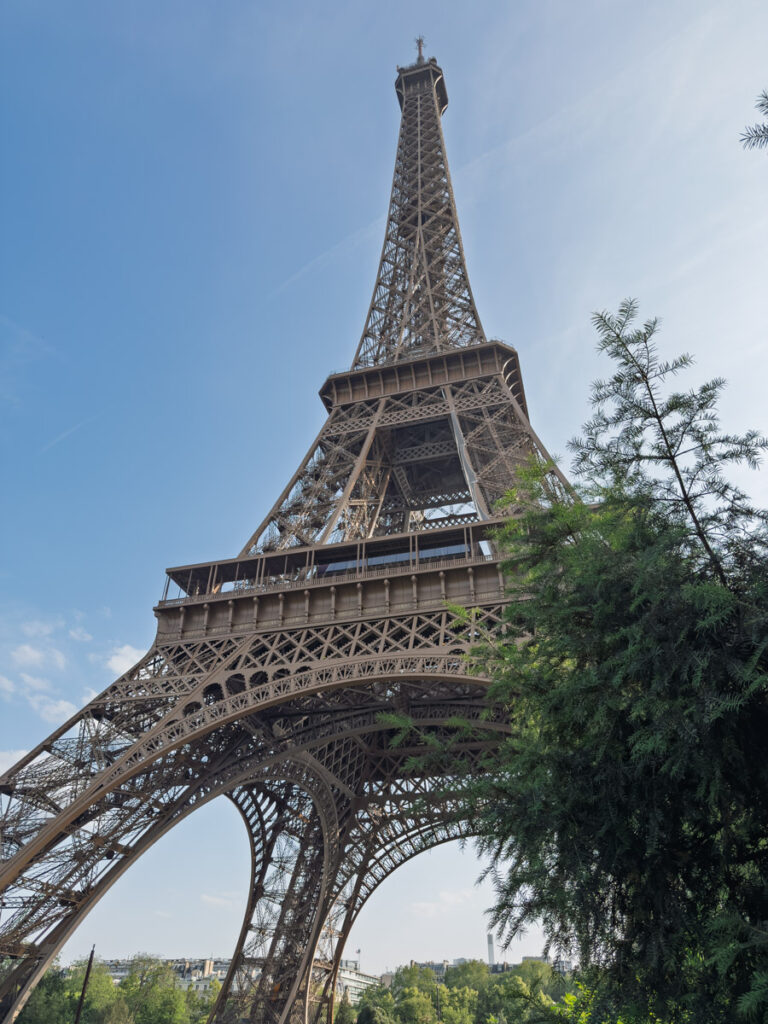
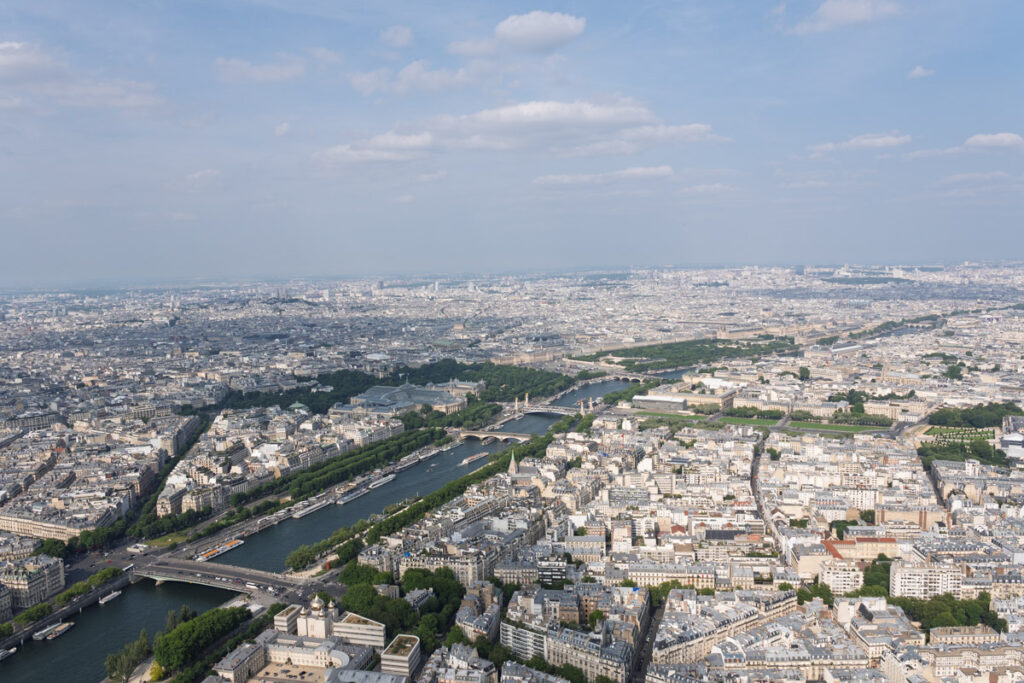
We had to leave the Jardin to make it to the Eiffel Tower for our timed entry at 5:00p (17:00). We metroed over to the area and then stood in a series of not-particularly-long lines for the next little while. First we went through a security line just to enter La Tour Eiffel’s grounds. Then we went through another line to show our tickets. This got us onto the first elevator up to the second floor (377 feet). Then after examining the views on this floor, we waited in line for yet another elevator up to the summit (906 feet). (Total height of the tower, with antenna, is 1083 feet.)
Getting tickets to the summit level had not been easy. If I remember correctly I had to purchase 60 days prior to the date we wanted to go, and I had to set my computer to France’s time zone so it would allow me to complete the purchase. I had been watching ahead of time and summit tickets would sell out very, very quickly. Luckily, I was able to secure us tickets. June, while summer vacation time for us, is not yet summer vacation in France. Schoolchildren there wouldn’t get out till early July. For all I knew, it’s even more difficult to score summit tickets during July and August.
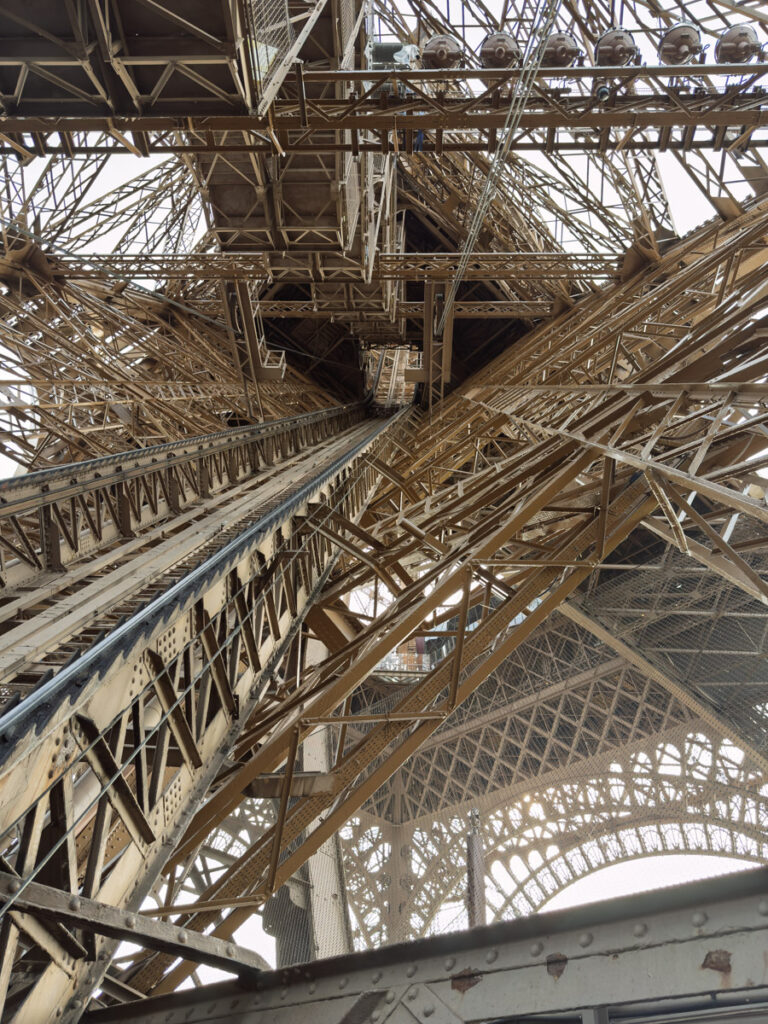
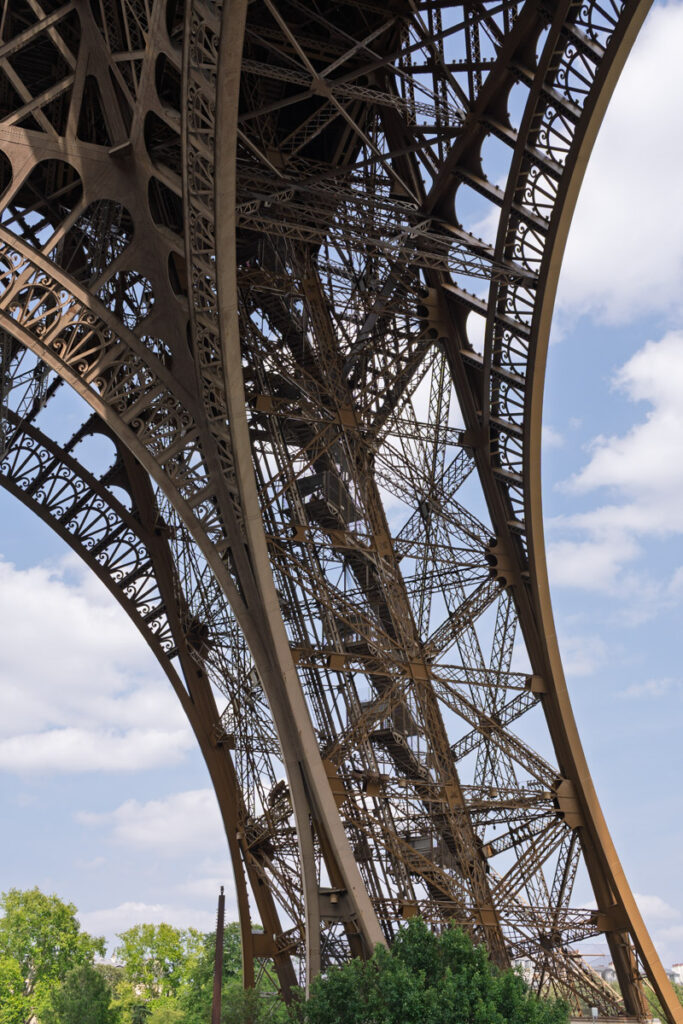
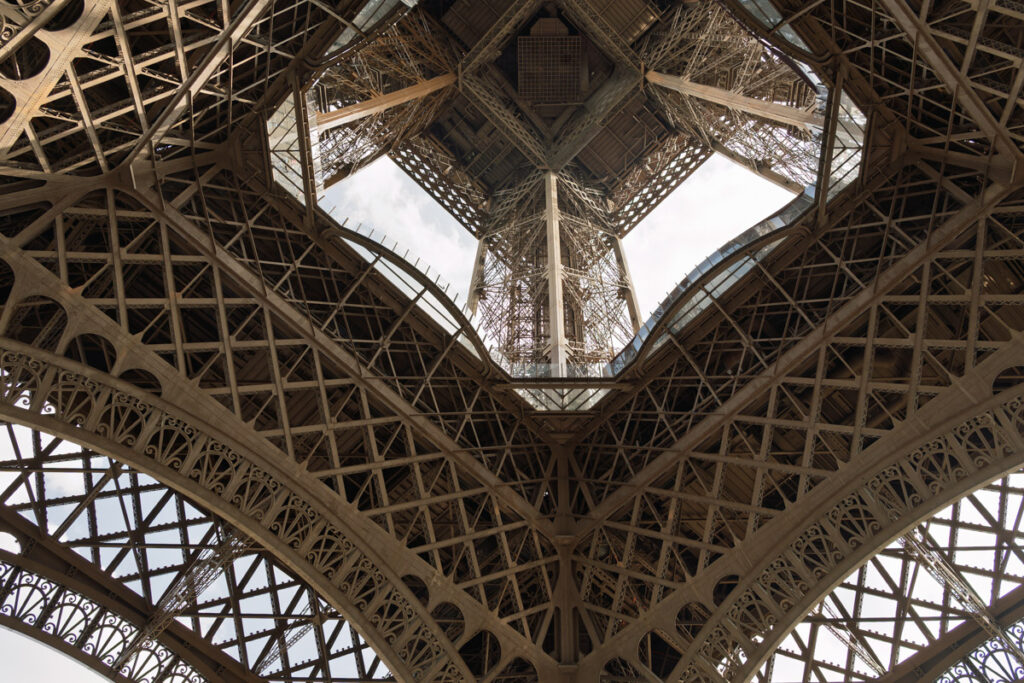
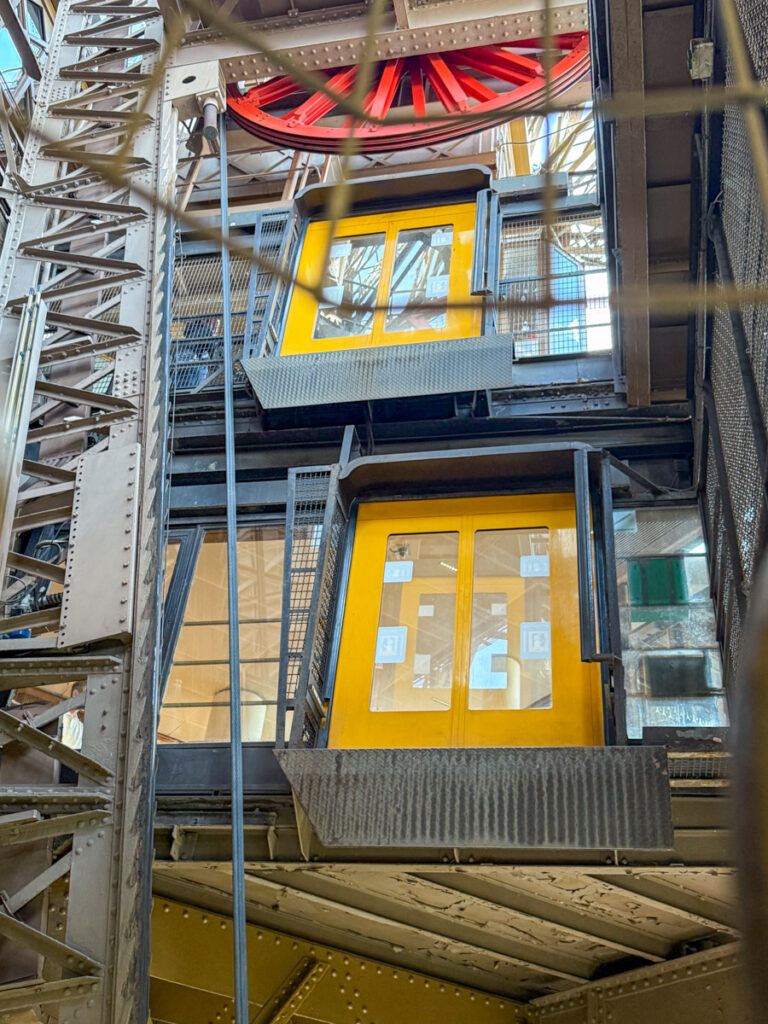
Riding the elevator up to the summit was particularly interesting. The Eiffel Tower’s structure is unique and fun to watch as it passes by. The monument’s website tells me it has 18,038 metal parts and uses 2.5 million rivets. Another interesting fact we were presented with while there … the Eiffel Tower, which is made of iron, needs to be repainted every seven years. According to the website, 60 tons of paint is required. Also, and I didn’t realize this, its paint color has changed over the years.
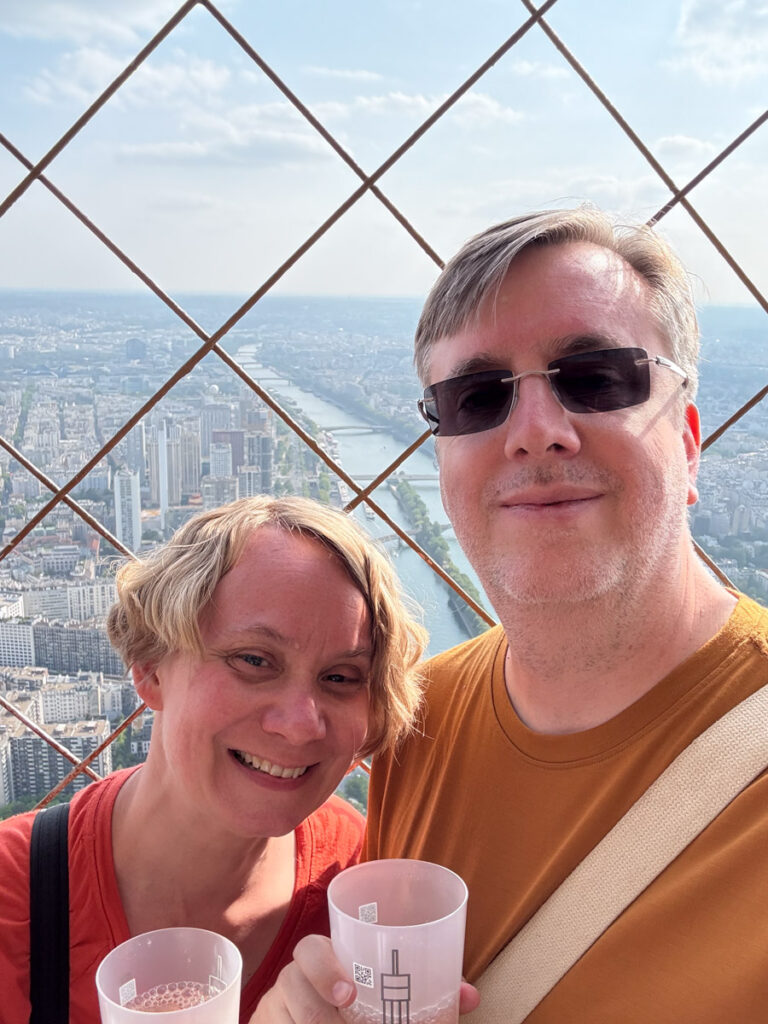
The views from the summit are amazing. You kind of have to become one with the crowd, but otherwise, once you find a little open space on each of the sides, you can relax a little and absorb the views. We didn’t spring for champagne at the top, but we did get little plastic cups of sparkling lemonade, which was most welcome with all the human body heat around us.
Your only option for descending from the summit is by elevator (you guessed it, another small line). But, once we got to the second floor, we opted to take the stairs down, even Sean who has an aversion to heights. It was much less sweltering than the elevator, we didn’t have to wait for it, and walking right in amongst the iron structure was actually pretty neat. Sean says that because of the four-leg structure of the Eiffel Tower, he didn’t feel that the tower swayed as much as some of them do.
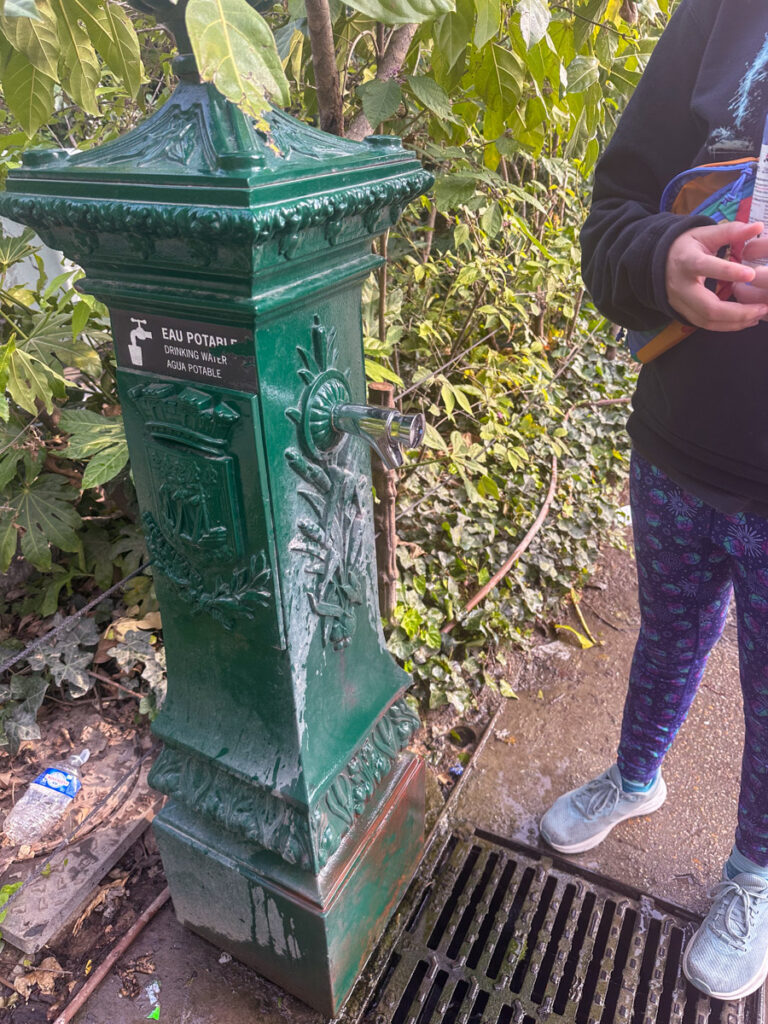
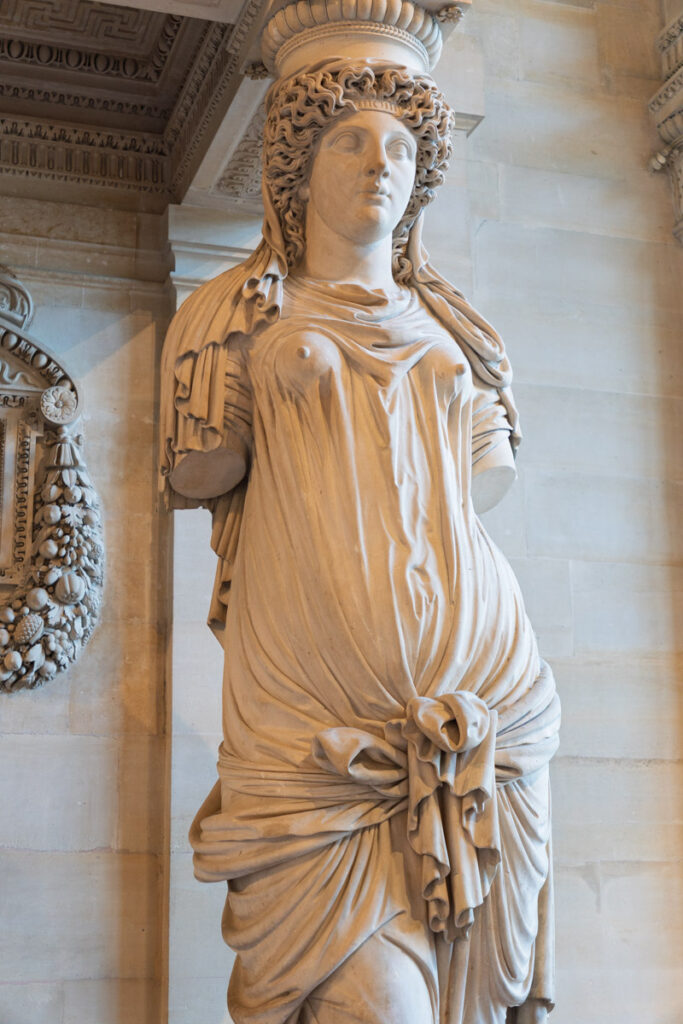
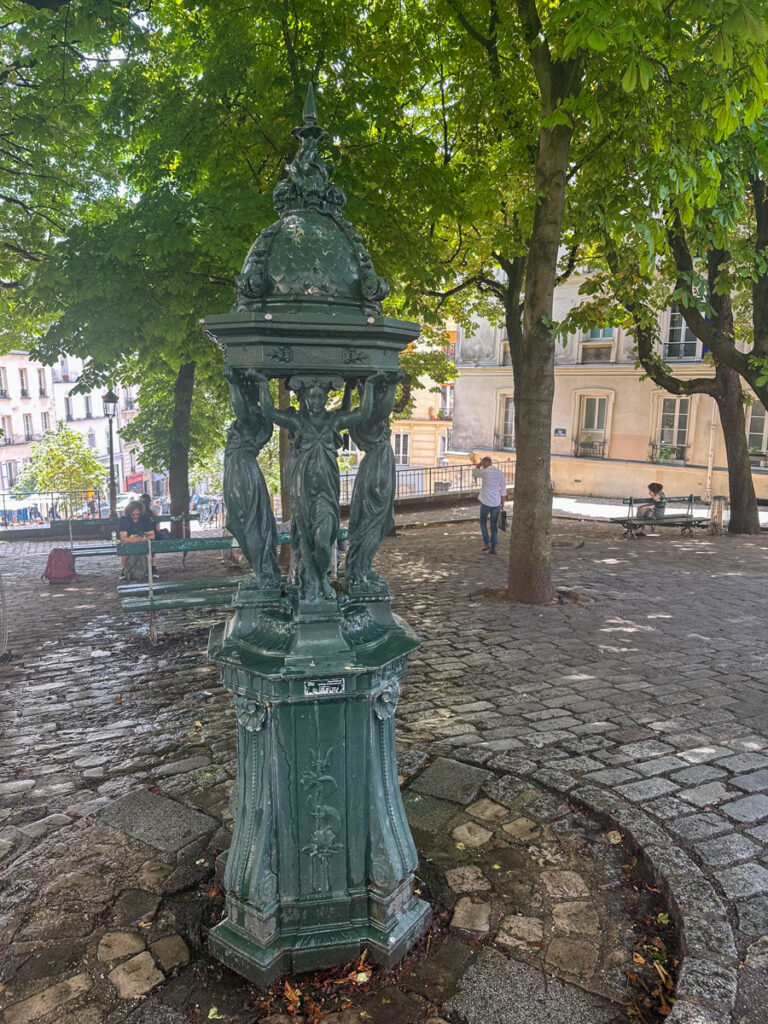
On our way leaving the Eiffel Tower, we happened upon a Wallace fountain, and refilled our water bottles. I don’t remember if we’d seen one before this, but it’s the first time I remember partaking. Apparently Sir Richard Wallace provided funding to have these installed around Paris starting in the 1870s to ensure a source of fresh drinking water for the poor. I read in the linked article above that, “The four Wallace caryatids, holding up the dome of the fountain, represent four virtues – kindness, simplicity, charity and sobriety.” Usually painted a dark green and very statuesque, they’re easy to pick out, and they do indeed supply delicious, safe drinking water, even to this day.
Once back in our neighborhood, we hit the grocery store to stock up on breakfast goods for the next morning. Then we hit a poke and bubble tea place for dinner, at the kids’ request. Then we all got cleaned up for our VERY early start the next day.
Day 4 – Tuesday – Sunrise Photos, Catacombs Disappointment, Notre Dame
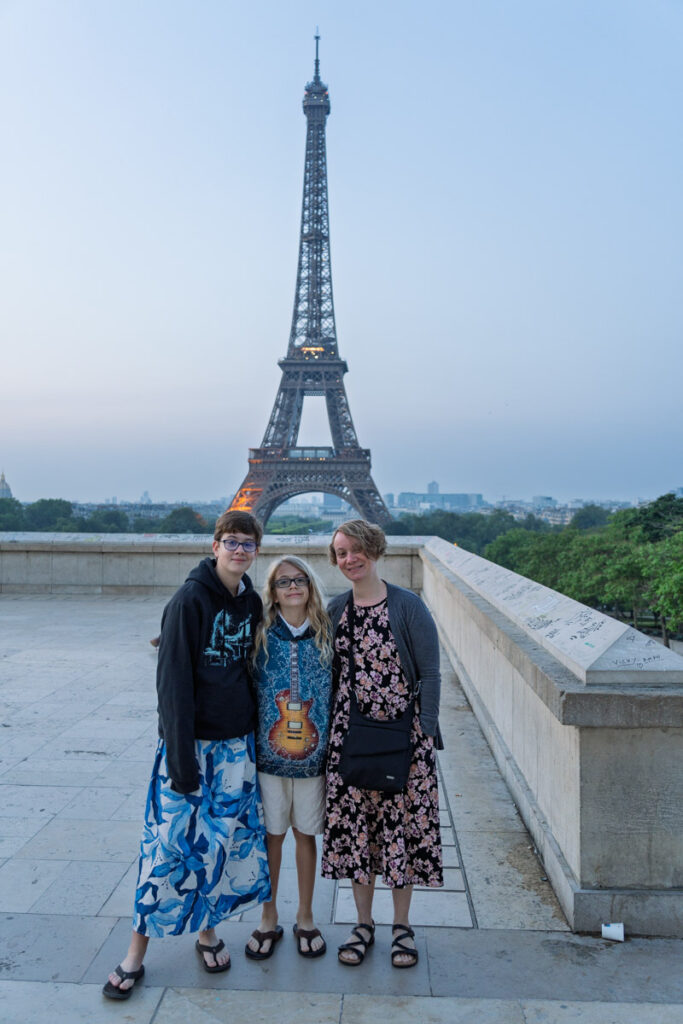
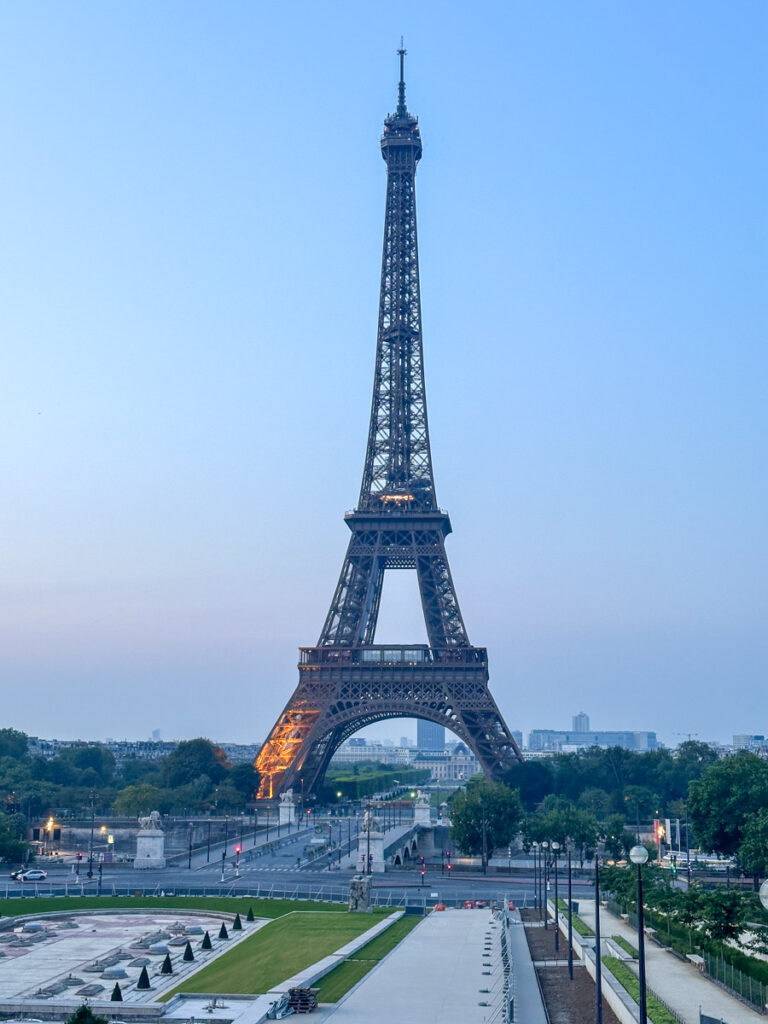
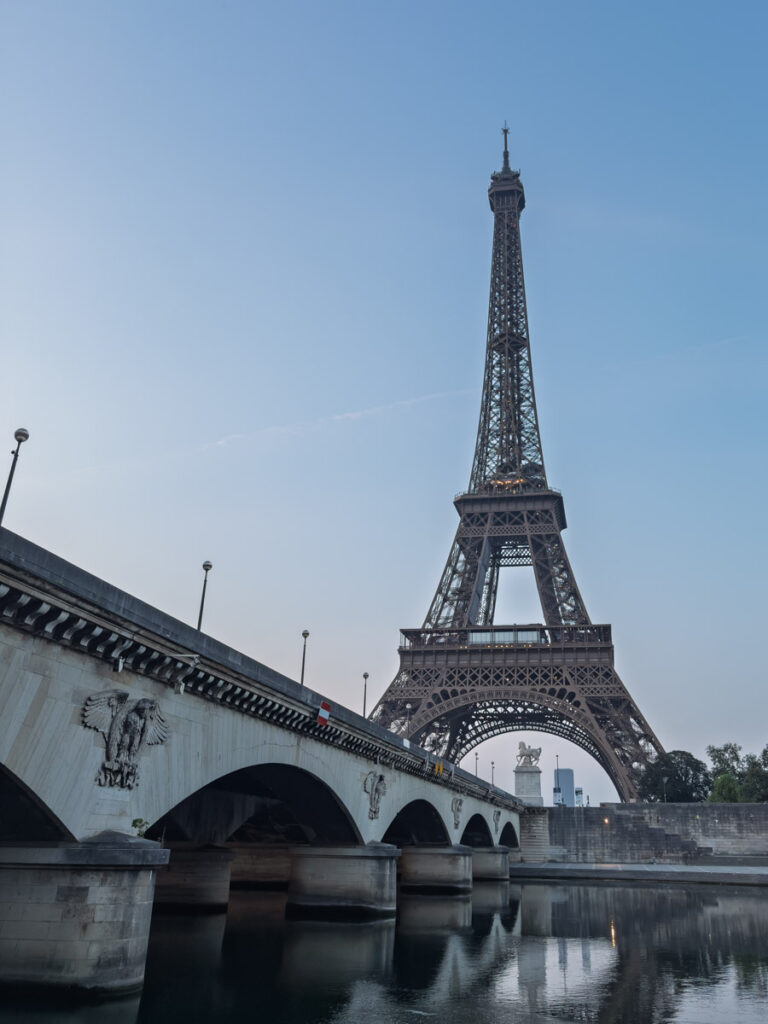
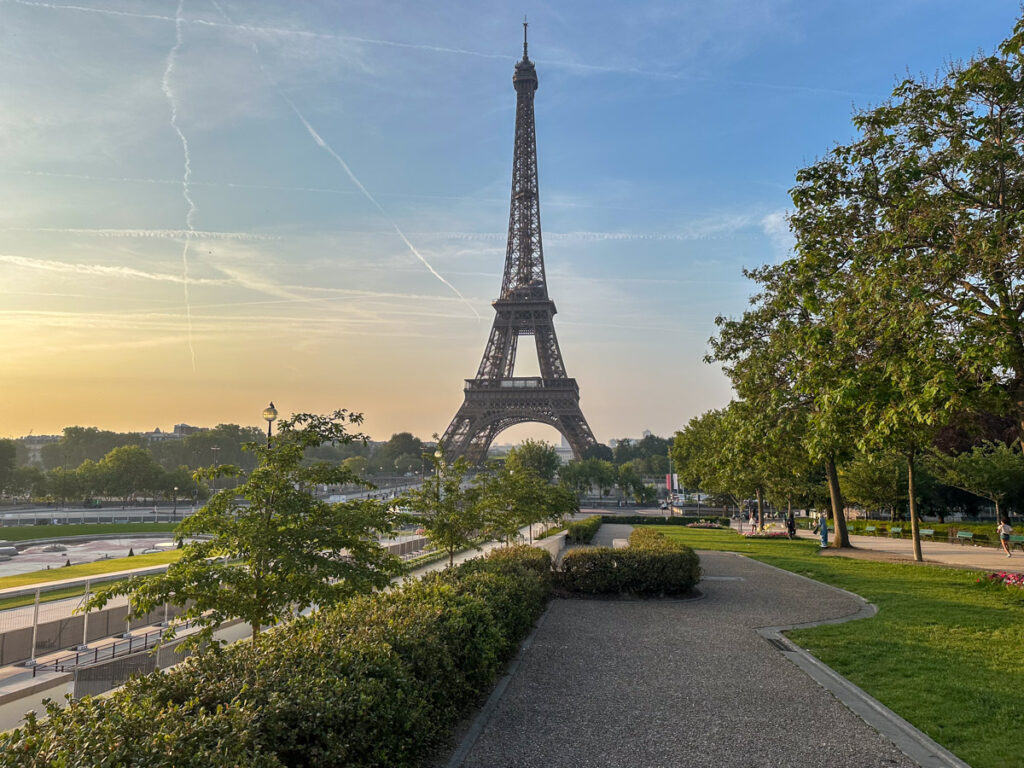
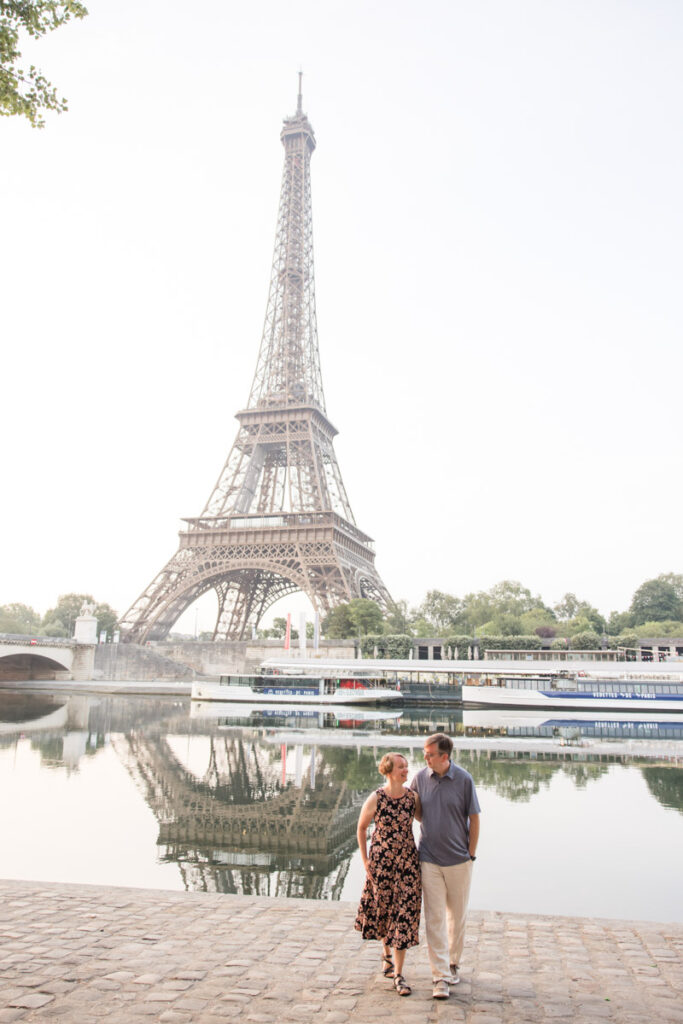
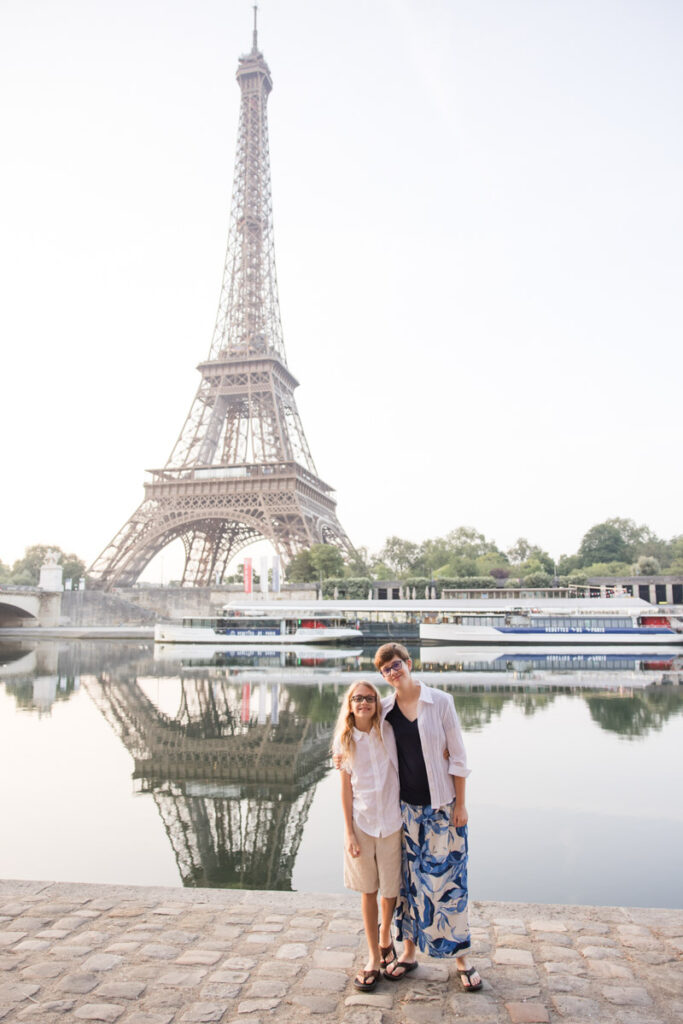
Months before we were scheduled to take this trip, I had decided that as an anniversary gift to ourselves, I wanted family photos taken with a view of the Eiffel Tower. I looked around for photographers (there are many) and reached out to a company that seemed reputable. One of the company’s photographers responded to us immediately to discuss our options. And that’s the story of how we were awake at 4:00 in the morning to pretty ourselves up to the best of our ability and meet a nice lady named Anais (from The Parisian Photographers) near the Eiffel Tower at 5:45a for sunrise photos.
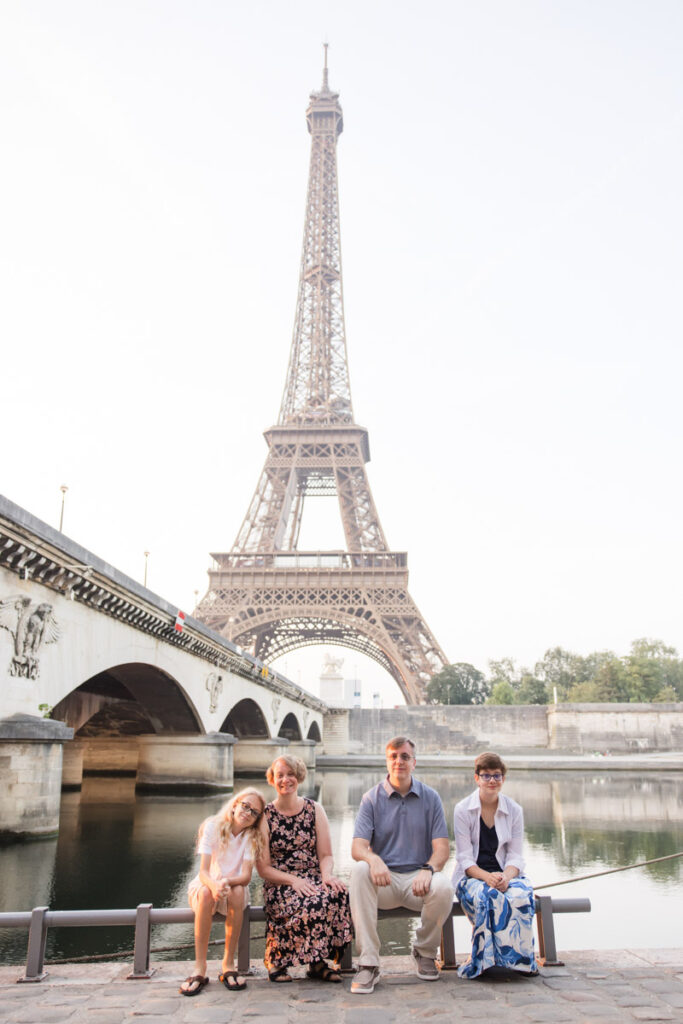
We had talked about locations ahead of time, and true to her word, Anais met us as discussed right on time. We had chosen a place right along the Seine that would feature a bridge in the foreground and the Eiffel Tower in the background. The river was quiet and still. There were very few people out. It was a little cold, so we stayed bundled up till photo shoot time, but it was pleasant enough that no one was overly bothered.
Anais helped set us immediately at ease. She took a series of photos aimed toward the boats on the water and then a second series of photos with the Eiffel Tower in view. She offered gentle guidance on how to pose and lots of encouragement. We could not have been happier with the photos she provided us.
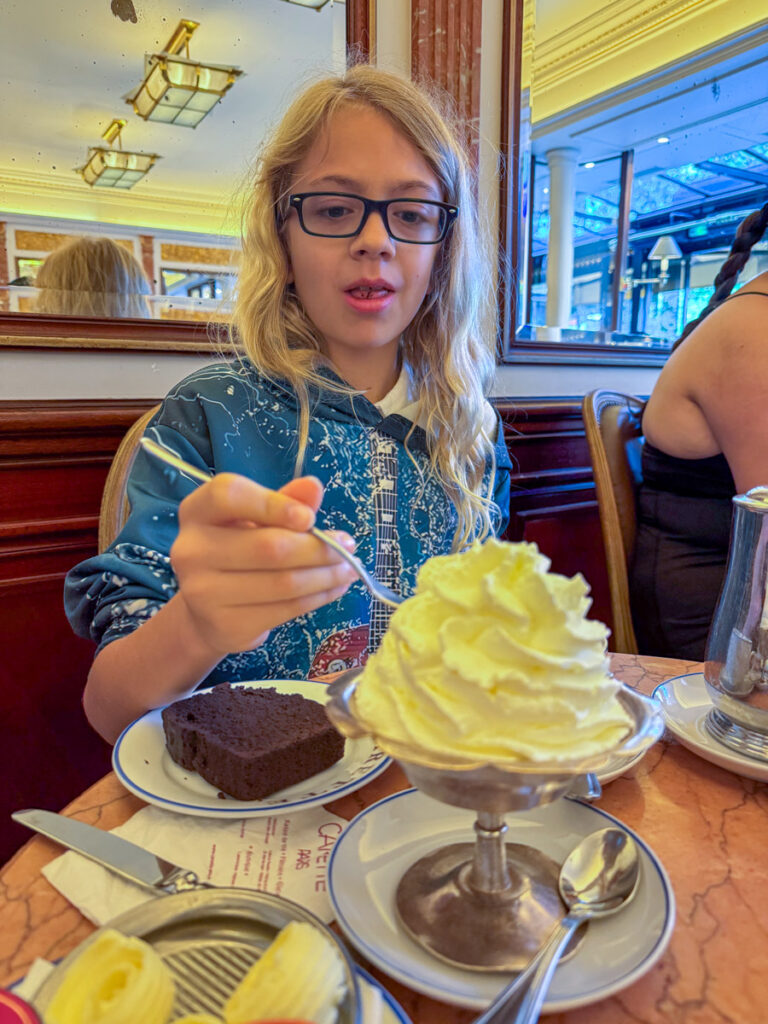
We finished up just before the Trocadero location of Carette opened at 7:00. The timing was such that we managed to be among the first folks seated for their famous thick hot chocolate with Chantilly cream. It was a welcome treat after our early start and a nice antidote to the cool morning air. For my part, I had coffee, but Sean let me taste his chocolate. It was thick and rich and on the sweet side. I think the cream is meant to thin it out and temper the sweetness, in the most decadent way possible, but of course our kids were having none of that, preferring to drink it straight.
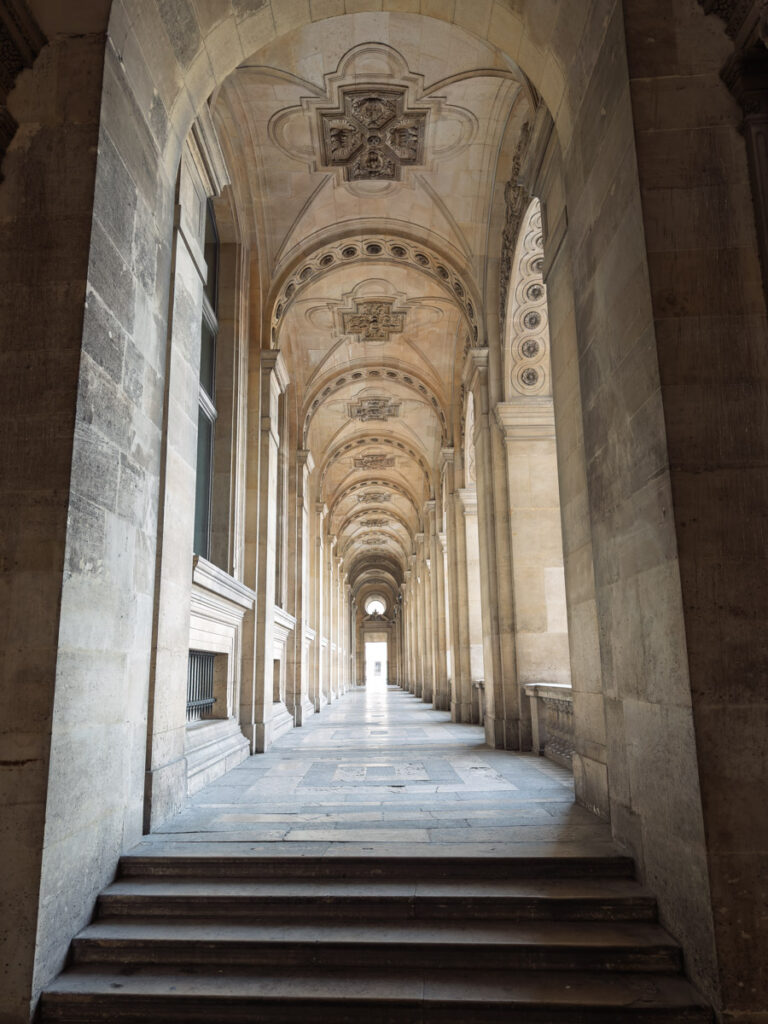
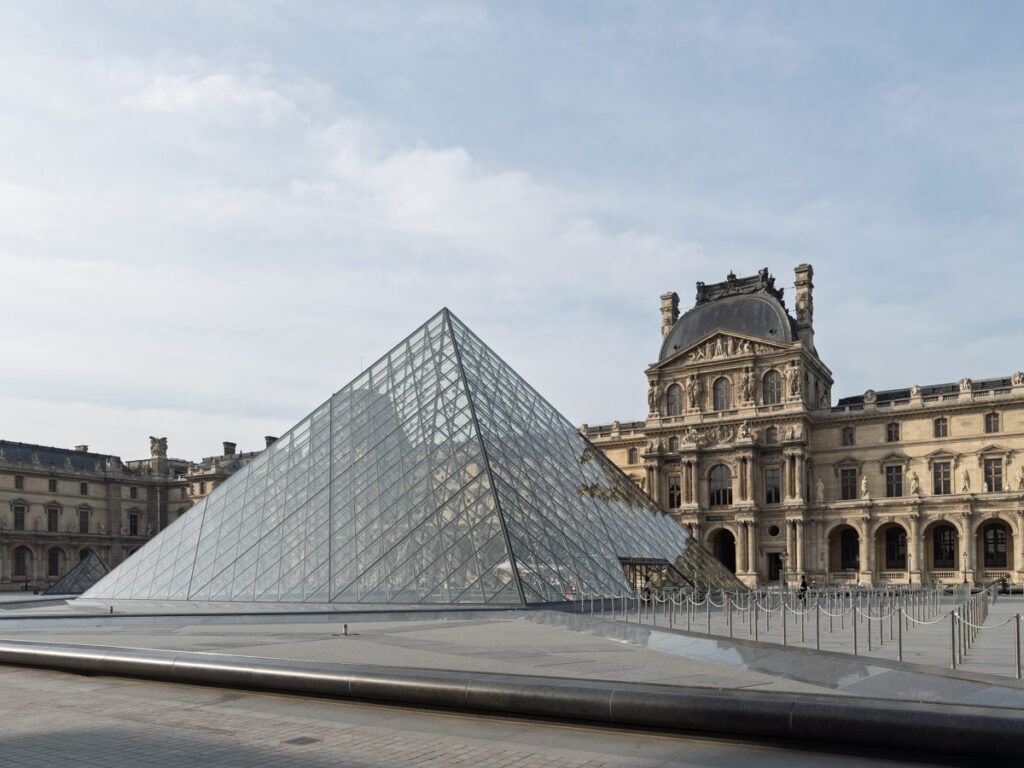
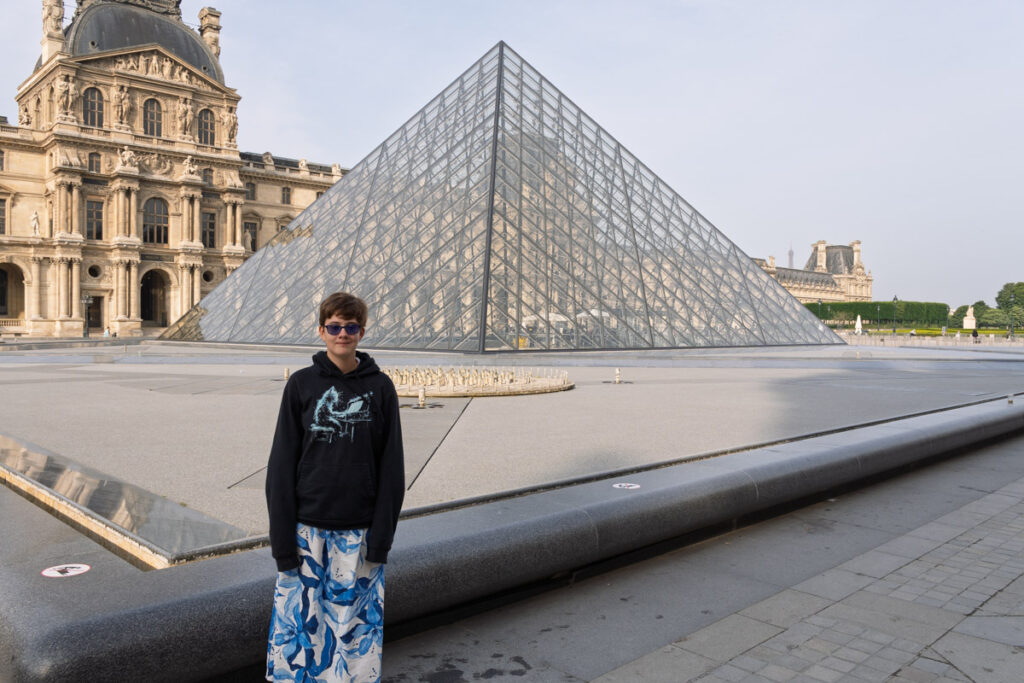
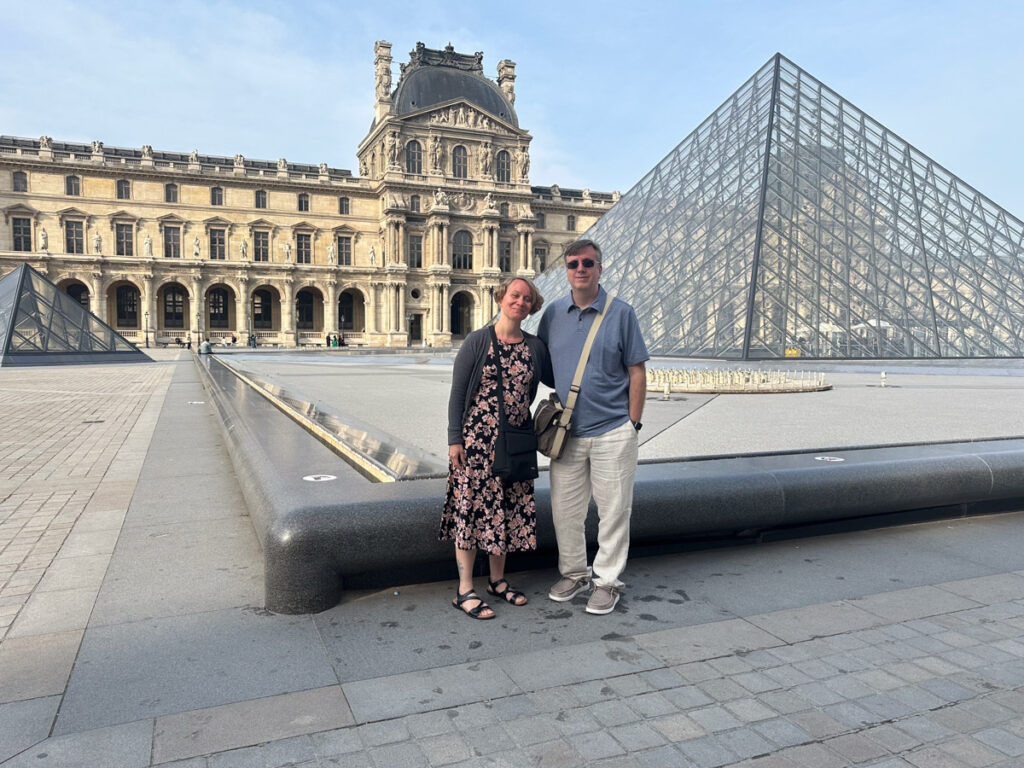
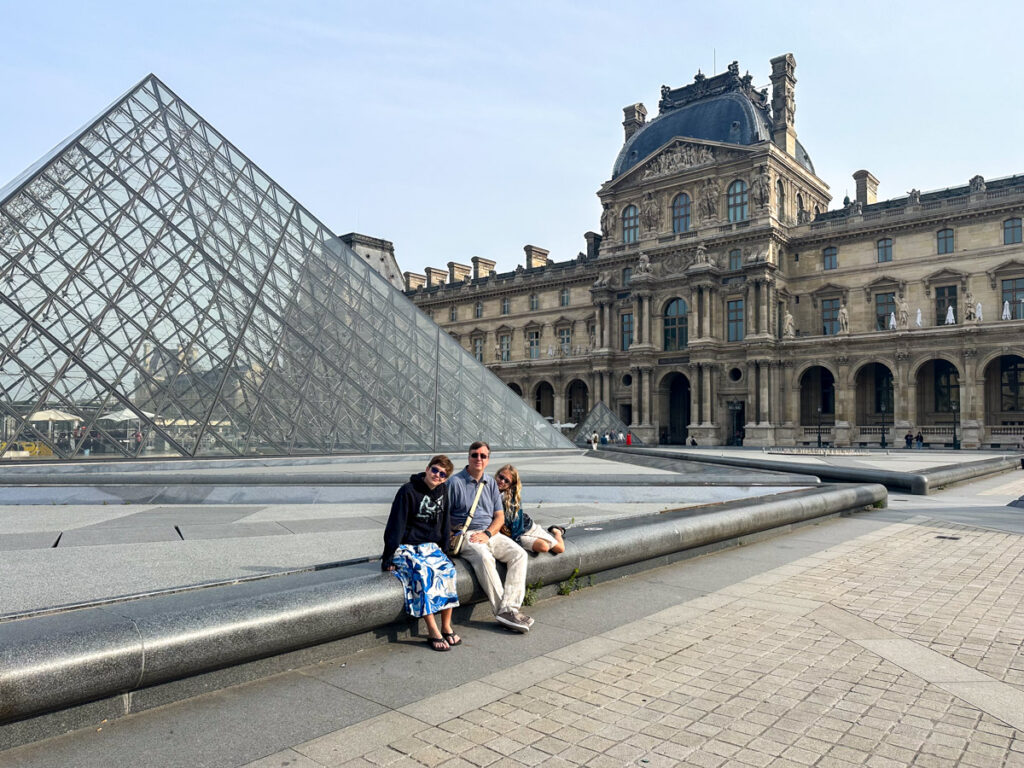
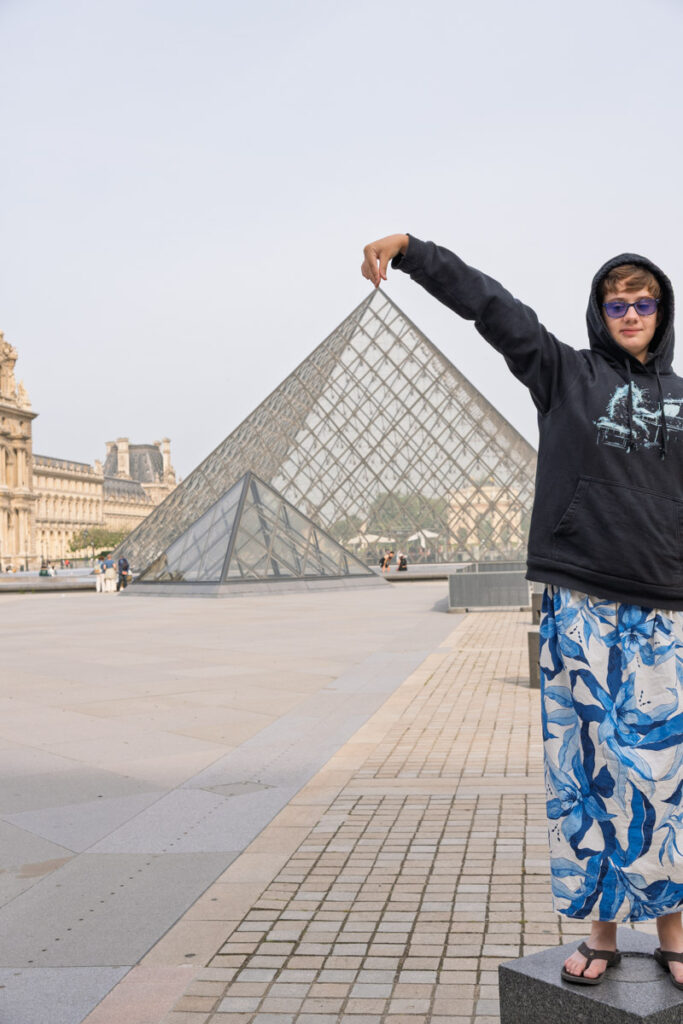
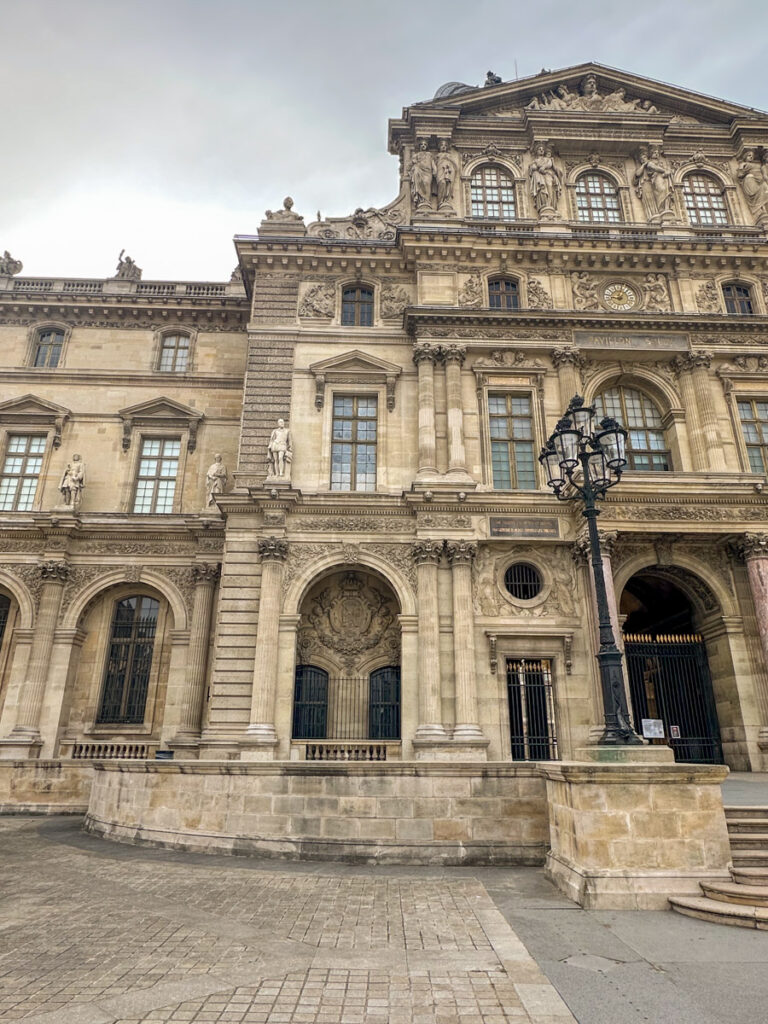
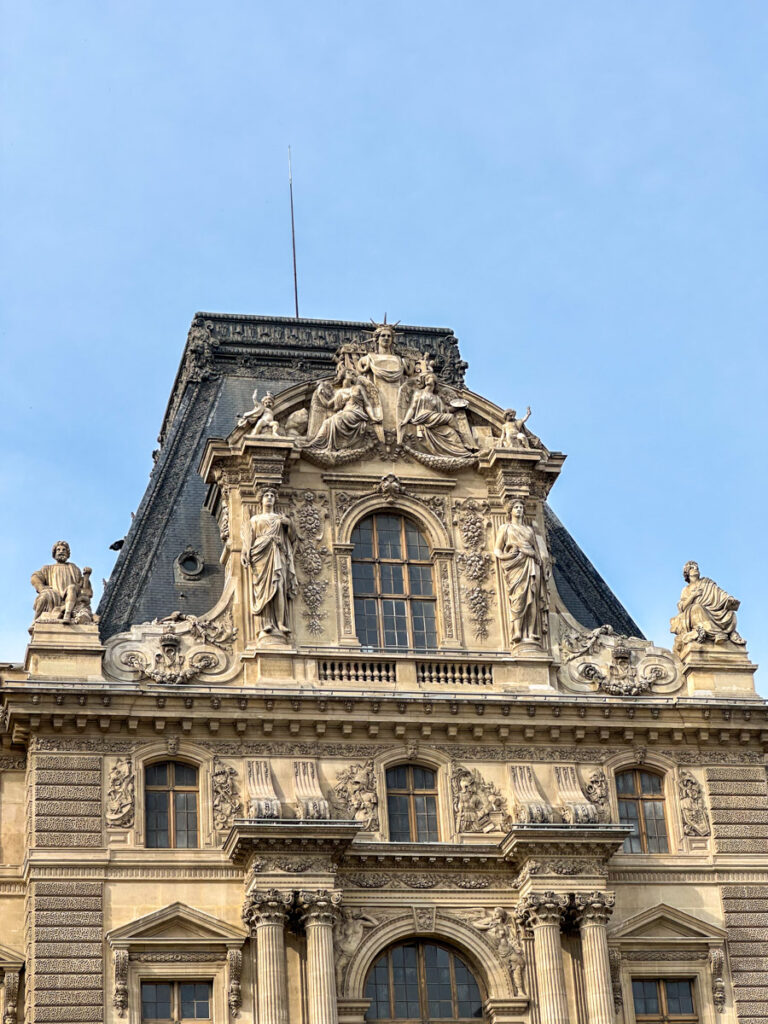
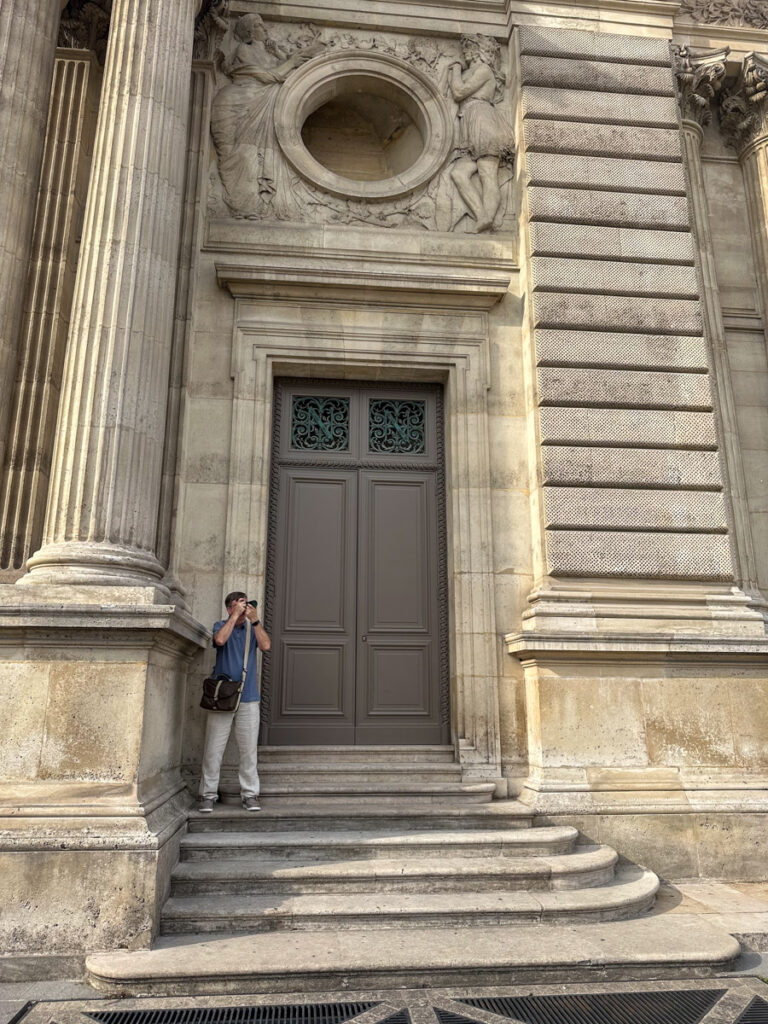
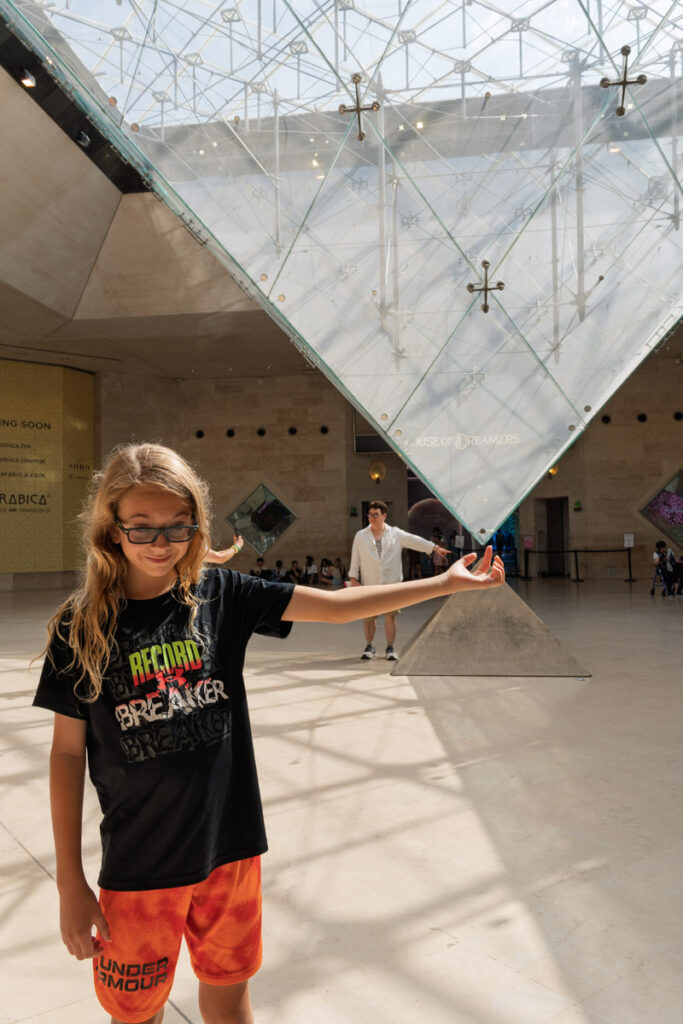
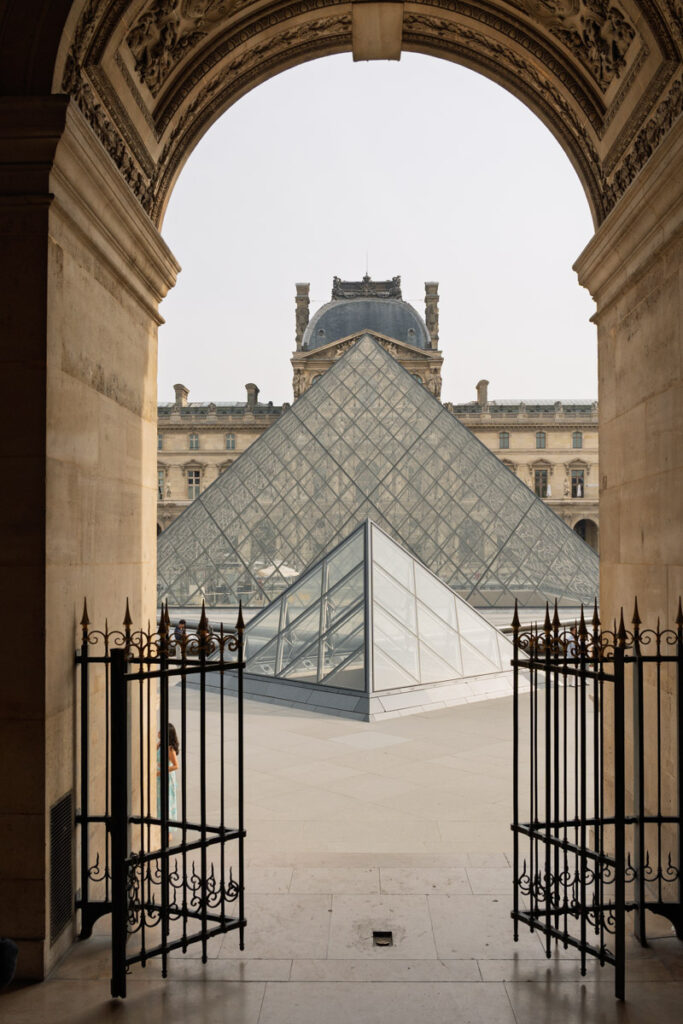
After we finished at Carette, we metroed over to the Louvre to take a few photos of the grounds. The museum is closed on Tuesdays and it was very early in the morning (Parisians aren’t known to be particularly early risers), so it was delightfully uncrowded. Sean spent as much time as the kids would allow, wandering around and taking photos of the area, of I.M. Pei’s famous pyramids, and of the older structure of the original Louvre palace. The kids, often the limiting factor on how much time can be spent, forced our hand and sent us home probably well before Sean was ready to leave.
We indulged in a much-needed rest when we were back at the apartment. Well, the grown ups worked on a bit of laundry and then napped. Our lunatic children instead played on their screens, ignoring the need for rest.
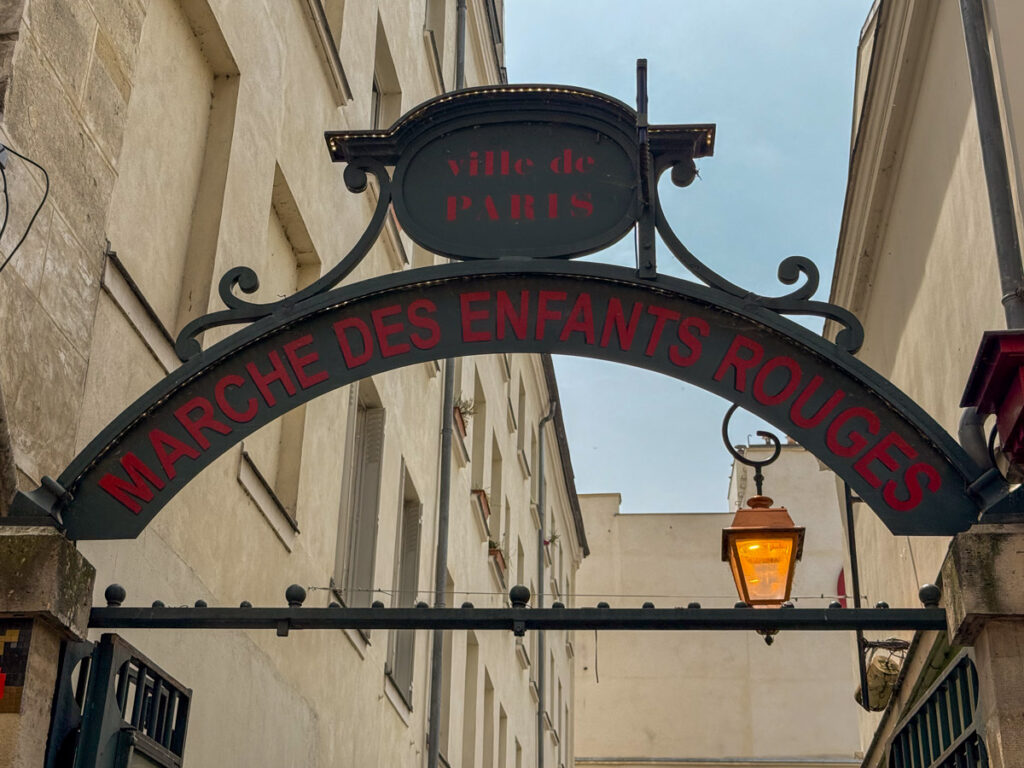
In our current neighborhood – La Marais – there’s a covered market called Le Marche des Enfants Rouges. It takes its name from what was once a nearby orphanage whose occupants wore red uniforms. Apparently, I’m learning now, it’s the oldest covered market in Paris, built in 1615. We just went there hunting for lunch.
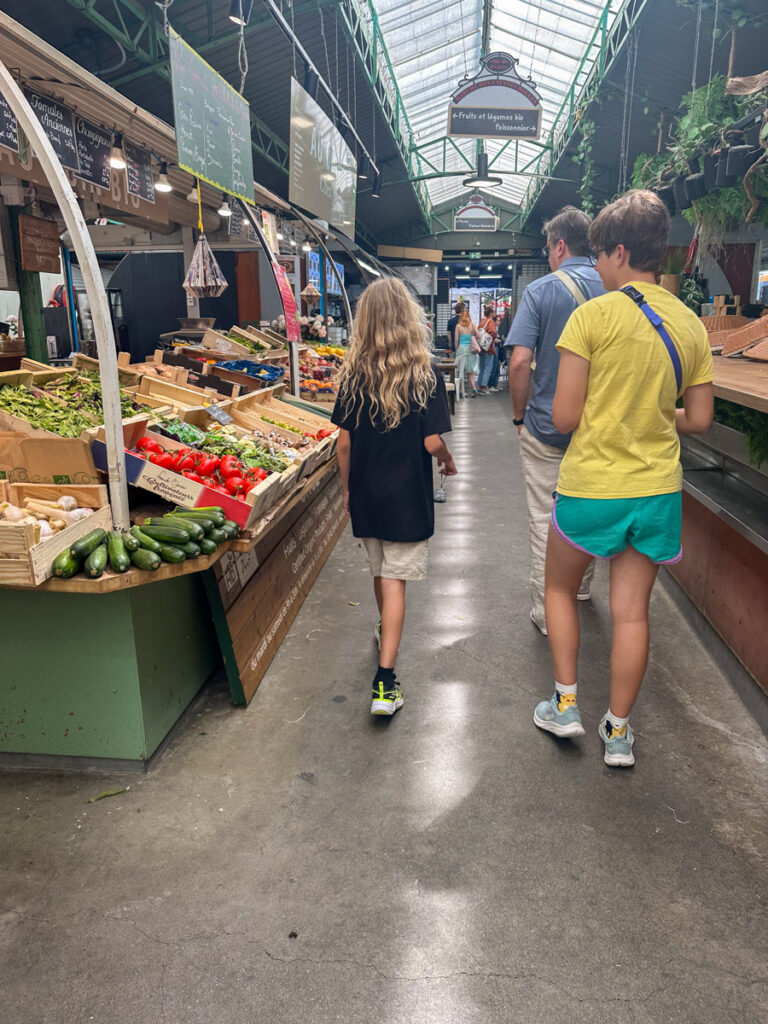
We let the kids choose where we wanted to eat, and so Maya landed on a place serving Italian food. She has a huge soft spot for pesto. I liked it because my Italian sucks slightly less than my French, and so it was easier to communicate. At any rate, our pasta was delicious, and after a stroll through the lively market, we headed back to the apartment to relax and knock out a little more laundry before our timed entry that afternoon to visit The Catacombs.
Getting these tickets was also a little tricky. You may not purchase them before 7 days prior to your preferred date, down to the time. So if you want 5p tickets, you must buy them at 5p 7 days before. I am careful, and I secured them, which made both kids very happy. They both had been anticipating visiting the Catacombs. One or both of them had actually seen videos about them before we even started planning this vacation and when we mentioned Paris, they checked in with us to verify that the place was real.
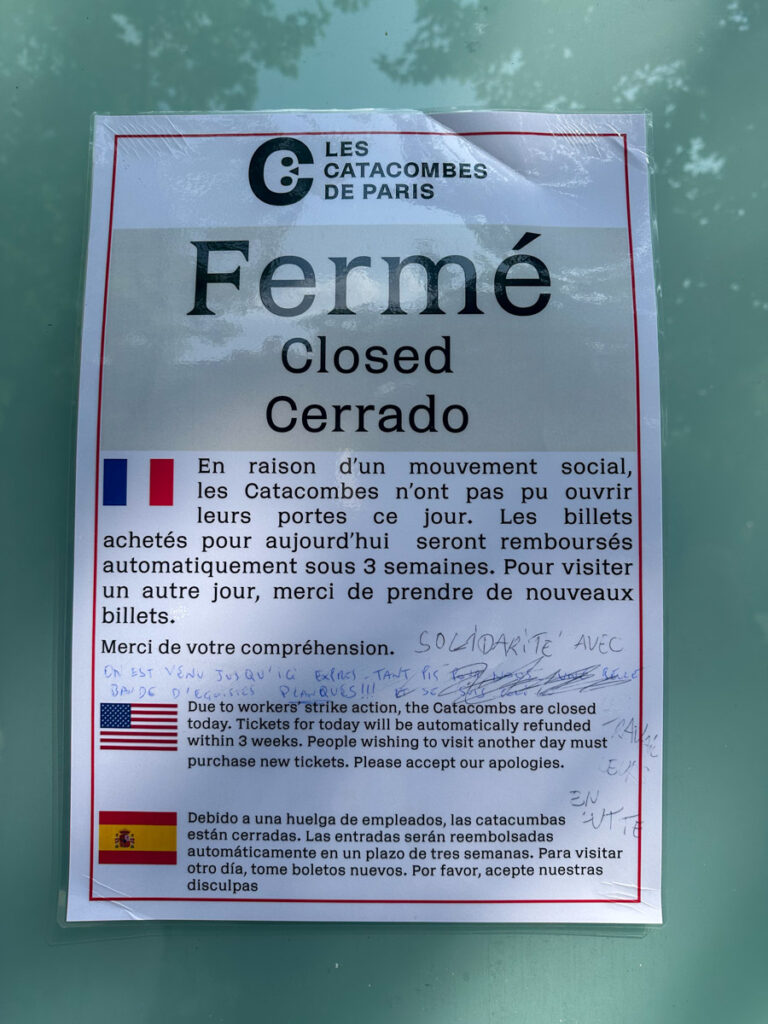
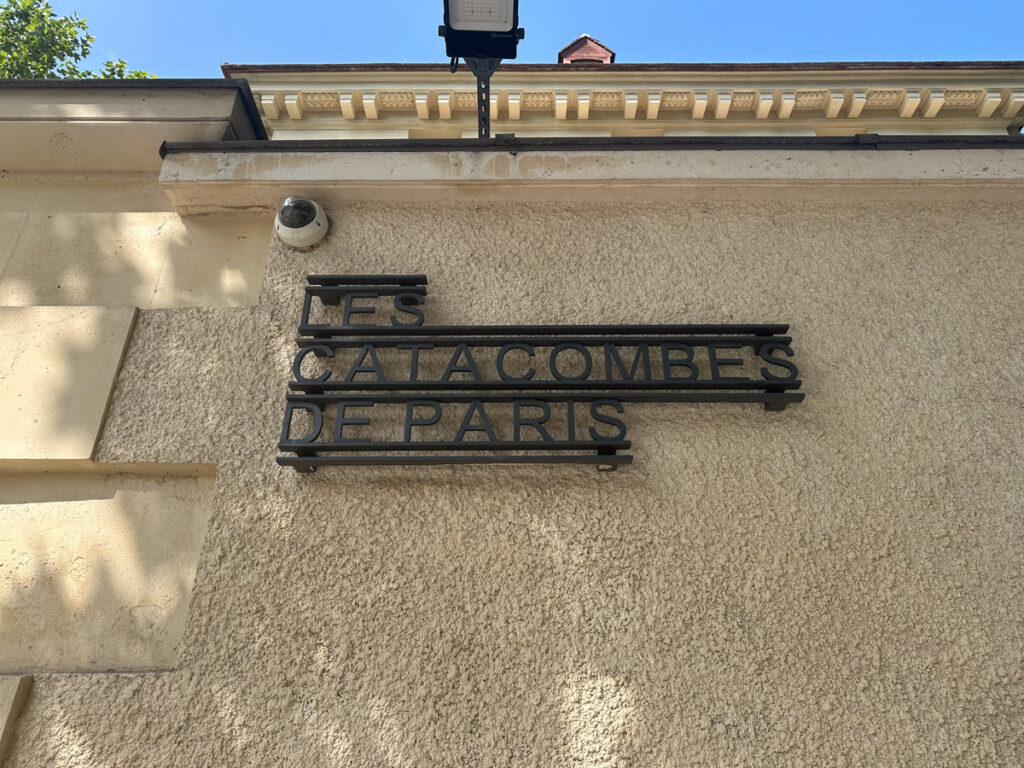
The Catacombs aren’t really close to anything else, so we had a long metro ride ahead of us to the 14th arrondissement. First, we needed to add more trips to our metro cards. We wound up at a station that didn’t seem to have machines for adding trips to the cards. We hoofed it to a known good station to recharge our metro cards. Once all that was done, we arrived at our destination with only a few minutes to spare. Imagine our disappointment when we walked up to the location full of relief that we’d made it on time, only to find that the workers were on strike and that we would not be visiting the ossuary on this vacation. Ferme (closed).
The kids were clearly sad, but there was nothing to be done. Any other day I could have booked was already sold out (and in checking after the fact, the strike extended through the rest of our time in Paris anyway). We instead thought we’d give Notre Dame another try. Back on the metro we went for a trip back into town.
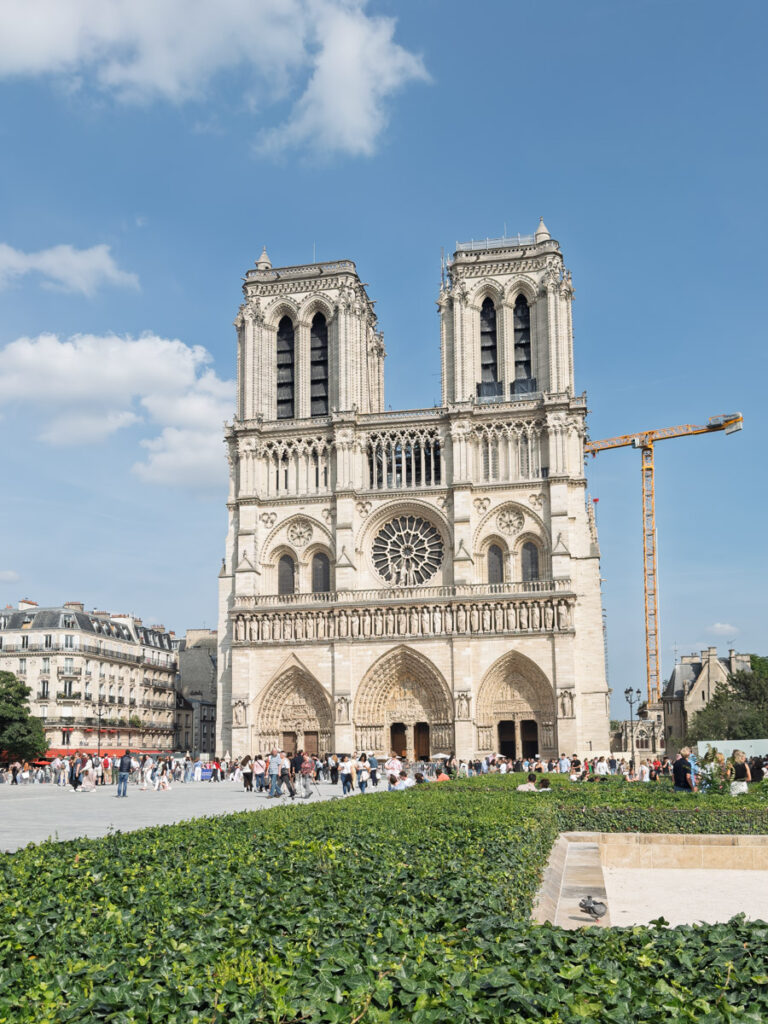
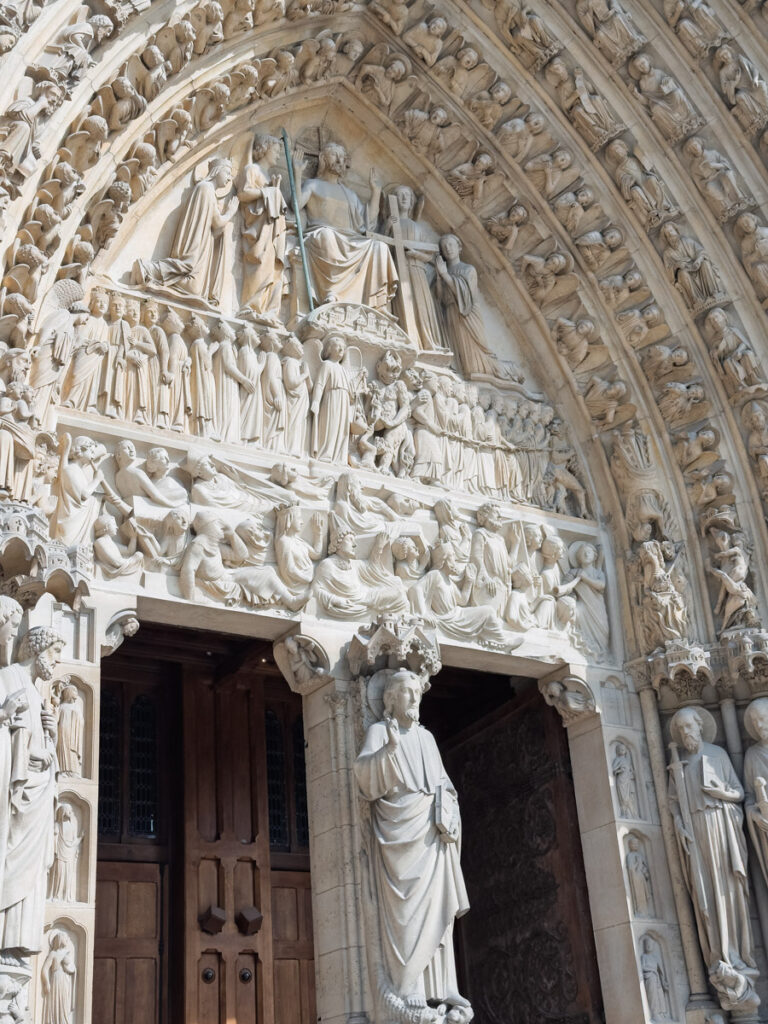
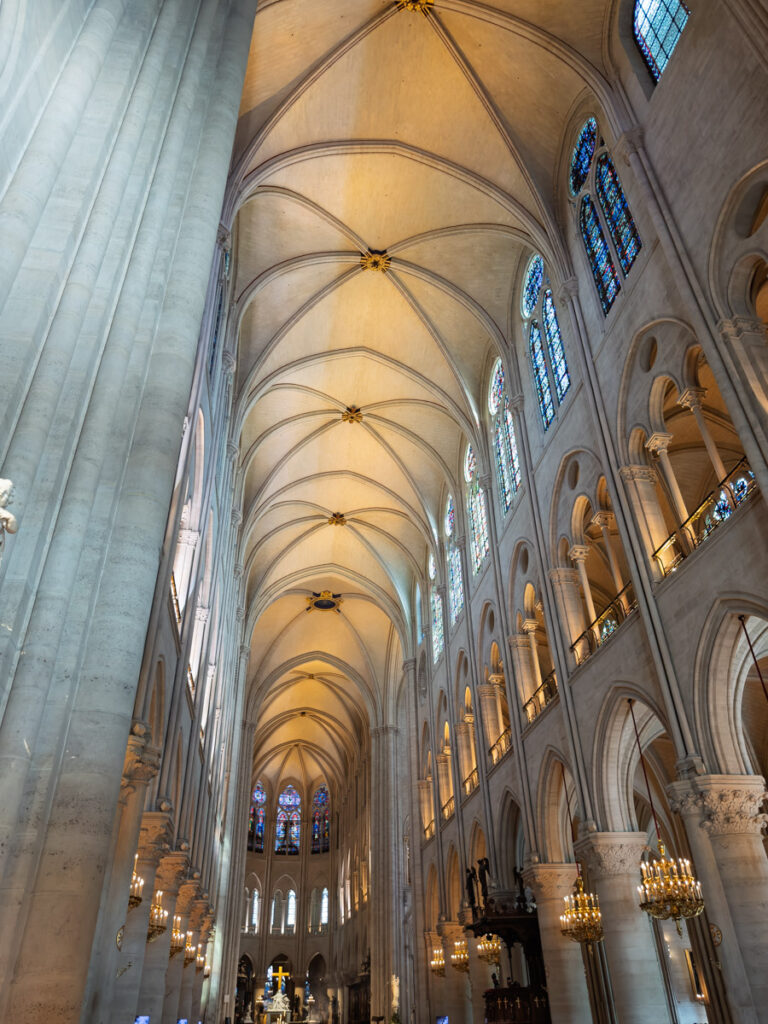
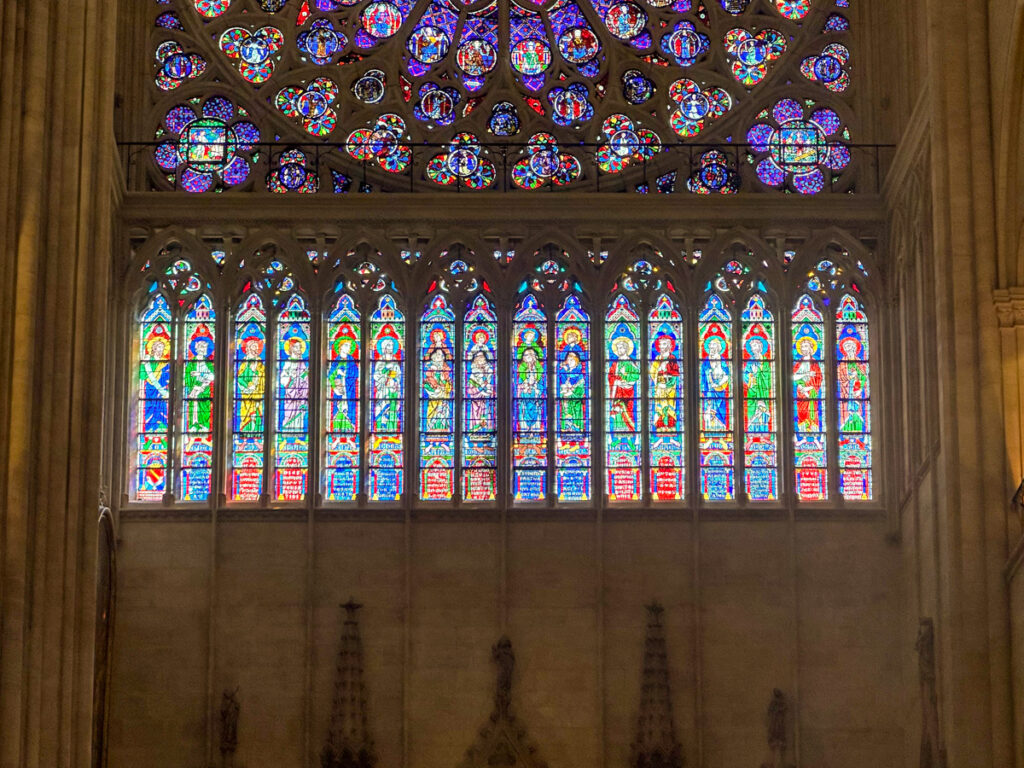
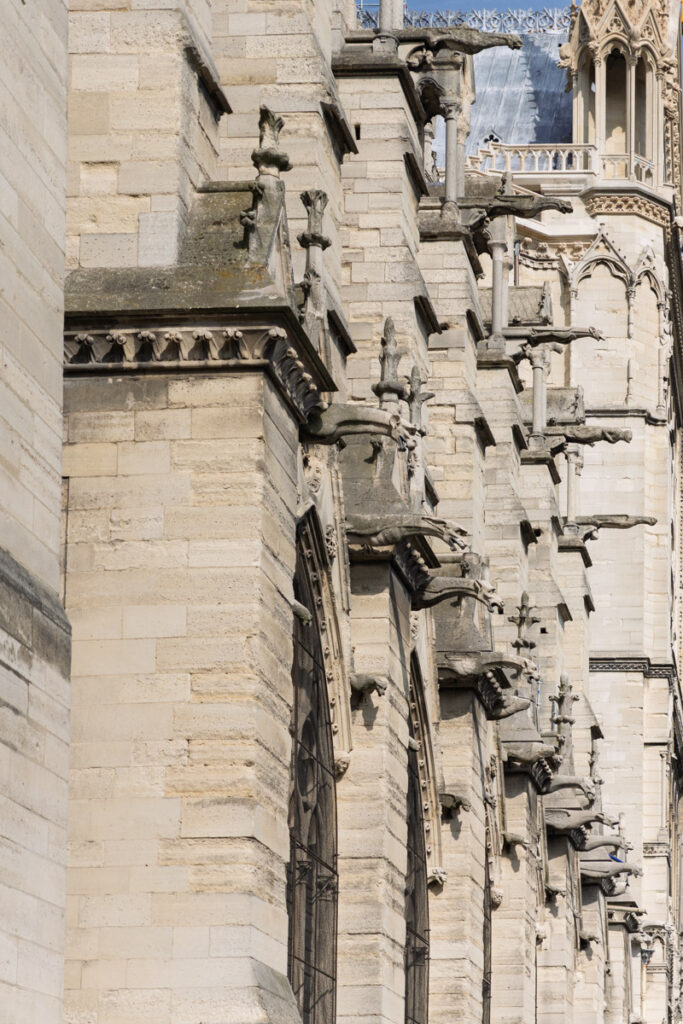
The fire in 2019 had closed Notre Dame. Thankfully restoration efforts allowed the cathedral to open (mostly) in December of 2024. We had seen travel videos from people who’d visited Notre Dame before and after the restoration, and commentary about the current state of things was very positive. Apparently, in addition to fire and smoke damage, the cleaning and restoration efforts removed decades worth of grime as well.
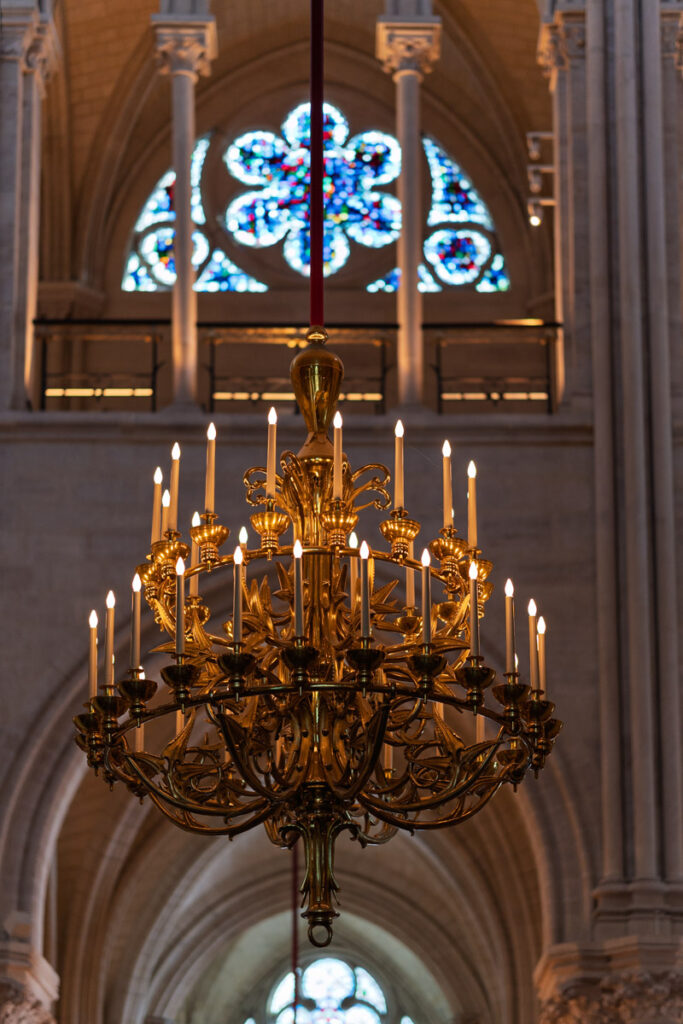
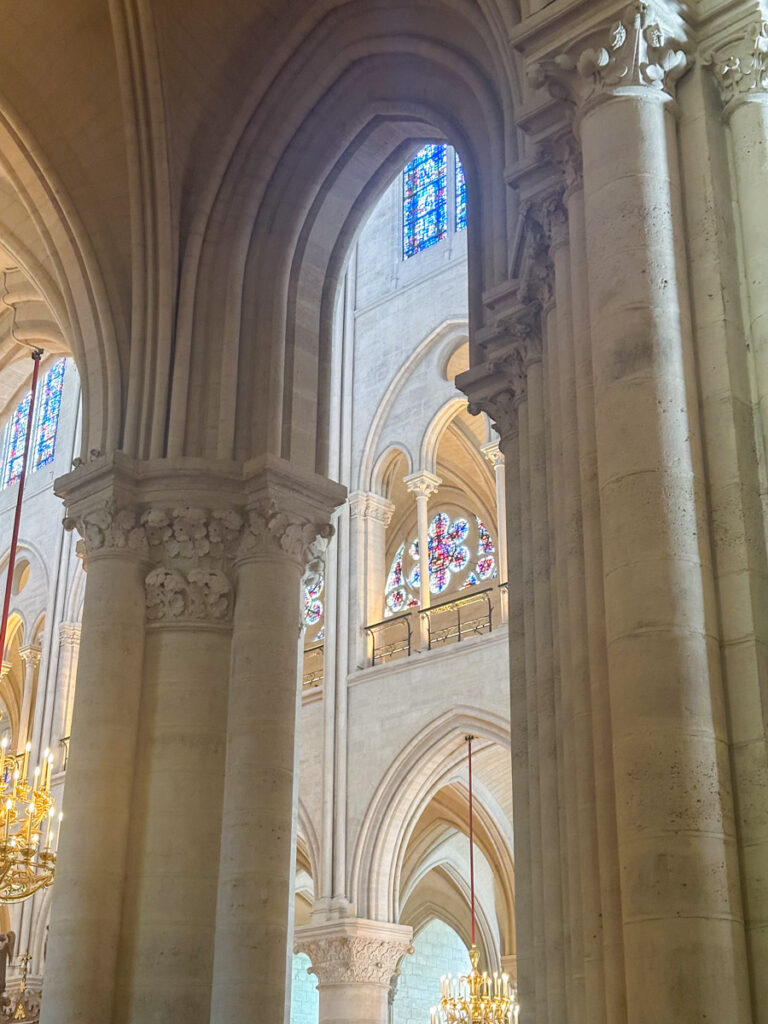
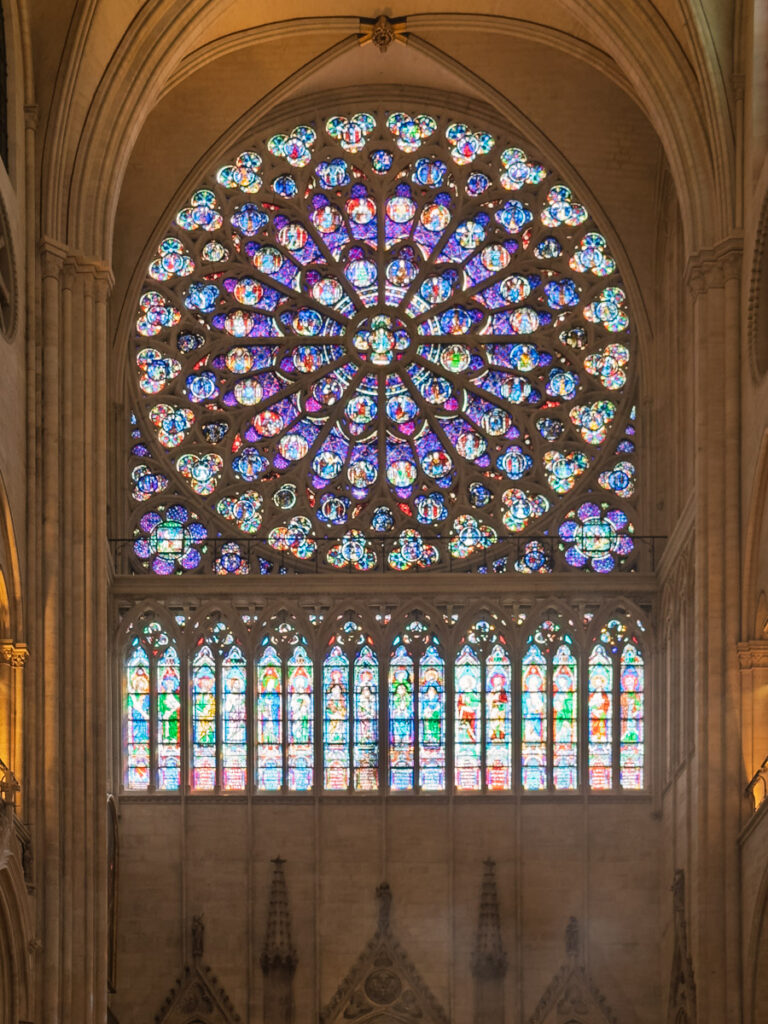
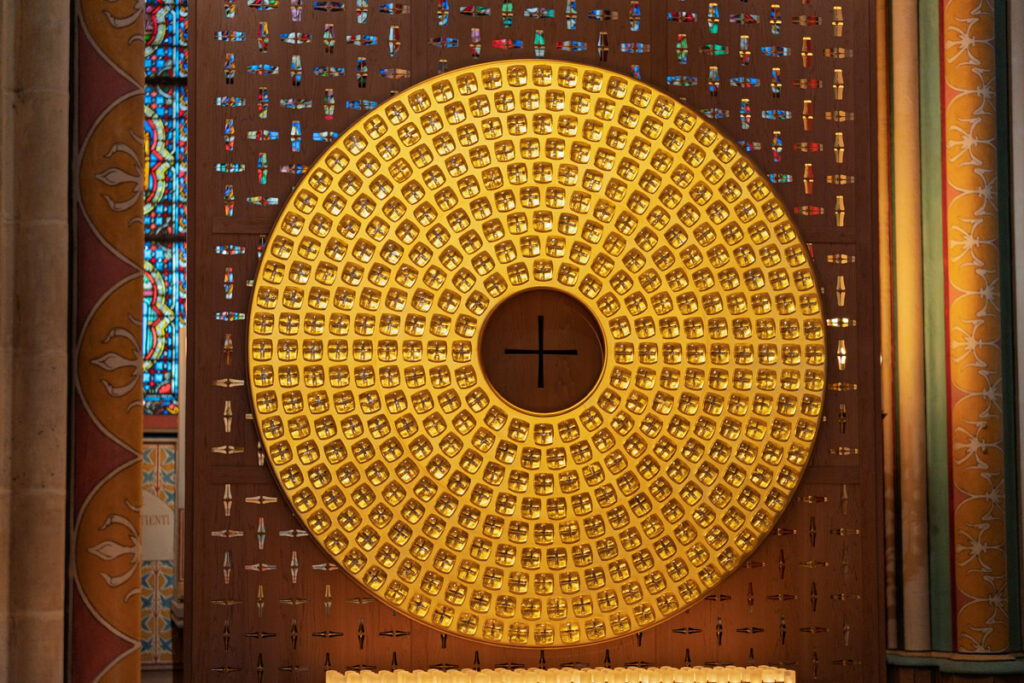
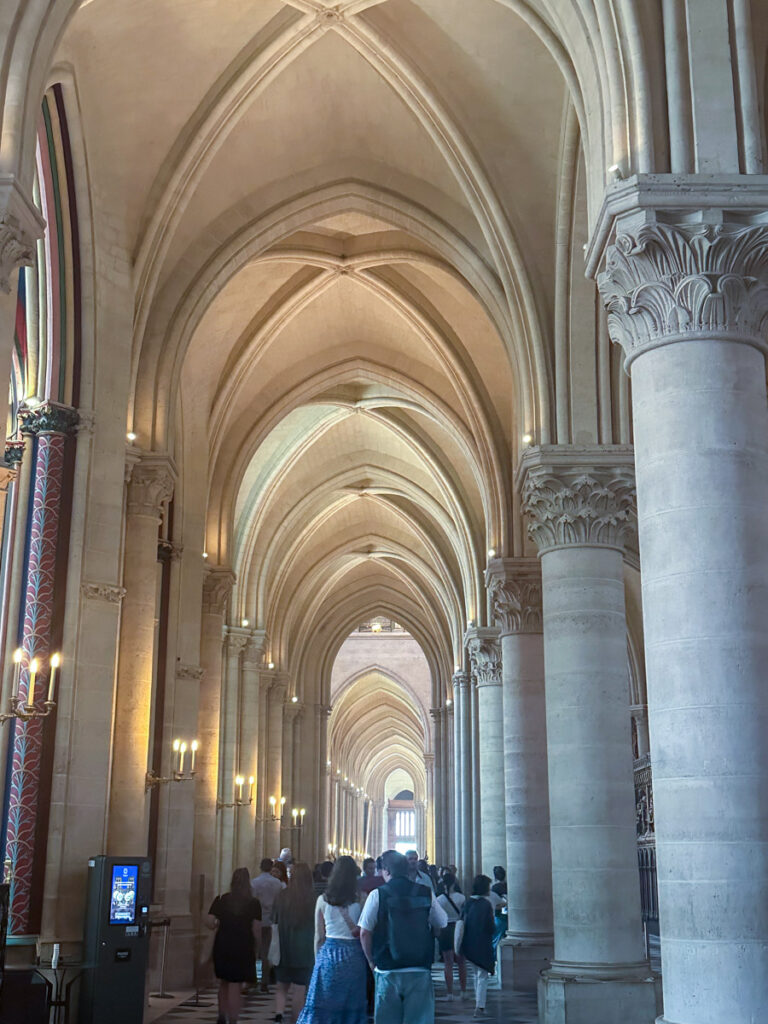
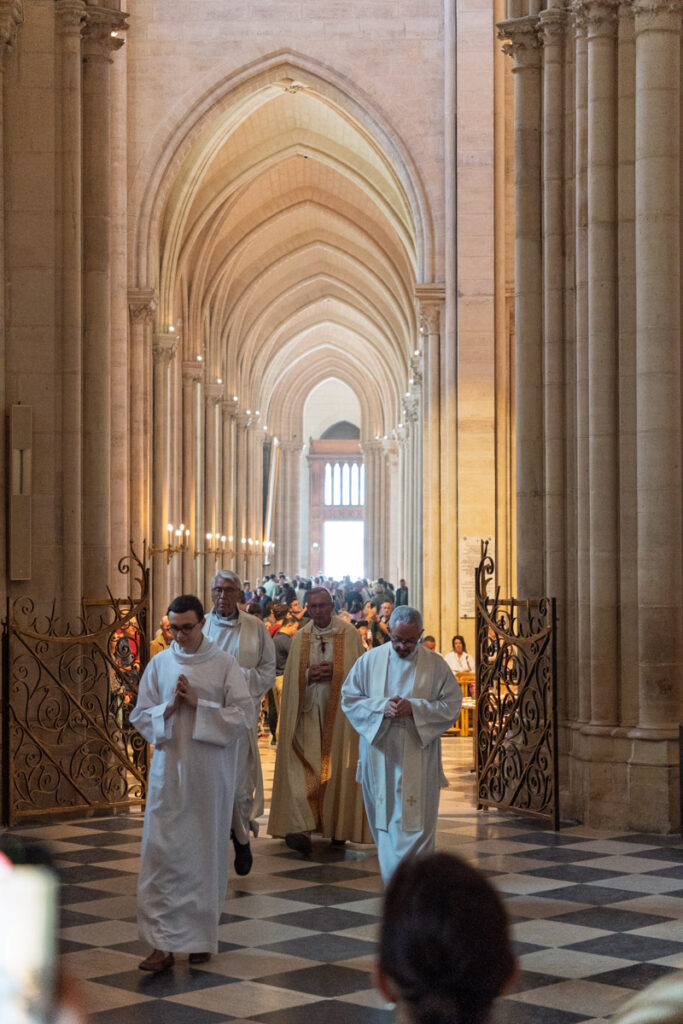
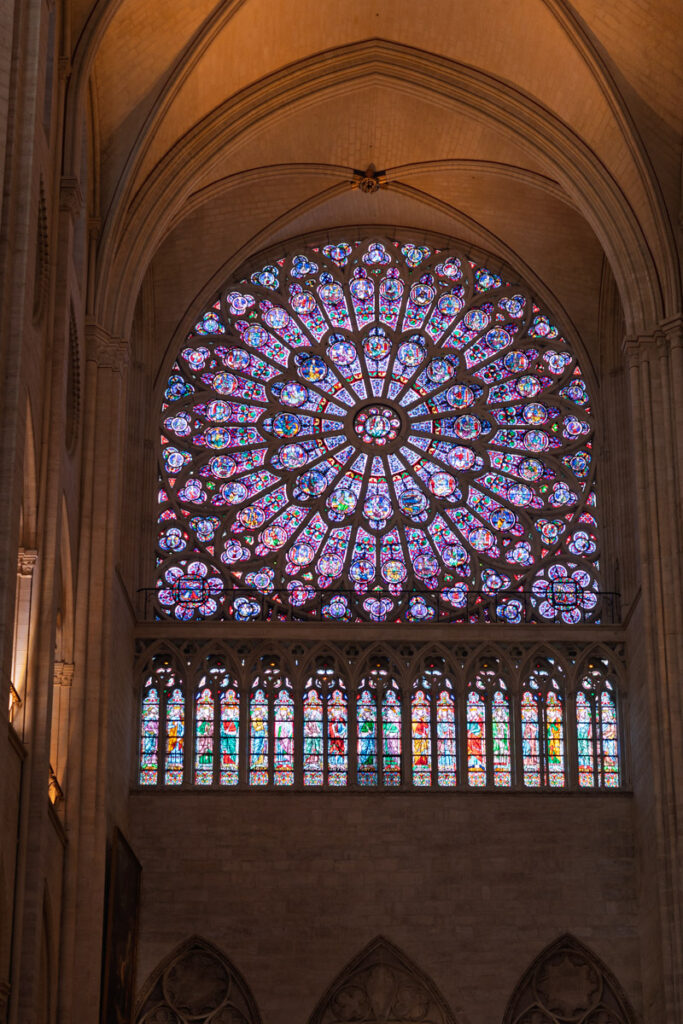
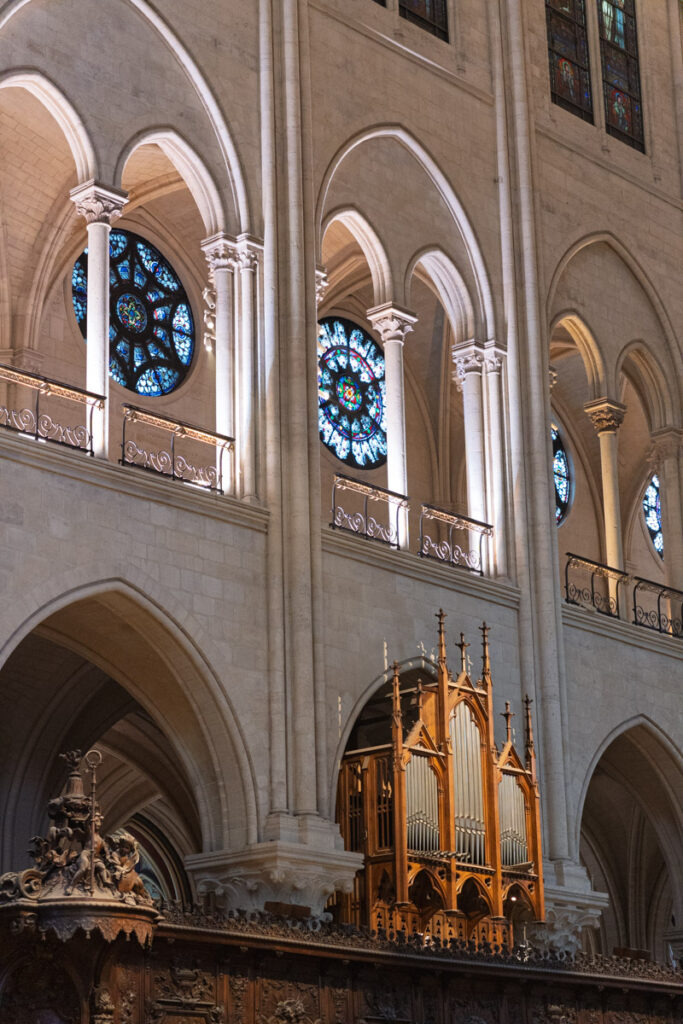
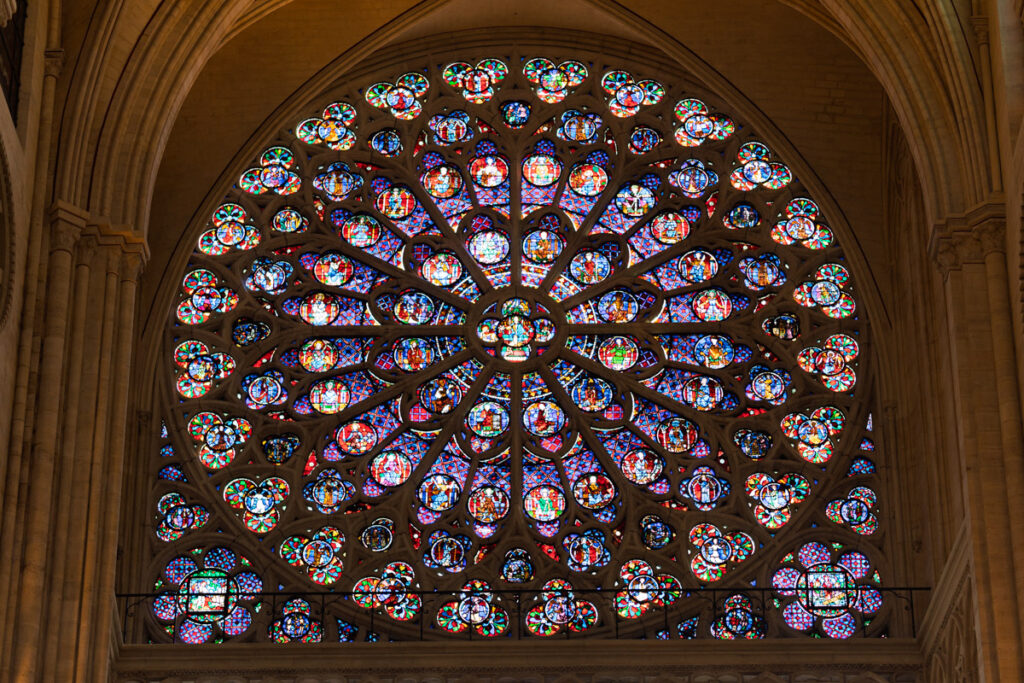
When we arrived this time, the line was considerably shorter than it had been earlier in the week and was moving very, very quickly. We found that Notre Dame was indeed a relatively bright and airy space. The rose windows are huge and beautiful. Maya was put off by the smoky incense, but otherwise, I enjoyed wandering the massive church, columns towering over us, colorful light from the stained glass shining.
The 2019 fire burned the spire and most of the roof. Firefighters saved what they could, in reportedly heroic fashion. Ultimately though, the spire collapsed. The rebuilding effort took just over five years. While in the church, we saw a piece of twisted metal on display. Apparently the spire had been topped by a copper rooster; it was believed that it had been lost to the fire. It was found the next day in the rubble on one of the upper sections of the cathedral. While damaged, it remains on display as “a symbol of Notre Dame de Paris’s resilience.”
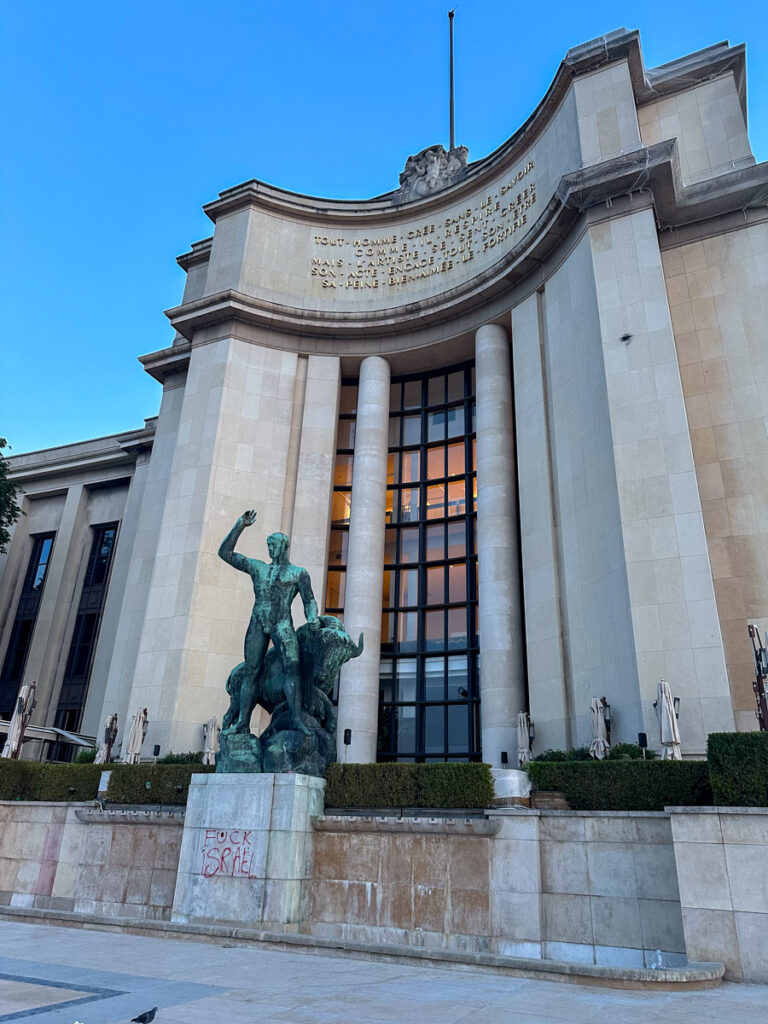
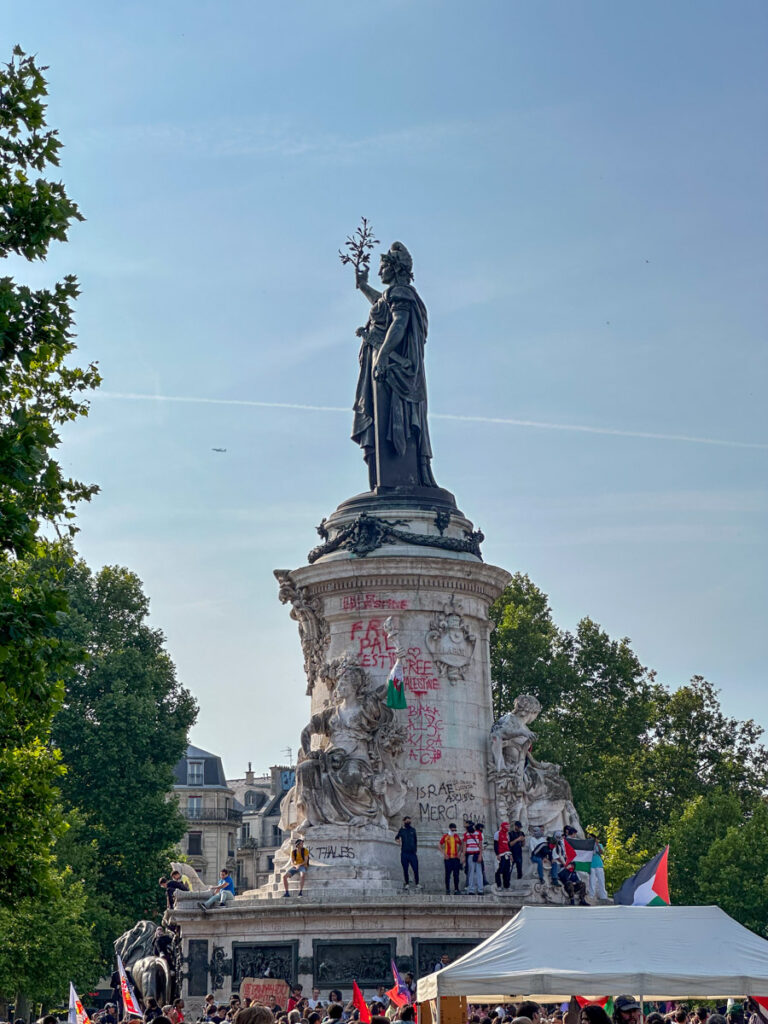
We headed back to our neck of the woods to find that a huge crowd was gathering at Place de la Republique to protest Israel’s treatment of Palestine. I felt like we had kind of the full French experience all in one day – first a labor strike, then a protest.
We had an easy dinner at Bouillon Republique where I had a workmanlike (and delicious) version of foie gras and duck confit, Sean had boeuf bourguignon, Ian had the first of many, many steak frites, and Maya had salmon tartare. Ian also discovered that he loved the creme brûlée that Sean ordered for dessert. A bouillon, by the way, is a type of restaurant serving traditional, affordable French cuisine to the working class.
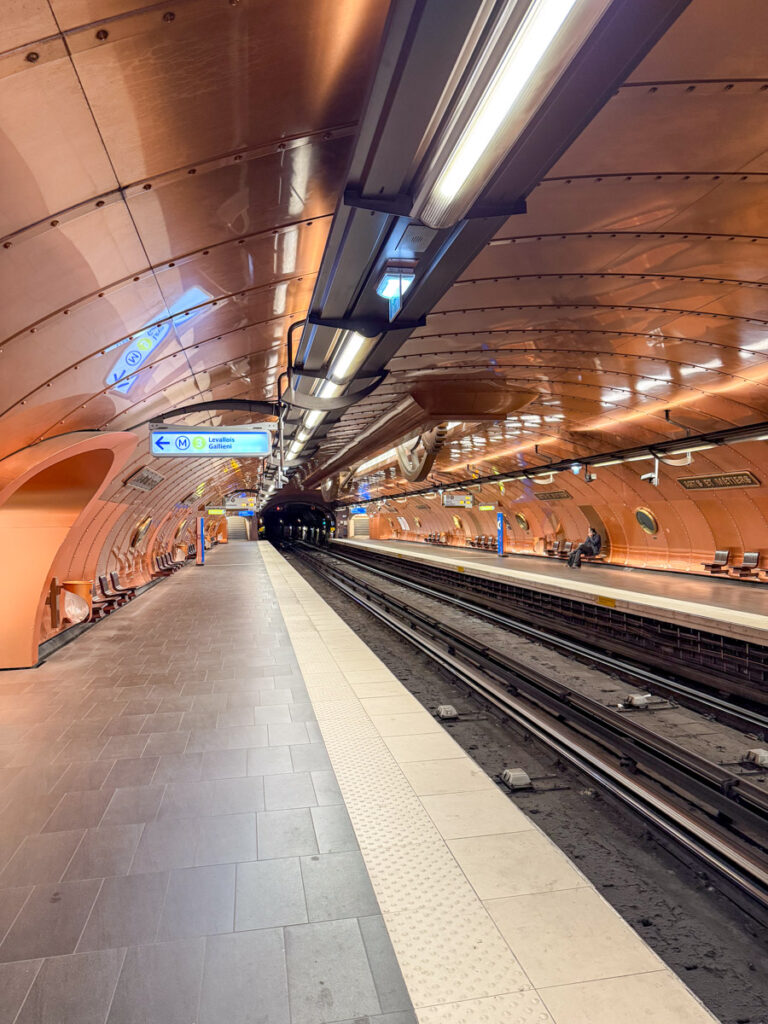
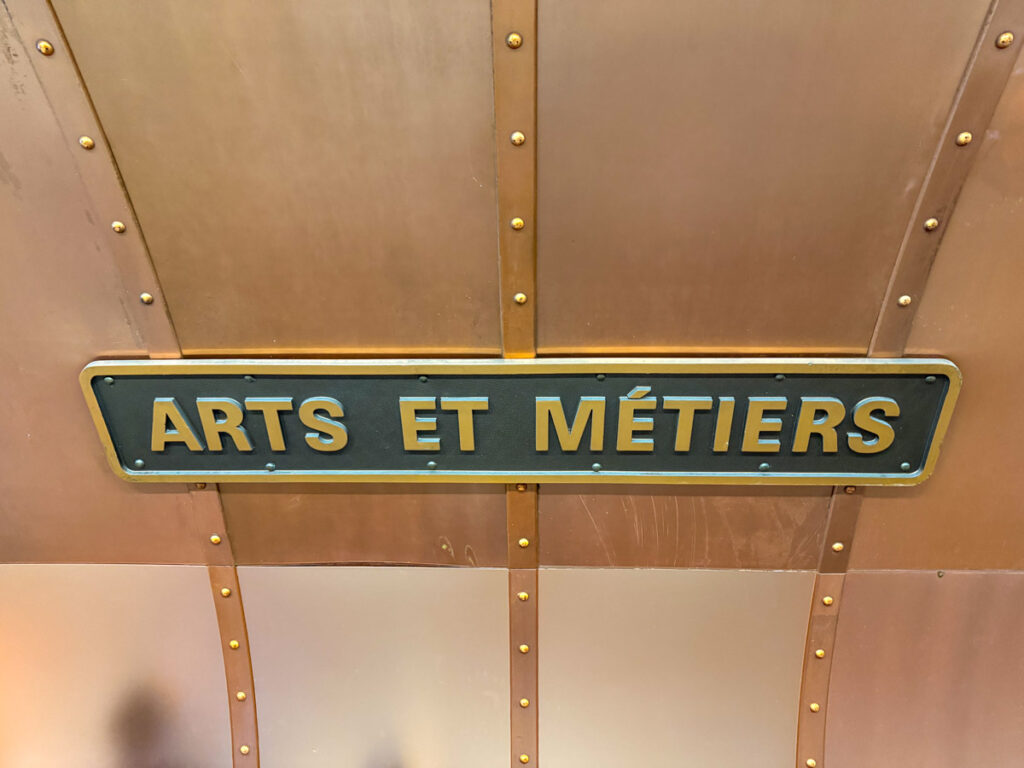
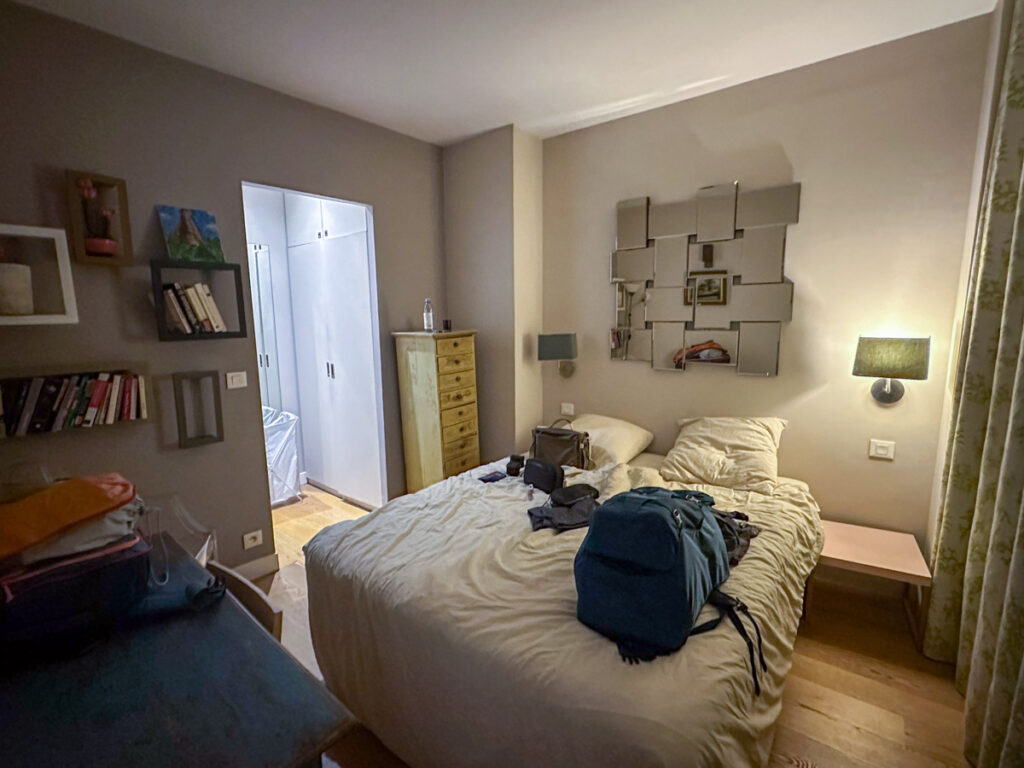
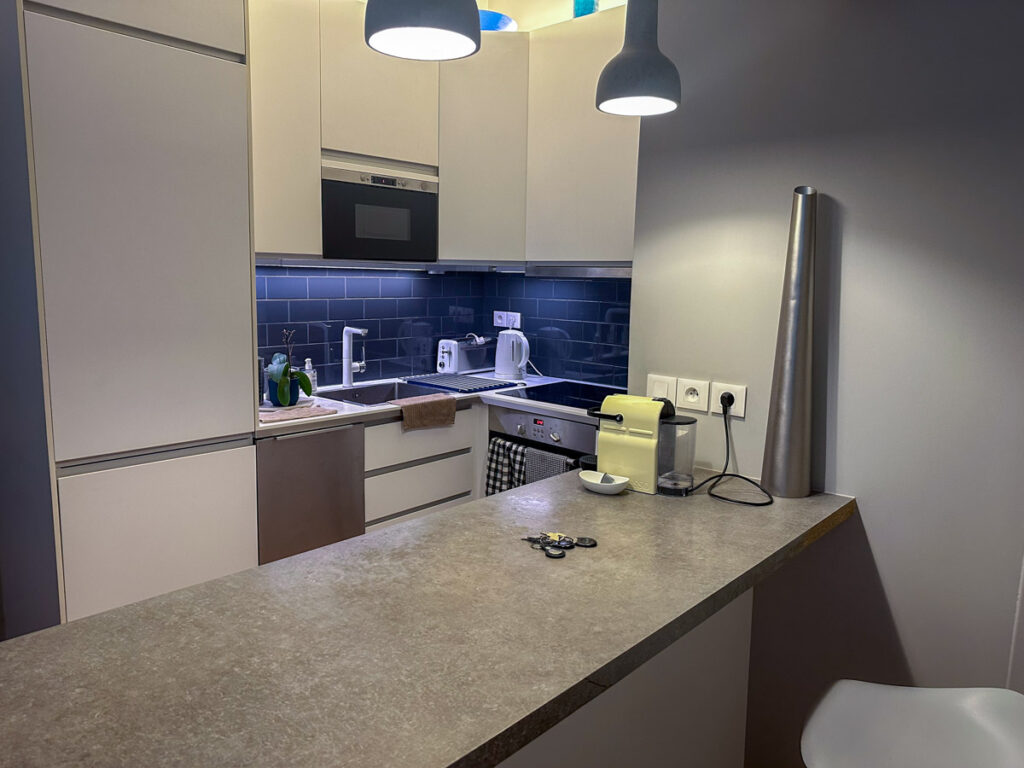
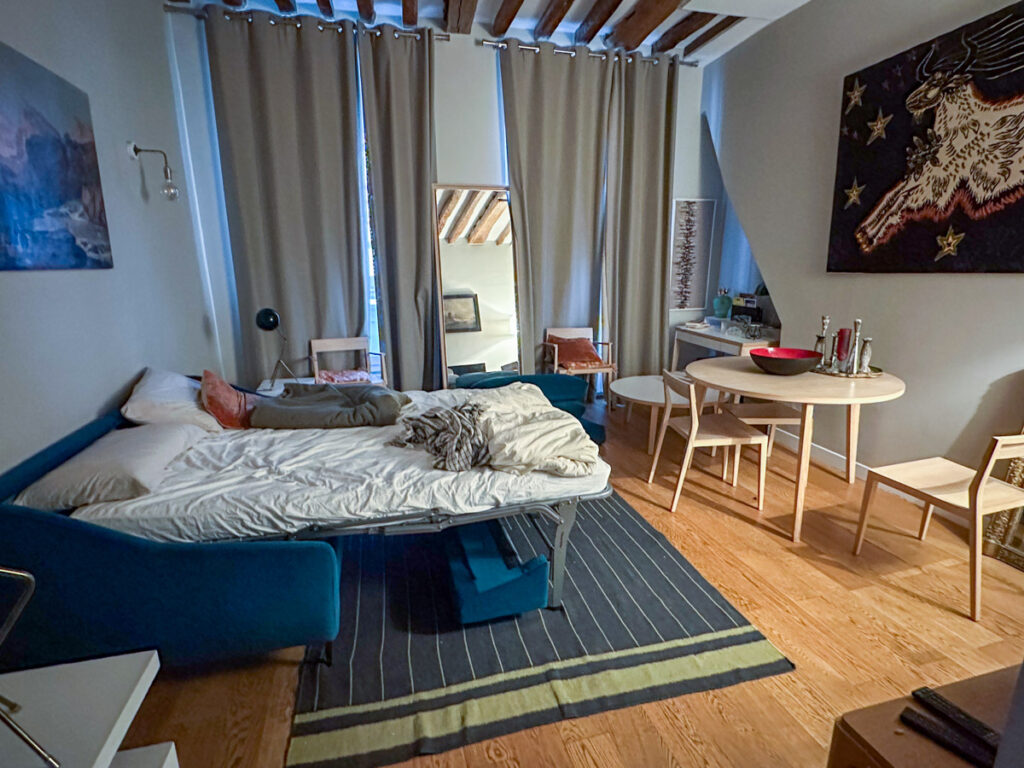
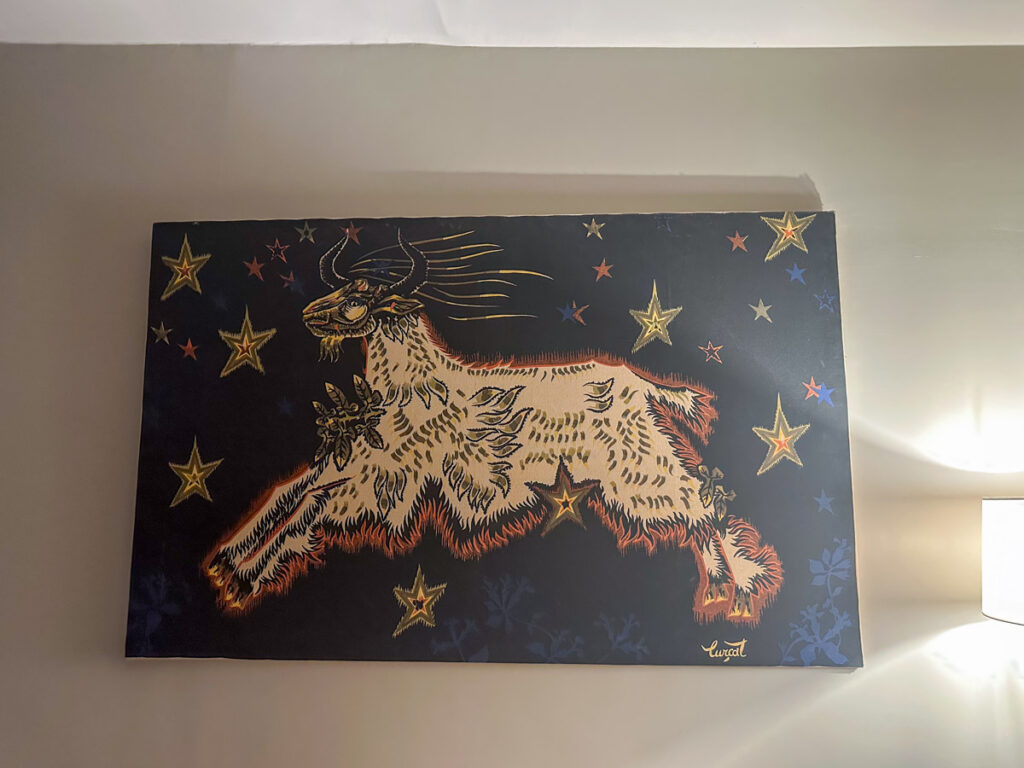
After a perfectly satisfying dinner, we headed back to the apartment to pack. I was a little sad to leave this place. We were staying a little north of all the action in the Marais district, but we were an easy walk to it. Plus our rental apartment was very comfortable. We didn’t have gobs of space, but more than we’d have had in a hotel room. The decor was wacky and fun. Plus we were near multiple metro stops. My favorite was the Arts et Metiers station, which had a coppery steampunk vibe. Alas, it was time to say au revoir. Tomorrow we would be heading to Disney.
Day 5 – Wednesday – Walt Disney Studios Park
Pays des Marveilles (Walt Disney Studios Park)
Day 6 – Thursday – Disneyland Paris
La Taniere du Dragon (Disneyland Paris)
Day 7 – Friday – Leaving Disney, Visiting Mona Lisa at Le Louvre
My foggy recollection is that we didn’t have any issue getting from our metro stop to our hotel, and that we were thankfully allowed to check into our hotel right away. Since we wouldn’t even be there for 24 hours, I had snagged a nice-looking hotel room that would accommodate all four of us in the 9th arrondissement of Paris (Hotel Imperial).
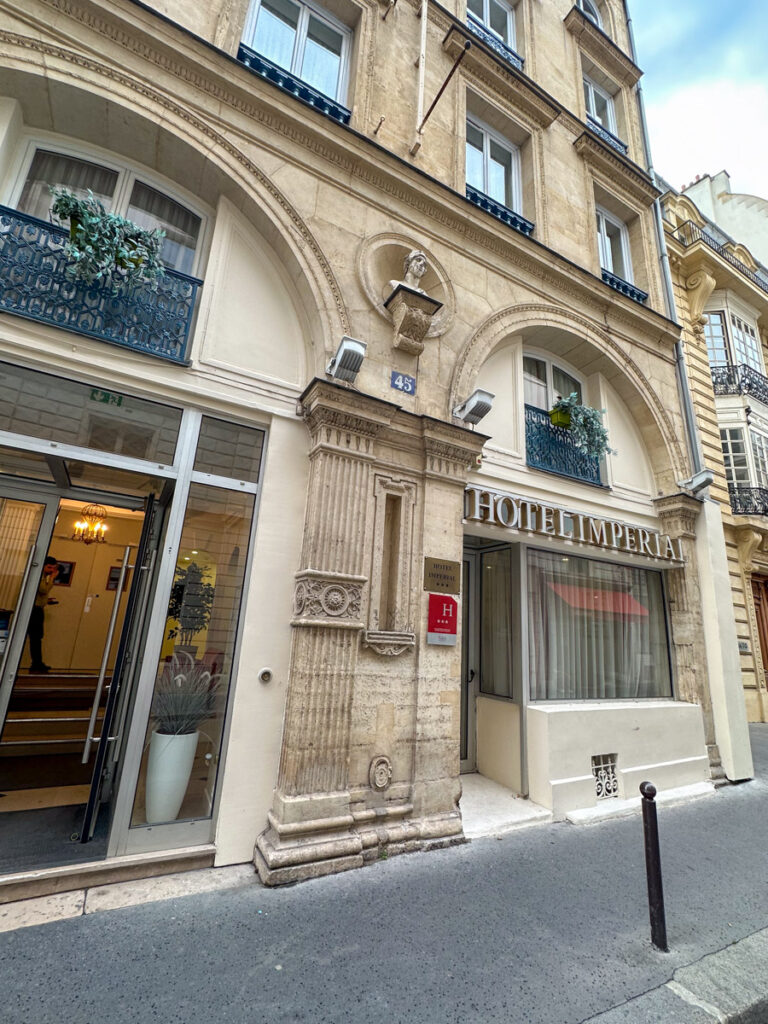
This is the Opera district, and the area was definitely more upscale than our Marais location had been. Everything was beautiful and ornate as we wandered around looking for a quick lunch, (since I had chosen to cancel our fancy lunch).
The kids chose ramen at a place called Bento 9. Sean and I picked at some kind of stir-fried noodle dish, still full from our big breakfast. I had timed entry to visit the Louvre later on that afternoon, so after lunch, we elected to rest in our hotel until then.
We had read beforehand that the Louvre is always jam packed with visitors. It is, after all, the most visited museum in the world, hosting nine million visitors annually. It also houses arguably the world’s most famous painting, Leonardo da Vinci’s Mona Lisa. I thought we’d try visiting during the Louvre’s late hours on a Friday night, to see if the crowds were any thinner. I’ll be honest, if they were, I’ll never know because the number of people was astonishing.
Another interesting fact about the Louvre, it was established as a museum in 1793, notably having been repurposed from a royal residence to a people’s museum, in line with the ideals of the French Revolution. Art is not just for royalty, after all.
The Louvre is immense. It is housed in the Louvre Palace, which was originally built in the late 12th to early 13th century. The museum covers roughly 73,000 square meters (~785,765 square feet), on five floors, and spread across three separate wings. As I understand it, while the museum has something north of 500,000 objects – including paintings, sculptures, and archaeological items, it only displays 35,000-38,000 at any given time. And I knew this, at a high level, but we found out the hard way that not all the rooms are open every day that the Louvre is open.
Planning a visit is completely overwhelming, so I cheated. Before we left Texas, I downloaded a plan of attack from the Internet and tweaked it with a couple things that I specifically cared about. And then I didn’t do a single drop of extra research. We showed up, grabbed a map, and tried to hunt down the room numbers as suggested in my downloaded plan.
This approach was impeded by a couple of things. First, they close different rooms on different days – I’m guessing to cope with staffing issues. They have a schedule online, and I should have looked at it ahead of time, but there was so much to do that that was one of the things that got overlooked. Also, while the map looks logical enough, reality doesn’t always match what you’re seeing on the paper. Sean is an excellent navigator, and usually he’s leading the charge with me telling him what we want to see next while trying to make sure we don’t lose any kids en route.
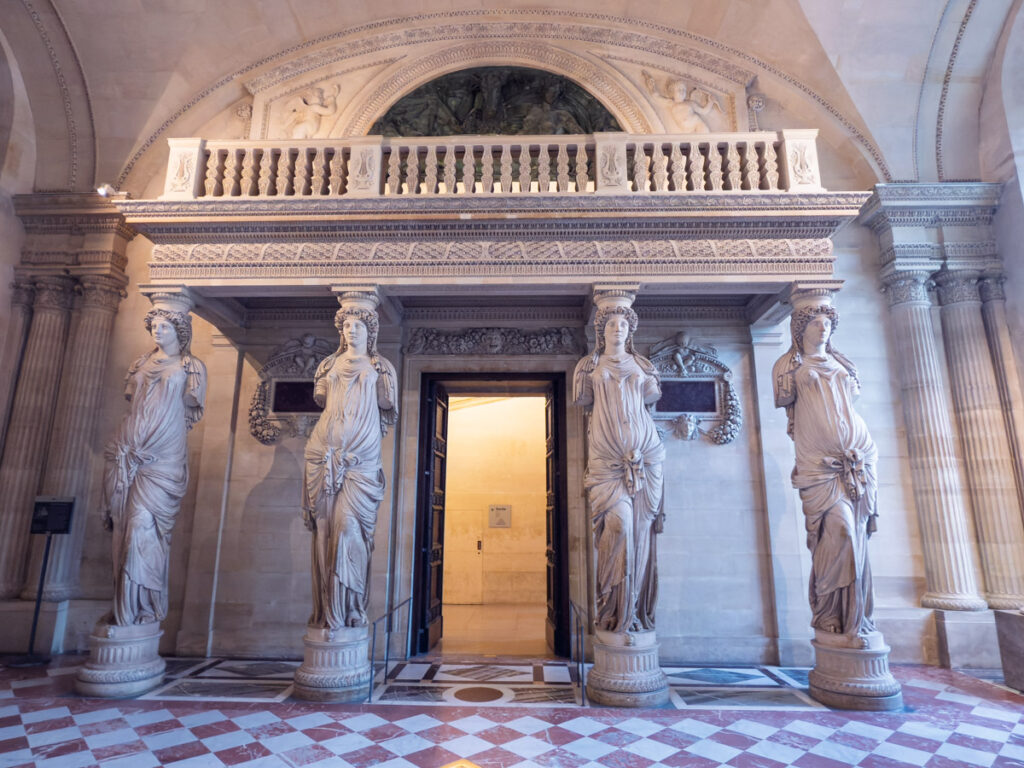
No joy. With random closures and walls and stairways popping up in unexpected places, getting from point A to point B was a hit or miss affair. We eventually managed to head to some landmark things, and gazed at the art and artifacts as we were passing through, usually in a mad jumble of people. It’s sort of freeing to know that it’s impossible, literally impossible, to see all the things in one visit. So you just … don’t.
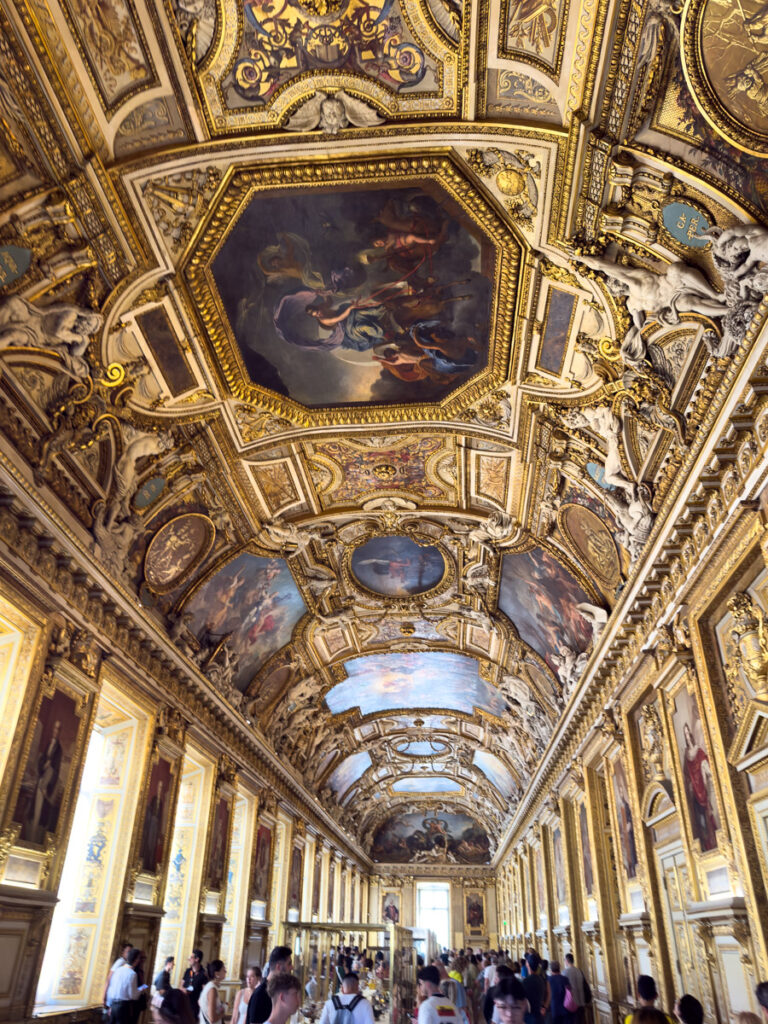
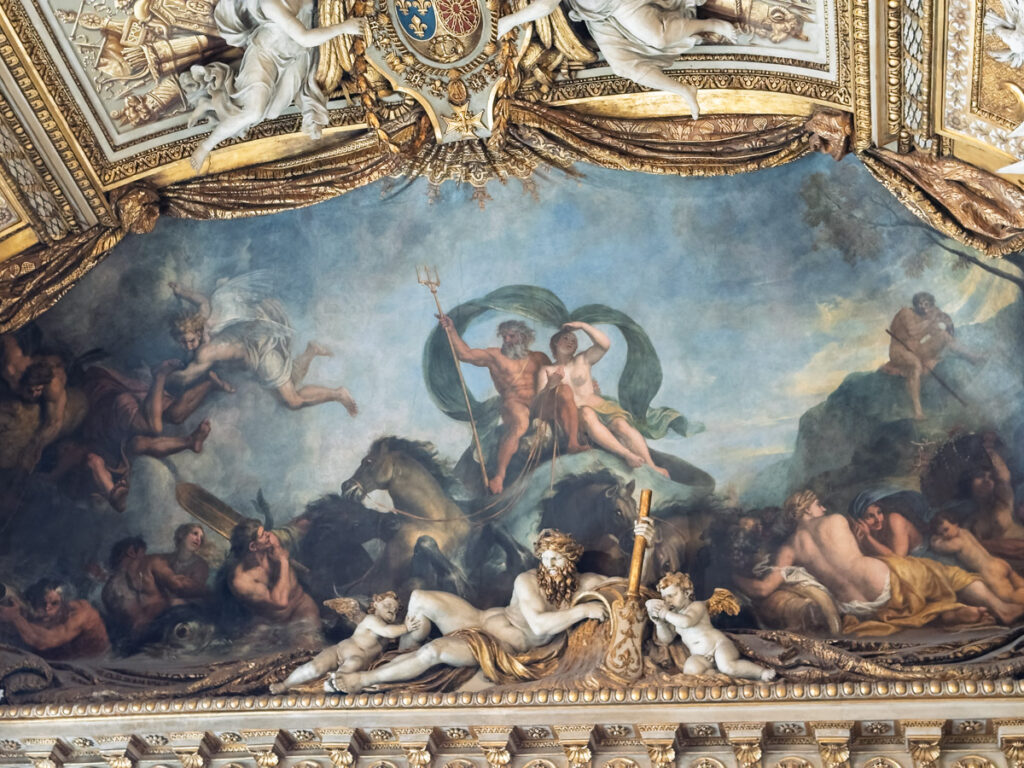
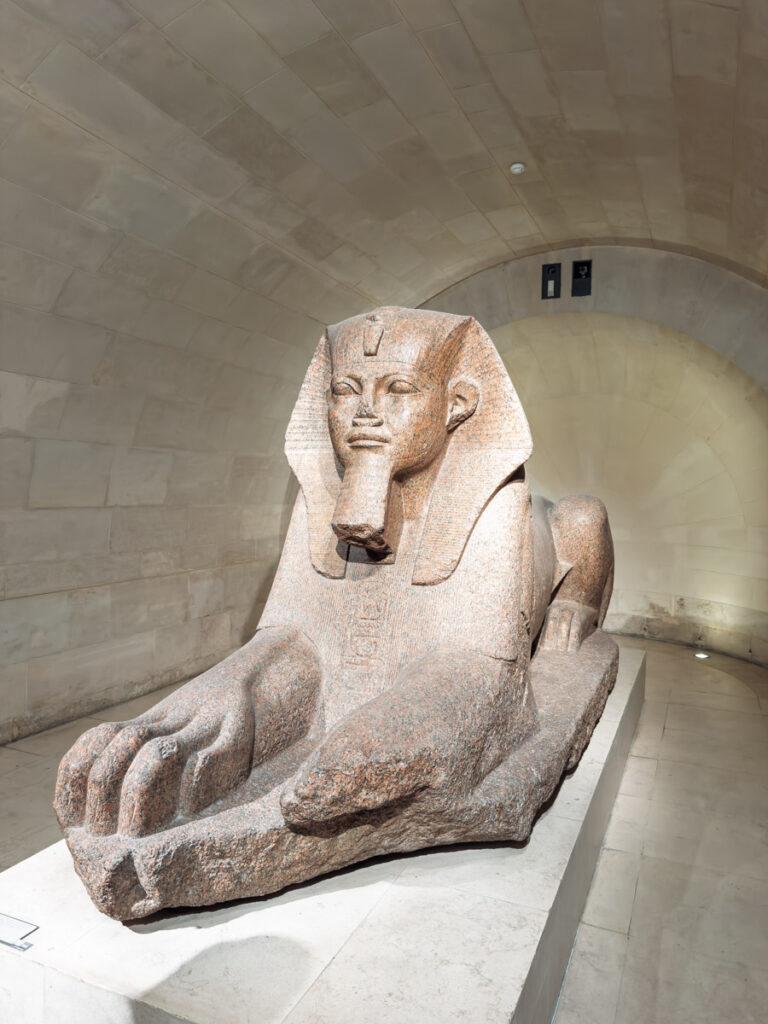
The palace itself is gorgeous. Every room is ornately carved and decorated. The ceiling is often bedecked with massive paintings. Looking up is highly recommended once you enter a new space. The historic artifacts collection contains items dating back to the 7th century BC. There is such a variety of things to see! For example, one of the rooms that we had hoped to see was one containing Egyptian burial urns and mummies, but alas, that was closed.
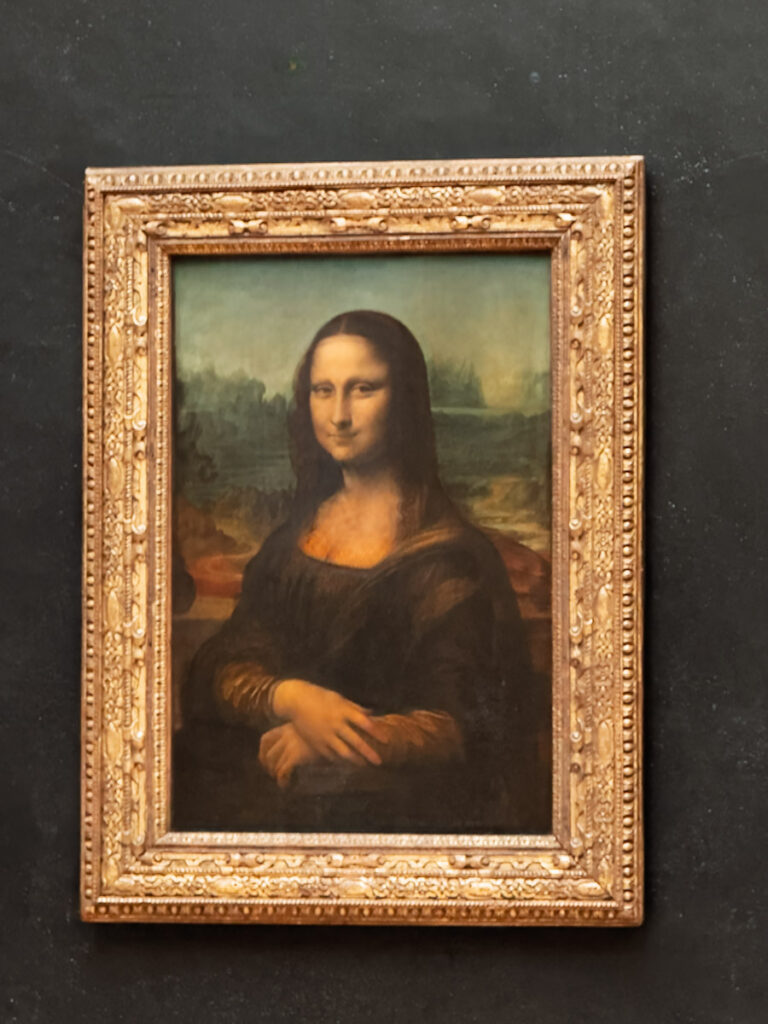
We did eventually fight our way through the Denon Wing and into the room to see teeny tiny Mona Lisa. You can’t get very close, and she’s encased in an enclosure that’s a bit reflective which impedes proper viewing, and there’s a mad crush of people all jockeying for position. But I feel like you kind of have to go see it. I’ve heard it referred to as a “destination painting.” Also, if you need to breathe for a moment, there actually is other art in the room to see.
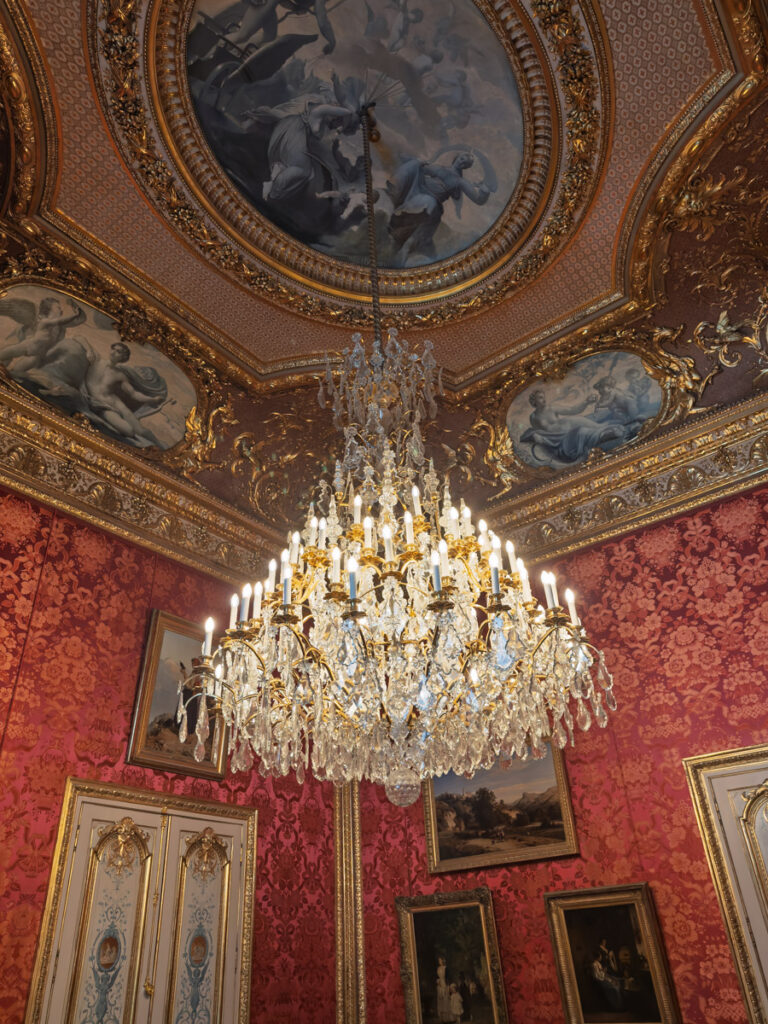
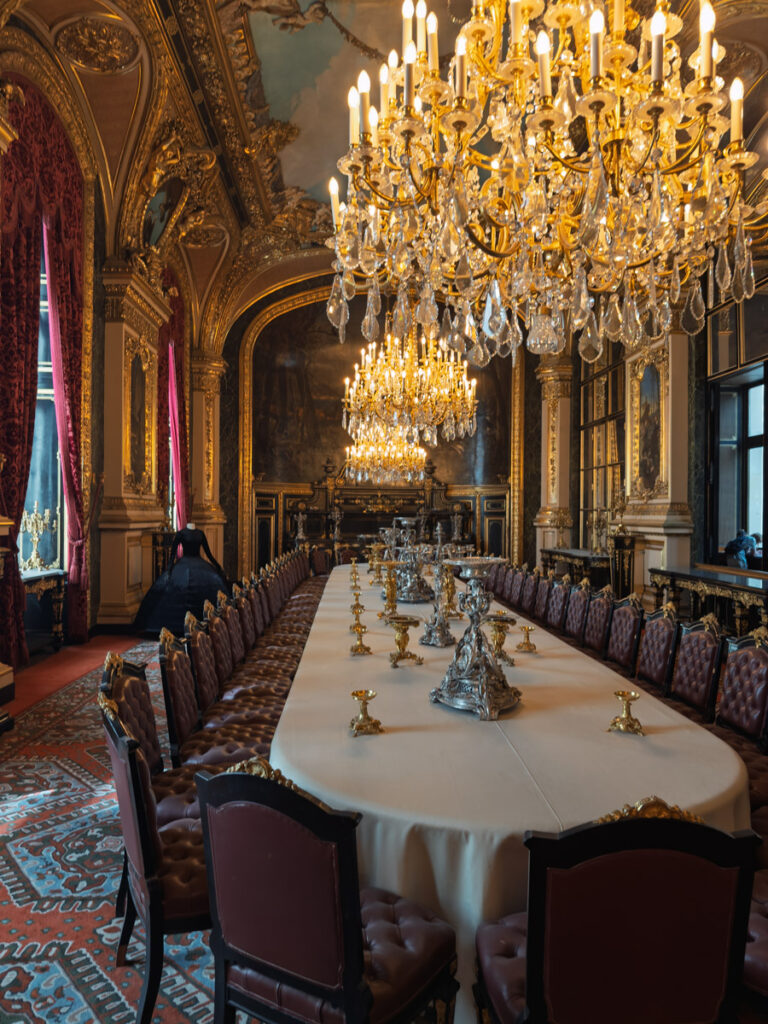
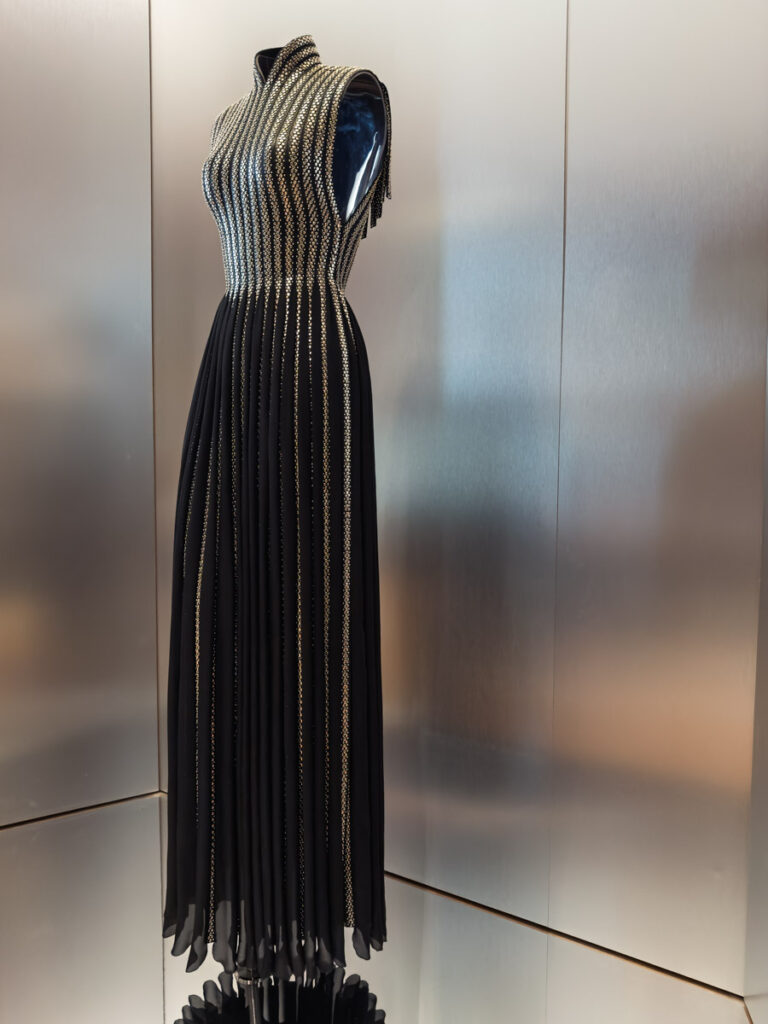
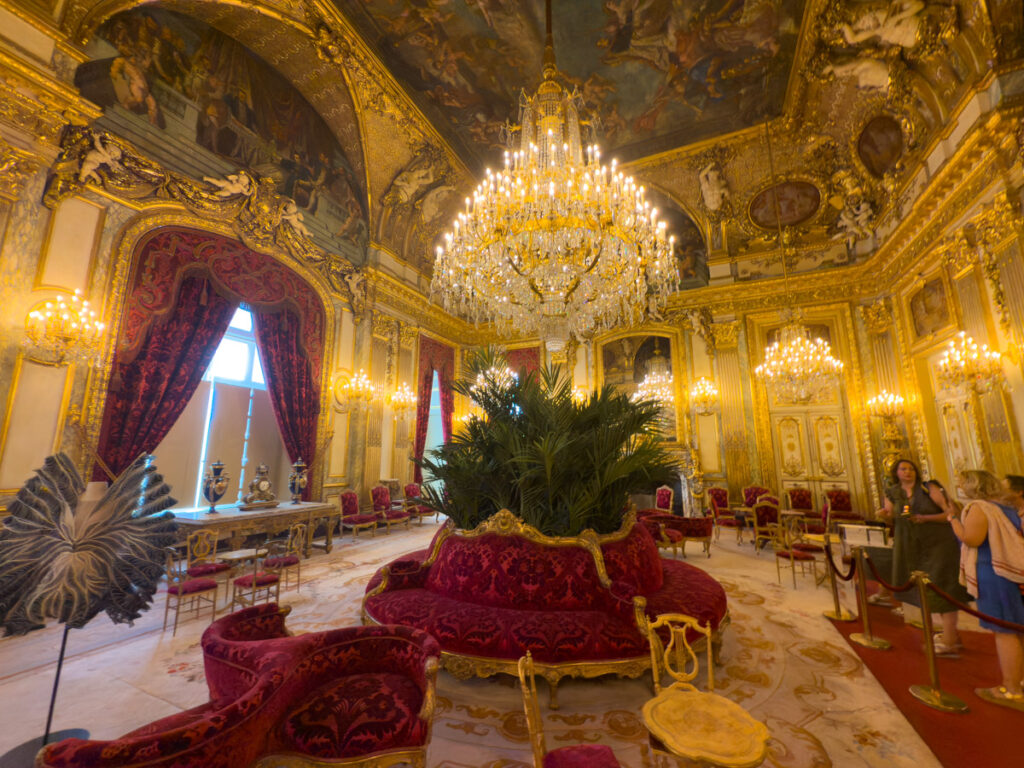
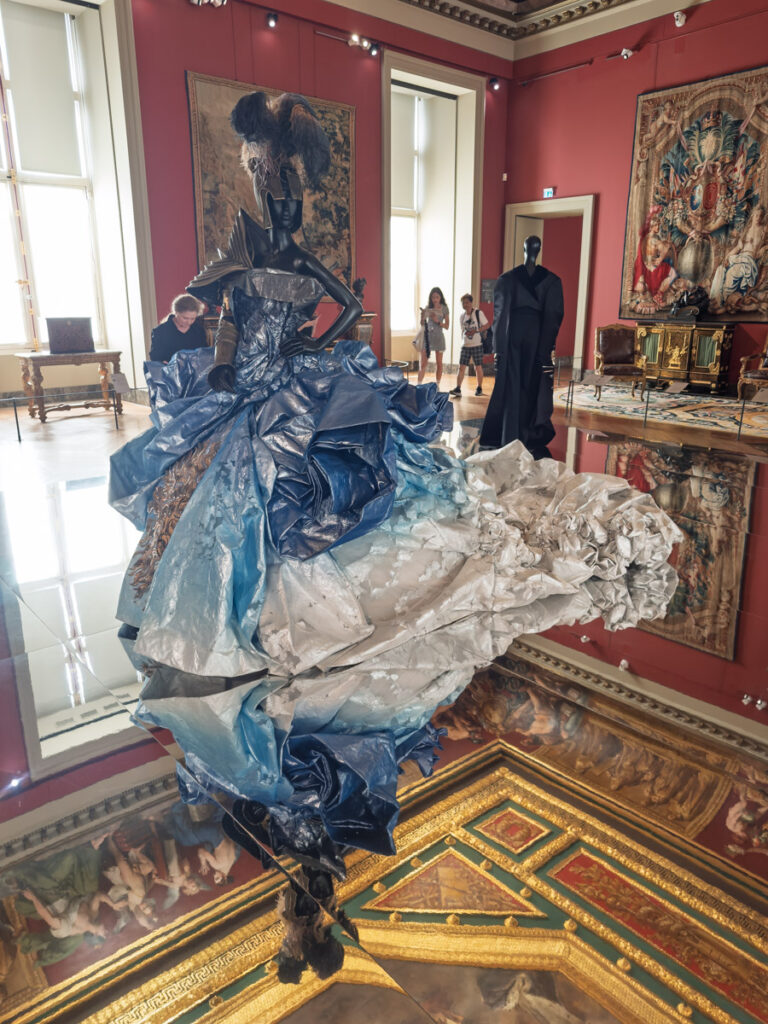
Back at trip planning time, we had decided not to spend one of our precious Paris days visiting the palace at Versailles. As a salve to that, we did make a point of visiting Napoleon’s apartments in the Louvre. These were actually in the Richelieu Wing, and were amazing to behold. A weird facet that I had kind of forgotten about (because I 100% do not care) was that the couture exhibit was happening in this wing of the Louvre during this time. Crazy outfits were on display throughout, and they were especially interesting in the context of the richly textured and decorated rooms in this wing.
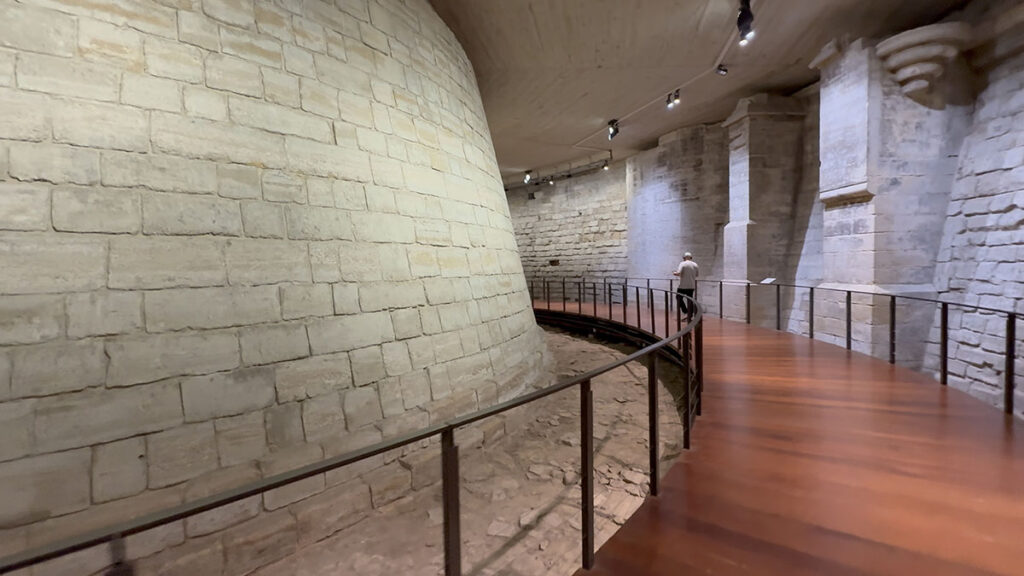
Another thing I really wanted to see was an exhibit called History of the Louvre, which has you heading way downstairs to see the medieval structures and foundations of the building, including the moat!
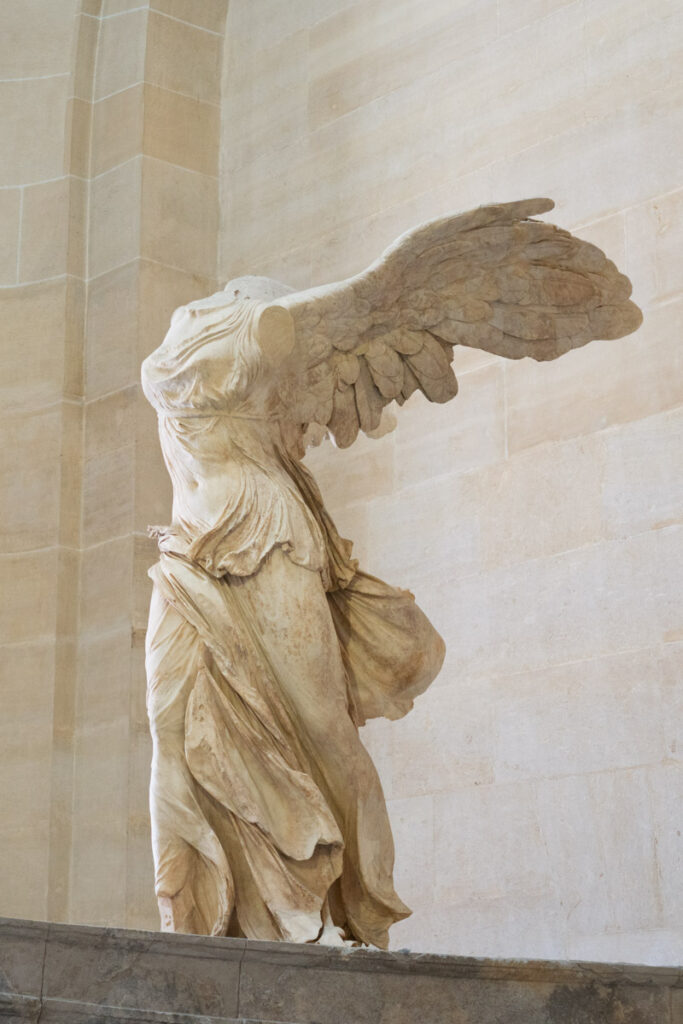
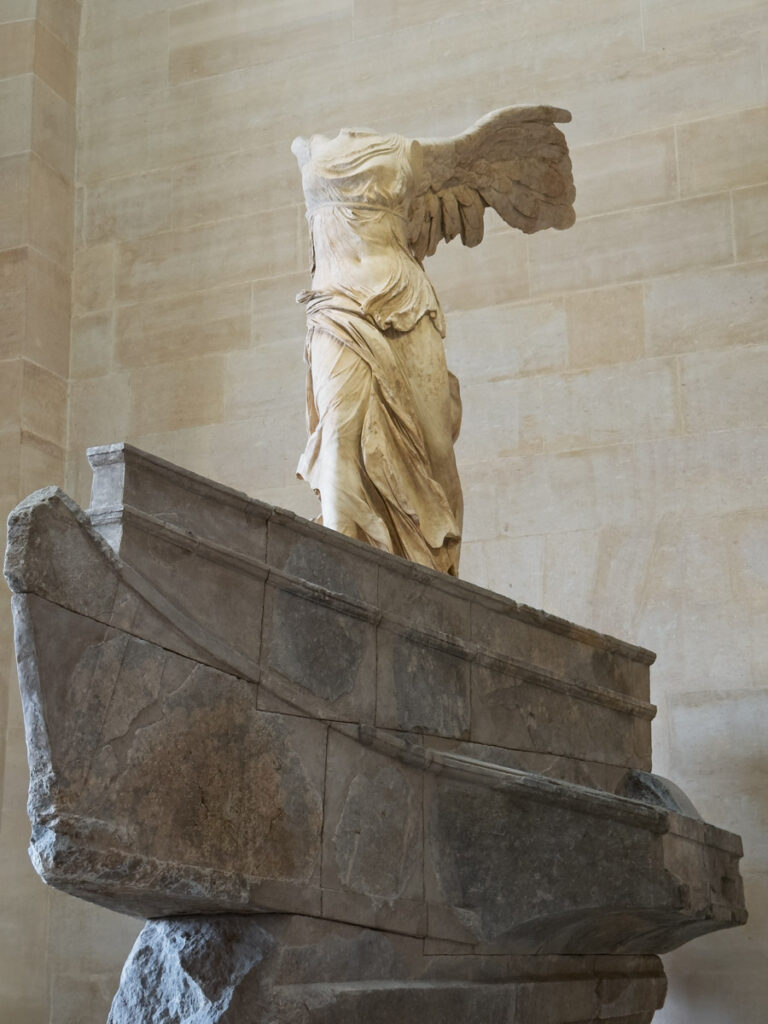
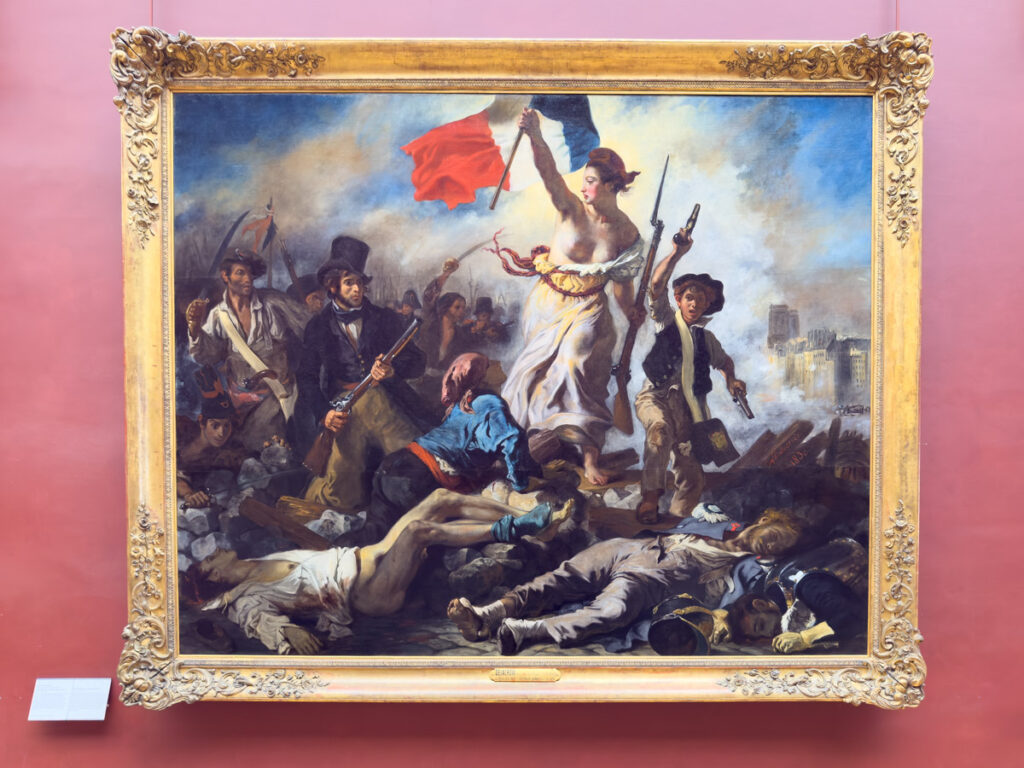
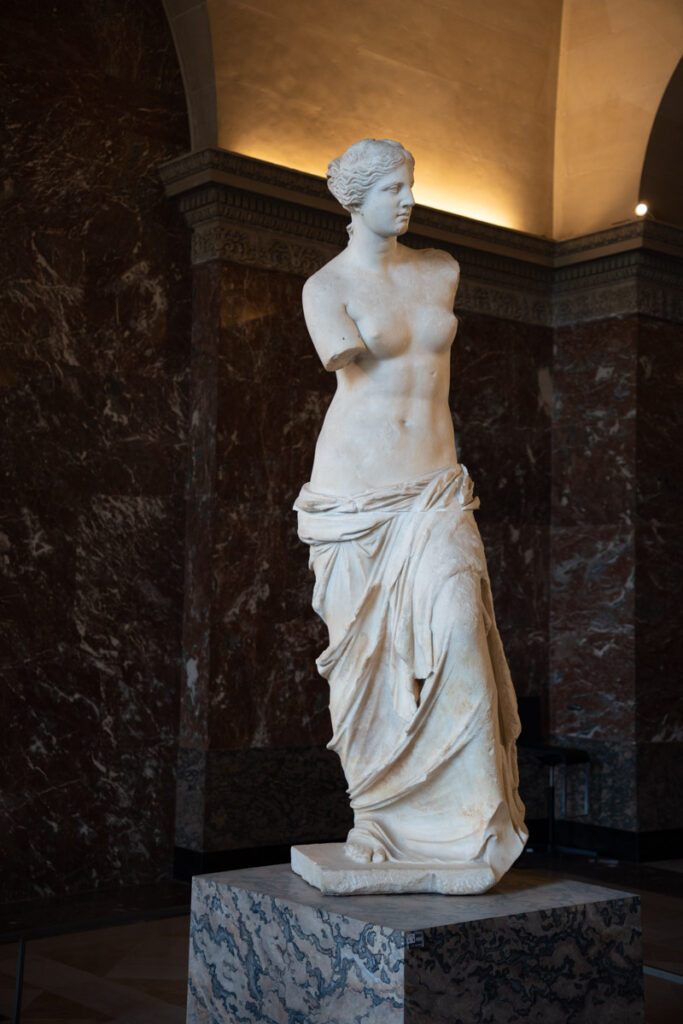
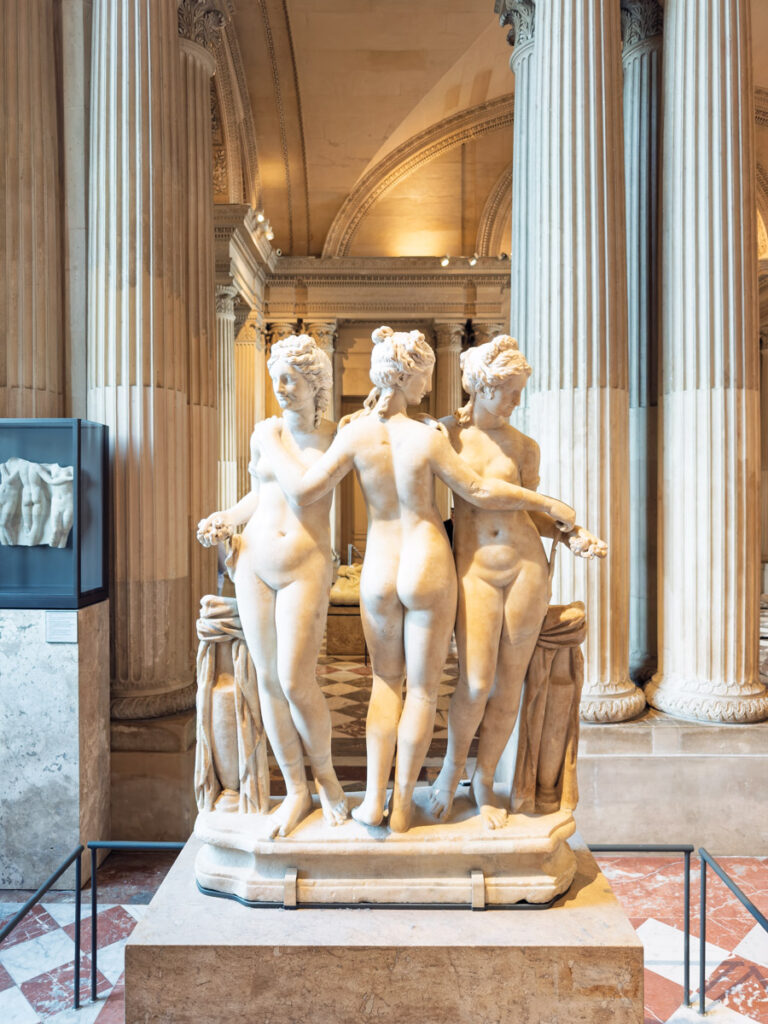
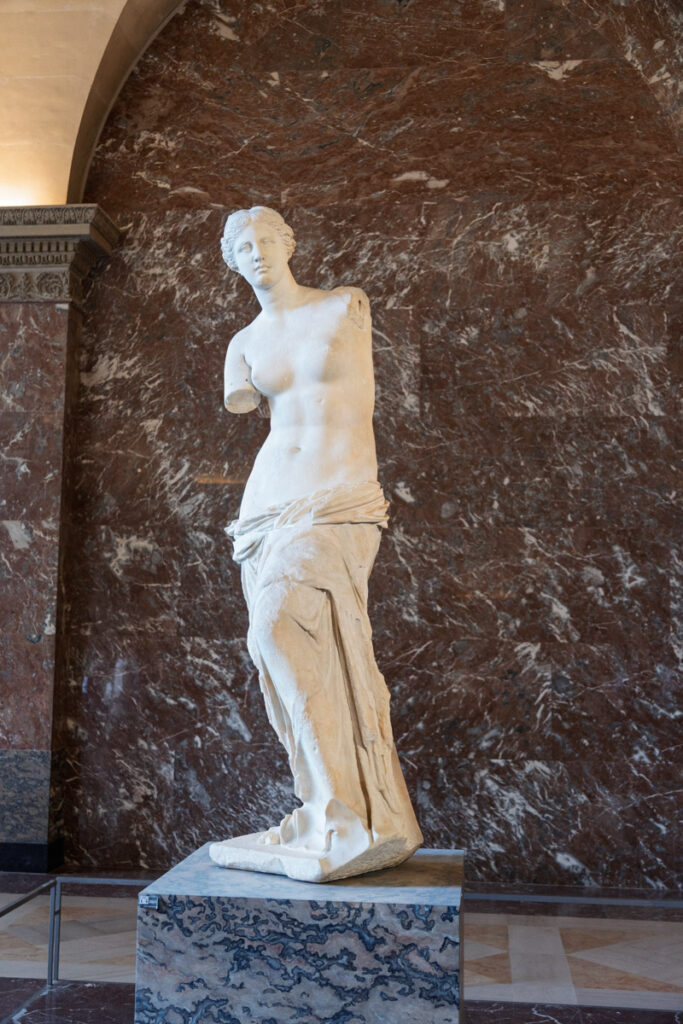
The sculptures were incredible too. We saw Venus de Milo, Winged Victory of Samothrace, and so, so much more. I know people complain about it, some even telling you to skip it, but I’m glad we visited the Louvre. Like I always do at big museums like this, I wish I understood art and its context a little more than I do. Understanding the novelty and controversy over subject matter and styles definitely adds to the experience.
As a concession to the several hours in the museum we’d spent that evening, we let the kids have McDonald’s for dinner. And after an unremarkable meal, we made our way back to our hotel to clean up and get packed for our first big train journey of the trip.
Day 8 – Saturday – Mont St Michel, eventually
Mont St Michel – A Good Night for a Long Walk
Day 9 – Sunday – Return from Mont St Michel, Nighttime Montmartre and Eiffel Tower
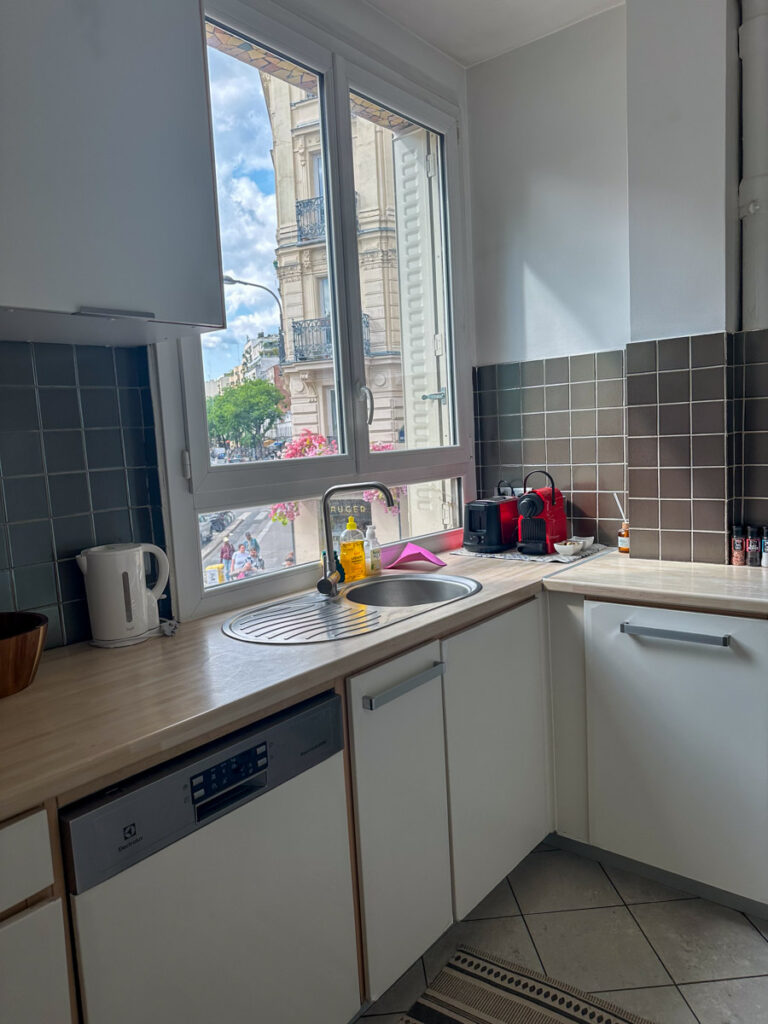
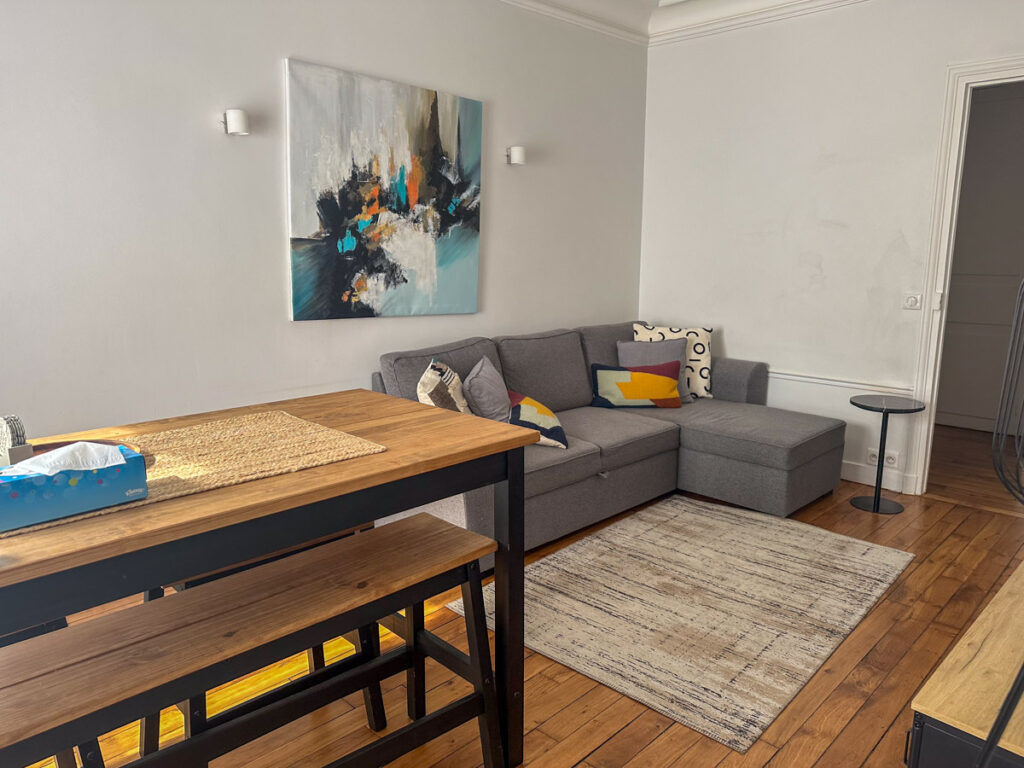
After our long trip from Mont St Michel, we were late enough into Paris that we were able to check into our AirBNB for this portion of the trip. This time, owing to our very early train in a couple days, we’d be staying not too far from Gare de Lyon right around where the 12th and 20th arrondissements border each other (our address was actually in the 20th, I think). This was our most local neighborhood-like location, and it was my favorite place we “lived” while in Paris. There were two bedrooms, a living room, and a kitchen. With all the windows, it felt very light and open. Out of our kitchen window, we had a view of a little skate-board area and a boulangerie, and it was fun to watch that part of the city slowly wake up in the morning.
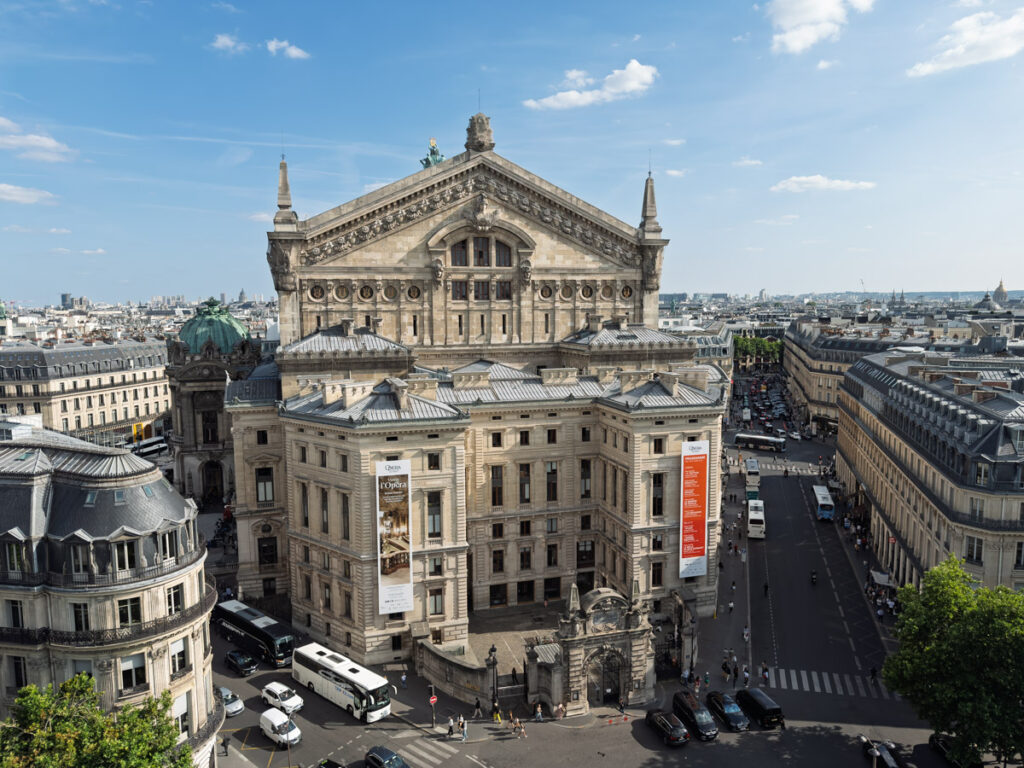
We had originally thought we might try to visit Opera Garnier, but all the tickets were sold out, and in any case, there wouldn’t have been much time (it closed at 5, and our train didn’t even get to Paris till 2:20). Instead, we visited the grocery store, started some laundry, and generally enjoyed some down time.
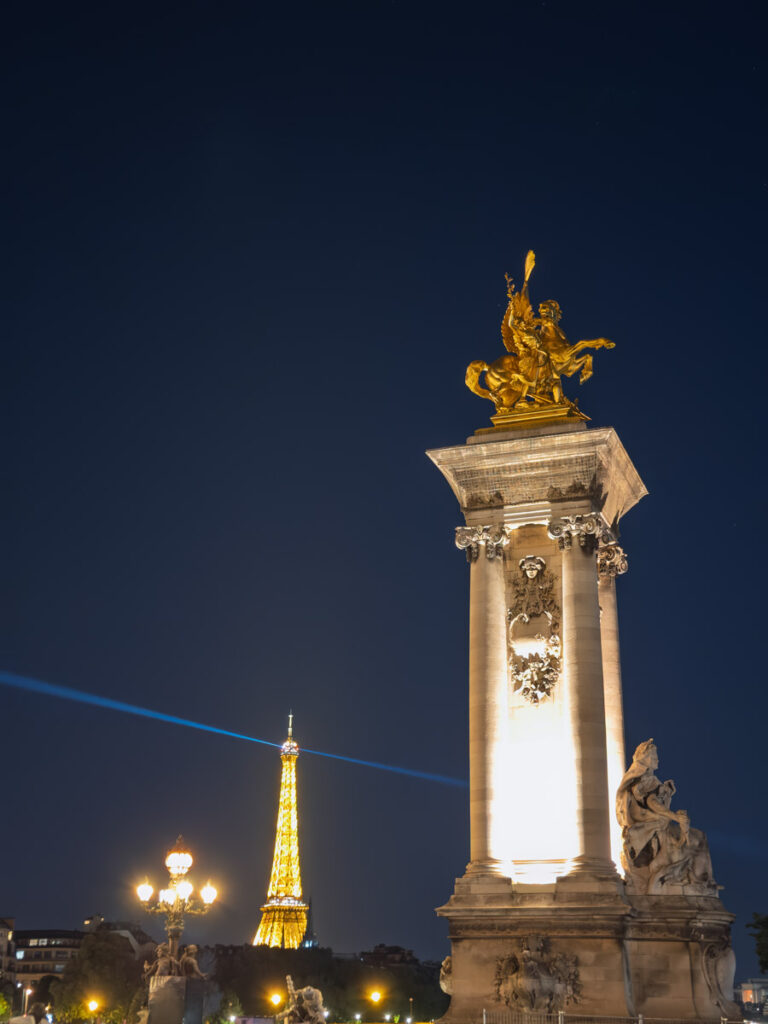
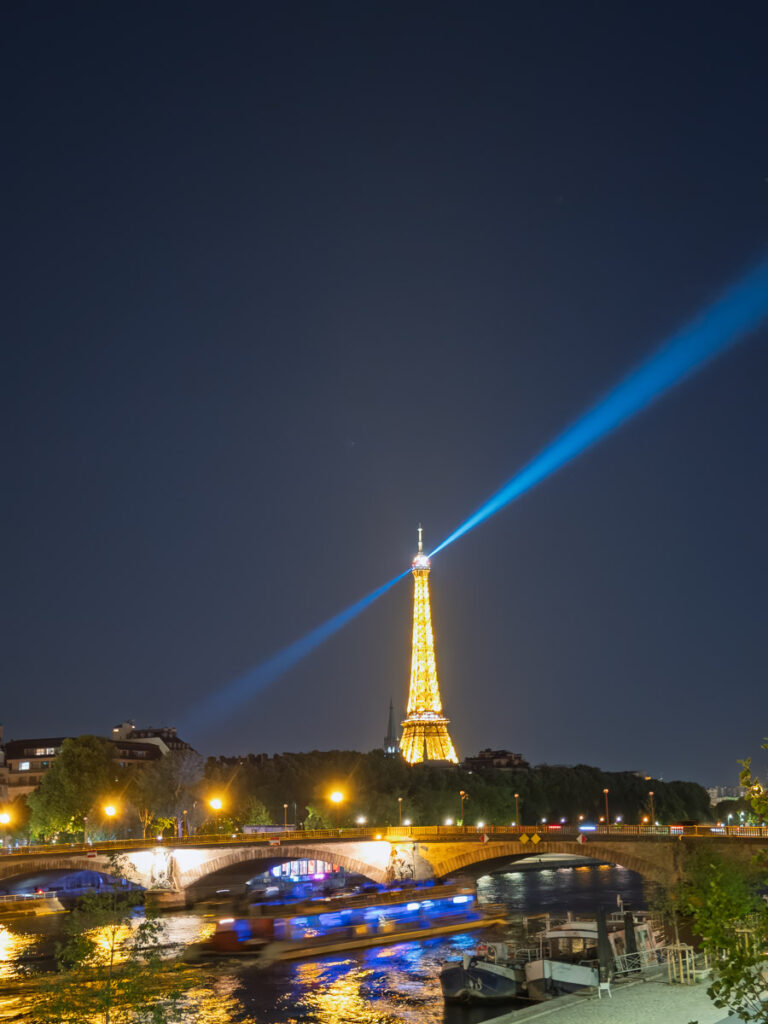
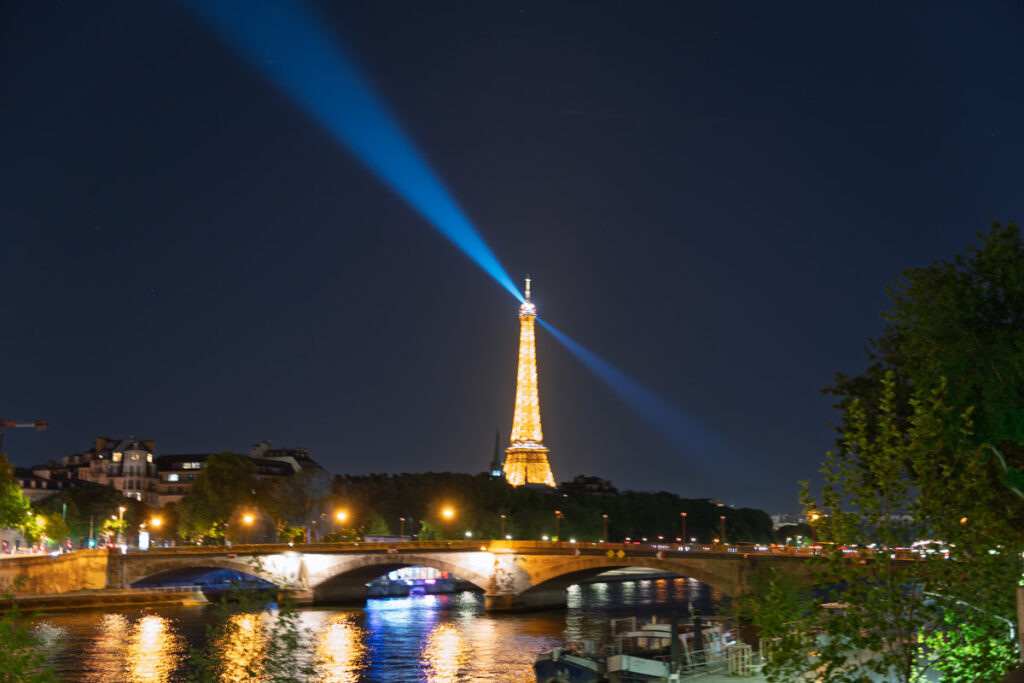
We decided that if we were going to see the Eiffel Tower light up and sparkle at night, we better make it this evening. We had an obscenely early train on Tuesday morning, and a late night beforehand seemed like a bad choice. As it happens though, sunset is very late this far north in the summer, and the tower doesn’t sparkle till sundown. By this point, in mid-June, it wouldn’t put on its first show till 11.
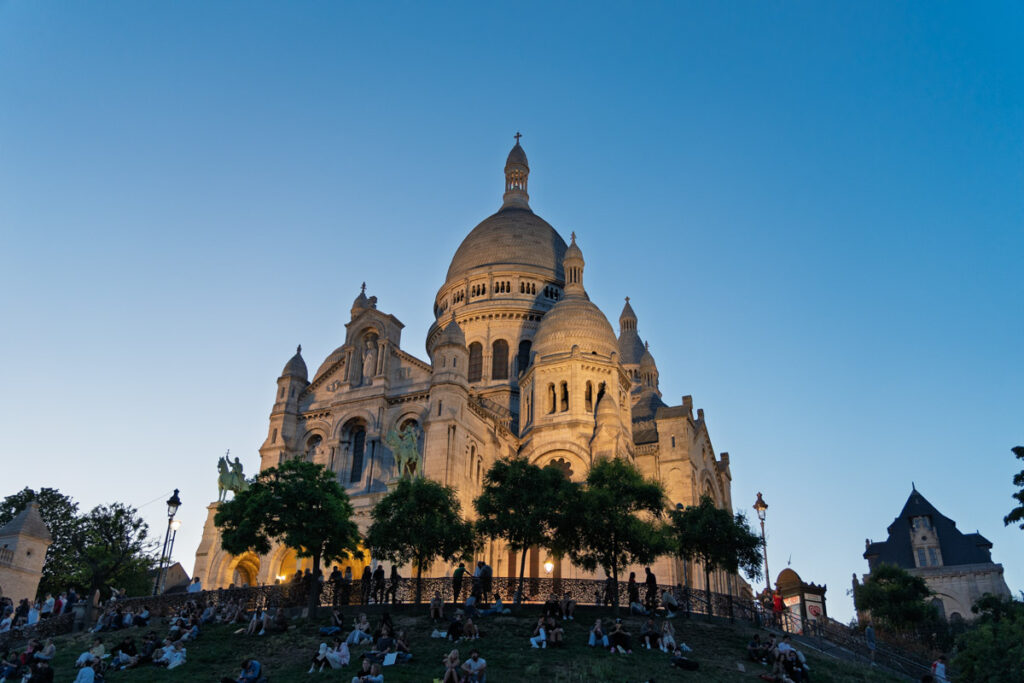
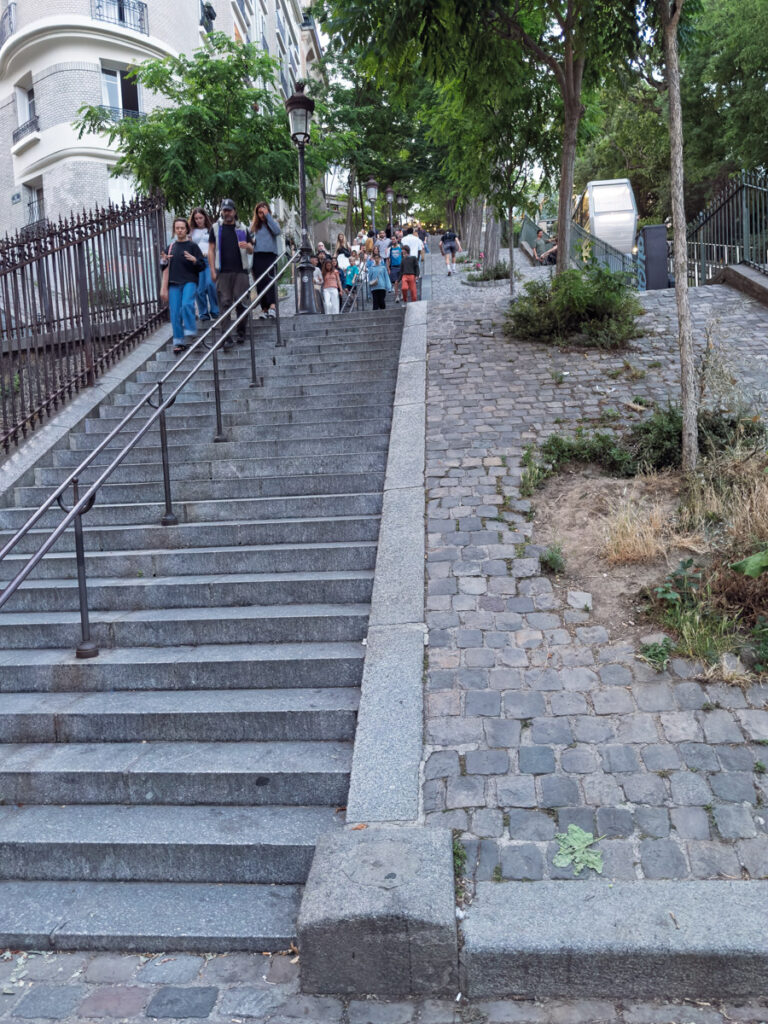
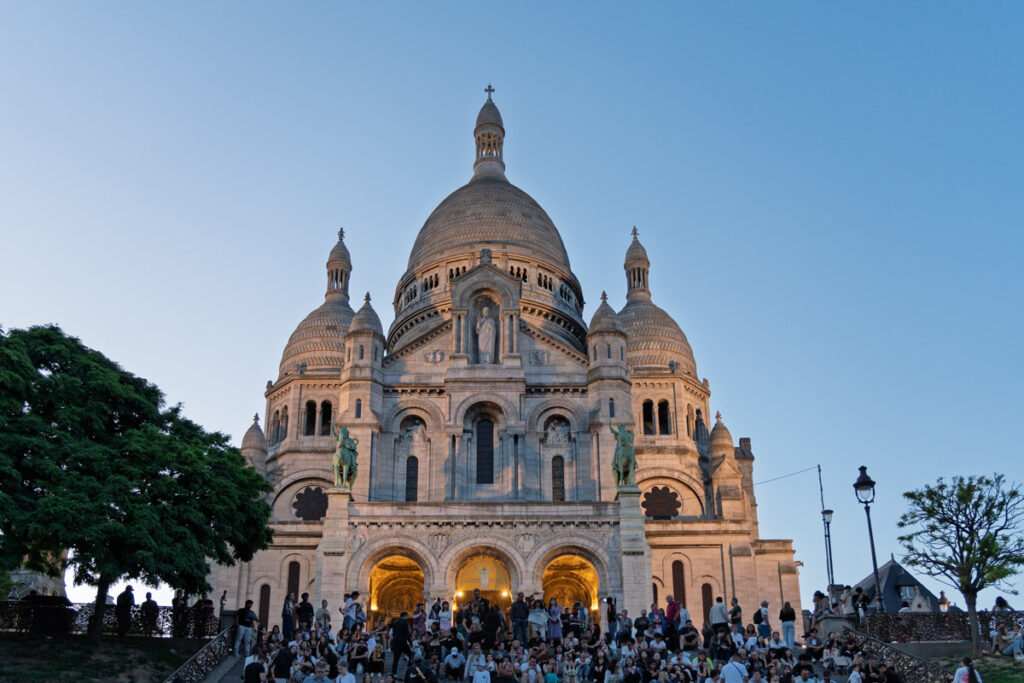
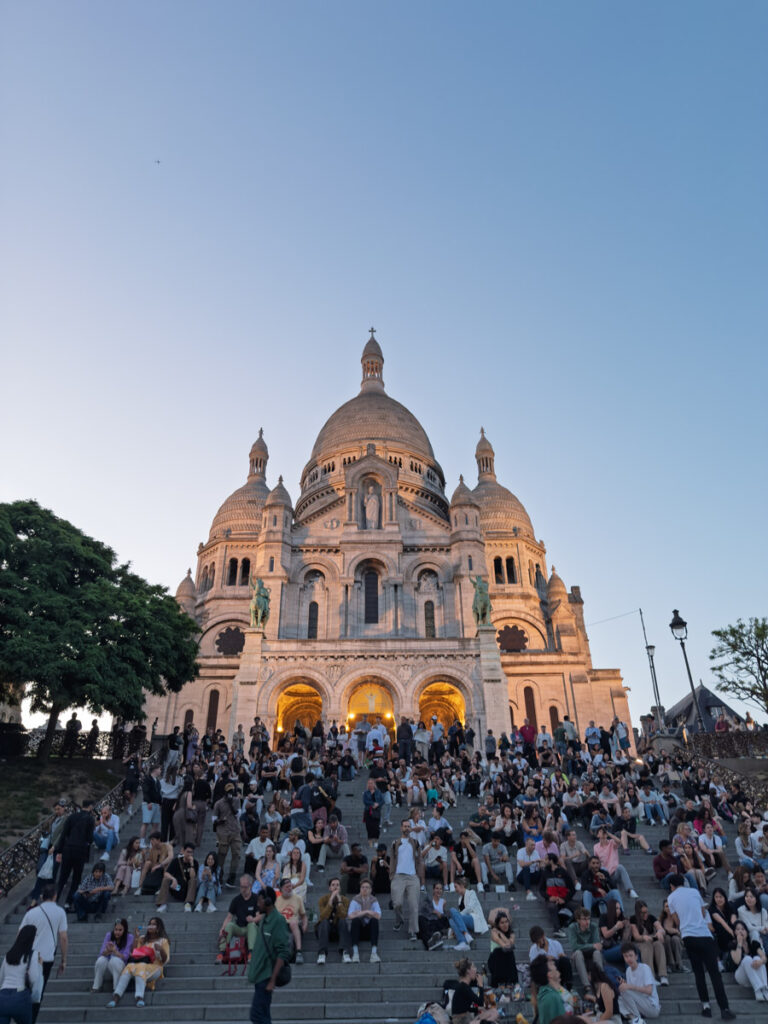
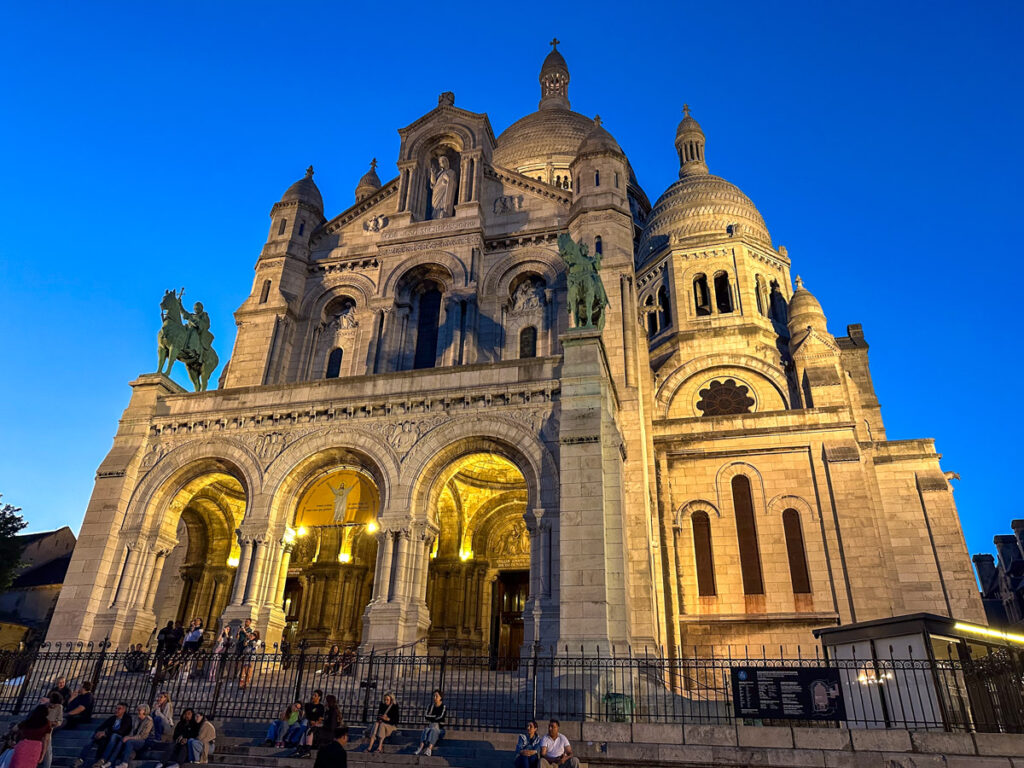
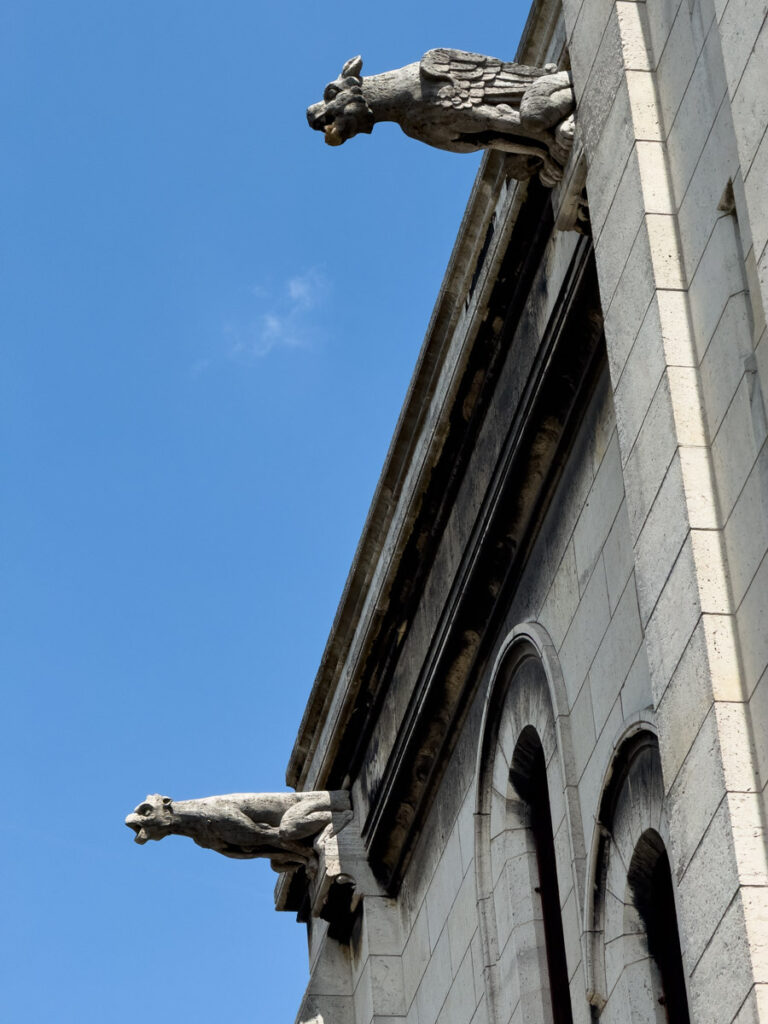
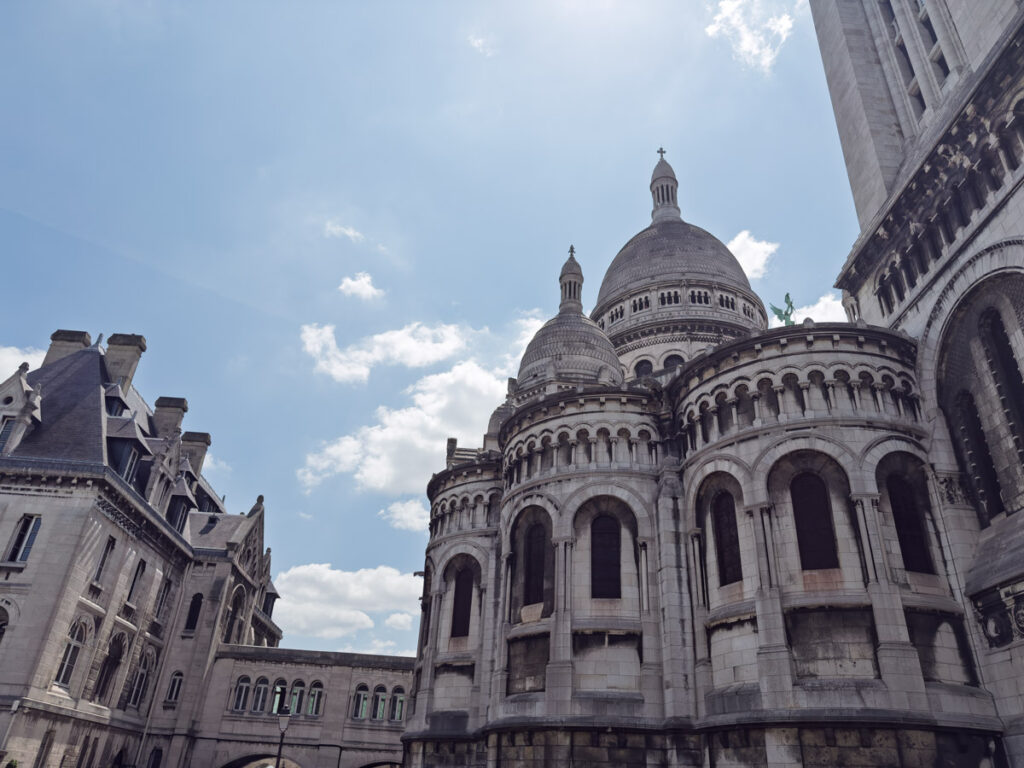
To kill a bit of time, we decided to go see the Montmartre district at night. The area was very lively, even on a Sunday evening. We walked first to famous Sacre Couer (Basilique du Sacre Couer de Montmartre). The steps heading up through that part of town and all the way up to the cathedral are not for the faint of heart. The building exterior is absolutely gorgeous, especially at night. You almost could forget about the huge crowds. Even though the cathedral is open late, we were too late to go in. It wasn’t particularly high on my list anyway, though it might have been interesting to climb the 300 steps up to tour the dome.
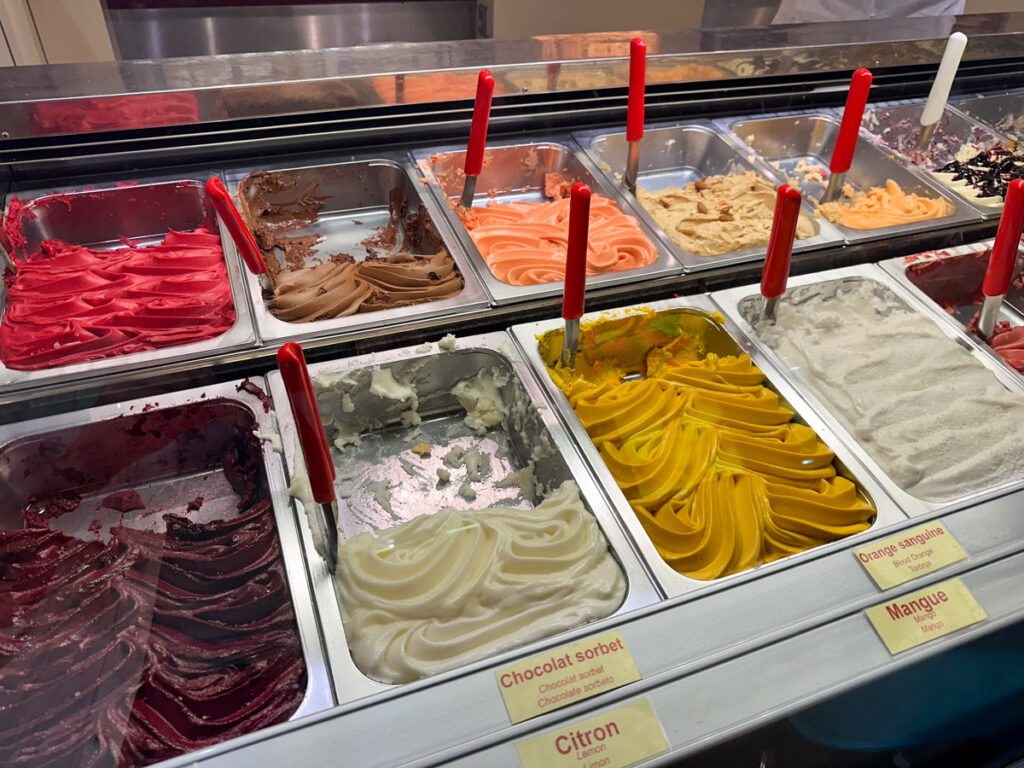
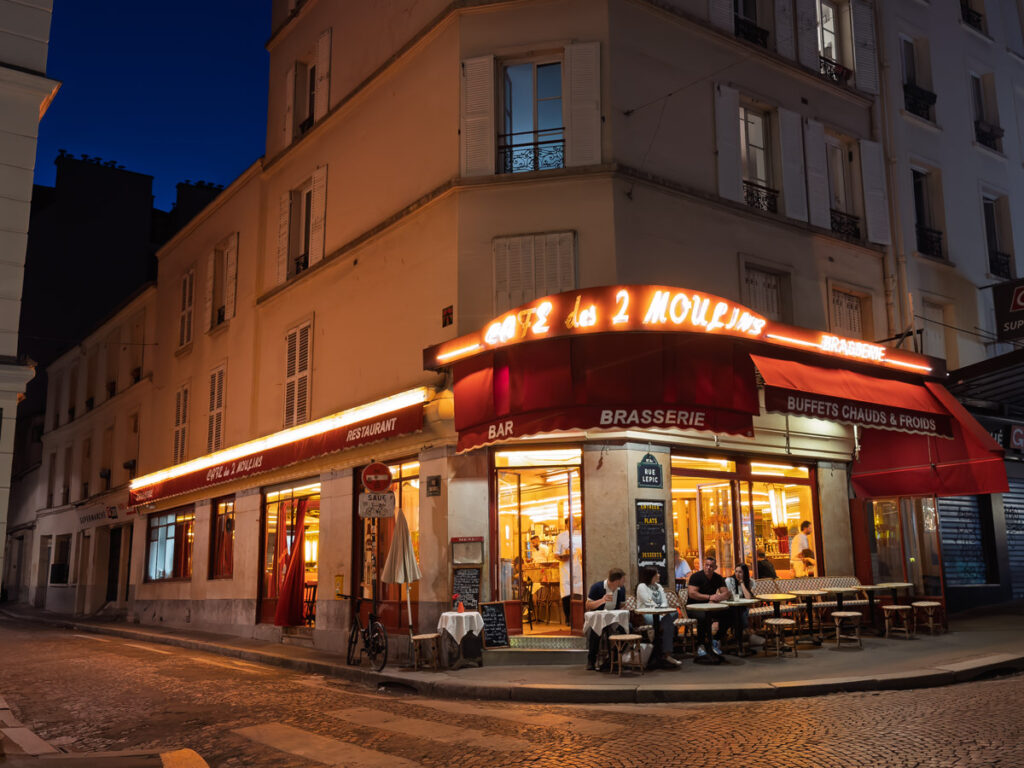
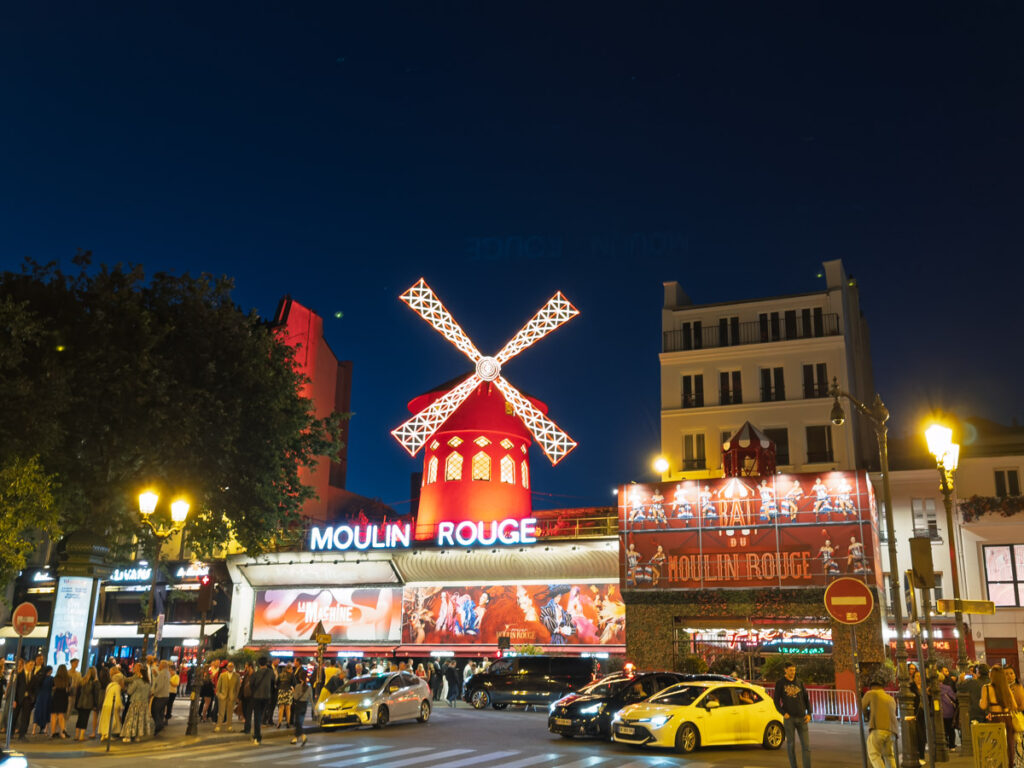
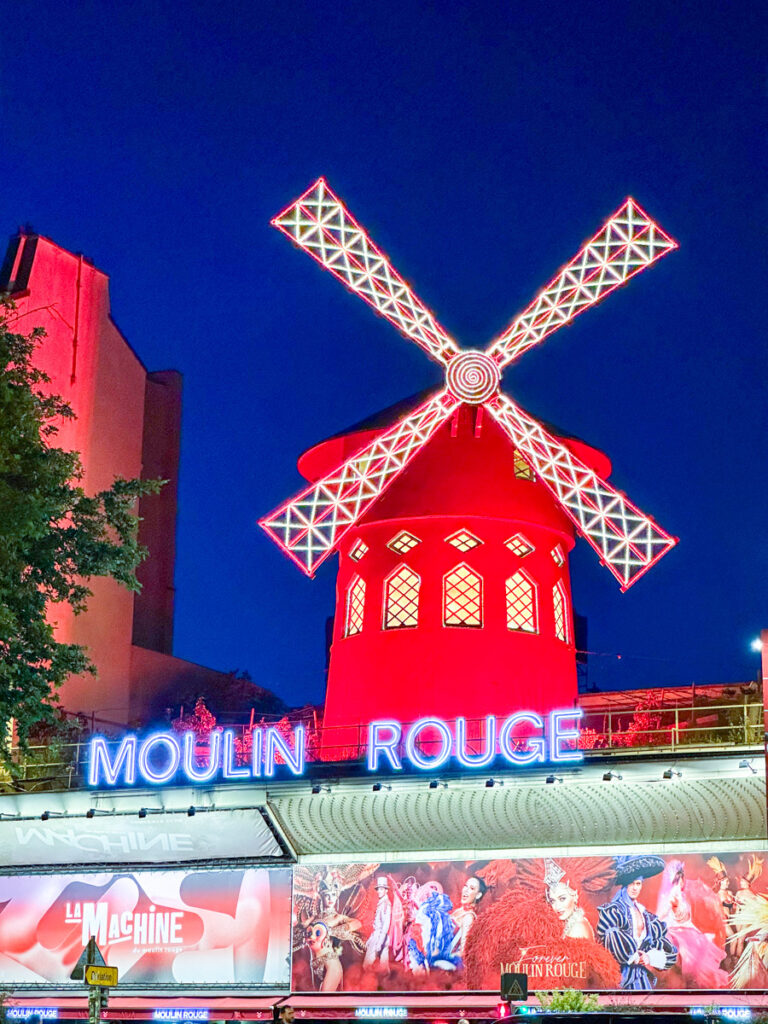
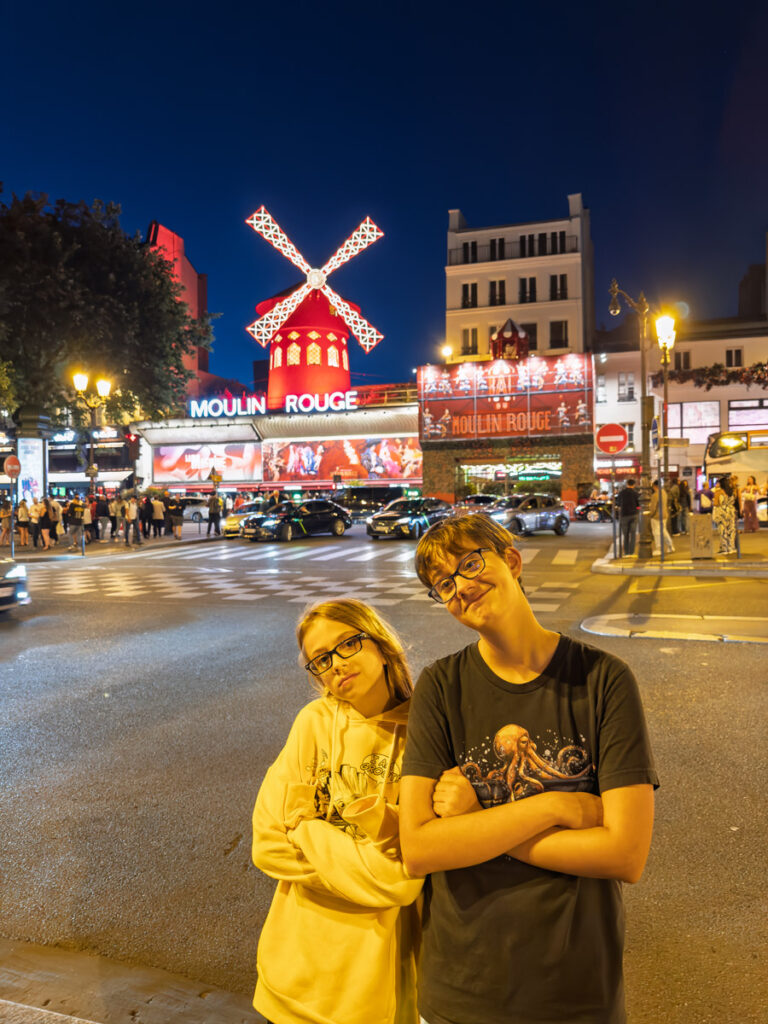
We bought our tolerant kids some nice ice cream and walked over to see Moulin Rouge all lit up at night (Moulin Rouge – sounds fancy and exotic in French – just means “red windmill”). We unintentionally walked ourselves past the Café des Deux Moulins, of Amelie fame. It was honestly a pretty pleasant walk.
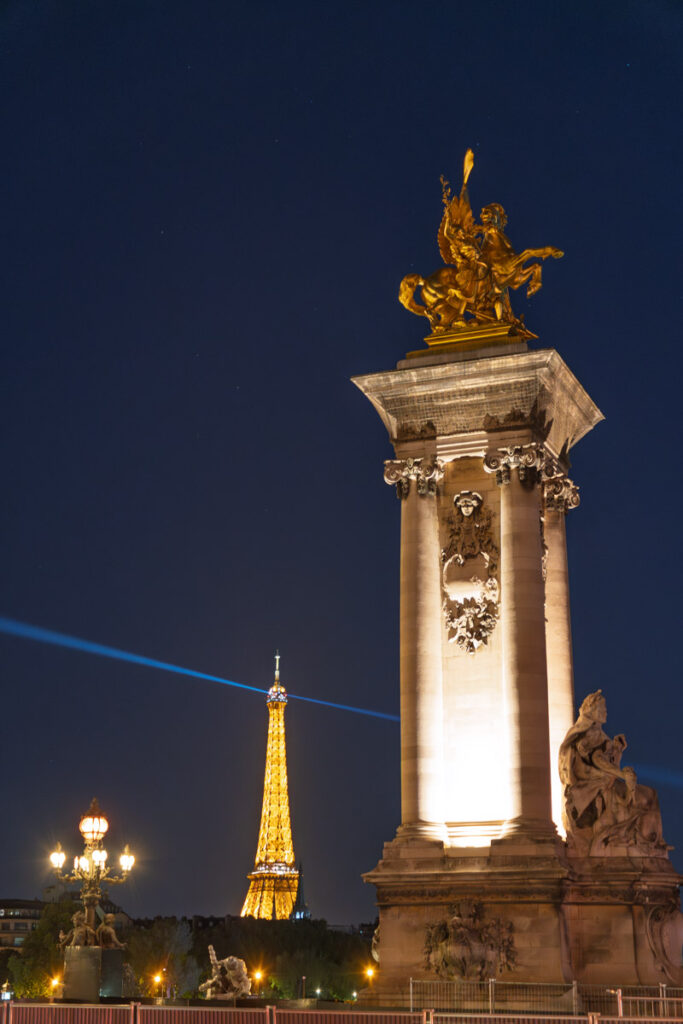
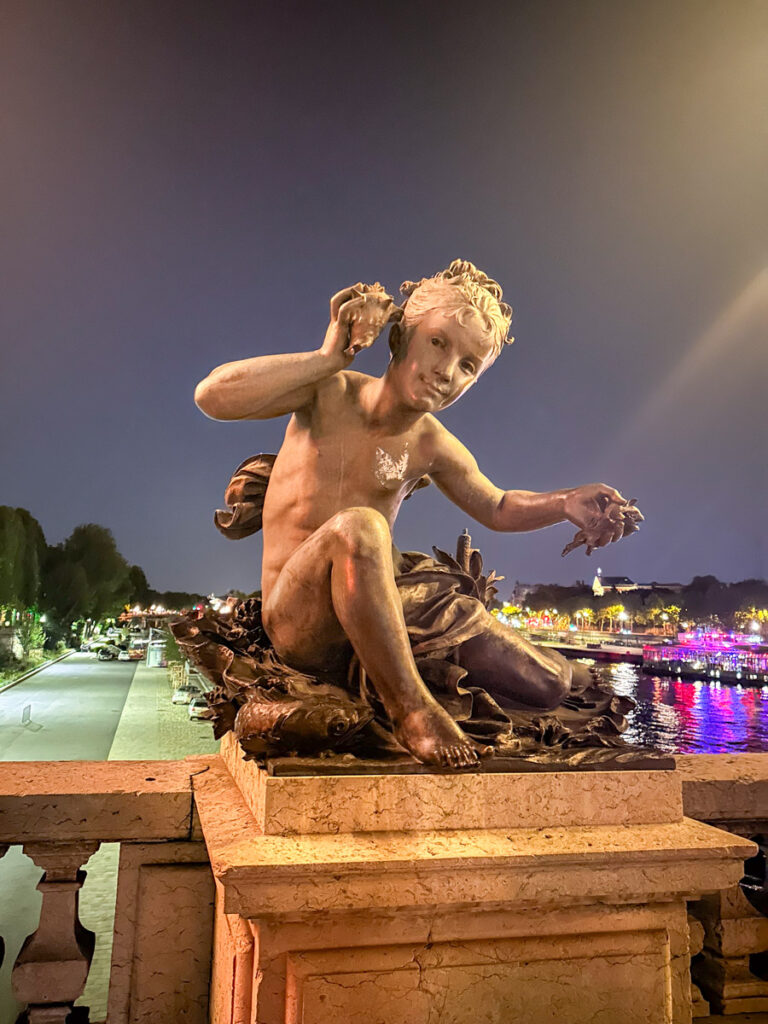
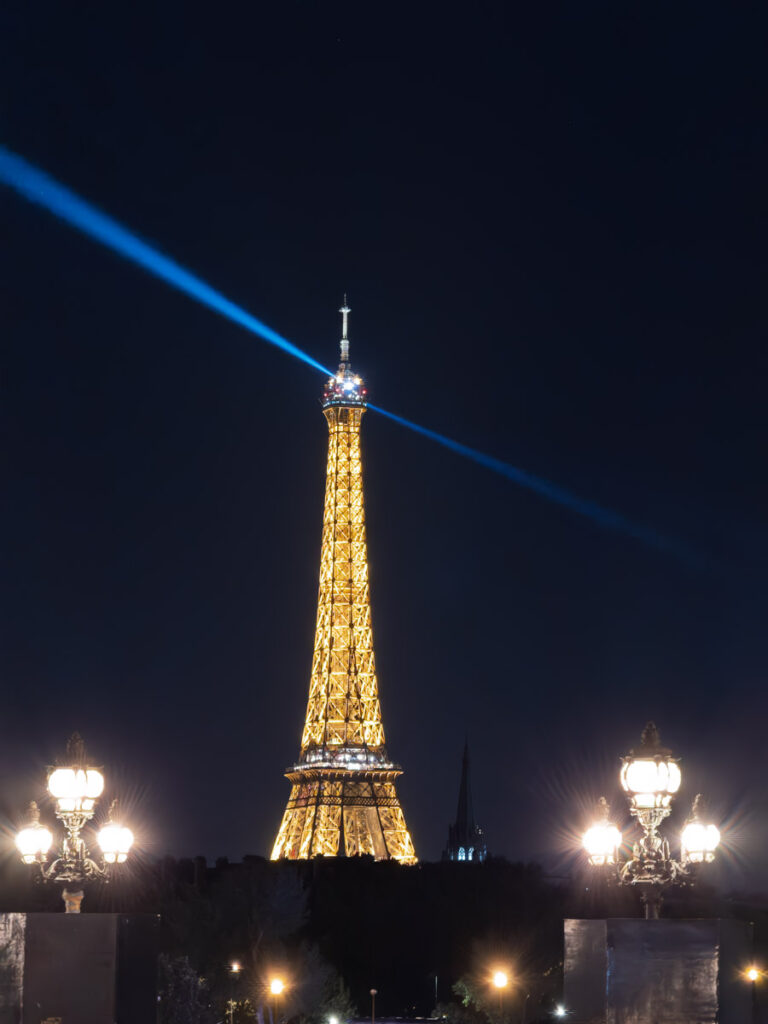
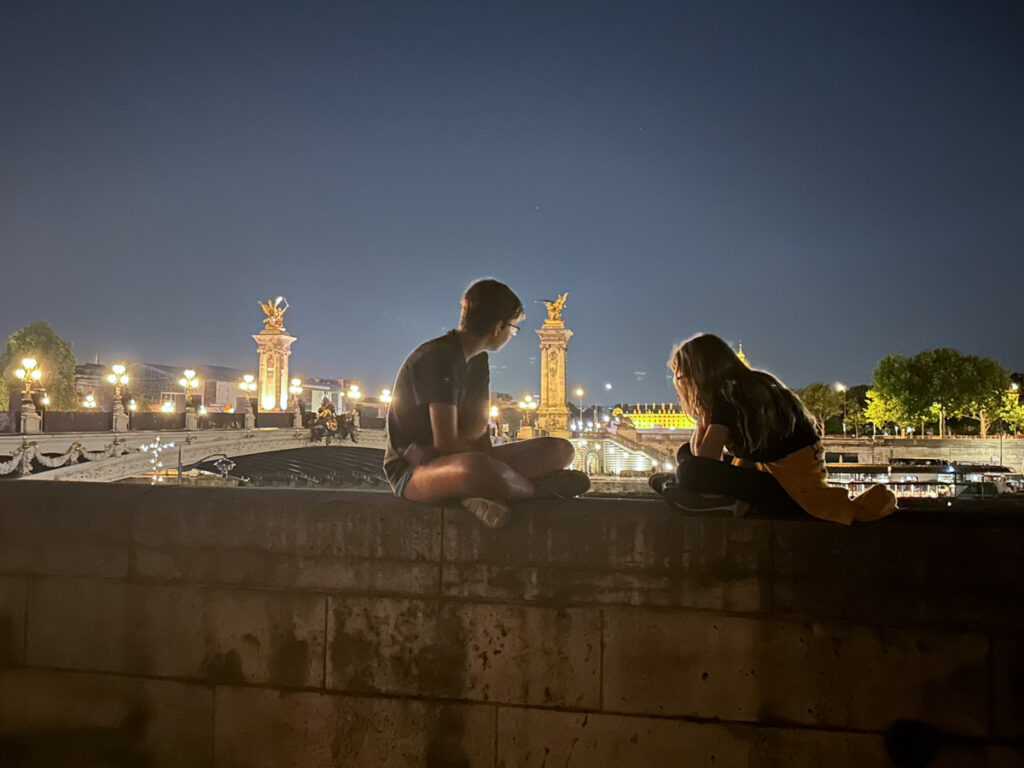
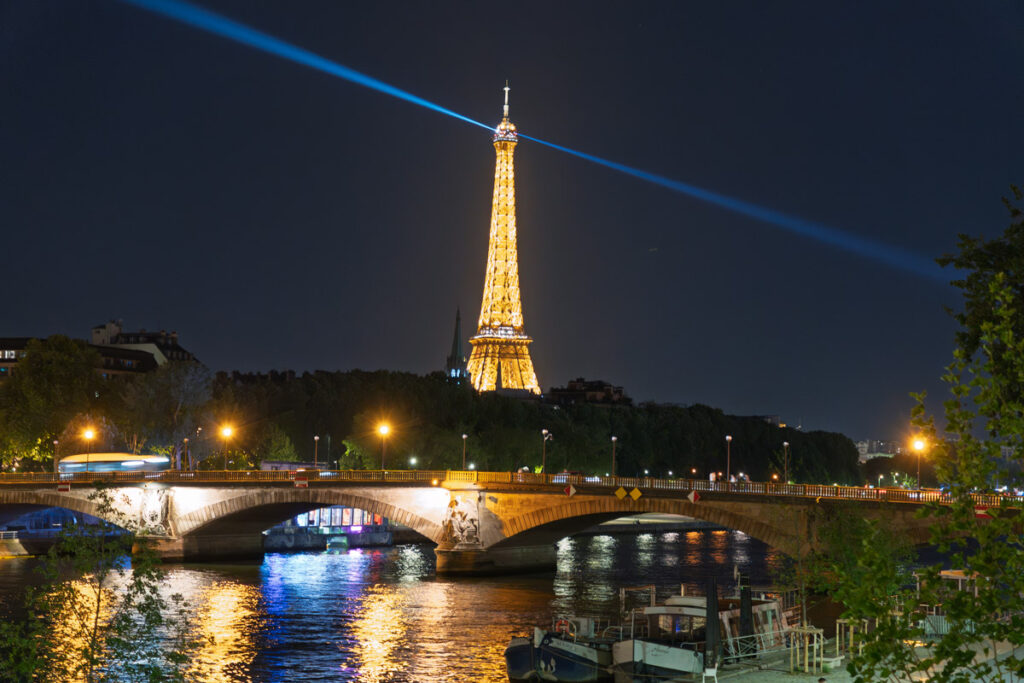
We hopped a metro over to the Alexander III bridge to find a good place to watch the Eiffel Tower sparkle. We had maybe 15 or 20 minutes to kill, which of course is an eternity in kid-time. Instead of staying up on the bridge (which had some kind of obtrusive construction going on), we managed to walk ourselves down some steps a bit nearer the Seine, and this turned out to be a much better (quieter and more scenic) location from which to watch the tower. Once the big moment finally came and the Eiffel Tower began to glitter and shimmer, both kids almost in unison said, “That’s it??!!” I guess it’s no match for a Disney castle night show.
We had a looooong metro ride back to our apartment (basically, we went all the way across town), and the kids were snoozing by the time we got to our stop. Sean and I discussed it. Even though I had booked 9:00 entry to the Musee de l’Orangerie the next day, and even though I badly wanted to see those giant Monet paintings, we decided to skip our reservation and let the kids (and adults) sleep in instead.
Day 10 – Monday – Pharmacie, Daytime Montmartre, Galeries Lafayette
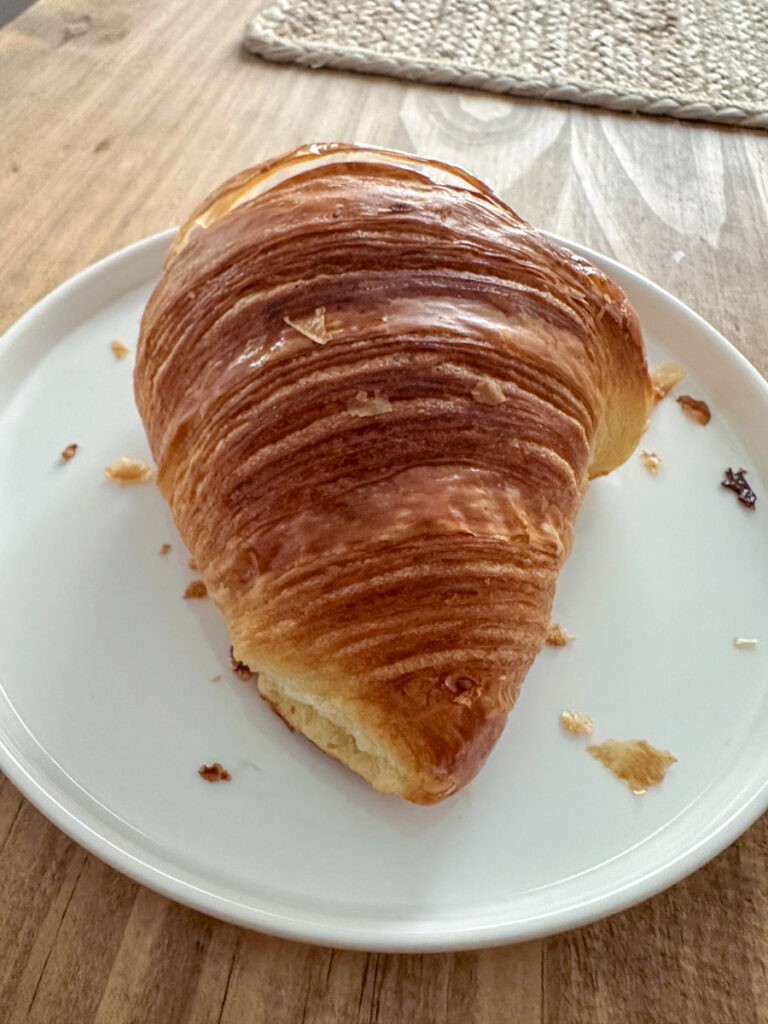
As mentioned, we let the kids sleep in. To thank me for my sacrifice, poor Maya woke up and vomited. At least she didn’t yark on a Monet. Later on, she managed to eat deux croissants that Sean had fetched from our boulangerie across the street.
After breakfast, our first stop would be at one of the ubiquitous pharmacies we’d seen all over the city. You can’t buy most medicines at a supermarche (grocery store). They must be purchased at la pharmacie. The upshot is that the pharmacist will chat with you and try to ensure you’re purchasing the correct medications for your (or your child’s) symptoms. We muddled our way through what Maya was dealing with, and we left with some very soothing cough drops (pastilles contre la toux), some expectorant, and some nasal spray, which Maya wholly loathed.
Once we had dosed her up, and she confirmed she was feeling ok, we headed out for more exploring. Our pharmacist had checked her temperature (she was normal), and Maya seemed to feel better and was able to keep her cough under control, so we thought this would be ok. (It was all ok, this isn’t Chekhov’s gun.)
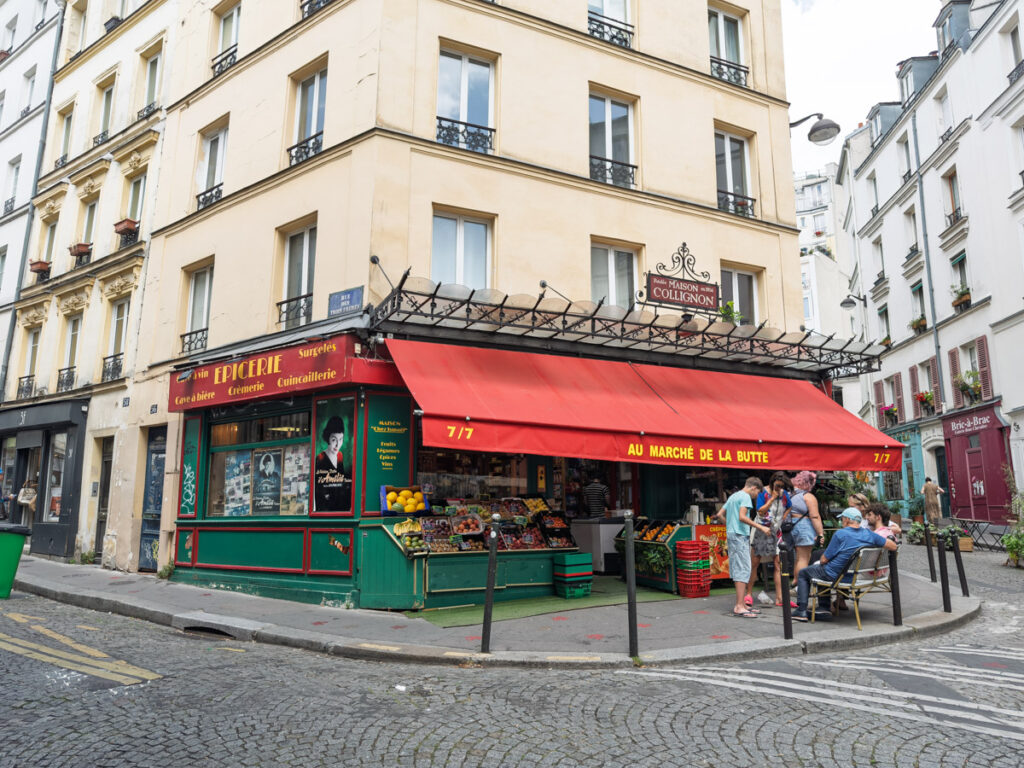
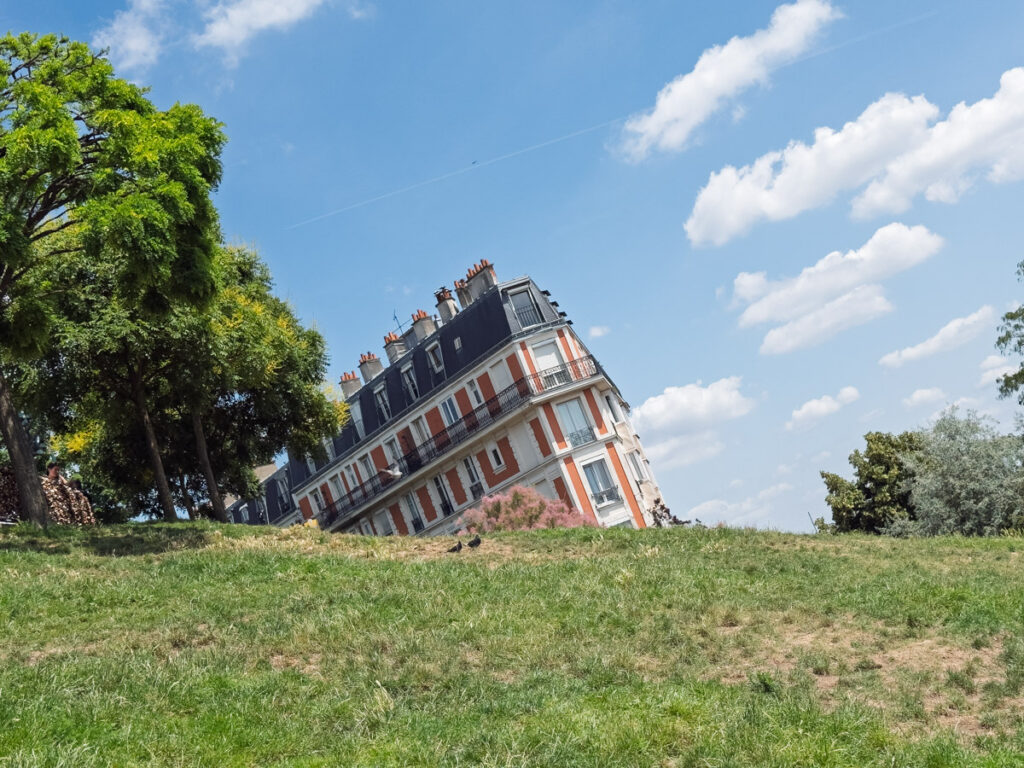
We headed again to Montmartre, this time to wander around and see the tourist things in the light of day. Sean chose our route carefully though. He led us on a path that would take us up switchback-esque lanes and byways instead of up those damnable steps again. Of note this day, in our wandering, we accidentally saw the grocery store from Amelie as well. I hear some people go on Amelie tours in Montmartre. We didn’t, at all, but wound up at some of the movie locations anyway.
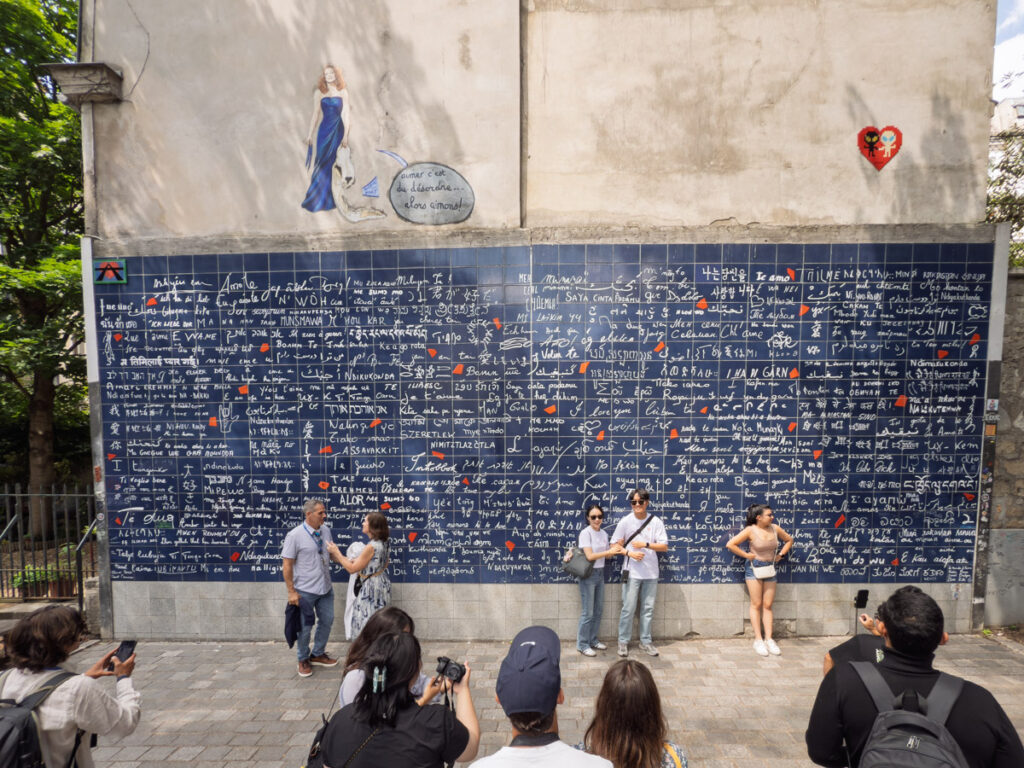
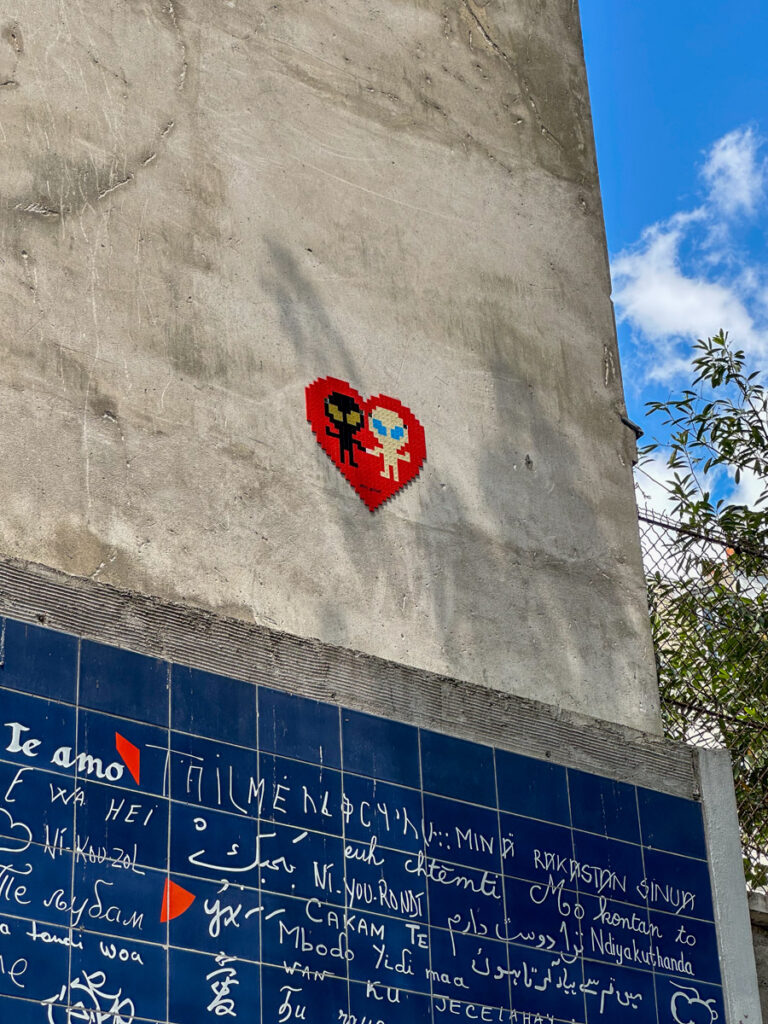
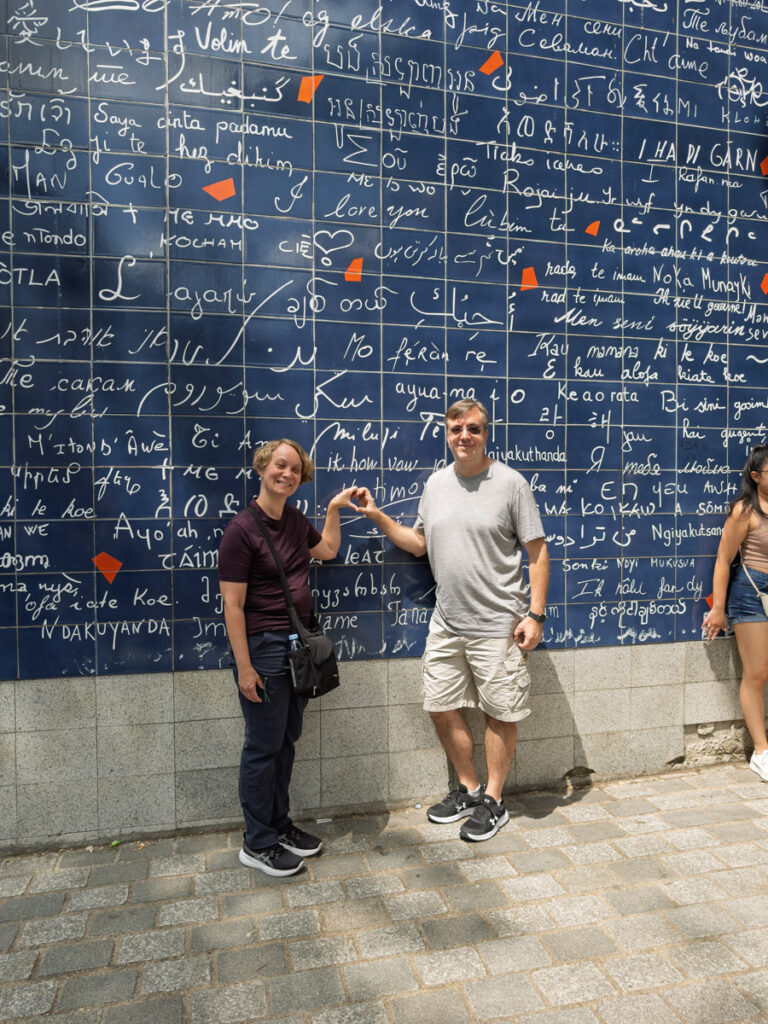
We wandered past the I Love You Wall (Le mur des je t’aime). This is a 400+ square foot art installation featuring the words “I love you” written in 311 languages. I can’t really complain because we were tourists too, but on this trip, I often found it hard to appreciate a thing for the sheer crush of people always obscuring it. We didn’t linger long here – we worked our way up toward the wall, took a few photos, found the English language “I love you” and then wandered out of the crowd.
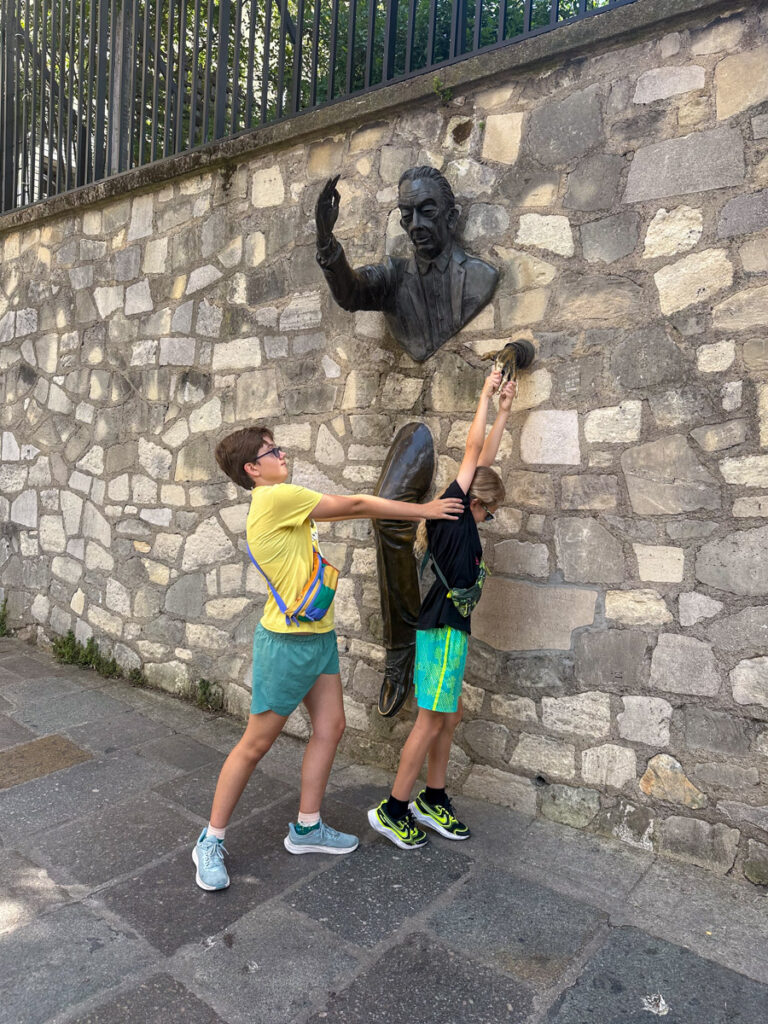
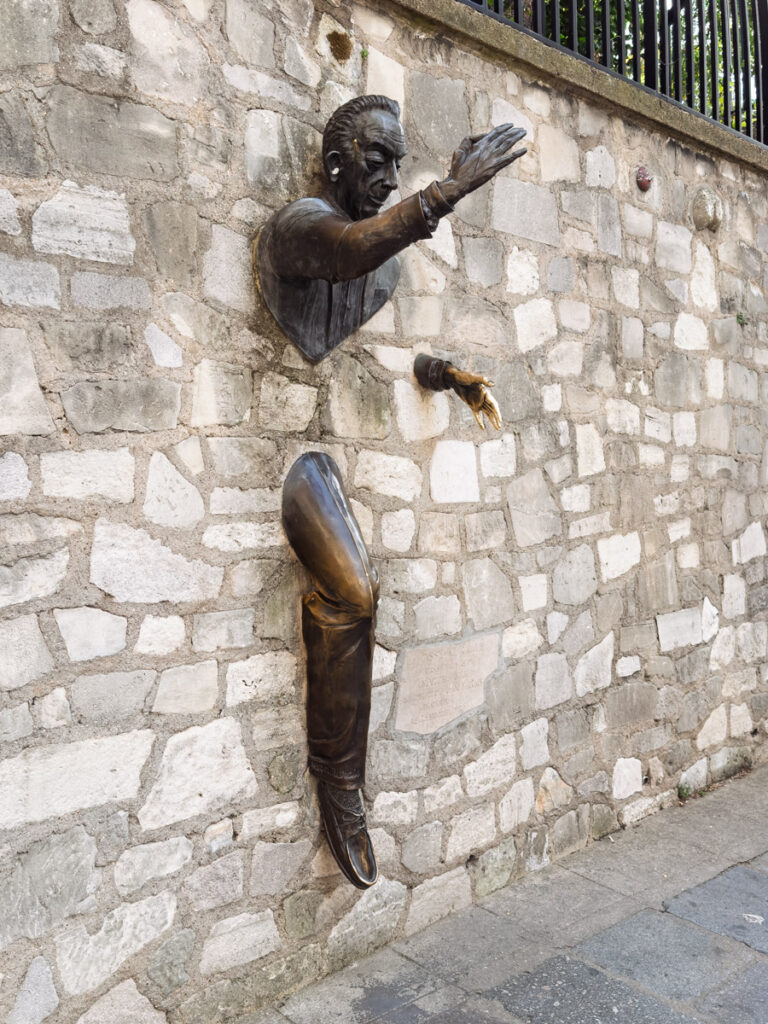
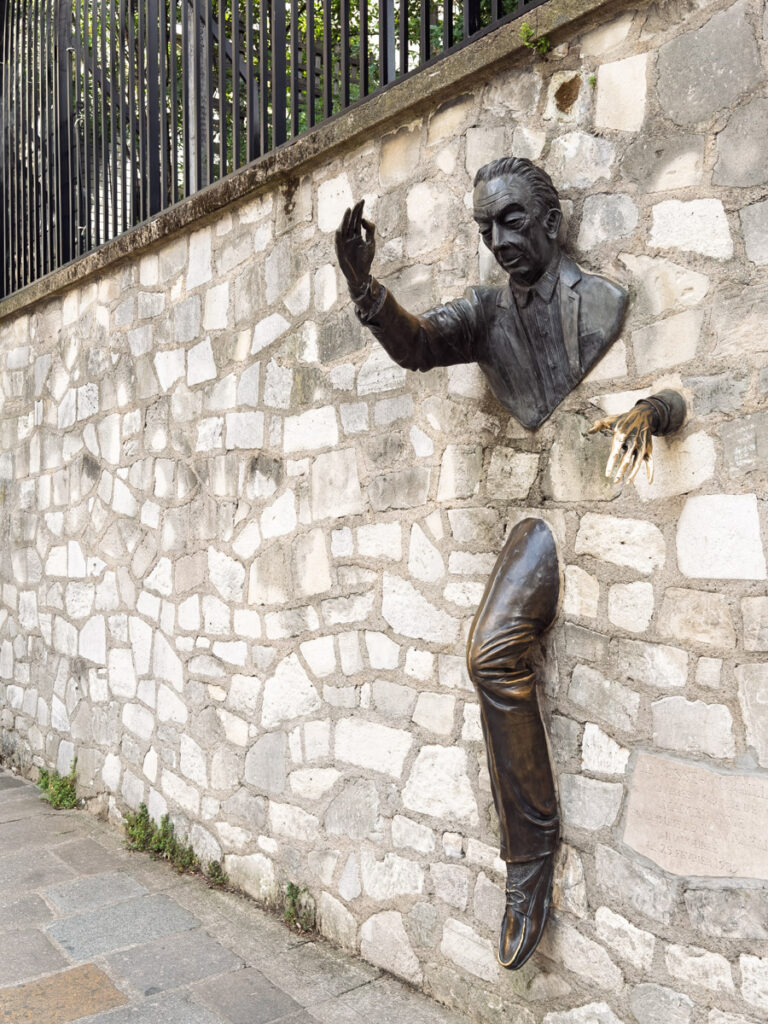
The next place we stopped was much more pleasant. We visited Le Passe Muraille (The Man Who Walked Through Walls), a bronze sculpture of a man who appears to be emerging from the wall. It’s apparently taken from a 1941 short story by Marcel Aymé. The story is about a man afflicted with the ability to walk through walls. Eventually he comes to abuse this power, annoying people to madness and robbing banks. One day, due to a funny set of circumstances, this man finds himself stuck in a wall for all eternity. The present day sculpture’s outstretched hand is shiny, implying that us tourists are trying to pull him from the wall. Knowing now what the story is about, maybe we should all just leave him there.
Our unpopulated reprieve was about to end. We made our way over to Place du Tertre. In this famous cobble-stoned square, artists gather to sell their goods. Cafes line the area. The scene is, in a word, bustling. My goal was to see if we could find a painting to bring home. The thing to do is to have your portrait made, but we had already had our photos taken, and didn’t really want to sit for that. Instead, I hoped to find a Parisian cityscape or scene. We fought our way through the crowd and looked through our options, and decided to think things over.
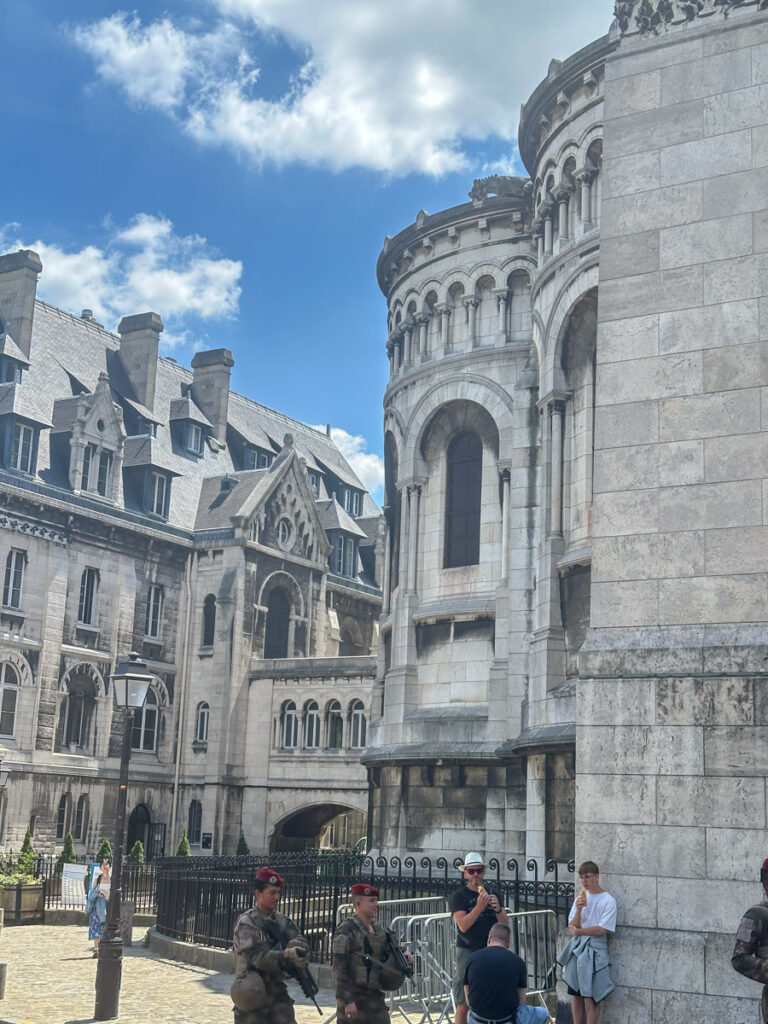
Then we took a walk over to Sacre Couer again so we could wander around during the daytime. We still didn’t take the time to go inside. Maybe we should have, but none of us were really feeling it, and the lines were long. Instead we circled the cathedral, checking it out from various angles, marveling at the juxtaposition of machine gun wielding guards against the serene white walls of the church.
We wandered back to Place du Tertre to find the artist whose work we most enjoyed. She let us flip through all the paintings till we found the one we loved the most. We had to fetch cash from a nearby ATM (many of the artists there only take cash), and then she packaged it up in a nice sturdy poster tube which I was nearly certain I could fit into my travel backpack (it did, just barely).
We had a late lunch at Bouillon Pigalle, during which our kids drank their weight in this “lemonade” which I think was just lemony, sweetened soda water, Sean and I had “ouefs mayonnaise,” and we all had a brief rest. Sean and I might have liked to choose a random cafe and sit down for a bit, but I don’t think our kids would have tolerated it well and we were in “keeping the peace” mode, I think.
Sean has been shopping for a clarinet for Maya. Before this trip, he discovered that the European-made clarinets are sold for nearly twice the price in the US that they are in France. We figured we would at least visit a store and see what our options were. Maya was singularly focused on this part of the trip. Everything else (except maybe Disney) was secondary to going clarinet shopping. Upon entering the very quiet shop and trying to talk to the shopkeepers, who appeared busy with clarinet repairs, she learned that they didn’t carry any of the 18-key clarinets she was hoping to try out. And just like that, we would not be buying a clarinet in France. But, since she tried a shop and they didn’t have what she wanted, she seemed satisfied that her wishes had been addressed. Why didn’t we try more shops, you might ask. They often kept strange hours and unfortunately they didn’t overlap well with our time in Paris. Alas.
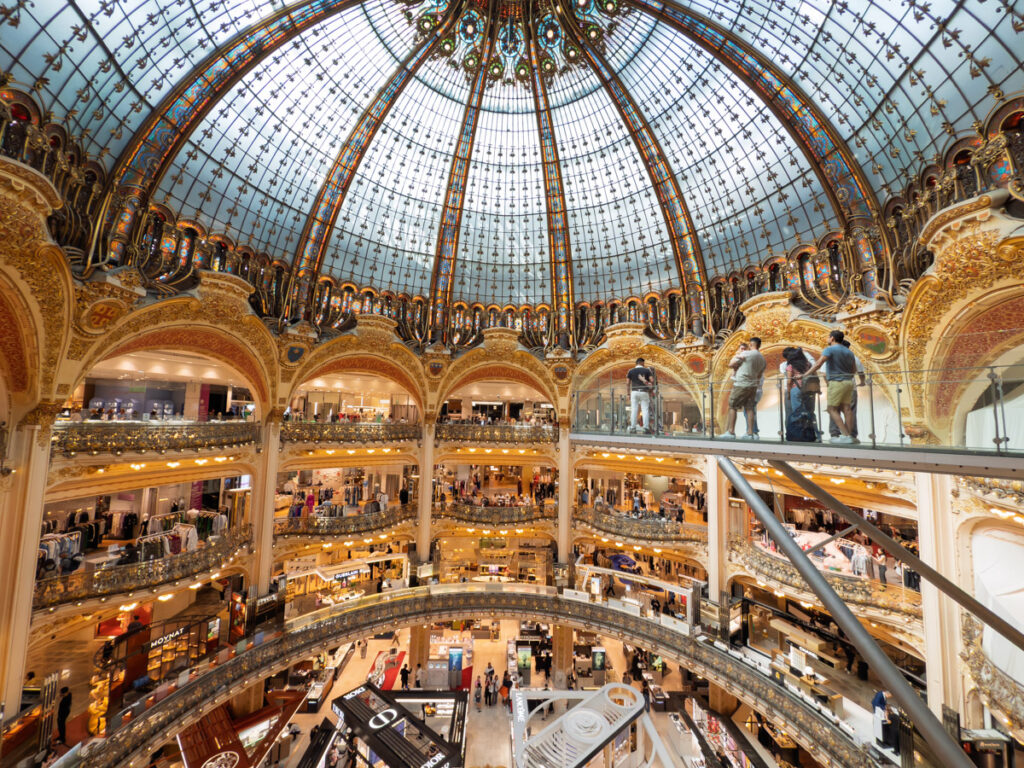
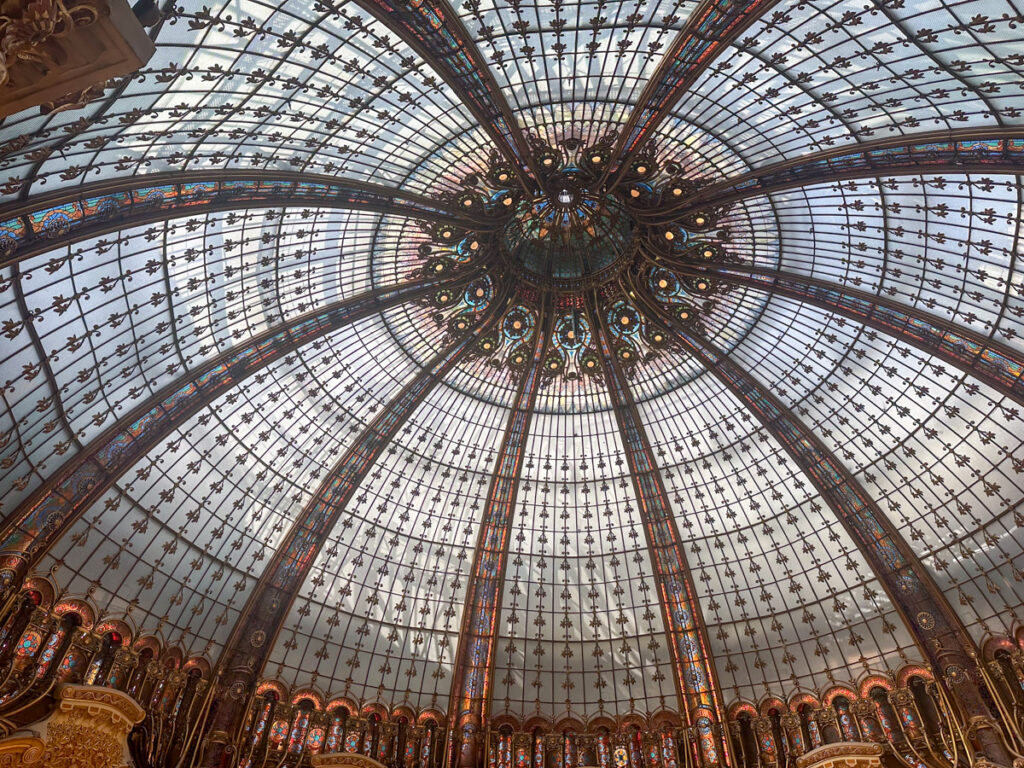
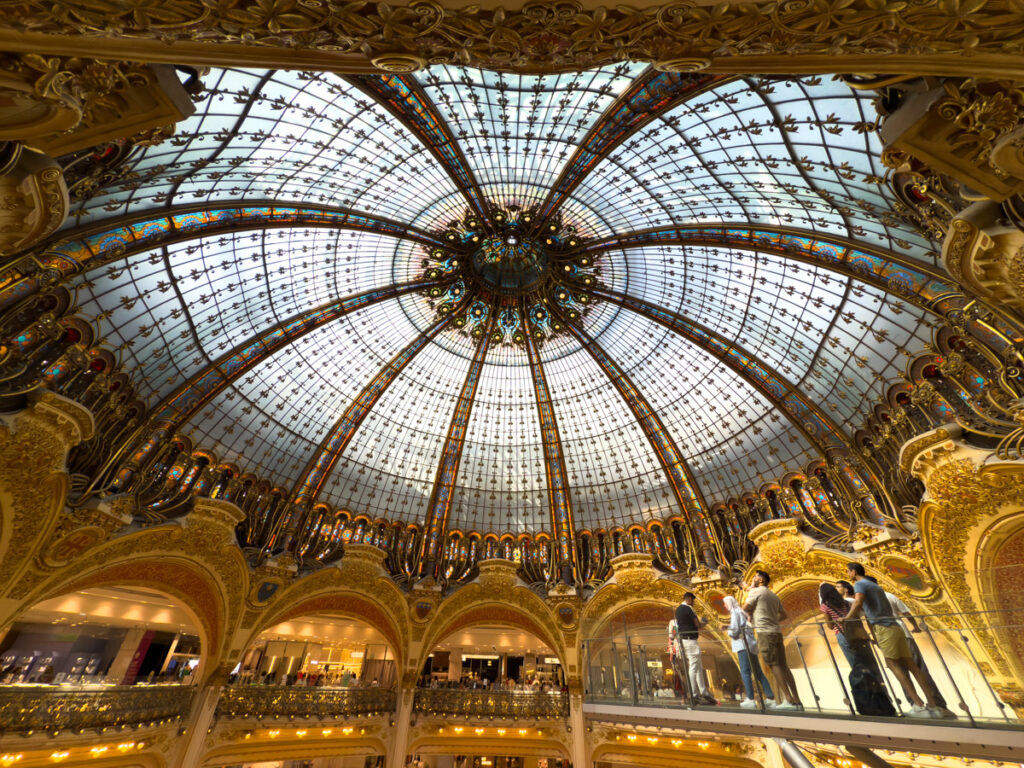
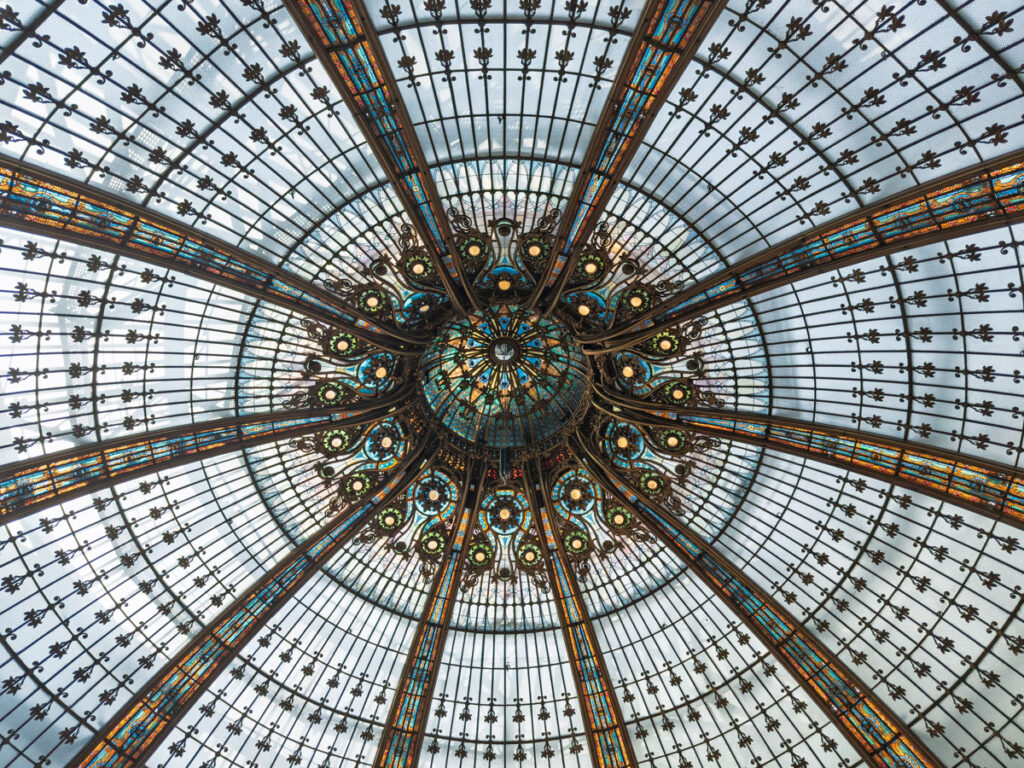
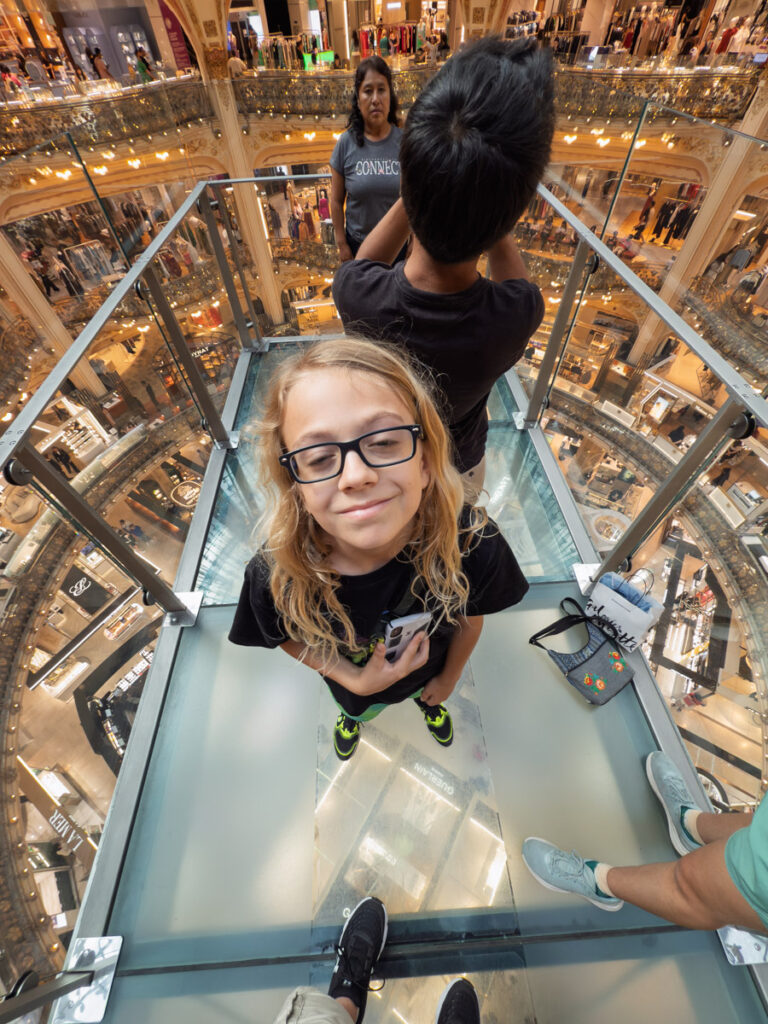
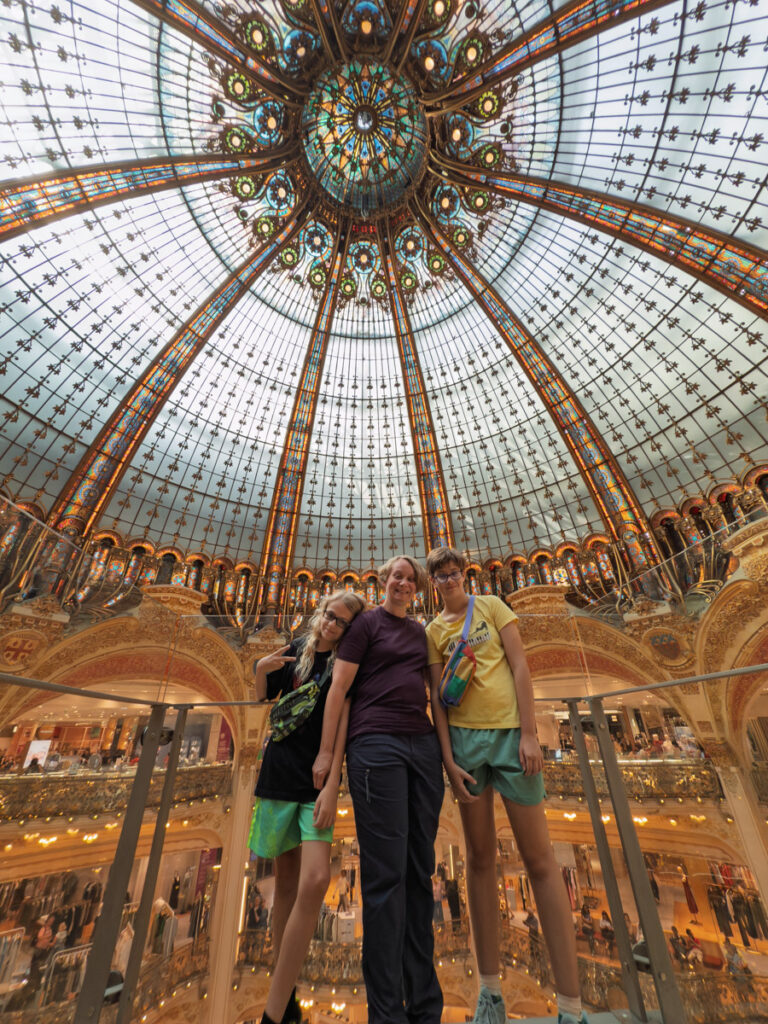
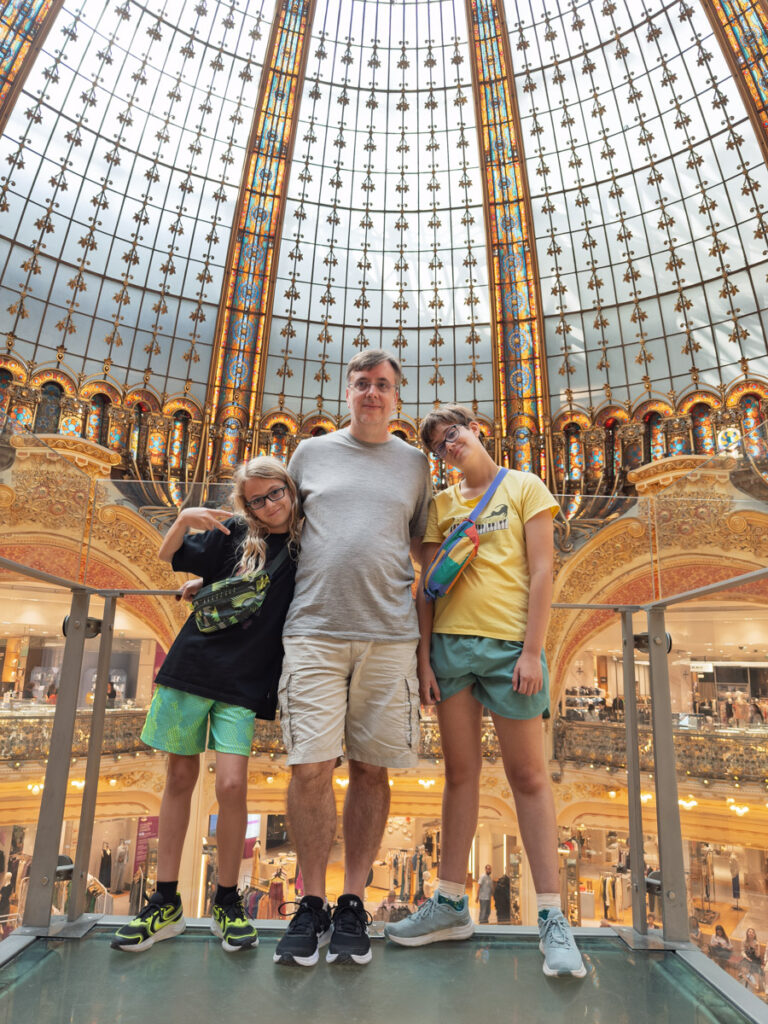
Next we headed to Galeries Lafayette to see the famous glass-domed ceiling (La Coupole) and to work our way up to see the rooftop view. Galeries Lafayette is first and foremost a shopping center – a huge one. You could tell that Sean and Ian, our resident shoppers, were enthralled and might have liked to spend some time perusing the goods. Unfortunately for them, we had a timed entry to check out the Glasswalk. This is a 9-meter long platform that juts out 16 meters above the floor below. One might observe that the only good way to get certain photos of the glass dome without the poxy glasswalk in the way is to go out on the glasswalk. They don’t charge for the experience, so I guess I won’t gripe.
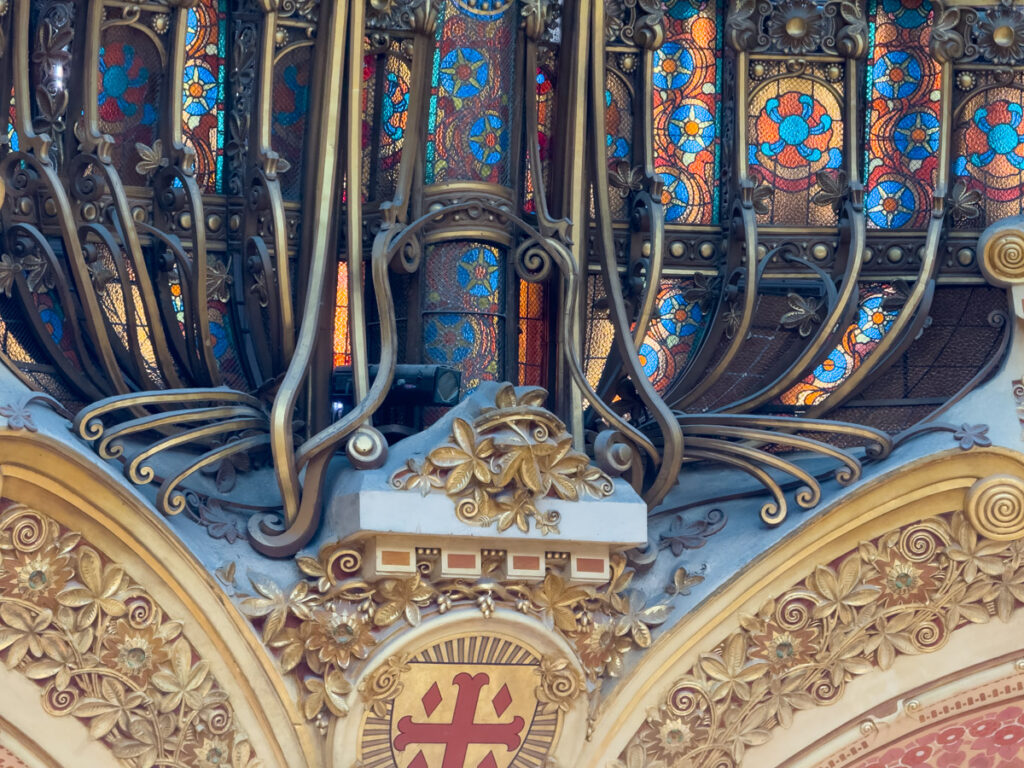
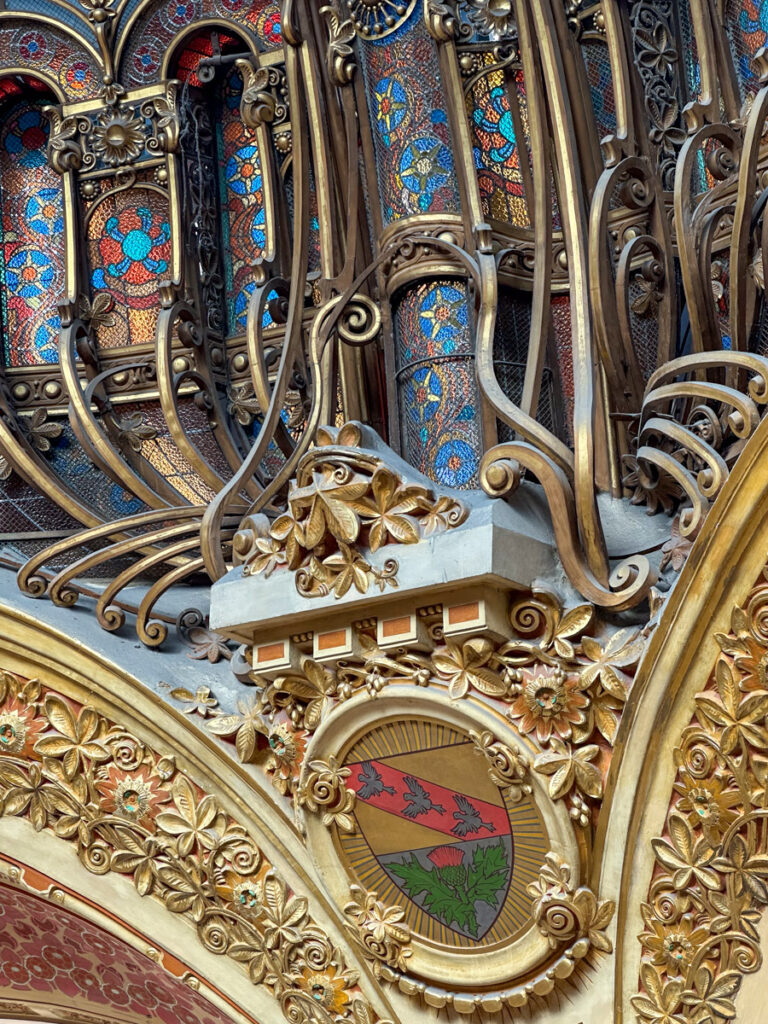
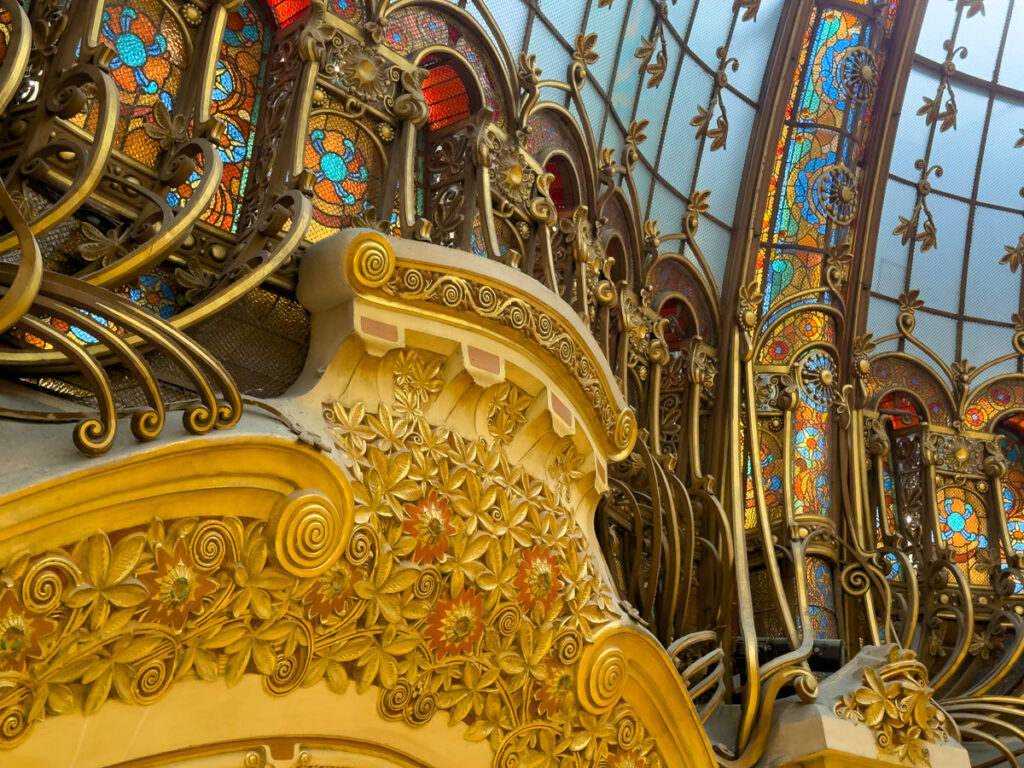
Our time on the glasswalk was very short, and I can’t guarantee we got the best photos, but that dome and honestly the whole area it covers is breathtaking. No surface is left un-embellished. I’m told the style is Art Nouveau with elements of Art Deco. Whatever it is, it’s a feast for the eyes.
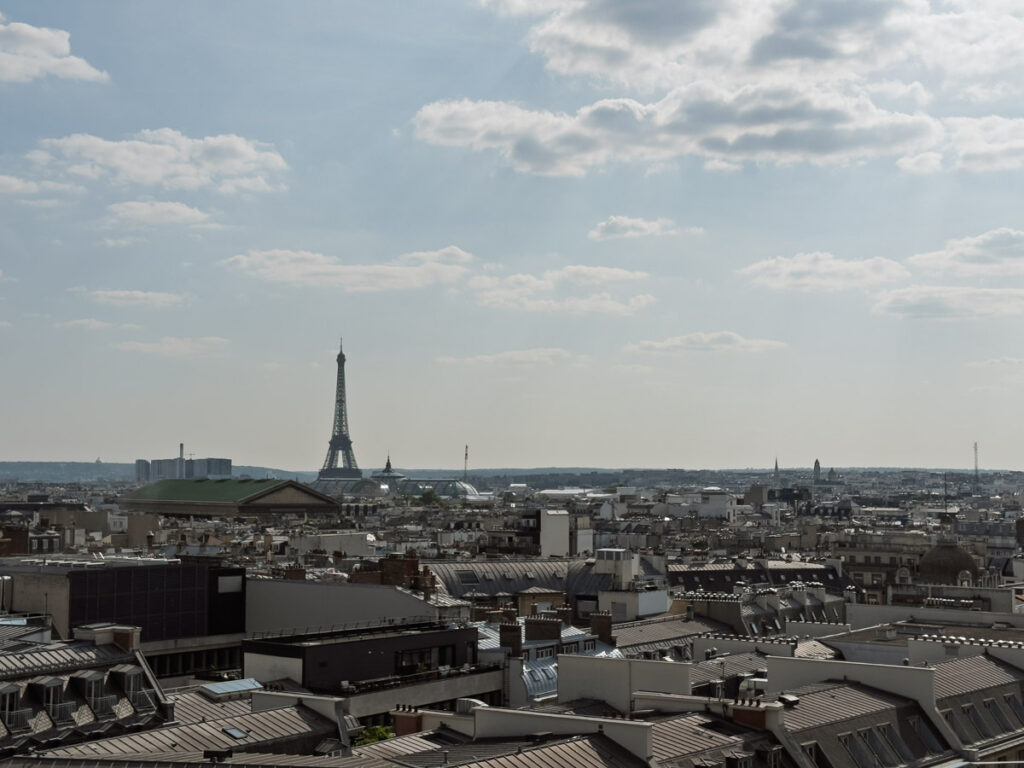
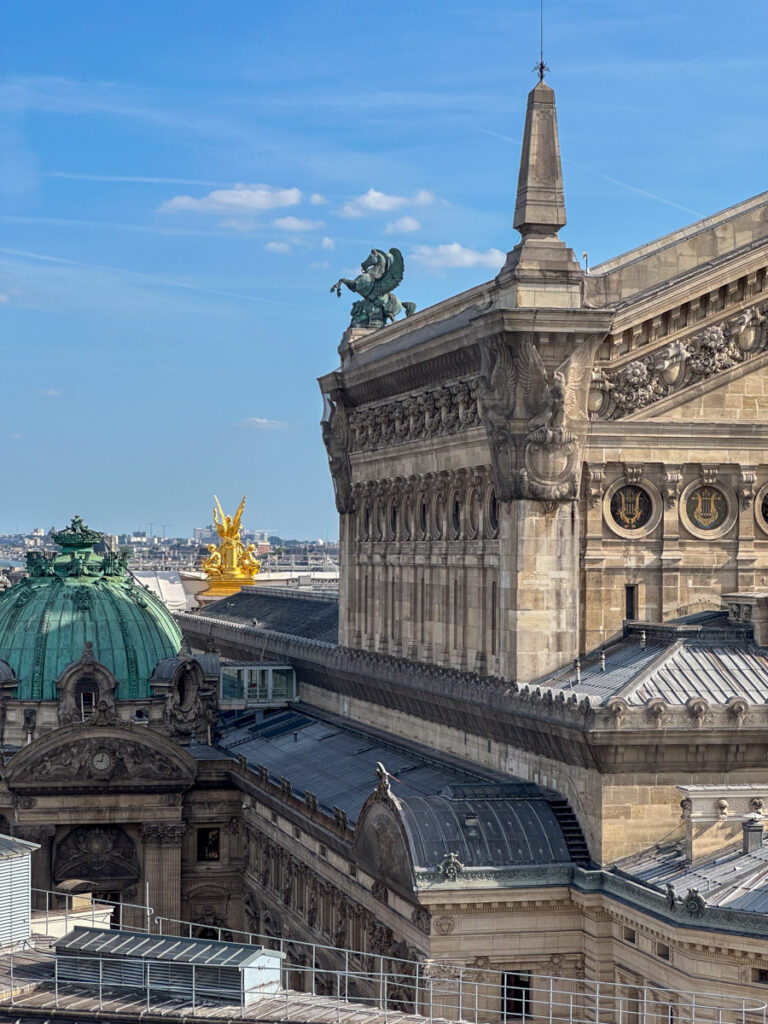
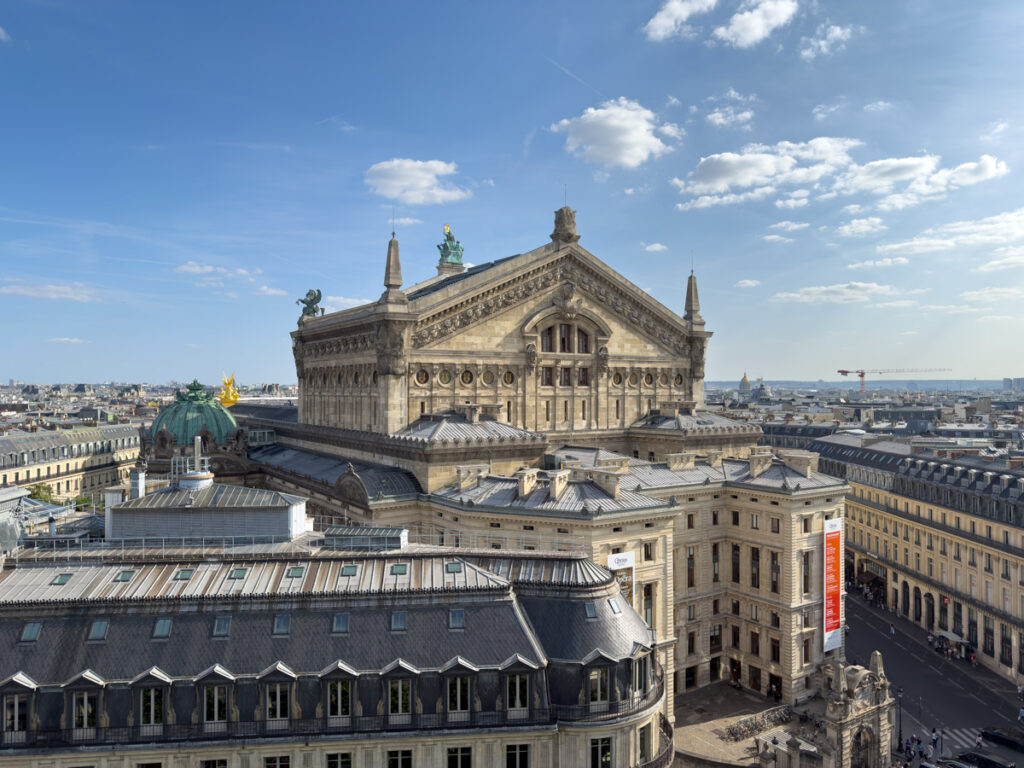
We made our way up to the eighth floor to check out the rooftop terrace. This is free to enjoy, though reservations at the rooftop bar so we could enjoy a late-afternoon “apero” might have been nice. Regardless, the views of Palais Garnier (a.k.a. Ópera Garnier), Sacre Couer, and the Eiffel Tower are excellent. For a time, there had been a sign on the roof proclaiming “Paris Je T’Aime,” and if you lined it up right, the Eiffel Tower jutted up from the I in “Paris.” Unfortunately, that sign was gone when we were there.
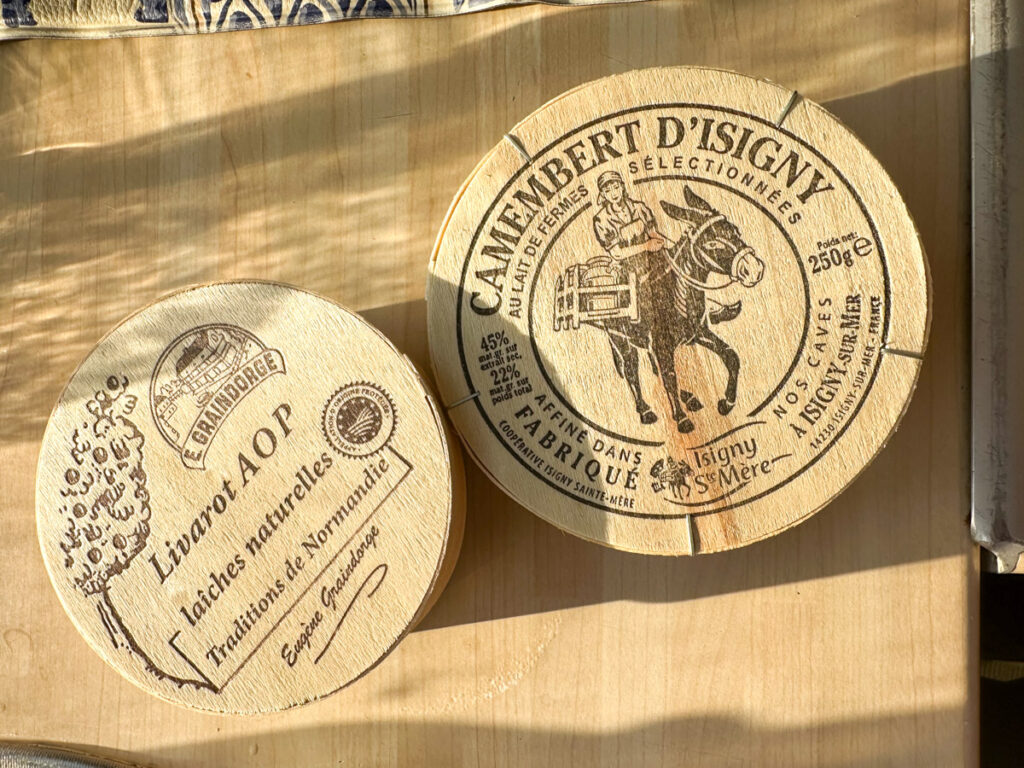
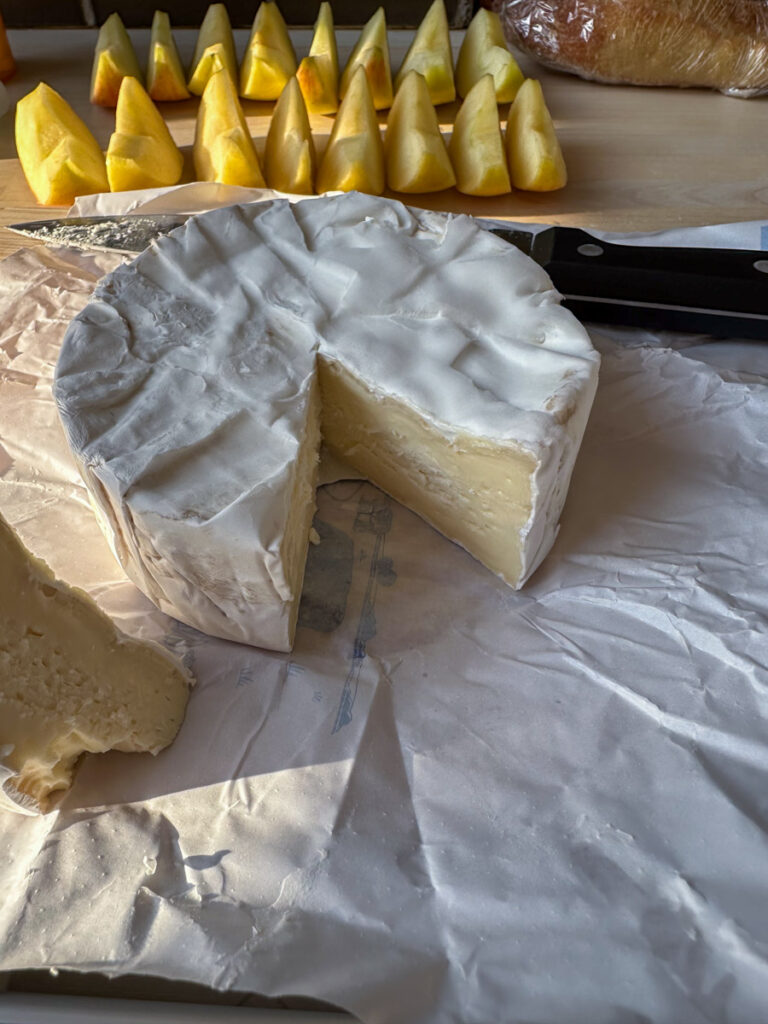
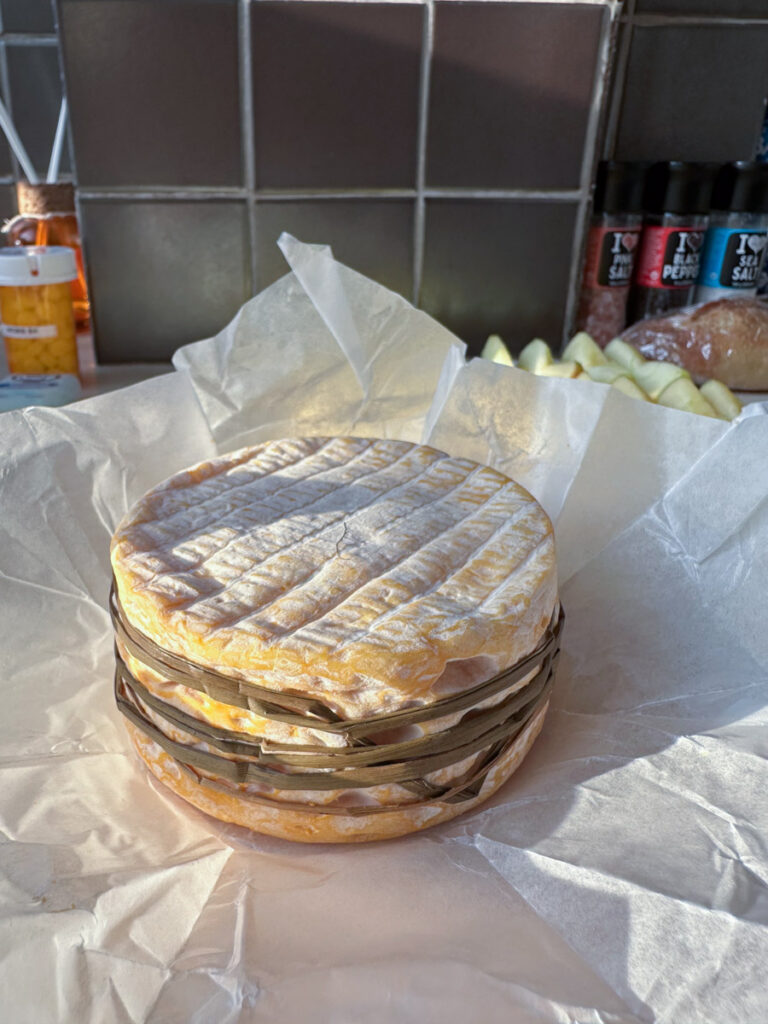
We headed back to our apartment after that. Sean and I fetched some grocery store goodies for dinner. We found some amazing cheeses, a petit Liverot that we have a hard time locating in the US, and “Disney” cheese. Ok, it’s not really Disney cheese. It is a lovely camembert from the Isigny-sur-mer, a town in the Normandy region of France. If it’s “of” Isigny, it looks like d’Isigny, which you would essentially pronounce as “Disney.”
Not at all coincidentally, Walt’s way-back forebears were named lords of Isigny, so they were called d’Isigny. Upon settling in England, the name was anglicized to the Disney we’re all so familiar with here in America.
Anyhow, the cheese was amazing. The kids had cured meat, more baguette, and finally some sliced up apples. It had been a while since we’d had any kind of fresh fruit. We spent the rest of our evening packing and tidying and making sure no one had snuck in and canceled our train.
Day 11 – Tuesday – Nimes, Pont du Gard
The Fascination of the Void (Nimes, Pont du Gard)
Days 12-16 – Wednesday-Sunday – Nice and Côte d’Azur
Probably this should be days 12-15, since Sunday was pretty much just a travel day.
A Nice Post (Nice, Eze, Antibes)